REVIEW · LONDON
Las noches de Jack the Ripper in Spanish
Book on GetYourGuide →Operated by Las noches de Jack el destripador · Bookable on GetYourGuide
Five streets. One chilling legend. Las noches de Jack el destripador turns London’s Whitechapel streets into a guided mystery using dramatized, sarcastic storytelling with a clearly dark mood. I like the way the guide anchors the fear in place-names and specific landmarks, not vague horror. One thing to consider: it’s not for kids under 14, and the topic is graphic enough that you should bring the right mindset.
I also love how well this tour fits into real sightseeing time. It’s a tight 2-hour route starting outside Tower Hill Station, with the guide waiting at the sundial wearing a red mask and carrying an umbrella. If you want a casual, all-cheer walk, this probably won’t be your vibe.
For the best experience, you’ll want to enjoy true-story suspense. The format is described as terror with true information, so expect performance, but not a goofy “it’s all make-believe” act.
In This Review
- Key highlights you’ll actually feel on the walk
- Meeting Jack at Tower Hill Station Sundial
- A Spanish Jack the Ripper tour hits differently than you expect
- Goulston Street and Mitre Square: the crime-scene walk you can follow
- The Roman Wall of Londinium stop that adds real depth
- Artillery Passage and the dark corners of daily life
- Spitalfields Market and The Ten Bells: where the story lands
- Price and value: what $5.39 buys you in practice
- What to watch for so the tour matches your comfort level
- Who should book Las noches de Jack el destripador
- Should you book? My practical take
- FAQ
- Where does the tour start?
- What is the meeting point like?
- How long is the tour?
- What language is the tour in?
- What’s the age recommendation?
- Is it wheelchair accessible?
Key highlights you’ll actually feel on the walk
- A guide who shows up as Jack: red mask, umbrella, and full-in-character delivery in Spanish.
- Whitechapel stops with famous labels: Goulston Street, Mitre Square, and Artillery Passage are treated like key evidence.
- Londinium’s Roman layer: you’ll stand by the Roman Wall of Londinium, then watch how the streets evolved.
- Old markets and old pubs: Spitalfields Market and The Ten Bells land the story with everyday London context.
- A tone built for mystery: dramatized narration with sarcasm and a deliberate creep-factor.
Meeting Jack at Tower Hill Station Sundial
The tour kicks off outside Tower Hill Station at the sundial, a few meters from the exit. You’ll be looking for the guide on the right side, and yes, they really do show up with a red mask and an umbrella.
This matters more than it sounds. Tower Hill is your “before the story” moment, because the medieval castle view is right there, and the area connects the modern city to older London. You get oriented fast, so later stops feel less like random street names and more like a timeline you can follow.
The whole experience is run in Spanish. If you’re comfortable enough to follow explanations at walking pace, you’ll get the most out of the jokes, timing, and the darker punchlines.
You can also read our reviews of more tours and experiences in London.



A Spanish Jack the Ripper tour hits differently than you expect
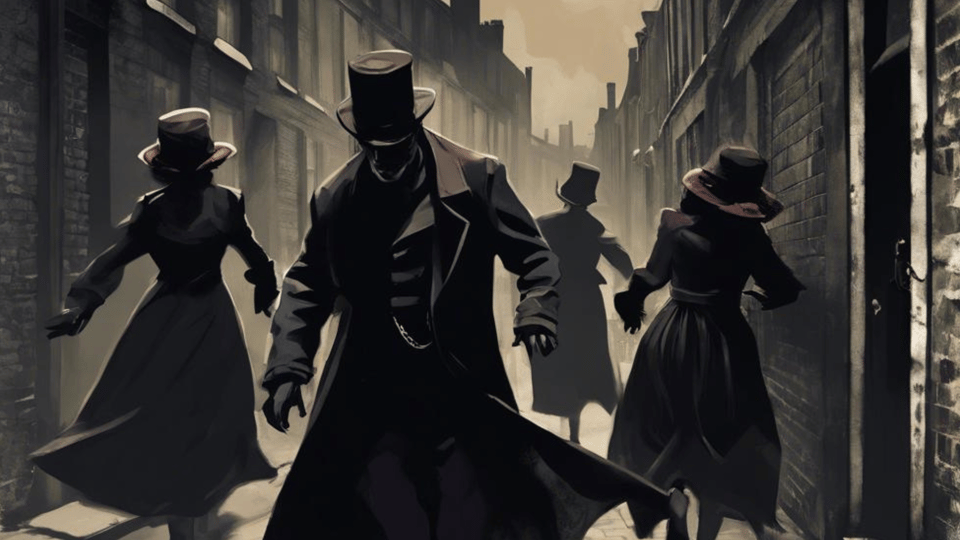
Most Jack the Ripper content in London floats in English pop culture. This tour takes the same legend and forces you to experience it in Spanish, which changes the rhythm of the storytelling.
You can feel that in how the guide handles suspense and sarcasm. Short turns, pointed remarks, and the way names are emphasized help the story stick. If you’re learning Spanish, this is also the rare chance to hear period-style vocabulary tied to real street locations, not a classroom lecture.
And there’s a big promise baked in: it’s presented as true information, not fictional improv. The guide is described as the spirit of Jack, and the walk is dramatized, but the framing is still meant to be factual. That balance can be great if you like your scares with context.
Goulston Street and Mitre Square: the crime-scene walk you can follow

Once you’re underway, the tour focuses on the parts of Whitechapel that Ripper-watchers keep circling. Goulston Street is one of the key stops, and it’s treated like an unforgettable marker in the story, described with the nickname Entrails of Whitechapel. That kind of phrasing is a hint: this isn’t a history lecture, it’s a guided path where the guide wants you to feel uneasy in the right places.
Mitre Square is another big anchor. It’s labeled as the place of the double event, so the guide ties it to the sequence of 1888 events rather than treating it as just another square in the grid. When you stand in a public space like that, it’s easier to picture how ordinary the surroundings were compared to what was happening underneath the surface.
One practical tip: keep your eyes up as well as down. These stops make sense visually because streetscape and sightlines help you understand how far someone might move between corners. Even when you don’t fully recreate the timeline, the geography makes the story feel more real.
The Roman Wall of Londinium stop that adds real depth
In the middle of the darker route, the tour shifts to something you can see and touch mentally: the Roman Wall of Londinium. This stop is a smart reset, because it widens your view beyond 1888 and into how London keeps layering itself.
You’re walking through streets that grew, shrank, rebuilt, and re-used space across centuries. When a Roman structure sits inside the modern city, it creates an instant contrast. The guide’s explanation ties the legend to this broader sense of place, which makes the whole walk feel less like a single grim night and more like a slice of London’s long timeline.
This is also one of those stops that helps non-Ripper fans relax a bit. If you start the tour curious but worry you’ll get tired of the macabre focus, the Roman segment gives your brain a clean, visual “breather.”
Artillery Passage and the dark corners of daily life
Artillery Passage is described as a street full of life with a dark corner. That line is useful because it sets expectations for how the guide talks about the area: not just as a crime map, but as a lived-in neighborhood.
Along the route, you may also hear about other named Ripper-linked spots described as favorites of Ripperologists and local history themes, including areas around Chamberlain and Algate Church. You’ll also encounter references to Lilian’s Building, described as an old night shelter. Even when you’re not standing at every single one as a formal stop, the guide’s selection of points paints a pattern of how people moved and where vulnerable lives intersected with the streets.
This is where the tour’s terror style becomes most noticeable. The guide uses dramatization and sarcasm, but the goal is to make you picture the social reality of the time. If you like your mystery grounded in geography and community details, this segment delivers.
Just be prepared for a more intense tone here than at the start. If you’re sensitive to grim subject matter, this is the portion where your comfort level will matter most.





Spitalfields Market and The Ten Bells: where the story lands
The tour finishes at The Ten Bells, and before that you’ll stop at Old Spitalfields Market. Spitalfields Market is described as an old silk market of the 17th century, which is a clever choice for an ending. It connects the story’s 1888 events back to a longer commercial history, showing how neighborhoods evolve but keep their identity through centuries.
Markets are also good storytelling locations because they suggest constant movement. Even without turning this into a theatrical scene, you get the sense that people came and went for work, trade, and daily needs. That contrast strengthens the guide’s main point: the legend happened inside real streets full of ordinary life.
Ten Bells works as a final stop because it’s a named pub tied to the last night framing. Standing there gives you a human endpoint: a place for a last drink, a last conversation, a last pause before you go back into modern London. It’s also practical. After a walk that’s two hours long, ending at a recognizable spot helps you regroup and head on with your evening.
If you’re planning dinner after, check the direction you need to travel first. Ending at Ten Bells places you in the East London orbit, so it can be a short hop to nearby options, or a longer ride if you’re going back west.
Price and value: what $5.39 buys you in practice
At $5.39 per person, this tour is priced like a bargain compared to many “themed walks” in London. You’re paying for two hours of live Spanish guiding, performance tone, and a route built around specific landmark stops.
Here’s the honest way to think about value: the price only makes sense if the guide is doing their job well and you’re buying into the concept. Thankfully, the tour is built around recognizable, named stops rather than a generic stroll. That turns your money into something practical: you leave with a mental map of Whitechapel’s key points and a story that’s easier to repeat later.
It’s also a low-commitment format. Two hours won’t derail your day, and it can fit between museum time and dinner. When you factor in that it’s Spanish-only, the price becomes even more compelling if you can follow the language comfortably.
What to watch for so the tour matches your comfort level
This experience is clearly designed for a certain tone. It includes dramatization, sarcasm, and terror, and the subject matter is the story of Jack the Ripper and the femicides connected to Whitechapel in 1888.
So don’t treat it like light entertainment. Treat it like a story walk through grim events, delivered with theatrical energy but positioned as true information. If you’re expecting jump-scares, you might not get Hollywood style effects. If you’re expecting a dry lecture, you’ll likely find the performance adds flavor.
The age rule is also worth respecting: it’s not suitable for children under 14. Even if your group includes older teens, consider whether they can handle dark details without getting uncomfortable.
Who should book Las noches de Jack el destripador
You’ll probably love this tour if you:
- enjoy mysteries tied to real street geography
- like guides who perform in-character while staying explanatory
- want an East London walk that feels different from museum-only sightseeing
- can follow Spanish at a normal speaking pace
You might skip it if:
- you want family-friendly content
- you prefer bright, upbeat city tours
- you don’t handle grim historical subject matter well
One more note: the tour is wheelchair accessible, and that’s a big plus for a themed walk that might otherwise assume a “standard legs only” audience.
Should you book? My practical take
I’d book it if you’re the type who likes a story you can walk through. The combination of named stops, a recognizable starting point at Tower Hill, and a strong finish at Ten Bells makes the walk feel like a route, not random wandering.
Also, the Spanish language adds real value. It’s not just the same English script with different words. The tone—dramatized, sarcastic, and scary—lands with different timing in Spanish, and that keeps the experience fresh even if you already know parts of the legend.
If you’re on the fence, here’s the simple decision rule: if you’re okay with a darker historical theme and you want a guided map of Whitechapel’s key landmarks, this is good value. If you want comfort and sweetness, pick another kind of London tour.
FAQ
Where does the tour start?
It starts at the sundial on Tower Hill, just a few meters from the Tower Hill Station exit.
What is the meeting point like?
The guide waits at the sundial wearing a red mask and holding an umbrella.
How long is the tour?
The duration is 2 hours.
What language is the tour in?
The live tour guide speaks Spanish.
What’s the age recommendation?
It is not suitable for children under 14.
Is it wheelchair accessible?
Yes, the activity is wheelchair accessible.