REVIEW · LONDON
London: Natural History Museum Guided Tour
Book on GetYourGuide →Operated by The Great Weekender · Bookable on GetYourGuide
Step into deep time, with a guide. I like how this Natural History Museum tour compresses the museum’s biggest stories into a smooth 2.5 hours, so you get real takeaways instead of just wandering. The two fossil moments I always remember are Sophie the Stegosaurus and Archaeopteryx, the often-cited link between birds and dinosaurs.
I also love the sight of a Giant Sequoia cross-section (a tree already around 1,300 years old when it was cut down in the 1800s). It’s one of those objects that makes the museum feel less like a warehouse of stuff and more like a place where time becomes physical.
One consideration: this is a highlights-first tour. If you already know a lot about geology, fossils, Darwin, and classic curiosities, you may wish for more depth and fewer stops.
In This Review
- Key highlights you’ll actually notice
- Why this Natural History Museum guided tour works in 2.5 hours
- Getting in fast: meeting point and express security
- Fossils first: Sophie, Dodo, and the Archaeopteryx connection
- Sophie the Stegosaurus
- Dodo and the idea of disappearance
- Archaeopteryx: the missing link, explained through one fossil
- Beyond dinosaurs: Darwin, sequoias, and Pompeii casts
- Darwin’s On the Origin of Species (first edition)
- Giant Sequoia cross-section
- Pompeii eruption victims: plaster casts
- The museum’s Earth and space side: gemstones plus Moon and Mars rock
- How the guide shapes your experience (and how to spot a good one)
- Price and value: what $93 buys you in London
- What to do before and after the tour
- Practical do’s and don’ts inside the galleries
- Should you book this Natural History Museum guided tour?
- FAQ
- How long is the London Natural History Museum guided tour?
- What’s included in the tour price?
- Where do I meet the tour guide?
- Is there a way to avoid long security lines?
- What language is the tour guide speaking?
- Can I take photos with flash?
- Is the tour wheelchair accessible?
- FAQ
- What cancellation terms are offered?
- Can I reserve without paying right away?
- Is the group private or small?
- What’s the main focus of the tour?
Key highlights you’ll actually notice
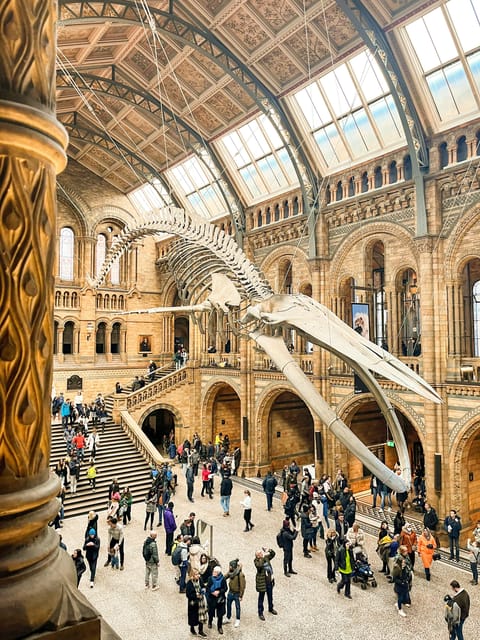
- Sophie the Stegosaurus takes center stage in the museum’s fossil energy zone.
- Archaeopteryx gives you the bird–dinosaur connection in one unforgettable look.
- Giant Sequoia cross-section turns “deep time” into something you can stand beside.
- Pompeii casts add an emotional layer to ancient history, not just science facts.
- Darwin’s On the Origin of Species (first edition) adds serious 19th-century context.
- Moon and Mars rock plus gemstones widen the tour beyond Earth life into space and minerals.
Why this Natural History Museum guided tour works in 2.5 hours
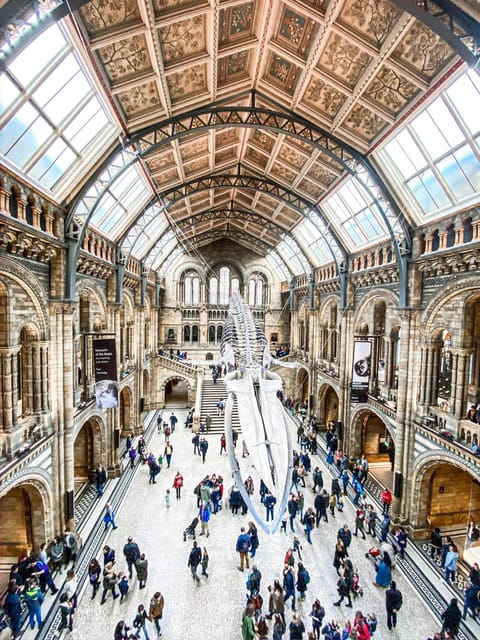
The Natural History Museum can swallow a whole day. The problem is that a self-guided visit often turns into a blur: you see impressive things, but you miss the “why those objects matter” part.
This guided format helps you get your bearings fast. In about 2.5 hours, you’ll hit major highlights from across the museum’s collection of roughly 80 million specimens. That means you’re not trying to plan a mini-museum marathon on the fly while navigating crowds, signage, and your own energy levels.
I also like that it’s structured as a live experience with a guide, not a recorded script. If you prefer conversations over lectures, you’ll still get the key points, but you’re not stuck reading placards for everything.
The visit includes main highlights access, so your time isn’t spent figuring out what’s worth your legs.
You can also read our reviews of more guided tours in London



Getting in fast: meeting point and express security
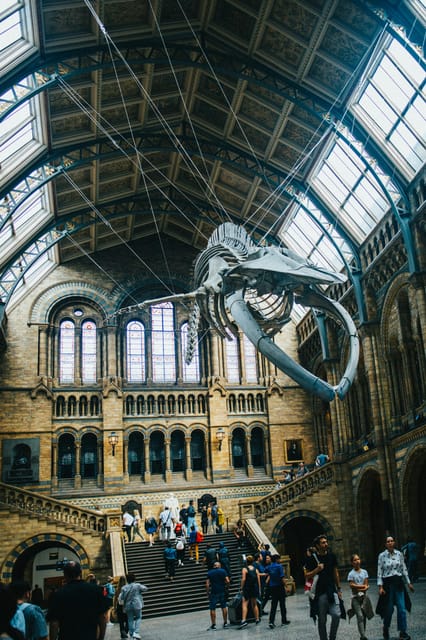
You meet outside the red telephone box opposite the Exhibition Road entrance. That’s helpful because the museum has multiple entrances and streets that can look similar when you’re headed in for a specific time slot.
One practical win: you’ll use express security instead of the standard line. In London museums, that can be the difference between a stressed start and a relaxed one.
Once inside, the tour is built around moving you through the museum efficiently, so you’re not zig-zagging across galleries just to reach the next “must see.” You also avoid the common mistake of arriving, collecting tickets, and only then realizing you’re running out of time.
A quick reminder: flash photography isn’t allowed, so if you’re the type to want that “I was here” shot with dramatic lighting, plan for normal lighting instead.
Fossils first: Sophie, Dodo, and the Archaeopteryx connection
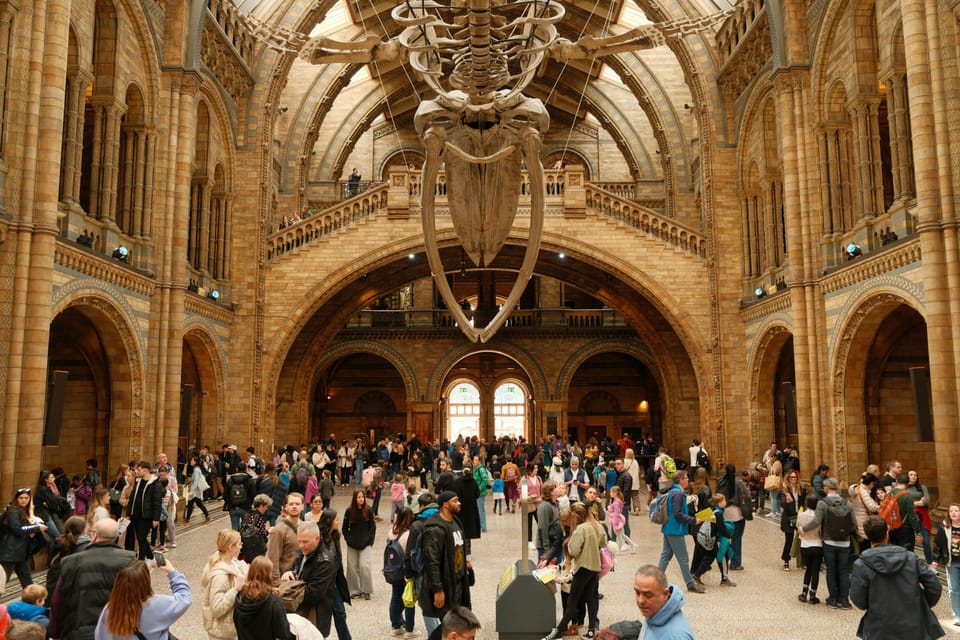
If fossils are your thing, this tour starts in a great place psychologically: big named specimens and clear storylines.
Sophie the Stegosaurus
Sophie the Stegosaurus is the fossil anchor. Even if you’re not a hardcore dinosaur person, you can’t help but notice how iconic this skeleton is. A guided moment here does more than point at bones. It helps you understand what makes a real complete specimen special compared to partial finds and scattered fragments.
And because it’s not a random photo-op, you get the sense of why paleontology is both painstaking and kind of thrilling. You’re looking at evidence, not just fantasy.
Dodo and the idea of disappearance
You’ll also see the long-extinct Dodo. This stop matters because it shifts the mood from “ancient monsters” to the human-sized tragedy of extinction. Even if you’ve heard Dodo facts before, a guide can help you connect that story to why museums exist in the first place: preserving traces, so we keep learning from what’s gone.
You can also read our reviews of more historical tours in London





Archaeopteryx: the missing link, explained through one fossil
Then comes Archeopteryx, often presented as the “missing link” between dinosaurs and birds. The value of this stop isn’t only that the fossil is famous. It’s that it helps you picture evolution as a chain of evidence rather than a simple before-and-after switch.
If you’ve ever seen people argue about evolution online, this is a place where you can switch from shouting to studying. You’ll look at the fossil and the story the guide builds around it, and suddenly the debate becomes much more concrete.
Beyond dinosaurs: Darwin, sequoias, and Pompeii casts
This is where the tour becomes more than a fossil sprint. It turns into a “time travel” sequence across biology, botany, and geology.
Darwin’s On the Origin of Species (first edition)
You’ll get to admire the first edition of Darwin’s On the Origin of Species, which is a big deal for a reason that goes beyond the label. This is scientific work at the moment ideas were still new enough to be controversial.
When a guide frames it alongside fossils and extinction stories, it makes Darwin feel less like a school subject and more like a turning point. You start seeing how evidence from nature and collections fueled major scientific change.
Giant Sequoia cross-section
Next is the cross-section of a Giant Sequoia that was felled in the 19th century, after it had been growing for roughly 1,300 years. Standing near a slice like that is oddly emotional. It’s a tree that lived through generations you usually only meet in books.
A guide’s best job here is interpretation. They’ll point you to what you can actually learn from a tree cross-section—how age and growth show up physically, not just as trivia.
Pompeii eruption victims: plaster casts
Then you’ll visit plaster casts of the victims of the eruption of Mount Vesuvius in Pompeii. This part changes the tone fast. It’s not a “wow, science” stop. It’s an anchor to human history and sudden disaster.
The casts are powerful because they show you the body-shaped aftermath of an event that was otherwise all ash and distance. A good guide helps you hold that complexity: the science of the event, the tragedy of the people, and why museums preserve these records.
If you want to understand why this collection goes far beyond aesthetics, this stop is one of the clearest reasons.
The museum’s Earth and space side: gemstones plus Moon and Mars rock
You might think the tour is only fossils and science classics. It isn’t.
There’s time to see finest gemstones from the museum’s earth vault, plus rock samples from the Moon and Mars. That pairing works well for visitors because it expands what “natural history” can mean.
Earth materials (gemstones, minerals) connect to geologic time and how our planet forms. Space rocks connect to questions like how other worlds evolve and what we can learn from fragments that survived long journeys.
If you’ve ever felt like museums separate “living things” and “rocks from space” into different boxes, this tour quietly blends the categories. You end up with a broader sense of how the museum’s collection tells one big story: matter, time, and change.
How the guide shapes your experience (and how to spot a good one)
A big chunk of the tour’s value is the live guide. The provider runs private or small groups and the tour is in English.
Some guides clearly know how to keep attention. In the best cases, you’ll get an upbeat, family-friendly approach where everyone stays engaged and the time flies. Names mentioned include Sasha and Wesley, and both are described as strong, interactive guides who made the experience feel smooth rather than dragged out.
You can judge a guide’s skill quickly in moments like:
- When they explain what you’re looking at in plain language.
- When they connect stops into one story instead of separate facts.
- When they keep momentum without rushing past the objects.
If you’re the type who likes to ask questions, a live guide format is a lot better than a purely self-guided loop. You get answers without needing to hunt down an exhibit label.
Also, keep your expectations realistic: with a 2.5-hour window, your guide is choosing highlights. That’s the tradeoff for seeing so much in one go.
Price and value: what $93 buys you in London
At $93 per person for about 2.5 hours, this isn’t a budget-only activity. The value comes from three things you’d otherwise need to do on your own:
- A route through key galleries without decision fatigue
The museum is large enough that “I’ll just wander” can turn into missed objects or wasted time.
- Interpretation
Seeing Sophie, Darwin, Archeopteryx, Pompeii casts, and the sequoia slice is impressive. But the guide’s job is to connect the dots so the visit feels like learning, not just sightseeing.
- Express security
If you’ve dealt with London museum security lines, you know time loss is real. Skip-the-line access helps keep your visit on track.
Is it worth it if you’re already well-versed? Maybe not fully. If you already know the details behind Darwin, volcanoes, gems, and dinosaur taxonomy, you may find the pacing more “overview” than deep specialty lecture.
But for most people—especially first-timers or anyone who wants a guided structure—the price starts to make sense. You’re paying for a focused experience rather than an open-ended day.
What to do before and after the tour
To get the most from a highlights tour, I suggest two things:
- Arrive a few minutes early so you’re not rushed locating the red telephone box meeting spot.
- Go in with one goal. For example: I want fossils plus one human-history stop. Or: I want science breakthroughs plus space rocks. Your priority helps you remember what mattered most.
After the tour, you’ll likely notice a few nearby things you’d like to revisit on your own. That’s a good sign. A guided highlights pass often works like a map—once you know the museum’s main threads, you can return and explore more at your own pace.
Practical do’s and don’ts inside the galleries
Here’s what you should keep in mind based on the tour rules and what the experience is built around:
- Flash photography is not allowed. Use normal lighting for photos.
- The tour is listed as not suitable for wheelchair users, so if accessibility matters in your planning, you’ll need to consider other options.
- Wear shoes that can handle indoor museum walking. Even with guidance and an efficient route, you’re still moving through multiple exhibits over 2.5 hours.
Also, keep your phone battery up. Even when you’re mostly there to look at objects, you’ll probably want to take a few reference photos for later.
Should you book this Natural History Museum guided tour?
Book it if:
- You want a well-paced highlights route through one of London’s biggest museums.
- You care about both the famous fossil icons and the connecting stories (Darwin, extinction, Pompeii).
- You’ll appreciate a live guide who helps you interpret what you’re seeing—especially around Archeopteryx and the sequoia cross-section.
Skip it or think twice if:
- You’re an enthusiast who already knows the major exhibits and prefers a slower, deeper study session without a fixed schedule.
- Your main goal is a relaxed museum wander rather than a structured tour.
If you’re choosing a single ticketed museum experience in London that combines fossils, science classics, and Earth-and-space objects in one compact visit, this is a strong pick. The tour’s best version is when the guide keeps the story moving and the time feels like it’s earned, not spent.
FAQ
How long is the London Natural History Museum guided tour?
The duration is listed as 2.5 hours, including a 2-hour tour through the museum’s main highlights.
What’s included in the tour price?
You get a guided tour of the Natural History Museum highlights, access to the museum’s main highlights, and access to the museum accompanied by a tour guide.
Where do I meet the tour guide?
Meet outside the red telephone box opposite the Exhibition Road entrance to the Natural History Museum.
Is there a way to avoid long security lines?
Yes. The tour includes skip the line through an express security check.
What language is the tour guide speaking?
The tour guide provides the tour in English.
Can I take photos with flash?
No. Flash photography is not allowed.
Is the tour wheelchair accessible?
No. The tour is not suitable for wheelchair users.
FAQ
What cancellation terms are offered?
Free cancellation is available up to 24 hours in advance for a full refund.
Can I reserve without paying right away?
Yes. The tour offers a reserve now & pay later option, where you can book your spot and pay nothing today.
Is the group private or small?
The tour is described as private or small groups available.
What’s the main focus of the tour?
The tour focuses on major museum highlights, including Sophie the Stegosaurus, the Giant Sequoia cross-section, Pompeii plaster casts, Darwin’s first edition of On the Origin of Species, and Archaeopteryx, plus gemstones and Moon and Mars rock.