REVIEW · LONDON
London Serial Killers – The Blood and Tears Walk
Book on Viator →Operated by City Secrets Walks · Bookable on Viator
London gets darker on this walk.
In this 2-hour, 2-mile nighttime stroll, you move from famed courts to lesser-known crime corners, hearing how Declan McHugh links cases, places, and patterns across the city. It’s built for true crime fans who like their history dramatic and their questions interactive.
I love the interactive profiling pieces, especially the Jack the Ripper-style question format and the horror-movie voting that mixes facts with audience participation. I also love the specific locations you don’t typically see on the usual London “just-Ripper” circuit, including Holy Sepulchre London and the tucked-away streets that feel made for dark storytelling.
One consideration: the pace stays fairly brisk, rain or shine, and the walk isn’t ideal if you struggle to keep up. If mobility is a big concern, this tour may not be the right fit.
In This Review
- Key things I’d bet you’ll care about
- London at Night: what the Blood and Tears Walk really feels like
- Meet Declan McHugh: the guide style that makes the tour work
- Stop by stop: St. Bartholomew’s, Holy Sepulchre, and the Old Bailey
- Stop 1: Church of St. Bartholomew the Great
- Stop 2: Holy Sepulchre London
- Stop 3: Old Bailey
- Printer Street and Red Lion Court: a lighter pause, then a twisted Victorian tale
- Stop 4: Printer Street and the horror movie voting moment
- Stop 5: Red Lion Court and a Victorian killer with global reach
- Hare Place: Jack the Ripper profiling that asks you to think
- St. Dunstan in the West and Royal Courts of Justice: atmosphere meets authority
- Stop 7: St. Dunstan in the West and the psychic experiment
- Stop 8: Royal Courts of Justice
- Portugal Street to The Princess Louise: the final shock and the book signing
- Stop 9: Portugal Street and the trial stories that keep stacking
- Stop 10: Princess Louise pub and a forensics-linked final story
- Price and logistics: value is real, but plan your night
- Who should book this tour, and who should skip it
- Should you book London Serial Killers: The Blood and Tears Walk?
- FAQ
- FAQ
- How long is the London Serial Killers – The Blood and Tears Walk?
- Where does the tour start and end?
- What time does it start?
- What is the price per person?
- Is it offered in English?
- How far do you walk, and is it fast-paced?
- What is the minimum age?
- Can I get a refund if my plans change?
- Do I need to buy tickets for the stops?
Key things I’d bet you’ll care about
- Declan McHugh leads the tour, tied to his book Bloody London, and he keeps you involved instead of talking at you the whole time
- True-crime storytelling across multiple sites, not just the usual London headlines
- Interactive moments: horror movie voting, atmosphere reactions, and profiling-style questions
- A tight route covering about 2 miles (3.2 km) in roughly two hours
- Ends at The Princess Louise pub, where the final story lands right before you step inside
London at Night: what the Blood and Tears Walk really feels like
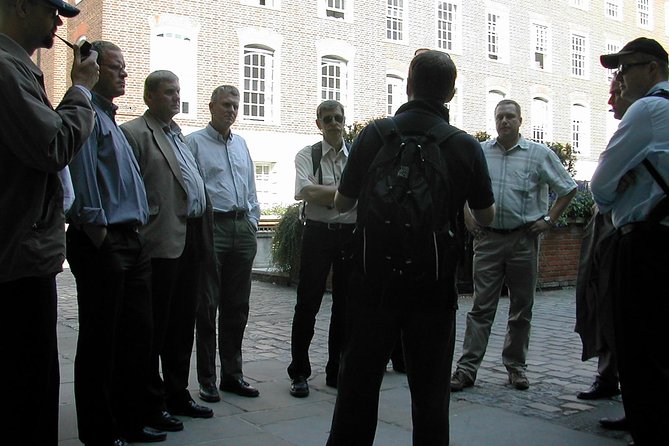
This is a 7:00 pm walking tour built for night-owls and true crime readers. You meet near Aldersgate St/Barbican at Underground Ltd, then you finish at The Princess Louise near Holborn underground, about a minute’s walk from the station.
The big headline value is the price: $27.74 per person for about two hours, with a live guide and a route packed tightly with story beats. That low-to-mid price makes it feel less like a “special ticket” and more like a smart way to see a chunk of London you’d otherwise miss after dark.
The tradeoff is pace. The route covers about 2 miles (3.2 km), and the tour is paced to fit ten serial killer-focused story stops into that time. If you prefer leisurely sightseeing, this one will feel more like moving from scene to scene than strolling through landmarks.
Group size stays relatively small (no more than 20 per booking), which matters here. When the tour starts asking questions and running small experiments, smaller groups make it easier to hear and easier to participate.
You can also read our reviews of more walking tours in London


Meet Declan McHugh: the guide style that makes the tour work
The star of this experience is Declan McHugh, author of Bloody London. His approach is part storyteller, part host, and part quiz-master—without turning it into a school exam.
You’ll notice this right away because the tour doesn’t just hand you facts. It uses short, cinematic stops and then prompts you to react: horror-movie opinions, profiling ideas, and quick check-ins that keep you awake and paying attention.
That style is one of the most praised parts of the tour. People consistently mention that it’s fun, riveting, and interactive, and that Declan mixes humor with facts so the subject matter doesn’t become one long grim lecture.
Still, one small caution: if you hate being put on the spot—even lightly—then the interactive “profiling and guessing” format may feel annoying. You’re not being graded, but you are expected to engage.
Stop by stop: St. Bartholomew’s, Holy Sepulchre, and the Old Bailey
The early part of the walk sets the tone: London’s dark past isn’t hidden in museums. It’s attached to streets, buildings, and institutions you’d pass in daylight without thinking twice.
Stop 1: Church of St. Bartholomew the Great
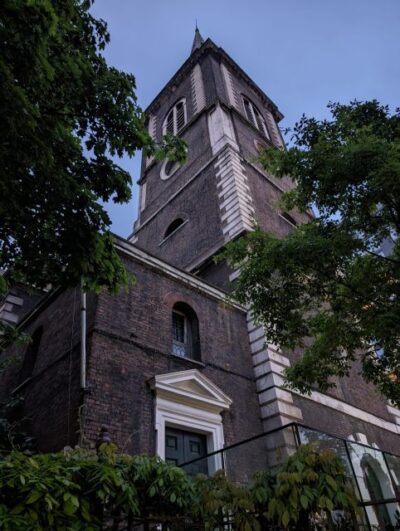
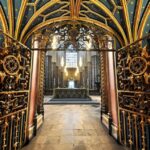
Your first stop is Church of St. Bartholomew the Great, where Declan sets up an unsettling story about an uncaught serial killer and two child murders years apart. The key thing he emphasizes is how similarities between cases can shape a profile—so you’re not only hearing what happened, you’re watching the reasoning process.
This stop matters because it shows how the tour builds an investigative mindset. Instead of treating each story like a standalone “case file,” it makes you think about patterns.
Stop 2: Holy Sepulchre London
Next comes Holy Sepulchre London, framed around the “economics” of death—grave-robbing and the darker side of what people did with bodies. Declan also brings in a clue pointing to St Bartholomew’s Hospital and suggests that certain institutions were willing to deal with criminals.
This section works best if you can handle the tour’s bluntness. It’s not gentle history, and the point isn’t to shock you for shock’s sake. It’s to connect crime, profit, and power inside the city.




Stop 3: Old Bailey
Then you hit the Central Criminal Court, also known as the Old Bailey—one of the world’s most famous courtrooms. Declan lays out multiple serial killer trials connected to this site, including a case where the same killer appears twice, sends an innocent man to death, and later confesses to murders of women.
He also covers another serial killer who murdered 13 women over about five years, plus later trial references to a killer linked with 15 boys and men, and a final mention of a woman described as perhaps the most dangerous in this category of crime.
If you like real-world institutions—courts, trials, evidence—this stop is a big payoff. You’re standing at the legal machine that processed some of the worst stories Britain has on record.
Printer Street and Red Lion Court: a lighter pause, then a twisted Victorian tale
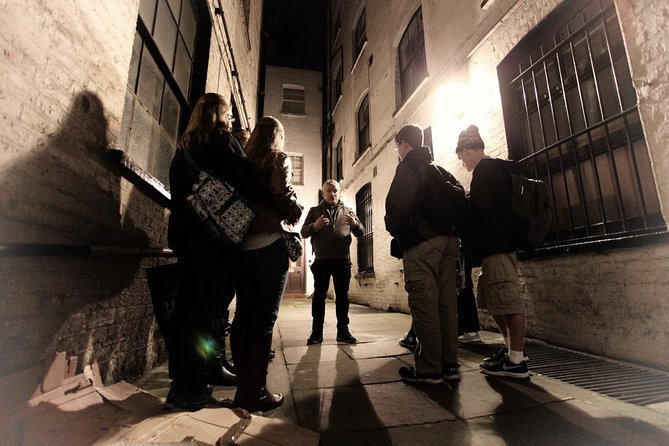
The tour doesn’t keep a constant straight-face level. You get a brief break that also makes the experience feel more personal.
Stop 4: Printer Street and the horror movie voting moment
At Printer Street, Declan calls it a lighter moment. He asks you for your votes on the scariest horror movies of all time and then reveals a Top Ten based on votes across 23 years.
The detail that sticks: there’s a film in the top ranks that many people don’t know, and it was recommended by 2,000 men with a claim of no women recommending it. Whether you agree with the premise or not, it’s a strong “people-watching” interlude—and it shifts you out of pure courtroom dread.
Declan also shares his own personal cult classic pick, a 60-year-old horror film that he says is available for free on YouTube. He doesn’t send you to a website mid-walk; the stop works as a conversation between the tour and your taste.
Stop 5: Red Lion Court and a Victorian killer with global reach
Red Lion Court is where the tour swings back to grim. Declan tells a true-life Victorian serial killer story—one with twists and a claim that the killer murdered on two continents and lived in the area.
It’s also structured like a narrative puzzle. The story ends with a question based on what you just heard, and the tour frames it as one of those “only a few people get this right” moments.
If you like true crime as storytelling, this stop delivers. It’s not just a list of names and dates; it’s a plot you’re meant to track.
Hare Place: Jack the Ripper profiling that asks you to think
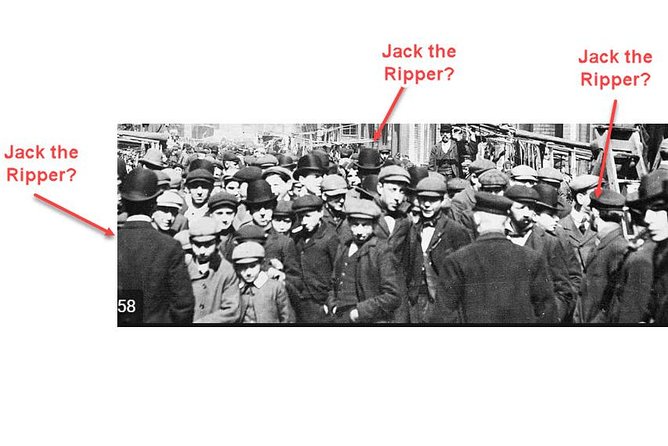
One of the most talked-about segments is the Jack the Ripper section at Hare Place, just off Fleet Street. This is where Declan moves from recounting to profiling.
He visits the place connected to his Jack the Ripper suspect and then lays out why he thinks this person fits. The tour doesn’t claim you’ll agree with him—what it does is model the type of reasoning he uses, tied to a chapter in his book Bloody London.
Then comes the toughest question on the walk. The tour says only about one out of every 500 attendees gets it right, and that correct answer earns you a spot on a Roll of Honour connected to Declan’s tour.
That’s a lot of pressure for one question, but in a way it makes sense: this isn’t a trivia night. It’s a profiling challenge that forces you to pay attention to the story logic, not just the scary name on the poster.
St. Dunstan in the West and Royal Courts of Justice: atmosphere meets authority
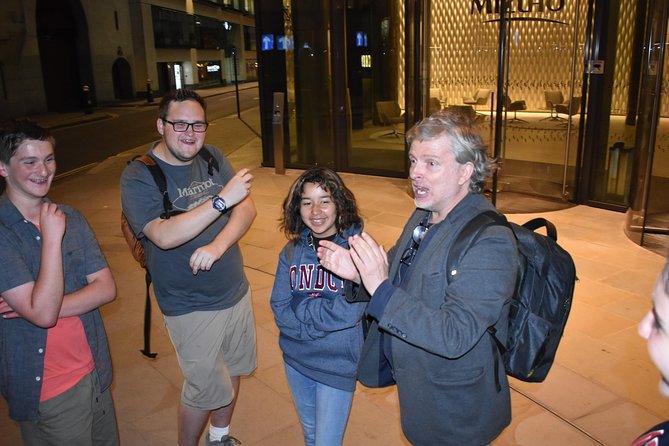
After court and profiling, the tour changes gear again—into a mood. The guide takes you to St. Dunstan in the West, described as a narrow, isolated alley that many people find unsettling in a way that feels more physical than intellectual.
Stop 7: St. Dunstan in the West and the psychic experiment
Here, Declan runs what he calls a psychic experiment: you’re asked to treat the spot like a murder scene and listen as he describes two serial killers who operated around the area.
The warnings are part of the experience. Declan suggests that if you’re sensitive to atmosphere, you might not like how the place feels, and that even tough-minded people have been shaken by it, especially in darker months.
It’s worth saying plainly: you’re not doing an official supernatural séance. You’re standing in a tight alley and letting the guide’s framing do what it does best—turn space into story.
Stop 8: Royal Courts of Justice
Then you’re at the Royal Courts of Justice. Declan keeps this section less spoilery and promises it’s unfailingly interesting, sometimes even jaw-dropping.
Even without the exact details spelled out here, the setting does half the work. These are the kinds of London buildings that feel built for drama—stone, formality, and the sense that decisions were made there that shaped lives.
If you’re the kind of person who enjoys seeing how place affects narrative, this stop will click.
Portugal Street to The Princess Louise: the final shock and the book signing

The last stretch ties everything together with more trial references and then a finale that’s designed to linger.
Stop 9: Portugal Street and the trial stories that keep stacking
Portugal Street is another location connected to serial killer trials at the Central Criminal Court. Declan covers one killer associated with 15 boys and men and another described as a potential standout in danger.
This is where the tour’s structure becomes clear. The guide isn’t just moving geographically; he’s layering the city’s legal geography. Courts, streets, and memory connect like threads.
Stop 10: Princess Louise pub and a forensics-linked final story
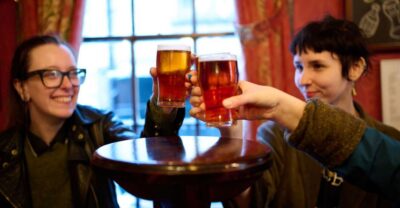
The tour ends at the Princess Louise, known for Victorian decor and the kind of pub interior that looks like it’s been waiting for a story like this.
Declan delivers the final serial killer account with a strong claim: a piece of behavior tied to a well-known British serial killer that he says you likely won’t know, despite all the books and documentaries. He says he was told the information by the Head of Forensics who worked the case and that the detail is not included in common sources.
After the story, Declan sells copies of Bloody London for £10, available for cash or PayPal, and he signs each book with a personal message.
If you’re on the fence about buying, the signing is worth considering because you’ll already have heard the reasoning style behind the book. Even if you don’t agree with every profile, you’ll understand how he builds his case.
Price and logistics: value is real, but plan your night
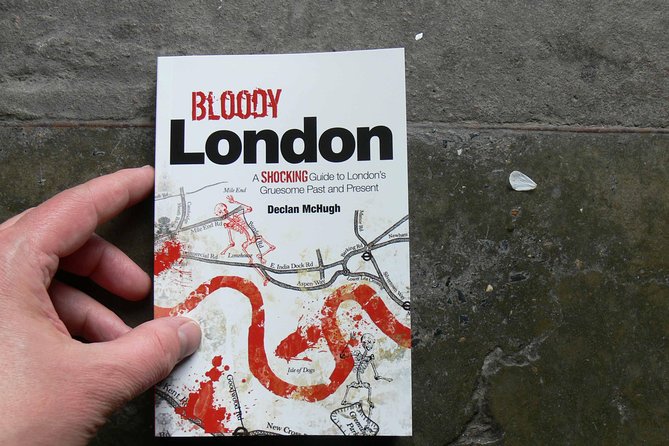
Let’s talk about the practical stuff, because the experience is intense enough that logistics shouldn’t trip you up.
- Cost: $27.74 for about two hours is strong value for a live, story-heavy night walk with lots of stops. The free-to-you outdoor settings mean you’re not paying museum admission on top of the tour.
- Timing: start time is 7:00 pm, and you should plan extra buffer because the tour notes you may need about 20 extra minutes due to Underground delays.
- Walking distance: roughly 2 miles (3.2 km) on a route paced to cover ten serial killer segments.
- Weather: it runs in all weather, so dress for real London rain, wind, and damp.
One more thing: the end point is near Holborn Underground (Central and Piccadilly lines). That’s a good way to avoid the stress of figuring out your ride right after the final story.
Who should book this tour, and who should skip it
This is best for:
- True crime fans who like more than the famous name and want multiple cases in one compact route
- People who enjoy interactive elements, especially profiling questions and audience voting
- Travelers who like mixing dark history with humor, rather than suffering through an all-grim lecture
You might want to skip it if:
- You struggle with brisk walking or fatigue. The tour is paced and covers about 2 miles in two hours.
- You dislike being asked to participate at all, even in quick games and profiling prompts.
- You get overwhelmed by intense atmosphere and grim content. The St. Dunstan in the West segment is specifically described as not a nice place.
If you’re traveling with teens, the tour sets a minimum age of 12, and it notes that 12–14-year-olds must be accompanied by an adult while adults are 15+. The content is adult in tone, so bring common sense and prep the kids ahead of time.
Should you book London Serial Killers: The Blood and Tears Walk?
If you’re choosing between “another London history walk” and something sharper, this one is a good bet. For $27.74, you get a small-group night tour led by Declan McHugh, built around real London sites, and powered by interactive profiling and story logic. The ending at the Princess Louise with a forensics-linked finale also gives the night a strong finish.
Book it if you want a different side of London and you’re okay with a brisk pace and a steady stream of heavy subject matter. Consider skipping if you need a slow, gentle sightseeing experience or if mobility is limited.
FAQ
FAQ
How long is the London Serial Killers – The Blood and Tears Walk?
It lasts about 2 hours.
Where does the tour start and end?
It starts at Underground Ltd, Aldersgate St, Barbican (EC1A 4JA) and ends at The Princess Louise pub, 208 High Holborn (WC1V 7EP).
What time does it start?
It starts at 7:00 pm.
What is the price per person?
The price is $27.74 per person.
Is it offered in English?
Yes, the tour is offered in English.
How far do you walk, and is it fast-paced?
The tour covers about 2 miles (3.2 km) and is described as fairly brisk to fit ten killer stories into two hours.
What is the minimum age?
The minimum age is 12, and it is strictly enforced. Children 12–14 must be accompanied by an adult (adults are 15+).
Can I get a refund if my plans change?
Yes. You can cancel up to 24 hours in advance for a full refund.
Do I need to buy tickets for the stops?
The stop notes indicate free admission tickets for the locations mentioned during the walk, so you’re not buying paid museum entries as part of the tour.