REVIEW · LONDON
Notting Hill Experience
Book on GetYourGuide →Operated by The Great Weekender · Bookable on GetYourGuide
Notting Hill looks like a movie, because it is. This 2-hour walk connects film locations and real landmarks, so you’re not just staring at pretty houses—you’re hearing how the neighborhood got that way. In French bookings, guide Adrian has a knack for keeping things flowing even when language mix gets messy.
I love the focus on Portobello Road markets and independent street life, not just famous facades. You’ll also hit music history with the house where Jimi Hendrix lived and died, plus the area’s street-art energy that includes Banksy-style visuals.
The main drawback is crowding, especially on Saturdays when Portobello Road can feel packed. Wear comfortable shoes and bring an umbrella if rain’s likely.
In This Review
- Key things to know before you go
- Starting at Notting Hill Gate: the smartest way to begin
- 80 minutes in Notting Hill: film sights meet real street culture
- Seeing the neighborhood through Notting Hill film landmarks
- The “celebrity spotting” angle—light and realistic
- Colorful houses, private gardens, and what you’re really looking at
- Art, street visuals, and Banksy-style street art
- Windrush history and carnival culture: the color has a reason
- Jimi Hendrix’s house: music history with a sense of place
- Portobello Road in 30 minutes: browse smart, don’t rush
- How to get value in a short time window
- Saturday note: crowds can change the whole mood
- Price and value: is $66 fair for 2 hours?
- What the tour feels like with real guides behind the wheel
- Timing, walking style, and how to dress for the streets
- Who should book this Notting Hill experience?
- Should you book it?
- FAQ
- Where does the tour start?
- How long is the tour?
- Is it a walking tour?
- What will we see besides Notting Hill film locations?
- Are celebrity sightings part of the experience?
- Where do we end the tour?
- What language is the live guide available in?
- How much does it cost?
- What’s the cancellation policy?
- Can I reserve without paying right away?
Key things to know before you go
- Notting Hill film scenes on real streets: you’ll recognize locations as you walk.
- Jimi Hendrix stop: the tour calls out the house where he lived and died.
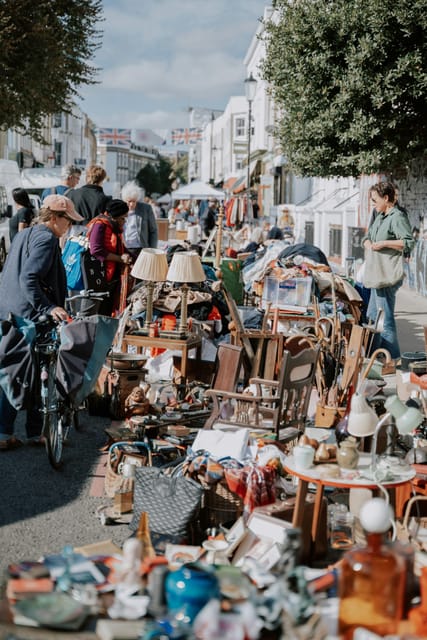
- Portobello Road markets in a short window: you’ll get time to browse without it turning into a full-day slog.
- Street art and galleries: you’ll see visuals tied to the neighborhood’s creative identity.
- Carnival and Windrush context: the color has a story behind it, not just aesthetics.
- Small-group potential: one booking was described as VIP with only a couple people, so the experience can feel personal.
Starting at Notting Hill Gate: the smartest way to begin
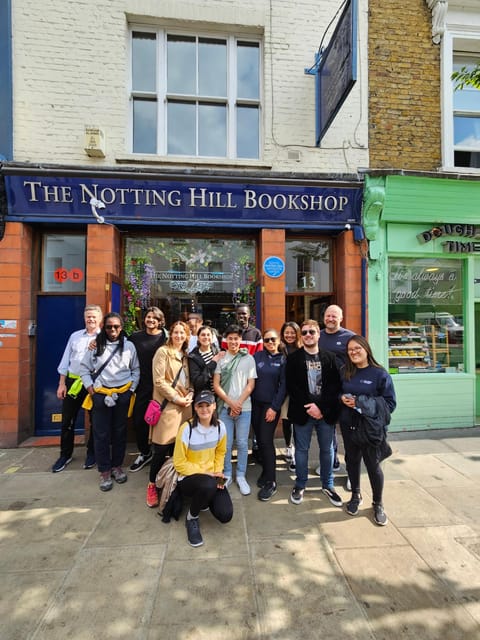
The meeting point is right by McDonald’s at Notting Hill Gate. It’s a very practical choice: easy to find, easy to regroup, and you’re set up right where the neighborhood begins to show its layers.
From the first steps, the tour has a clear game plan. It’s a walking experience, but not a long-distance one, so you can focus on noticing details instead of burning energy. I’d still wear comfortable shoes because you’ll be on sidewalks and stopping often for stories and photo moments.
What makes this start work is that you’re placed at the edge of the Notting Hill vibe, not somewhere “nearby” where you have to guess your way in. You quickly get bearings—real ones, not just “it’s on this street somewhere” directions.
You can also read our reviews of more tours and experiences in London.



80 minutes in Notting Hill: film sights meet real street culture
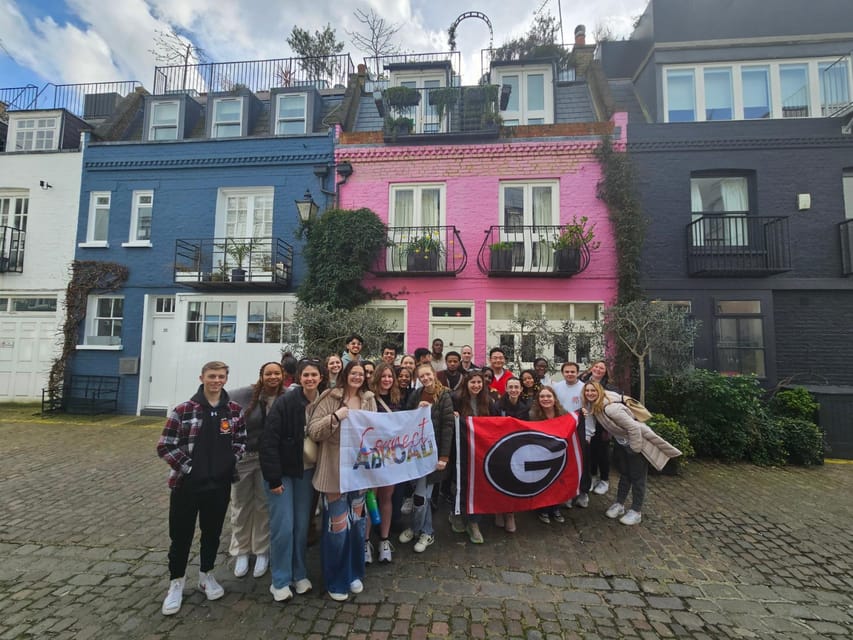
This is the heart of the tour, and it’s where the experience earns its $66 price tag. Notting Hill is famous for celebrity glam, sure—but the tour keeps pulling the lens back to the real neighborhood. That’s the trick: you get the movie factor, then you learn what’s underneath it.
Seeing the neighborhood through Notting Hill film landmarks
You’ll pass sights tied to scenes from the film Notting Hill. The goal isn’t to do a scavenger hunt for set locations. It’s to help you read the street as a storybook, where scenes make more sense once you understand the area around them.
If you’re a movie fan, you’ll likely get that fun “wait, I’ve seen this” moment. If you’re not, you’ll still benefit because the film references act like signposts—your guide uses them to point out what to look at next: architecture, street character, and how the place has changed over time.
The “celebrity spotting” angle—light and realistic
The tour includes celebrity spotting as a maybe. That’s smart framing. Notting Hill has a long association with fame, so you might spot someone, but the tour doesn’t bet the whole experience on it. Instead, it uses the celebrity layer to talk about why the neighborhood became a magnet in the first place.
This makes the walk feel more relaxed. You’re not spending your time craning your neck like you’re on a paparazzi schedule. You’re still free to enjoy the real atmosphere and the visual rhythm of the streets.
Colorful houses, private gardens, and what you’re really looking at
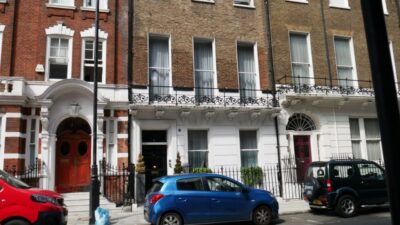
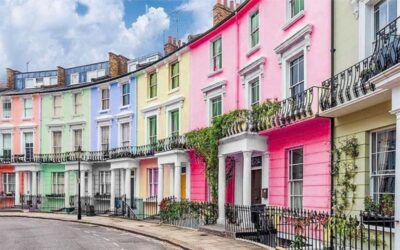
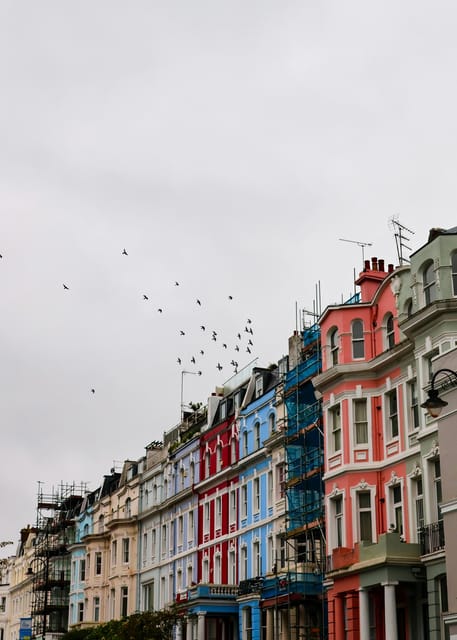
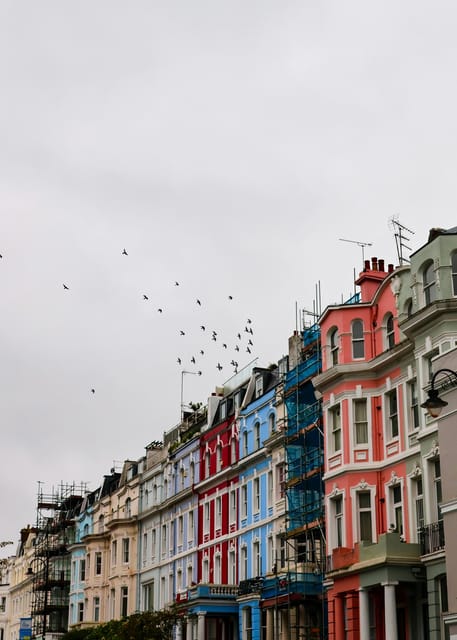
Notting Hill is known for multicolored homes, but the guide’s angle is what I like: you learn how those visual cues tie into a bigger evolution. As you walk, you’ll see lush private gardens from the street. Even though you can’t go inside, those glimpses matter. They tell you this is a neighborhood with character and long-term residents—not just temporary film-drawing power.





Art, street visuals, and Banksy-style street art
You’ll also get time devoted to art and street visuals, including Banksy-style street art. The way to get value here is to slow down for the small stuff. Look at how the street art sits in its setting. It’s not only about the image—it’s about how creativity thrives in public spaces.
Even if Banksy isn’t your obsession, this stop changes how you see the area. It turns Notting Hill from “pretty streets” into “a place where expression lives.”
Windrush history and carnival culture: the color has a reason
One of the most meaningful parts of the walk connects the neighborhood’s cultural life to carnival traditions. The guide talks about freedom and expression connected to the biggest carnival in Europe, plus Windrush history—two threads that explain why Notting Hill’s identity is so tightly linked to community energy.
The value here is context. Without it, you might see carnival as a yearly spectacle and call it a day. With it, you understand that the neighborhood’s artistic look and social spirit didn’t appear by accident—it grew out of people, politics, and persistence.
It also adds balance to the celebrity story. Fame may draw attention, but it’s the lived culture that keeps the place interesting when the cameras leave.
Jimi Hendrix’s house: music history with a sense of place
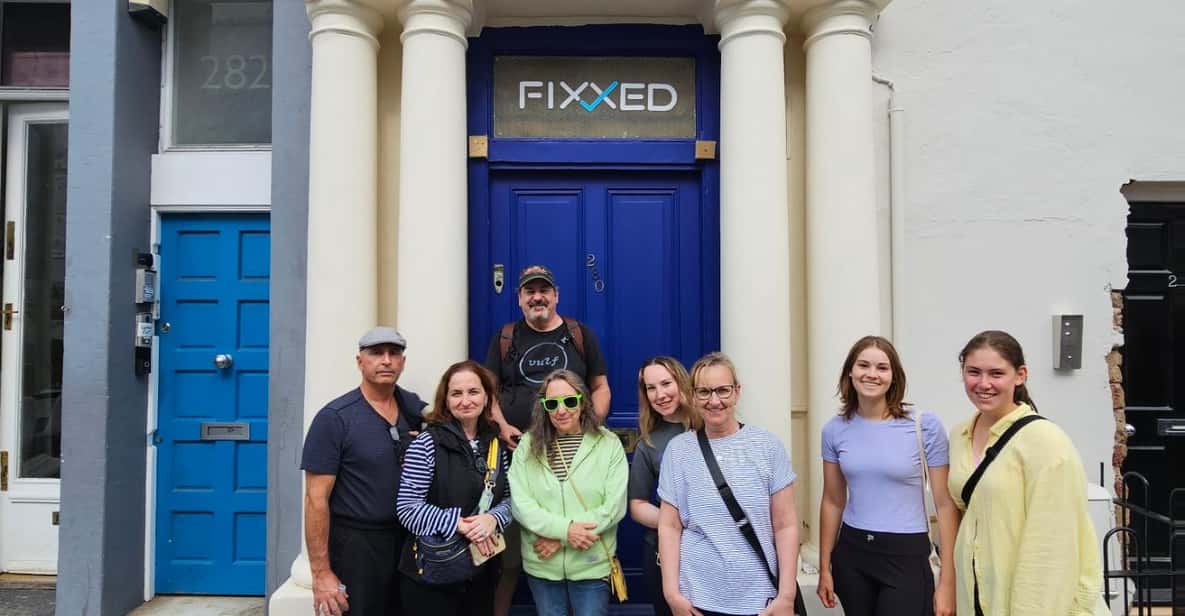
The tour specifically calls out the house where Jimi Hendrix lived and died. That’s a powerful stop because it’s not museum-history. It’s anchored to a real address, inside a neighborhood you’re already walking through.
I like how this works on a mental level: you connect music history to the street texture around it. You’re not just learning a fact—you’re getting a sense of how creative life overlaps with the city’s day-to-day geography.
If music is your thing, you’ll probably linger here. If music isn’t your thing, it still hits, because it’s one of those rare “famous story, real location” moments that makes London feel oddly personal.
Portobello Road in 30 minutes: browse smart, don’t rush
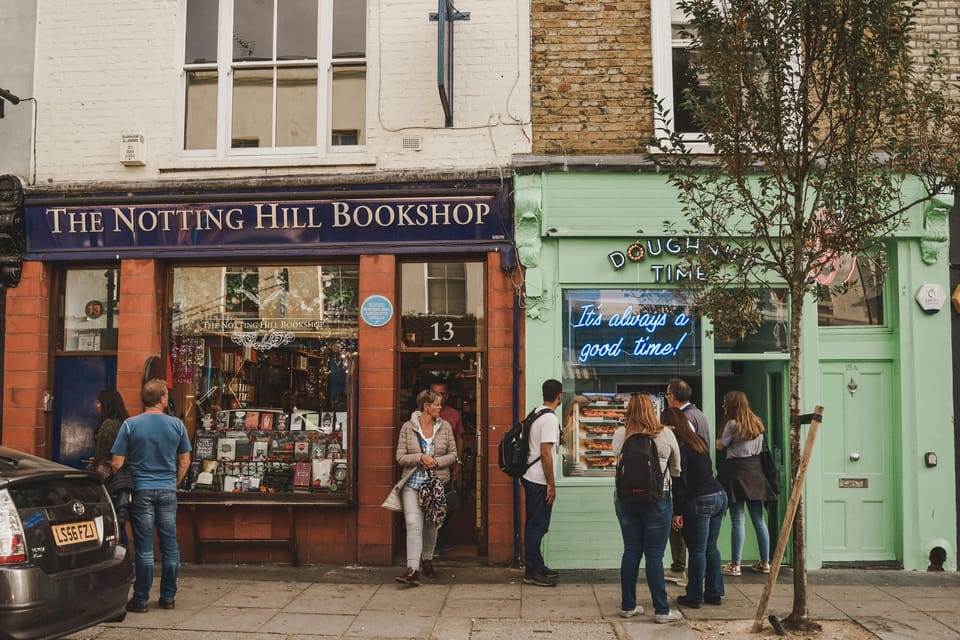
After the Notting Hill walk, you shift to Portobello Road for a shorter guided segment. Thirty minutes is brief by market standards, so you need to approach it like a quick tasting menu, not a full grocery run.
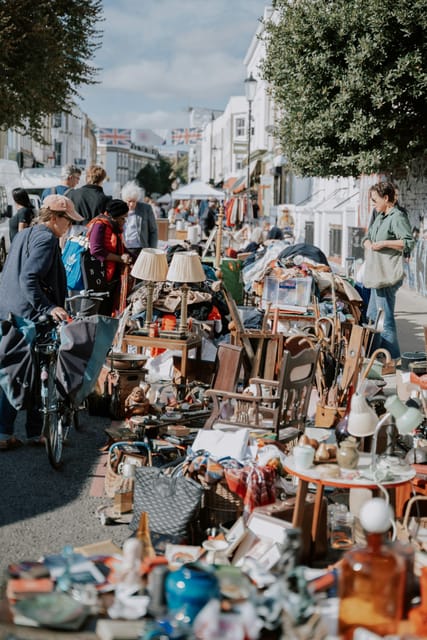
You’ll see the infamous and eclectic markets of Portobello Road. This is where the tour leans into neighborhood life: quirky market stalls and creative commerce that feels more local than flashy.
How to get value in a short time window
Here’s my practical advice for this part. Pick one or two “lanes” and focus your attention. For example:
- If you’re into artwork, look for art galleries and street-linked displays.
- If you want souvenirs, aim for small items you can actually carry.
- If you’re just curious, do a slow walk through the most visually interesting section first, then come back to the stalls that caught your eye.
Because you only have a short guided stretch, you’ll likely get more from repeating the same rule: slow down for photos, then speed up when you’re ready to buy or move on.
Saturday note: crowds can change the whole mood
One booking note is hard to ignore: if you dislike crowds, consider skipping Saturdays. Portobello Road can get packed, and market pressure changes the experience from leisurely browsing to “hurry, squeeze, repeat.”
If you’re going on a busier day anyway, plan to bring patience. The tour will still give you context, but you’ll have less breathing space to enjoy it.
Price and value: is $66 fair for 2 hours?
At $66 per person for about two hours, this isn’t a budget-only stroll. But it also isn’t trying to be a full-day London production.
You’re paying for three things:
- A live guide who ties together film sights, street art, and cultural history into a coherent walk.
- A structured route that hits big signals fast: Notting Hill film scenes, the Hendrix house, and Portobello Road markets.
- Meaning, not just scenery—especially for Windrush history and carnival culture.
If you tried to do this on your own, you could certainly recreate portions. But you’d be guessing which street details matter and why. This tour saves you that time and guesswork with a guided narrative that connects the dots as you walk.
I’d call it a strong value for first-timers who want a story-driven experience, and also for people who love London’s pop culture without losing the real human side of the neighborhood.
What the tour feels like with real guides behind the wheel
The experience is led by an experienced local guide, and language options include English and French. That matters because you want the cultural and historical points to land clearly.
In one French-language booking, Adrian kept the visit interesting and enjoyable while adjusting to the group’s English level. That’s the kind of flexibility that turns a potential language barrier into a smoother experience.
In another case, Matt was described as amazing, with lots of explanations and care with the group. That’s a helpful reminder: this isn’t just a “stand and point” walking tour. You’re meant to understand what you’re seeing, and you’re meant to feel looked after along the way.
Timing, walking style, and how to dress for the streets
This is a walking tour, but the distance isn’t the point. The stopping, looking, and listening are. So treat it like an active sightseeing session rather than a long hike.
Plan for:
- Comfortable shoes (you’ll be on your feet)
- An umbrella if rain is likely
- A willingness to pause for stories even if you’re tempted to power through for photos
If you like your sightseeing with breaks and context, you’ll do well here. If you prefer to cover ground fast with minimal talking, this may feel a bit slower than you want.
Who should book this Notting Hill experience?
This tour fits best if you:
- Want Notting Hill film sights paired with real neighborhood context
- Care about street art, music history, and cultural stories, not only celebrity culture
- Enjoy walking tours that are structured but not physically demanding
- Want a quick taste of Portobello Road markets without turning it into a half-day mission
It may be less ideal if:
- You hate crowds and you’re set on going on Saturdays
- You want a purely self-guided experience with zero explanations
- You’re looking for a long museum-style deep dive that takes hours and hours (this is short and focused)
Should you book it?
Yes, I think you should—if you want a tight, story-focused introduction to Notting Hill and Portobello Road.
Book it when:
- You love film locations and want them explained in context
- You’d rather pay for a guide than spend your time sorting facts yourself
- You want cultural meaning attached to the neighborhood’s famous look
Skip it or rethink if:
- Saturdays are non-negotiable for you and crowd pressure ruins your day
- You’re after lots of time inside shops or a long market roam
If you’re flexible on timing and you come ready to walk and listen, this is a solid, good-value way to experience Notting Hill like more than a postcard.
FAQ
Where does the tour start?
Meet outside McDonald’s at Notting Hill Gate.
How long is the tour?
The total duration is 2 hours.
Is it a walking tour?
Yes. It’s a walking tour, and there isn’t a lot of distance involved, but you should still wear comfortable shoes.
What will we see besides Notting Hill film locations?
You’ll also see Portobello Road markets and features like street art, Banksy-related visuals, music history connected to Jimi Hendrix, plus carnival and Windrush history.
Are celebrity sightings part of the experience?
Celebrity spotting is included as a maybe. The tour keeps the focus on the neighborhood and its culture rather than guaranteeing famous faces.
Where do we end the tour?
You’ll have drop-off locations at Portobello Road Market and McDonald’s.
What language is the live guide available in?
The live tour guide is available in English and French.
How much does it cost?
It costs $66 per person.
What’s the cancellation policy?
You can cancel up to 24 hours in advance for a full refund.
Can I reserve without paying right away?
Yes. You can reserve now and pay later.