REVIEW · LONDON
Booze, Brothels & The Bard: A Walking Tour of London’s Bawdy Borough
Book on Viator →Operated by Historic London Tours · Bookable on Viator
London’s not-so-polite past starts here. This 2-hour walking tour threads through Southwark’s darker corners while keeping one foot in literature, from Shakespeare to Dickens-era London. I love the way the route ties together history with human stories and I also like how you finish at Shakespeare’s Globe without needing extra planning.
You’ll cover major landmarks fast, but that speed is part of the point: you get the spark notes in real places, then you can wander back on your own. One thing to consider is that the stops are short, so if you want long museum time, you’ll likely want to follow up after the tour.
In This Review
- Key things you’ll like about this walking tour
- Why Southwark feels different on foot
- Route overview: what a 2-hour pace really means
- Marshalsea’s last piece at St George the Martyr
- Crossbones Graveyard: outcasts, remembrance, and place
- The Hop Exchange: beer trade built into brick
- George: a surviving galleried coaching inn
- Old Operating Theatre and Herb Garret: surgery before science
- London Bridge: the landmark that anchors the walk
- Southwark Cathedral: London’s oldest surviving gothic church
- Borough Market: a thousand years of food life
- Winchester Palace: medieval prestige in the remains
- The Clink Prison Museum: the notorious side made physical
- Shakespeare’s Globe finish: ending on performance history
- Price and value: why about $27.78 can be a good deal
- Who should book this tour
- Should you book it?
- FAQ
- How long is the walking tour?
- What is the price per person?
- Where does the tour start and end?
- Is the tour offered in English?
- Do I need separate tickets to enter the stops?
- What is the cancellation policy?
Key things you’ll like about this walking tour
- Small group size (max 15): you’re not just another face in a crowd.
- Literature meets real sites: Shakespeare and the broader London writing world shows up through place-based storytelling.
- A focused Southwark route: prisons, beer trade reminders, a cathedral, and market history on one walk.
- Free entry for the listed stops: each location in the route is marked as admission ticket free.
- Guide energy matters: guides like Tom (seen in past experiences) bring the area’s stories to life.
Why Southwark feels different on foot
Southwark is the kind of London neighborhood that still holds onto its layers. You’re not bouncing between far-flung sights; you’re staying in one slice of the city and watching it change across centuries. This tour leans into that. It links places that were tied to punishment and survival, work and commerce, and culture and performance.
The big win for me is the blend of topics. You’re not only seeing famous names; you’re seeing the settings that made those names feel believable. You’ll also get a clear sense of how Southwark worked as a “real-life” part of London, where the town’s systems brought ordinary people into contact with some very extreme outcomes.
And because you’re walking, you’ll get your bearings fast. You move from historic churchyard space to the food life of Borough Market to the performance stage at Shakespeare’s Globe. It’s one continuous story.
You can also read our reviews of more walking tours in London

Route overview: what a 2-hour pace really means
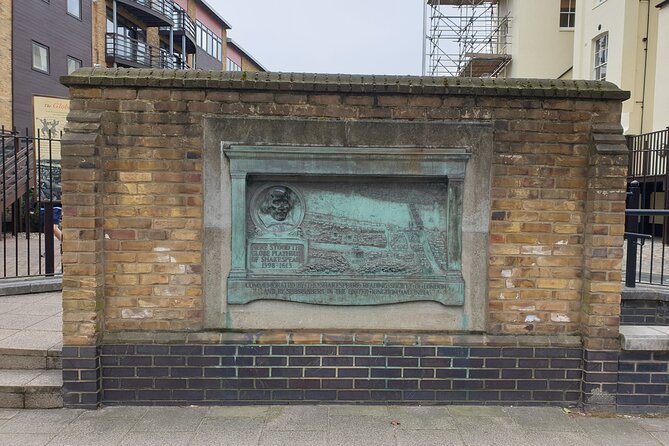
The tour is about two hours and runs with a maximum group size of 15. That matters because it keeps the vibe personal. In a small group, you can actually hear the guide and ask follow-ups if you want.
You’ll also notice the tempo: each stop is brief. Think short pauses with explanation, not long ticketed museum time. That’s why this works best as a first or second pass through the area—so you understand what you’re looking at before you decide what deserves extra hours.
The walk starts at Borough High St, London SE1 1JX and ends near Shakespeare’s Globe, 21 New Globe Walk, London SE1 9DT. Ending at the Globe is a smart move. If you want to keep exploring, you’re positioned right where the action is.
Marshalsea’s last piece at St George the Martyr
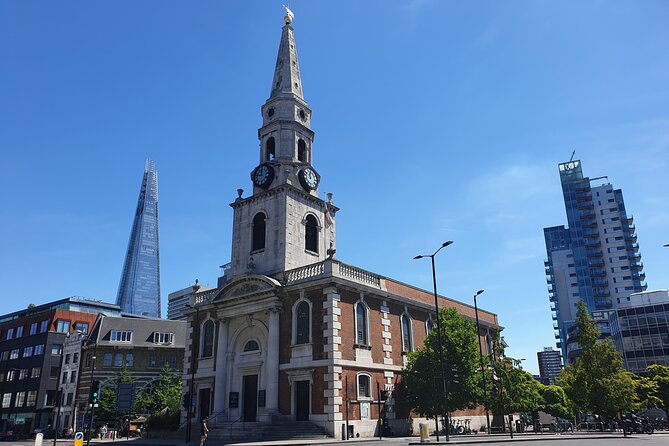
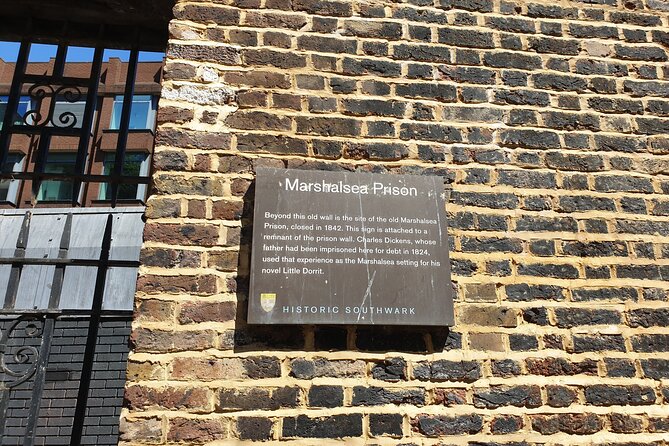
Your first stop is St George the Martyr, where you can see the only remaining part of the Marshalsea Prison. Prison history can feel abstract in photos. Here, it lands differently because you’re standing near what’s left behind.
This is a good opening because it sets the theme immediately: Southwark wasn’t only about theaters and markets. It also held punishment, confinement, and the consequences of London life. The tour keeps the focus on what made the prison important and how that kind of place functioned in the city’s social system.
One practical note: since this is a short stop, you’ll want your questions ready. If you’re the type who loves details, this is a place where a quick follow-up can help you connect the dots for the rest of the route.
Crossbones Graveyard: outcasts, remembrance, and place
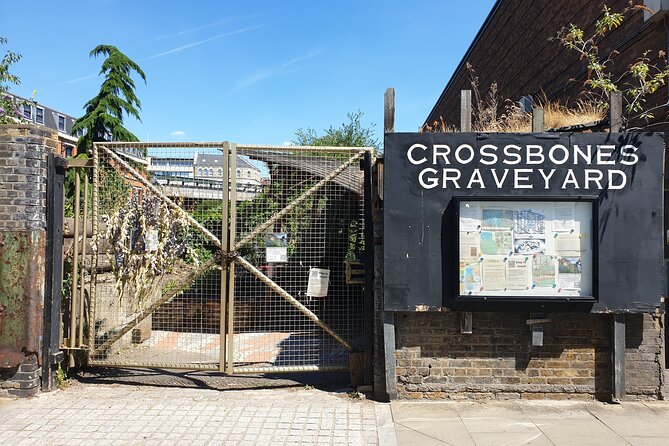
Next comes Crossbones Graveyard and the Garden of Remembrance. This is tied to the final resting place of thousands of Southwark’s outcast dead. That phrase outcast dead matters because it hints at how society sorted people—who got recognized, who got buried, and who got forgotten.
You’re walking into an area that feels like it’s meant for reflection, not just sightseeing. The guide’s job here is to connect the physical space to the idea of community and exclusion. Even in a short visit, you can get a sense of why the site has stayed in public memory.
This stop is also useful if you care about how cities remember their darker pasts. Southwark’s identity isn’t only built from grand architecture. It’s built from the places that mark what people tried to hide—or couldn’t.
The Hop Exchange: beer trade built into brick
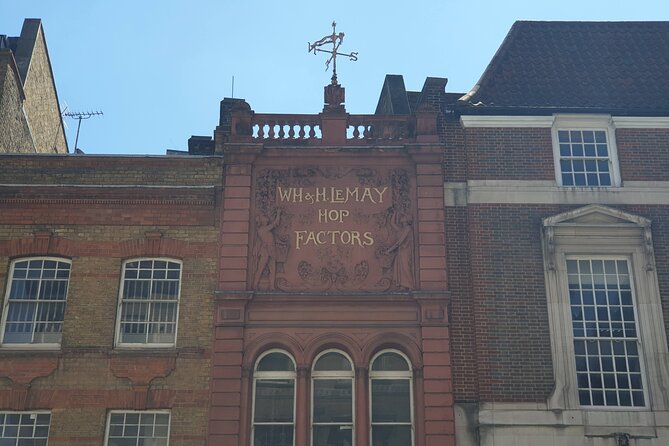
Then you hit The Hop Exchange, described as the largest extant reminder of Southwark’s beer trade. This is where the tour shifts gears from punishment and burial to trade and everyday work.
It’s easy to think about beer as a modern convenience. On this walk, beer becomes part of a historical engine: farming, transport, distribution, and the money loop that kept neighborhoods functioning. Seeing a building tied to that industry helps the story feel grounded.
If you like London’s industrial side—things that aren’t always front-page “attractions”—this stop is a satisfying pivot.

George: a surviving galleried coaching inn
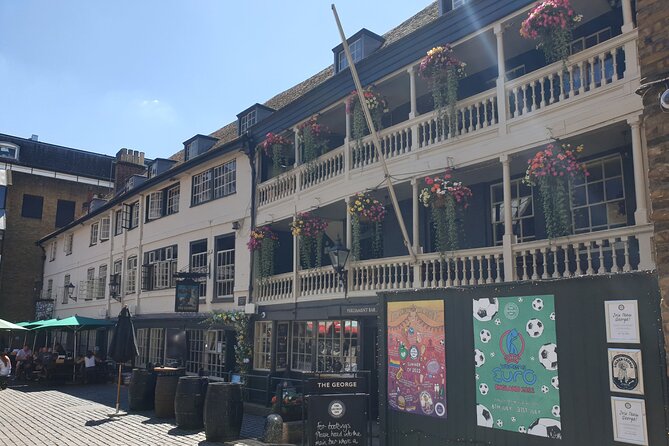
At George, you’ll find London’s last surviving galleried coaching inn. Coaching inns are a window into travel before modern transport. They were meeting points, rest points, and money points. They helped move people and goods across the country.
The galleried design is the key idea here. It signals how space was organized for people coming and going. You’re not just learning that inns existed; you’re learning what their architecture says about their purpose.
This is one of those stops where a minute of paying attention to structure makes the guide’s story click. Look for details tied to the layout and imagine the flow of guests.
Old Operating Theatre and Herb Garret: surgery before science
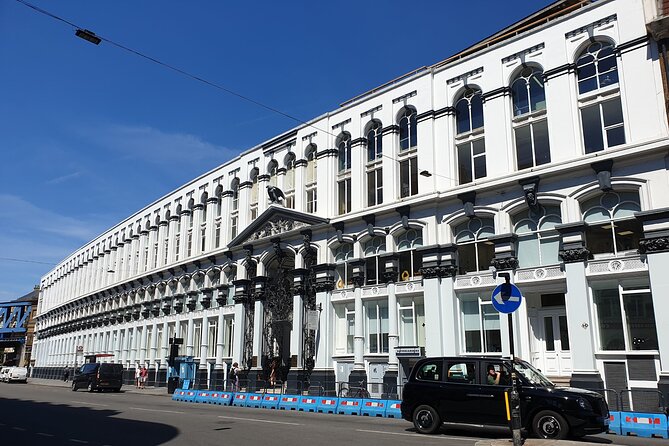
Next is the Old Operating Theatre Museum and Herb Garret, noted as Europe’s oldest surviving operating theatre. This stop turns the dial toward medicine—and it’s not the sanitized version of medicine most people expect.
Even without a long museum session, the idea lands: surgery in earlier times wasn’t the controlled, sterile process we associate with modern hospitals. The “herb garret” piece also adds a practical angle—plants and remedies were part of how people tried to treat illness.
If you prefer history that explains how systems worked, not just who famous figures were, you’ll likely enjoy this. It gives you a real sense of how London’s institutions handled pain, illness, and survival.
London Bridge: the landmark that anchors the walk
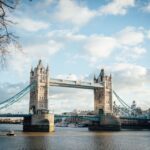
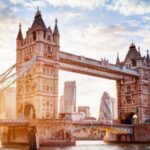
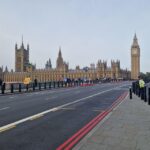
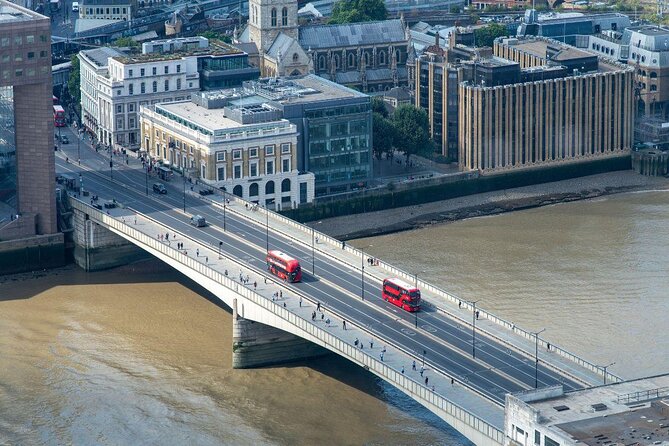
Then you’re at London Bridge, one of the world’s most iconic bridges. This is brief, but it serves a purpose. It’s an anchor point in the middle of the route—your brain gets to reset with a famous view while the guide keeps stitching the timeline back together.
Bridges also work as historical junctions. They’re about movement—people, commerce, and connections between neighborhoods. So even if you spend only a short time here, you can use it as a mental marker for what changed as you walked through Southwark’s story.
Southwark Cathedral: London’s oldest surviving gothic church
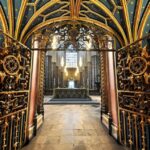
After the bridge, you’ll stop at Southwark Cathedral, described as London’s oldest surviving gothic church. Cathedrals can feel like they belong to a postcard. Here, the cathedral helps balance the route.
This is where the theme grows beyond “dark and gritty.” You get a reminder that long-term power in London wasn’t only political or commercial. It was religious, too, and it helped define community spaces that lasted.
In a short stop, you won’t get a full cathedral visit. But you will leave with a better sense of why this particular church mattered and how it shaped the neighborhood’s identity over time.
Borough Market: a thousand years of food life
Then comes Borough Market, described as a food market with a history stretching one thousand years. This is a different kind of history—daily life history. Instead of asking what happened in prisons or operating theatres, you’re looking at what sustained people.
Markets are where culture shows up fast. Food brings travelers, workers, families, and vendors into the same orbit. Even if you don’t snack during the tour, you can still see the market as a living engine that kept Southwark relevant across centuries.
If you like to travel with your stomach as well as your mind, this stop is a great moment to decide what you want to try after the tour ends.
Winchester Palace: medieval prestige in the remains
Next you’ll visit the remains of Winchester Palace, a prestigious medieval home site. This is the part of the route that shifts from institutions like churches and markets into elite domestic power.
Palace remains can be tricky because you expect grand walls and get fragments instead. The guide’s job here is to translate what you’re seeing into what you can’t see—who lived there, how prestige worked, and how medieval London organized influence.
This stop is good if you’re curious about how power looked on the ground, not just how it looks in textbooks.
The Clink Prison Museum: the notorious side made physical
Then you’ll head to The Clink Prison Museum, tied to the notorious Clink Prison. The prison theme returns, but now with a different flavor than the Marshalsea story at the start.
Clink prisons are often associated with the sort of grim details people remember. The value of the stop on this tour is that it’s not just about the notoriety. It’s about connecting why certain places became known and what that means for how cities managed control and disorder.
Because this is a short stop, you won’t get an all-day museum experience. But you’ll come away understanding the role it played in the neighborhood’s past.
Shakespeare’s Globe finish: ending on performance history
The final stop is Shakespeare’s Globe Theatre, described as a reconstruction of Shakespeare’s Globe Theatre. Ending here is smart because it ties the tour’s literature thread into a real stage setting.
This is where the “Bard” part becomes tangible. You can think about why plays mattered to London life and how theatre fit into a neighborhood that also contained prisons, markets, and everyday commerce. In other words, the guide isn’t just dropping Shakespeare’s name; you’re linking him to the physical space where performance culture took shape.
If you want to continue, you’ll already be in position to do it. Finishing at the Globe means you can stay for photos, area exploring, or any further theatre-related time you want.
Price and value: why about $27.78 can be a good deal
At about $27.78 per person for roughly 2 hours, this tour sits in the “serious value” range for London. You’re not paying mainly for entry tickets. You’re paying for guided interpretation—someone to make the route cohere.
The stops are marked as admission ticket free for the route locations, which helps your sense of value. You’re also getting a guide, a clear route from Borough High St to the Globe, and a small group size that supports actual conversation.
Is it cheap? Not always by US standards. But for London, where guided experiences can spike quickly, this price feels reasonable—especially because you cover a lot of recognizable Southwark highlights without the hassle of planning each stop separately.
Who should book this tour
This walk is a strong fit if you want London that feels more like a neighborhood than a museum circuit. I think it works well for:
- First-timers who want context for Southwark before going deeper
- People who like literature history connected to real sites
- Travelers who enjoy darker, human-scale stories as much as famous buildings
It may be less ideal if you want long time inside museums or slow, deep reading of one attraction. The route is designed for momentum. You get informed stops, not extended stays.
Should you book it?
Yes, if you want a smart way to understand Southwark in a short window. The route connects beer trade, prisons, medicine, church power, food markets, and Shakespeare in one continuous walk, and the small group size helps the guide’s storytelling land. For me, the best part is the way the tour helps you see London as a system of places where real life happened—not just a list of sights.
Book it if you’re the type who likes to get your bearings, learn the background, and then choose what to revisit later. Pass or plan extra time if you know you want to spend a lot of minutes inside any one site.
FAQ
How long is the walking tour?
It lasts about 2 hours.
What is the price per person?
The price is listed as $27.78 per person.
Where does the tour start and end?
The tour starts at Borough High St, London SE1 1JX and ends near Shakespeare’s Globe at 21 New Globe Walk, London SE1 9DT.
Is the tour offered in English?
Yes, it’s offered in English.
Do I need separate tickets to enter the stops?
For the listed stops, admission tickets are marked as free.
What is the cancellation policy?
You can cancel for a full refund if you cancel at least 24 hours in advance of the experience start time.