REVIEW · LONDON
German Language : Original Jack the Ripper Tour
Book on GetYourGuide →Operated by See Your City · Bookable on GetYourGuide
Whitechapel has a way of getting under your skin. This German language Jack the Ripper tour walks you through 1888 London as you try to connect clues, suspects, and real street locations around Whitechapel. You’ll hear the famous questions the case raises and watch the story unfold on foot.
I love two things most: first, the guide’s use of then-and-now photo evidence to help you picture what the streets looked like in the 19th century. Second, I like that the walk isn’t only about crimes—it also zooms in on everyday life in an impoverished East End neighborhood and shows you places like Spitalfields Market.
One consideration: the tour includes graphic details and visual content, and it’s entirely outdoors, so two hours in the weather is part of the deal.
In This Review
- Key things I’d mark on your map
- Whitechapel on foot: why this tour feels different
- Finding the tour: Altab Ali Park and the blue-flag meet
- St Marys Whitechapel Church Memorial: setting context before the clues
- Whitechapel streets: why the guide keeps returning to daily life
- Ten Bells Spitalfields: a famous landmark and a strong wrap-up point
- Christ Church Chelsea and Mitre Square: how streets become evidence
- Brick Lane, Petticoat Lane, and Spitalfields Market: beyond the crimes
- How the Ripperologist guide handles evidence and theories
- Sherlock Holmes and Victorian culture: why this tour ends wider than murder
- Price and time: why $24 feels fair for what you get
- Who should book this tour
- Should you book this German Jack the Ripper Tour?
- FAQ
- How long is the Jack the Ripper tour?
- How much does the tour cost?
- Where do I meet the guide?
- What should I look for at the meeting point?
- What is the nearest Underground station?
- Which languages are offered?
- Is the tour wheelchair accessible?
- Is food or drink included?
- Does the tour include graphic content?
- What places does the tour visit, and where does it end?
- Can I get a full refund if I cancel?
Key things I’d mark on your map

- German live guiding, plus other languages available on request
- Start and finish around Whitechapel landmarks, with a clear meeting point by Altab Ali Park
- Period clues on foot: you’ll hear stories, examine photographic evidence, and weigh theories
- Real East End stops including Brick Lane, Spitalfields Market, Mitre Square, Petticoat Lane, and Ten Bells
- A short, focused time window that’s long enough to build the full case timeline
- Ripperologists with a teaching style that makes suspects and evidence easier to follow
Whitechapel on foot: why this tour feels different
A Jack the Ripper tour can turn into either a spooky story sprint or a history lecture that never quite lands. This one aims for the sweet spot: you get a guided narrative with enough structure that you can follow the logic—then you’re walking through the actual geography that shaped the mystery.
You’ll be outdoors the whole time, which matters. London’s East End streets don’t feel like a museum set. They’re narrow, busy in real life, and full of visual cues. That’s the point. When the guide talks about why Whitechapel mattered, you’re standing in the place where the neighborhood’s layout and daily rhythms would have shaped what was possible.
Also, the fact that you can do it in German (with other languages offered by the live guide) is a real value. You’re not just listening to English narration at a distance—you’re getting the details clearly enough to actually think through the theories.
You can also read our reviews of more tours and experiences in London.



Finding the tour: Altab Ali Park and the blue-flag meet
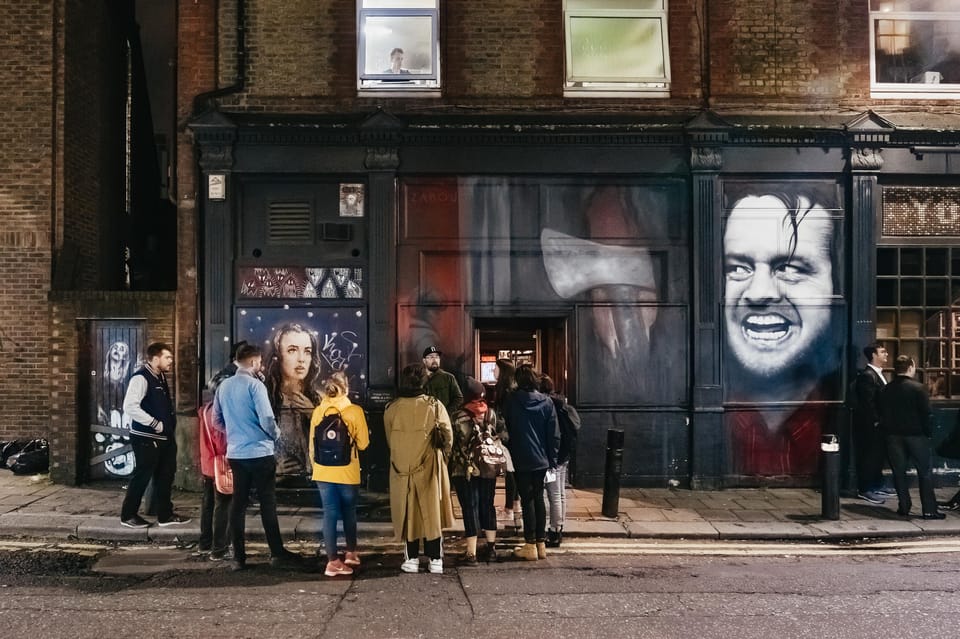
Meeting matters on any walking tour, and this one sets you up with a practical, easy-to-find location. You meet at the west entrance to Altab Ali Park, at the corner of White Church Lane and Whitechapel High Street. Look for the large iron arch gate and a guide holding a blue flag.
The nearest Underground station is Aldgate East. That’s helpful because the walk starts in the Whitechapel area where you’ll likely arrive via the Tube rather than bus.
One small note for your day planning: the tour begins near the St Marys Whitechapel Church Memorial. In other words, plan to be on time so you’re not arriving while the guide is setting the scene.
St Marys Whitechapel Church Memorial: setting context before the clues
Most Ripper tours jump straight into the murders. This one starts by anchoring you in the wider place and time. When the walk kicks off near St Marys Whitechapel Church Memorial, it works like a mental warm-up: you’re primed to pay attention to the neighborhood, the streets you’re about to see, and the social conditions you’ll hear described.
This opening segment is where I’d focus most if you tend to zone out at the start. The guide is essentially building your map in your head. Once you have that, the later “spot the evidence” moments make more sense.
And since the tour is led by a Ripperologist guide, you’re not just getting vibes—you’re getting story plus interpretation. The aim is for you to leave thinking, Was Jack the Ripper ever close to being caught? Why did he choose Whitechapel? Where was any evidence discovered?
Whitechapel streets: why the guide keeps returning to daily life
As the tour moves through Whitechapel, you’re not just hearing about infamous events. You’re learning about the neighborhood as it existed then—an area described as impoverished, with the kind of daily routine that shapes crime opportunities and investigative challenges.
I like this approach because it stops the case from feeling like a random horror movie. If you understand the living conditions, you understand why witness reports, street activity, and policing effort were complicated. You also start to see why a place like Whitechapel could become a magnet for rumors and theories.
The practical payoff for you: when you later hear about suspects, alleged perpetrators, and competing ideas, you’ll have context for why people focused where they did.
Ten Bells Spitalfields: a famous landmark and a strong wrap-up point
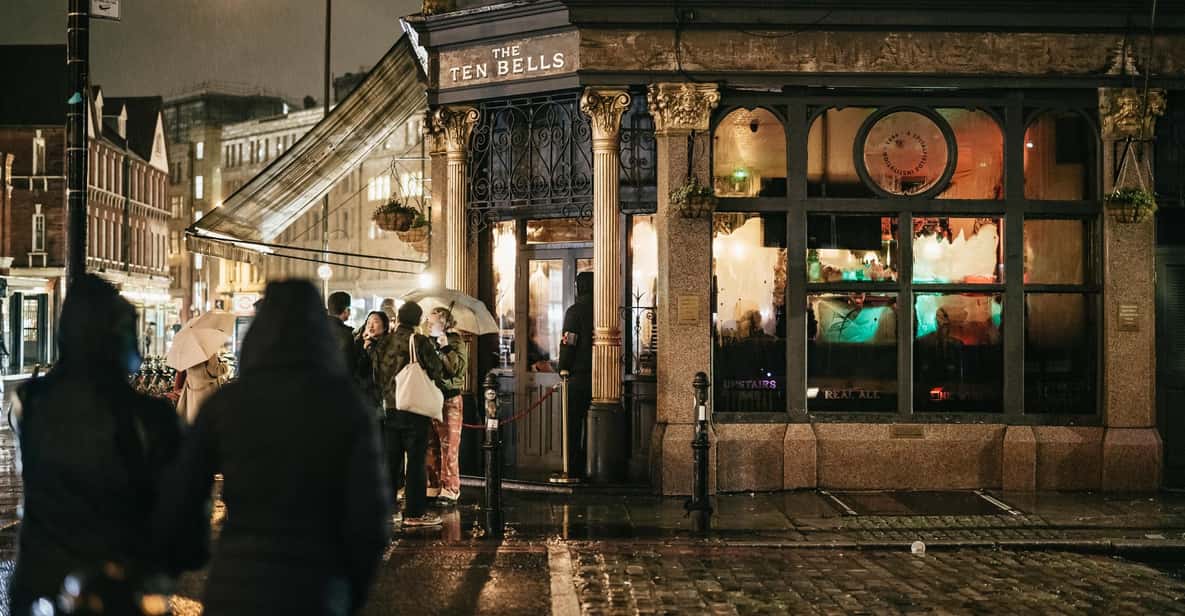
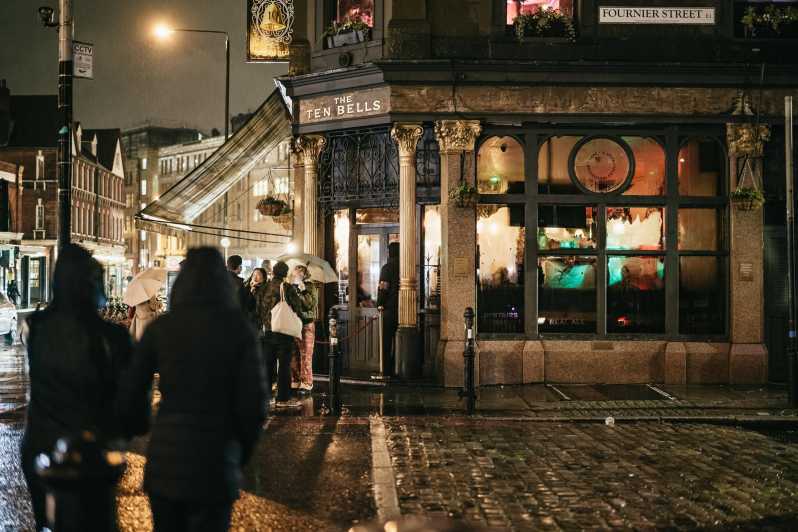
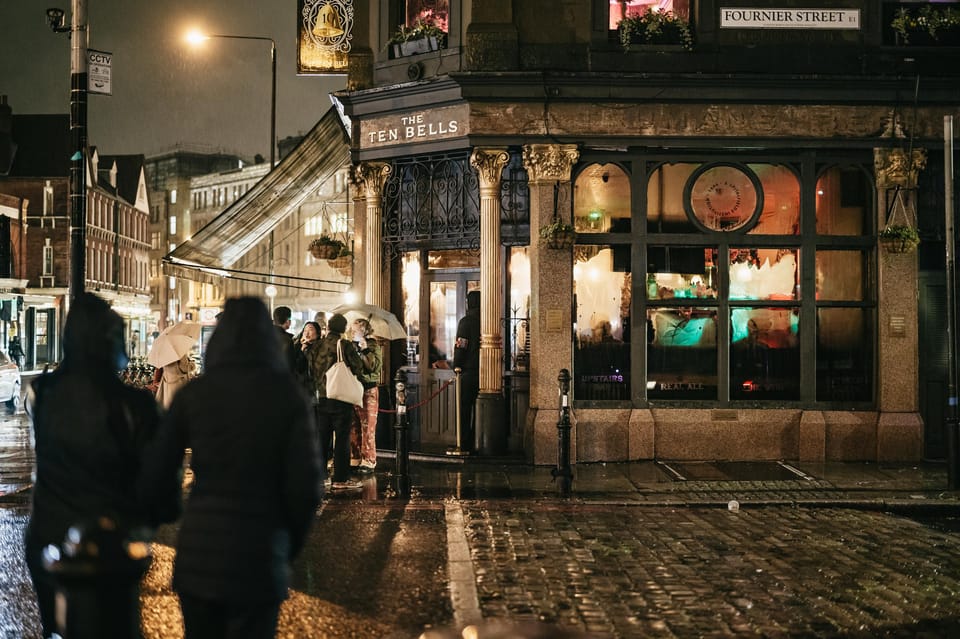
You’ll pass The Ten Bells Spitalfields partway through the walk, and then you finish there. That repeat stop is smart. It gives you a “before and after” feel: first you’re hearing setup clues, then you return for a recap moment.
Ten Bells works in a Jack the Ripper tour because it’s a recognizable East End landmark tied to the legend. Even if you’re not a hardcore Ripper scholar, you’ll feel the anchor point in the story. The guide uses that anchor to connect what you just learned with the famous questions that still hang in the air.
If you’re the type who likes closure, finishing here helps. You end with the case still unresolved in the way the story is known to be, but you’ll have your own “here’s what seems most plausible” framework in your head.





Christ Church Chelsea and Mitre Square: how streets become evidence
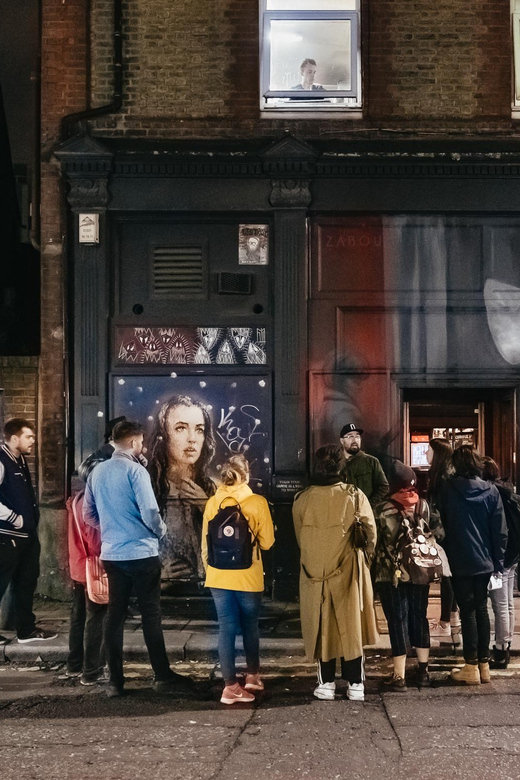
You’ll pass Christ Church Chelsea and then Mitre Square. These aren’t the murder locations you might picture from horror posters. They’re more about the city’s structure—what the guide can use as turning points in the narrative.
In tours like this, squares and institutional buildings are useful because they give you a stable viewing moment. You can look around and understand that the case isn’t happening in a vacuum. Streets connect blocks. People move between landmarks. Investigators had to work within the city’s reality.
For you, that translates into a better mental map. After these stops, it gets easier to follow the walk without feeling like you’re being rushed between random points. The story gains geography, not just sound.
Brick Lane, Petticoat Lane, and Spitalfields Market: beyond the crimes

Then you hit Brick Lane and the area around Petticoat Lane, and you also see Spitalfields Market. This is the part where the tour stops feeling like only a crime outline and starts feeling like a portrait of the neighborhood.
I especially like the contrast of a place that’s known today for markets, shops, and street energy, paired with the guide’s description of what everyday life looked like in Whitechapel at the time. It makes the story more believable. You’re reminded that the people living here weren’t just background characters—they were neighbors, workers, and families dealing with hard conditions.
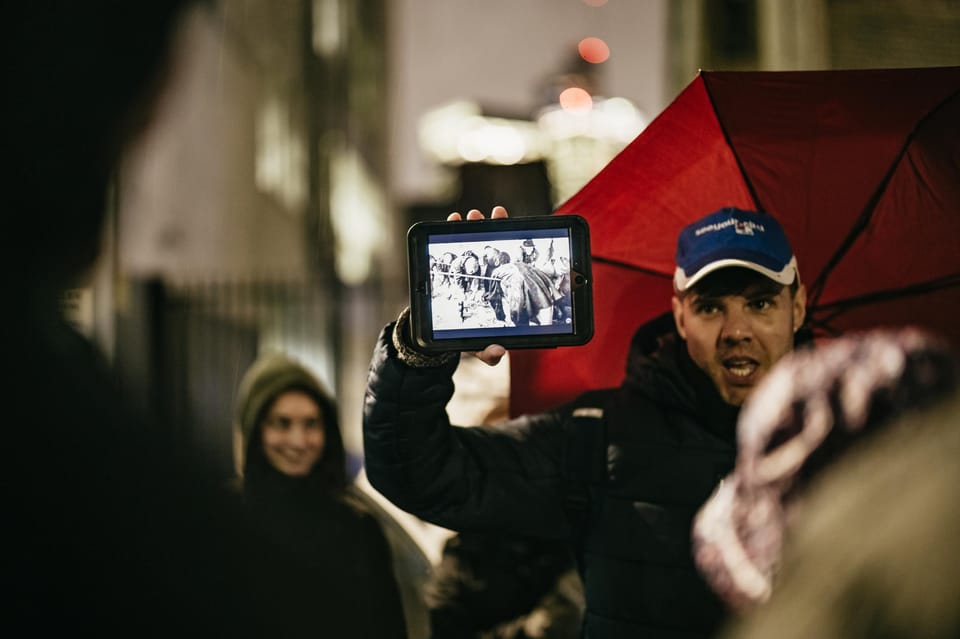
You’ll also likely get the then-and-now photo angle here. One of the standout teaching styles in the feedback I’ve seen is guides using older images so you can compare the current street view with the past. That kind of comparison is where the tour really clicks. It’s one thing to hear about 1888. It’s another thing to see the same kind of street corner and try to imagine it filled with different crowds.
How the Ripperologist guide handles evidence and theories
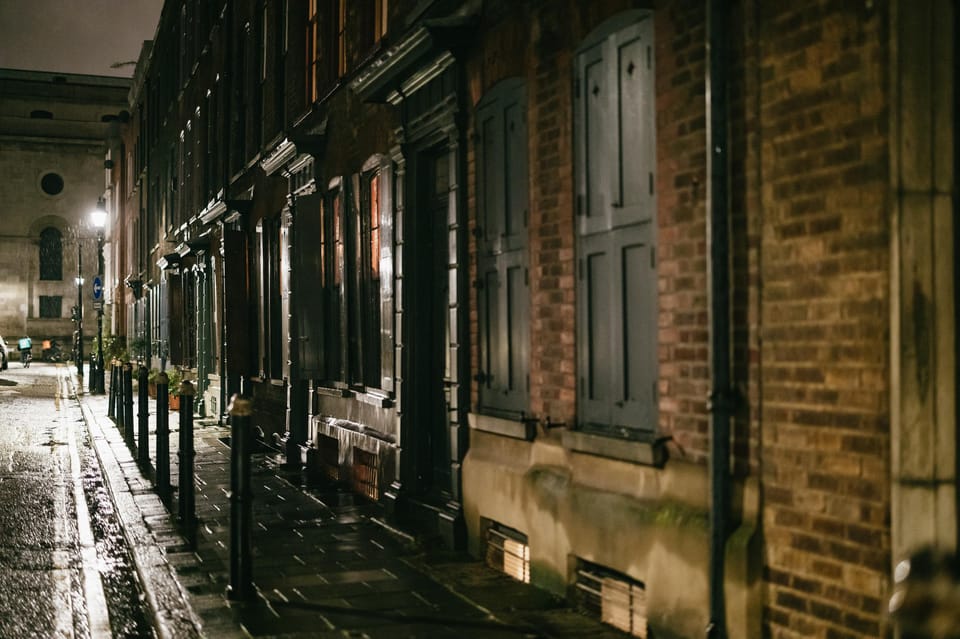
The heart of this tour is the way the guide frames the mystery. You’re not just handed a single “answer.” You’re guided through the process of thinking like an investigator: assessing photographic evidence, hearing true-to-life stories about the investigation, and then “investigating” alleged suspects and theories.
The tour addresses questions like:
- Was Jack the Ripper ever close to being caught?
- Why did the case focus on Whitechapel?
- Where was any evidence discovered?
That’s what makes it worth the time. A lot of Ripper tours tell you what happened. This one tries to show you how people might have reasoned—what they noticed, what they assumed, and what they could never fully prove.
Also, expect the guide to keep the story understandable. I’ve seen Ripper-focused guides described as using old photos and clear explanations, including names like Bettina and Sara in the kinds of teaching styles people highlight. You can treat that as a clue about what you should look for during the walk: visuals, comparisons, and a steady narrative thread.
Sherlock Holmes and Victorian culture: why this tour ends wider than murder
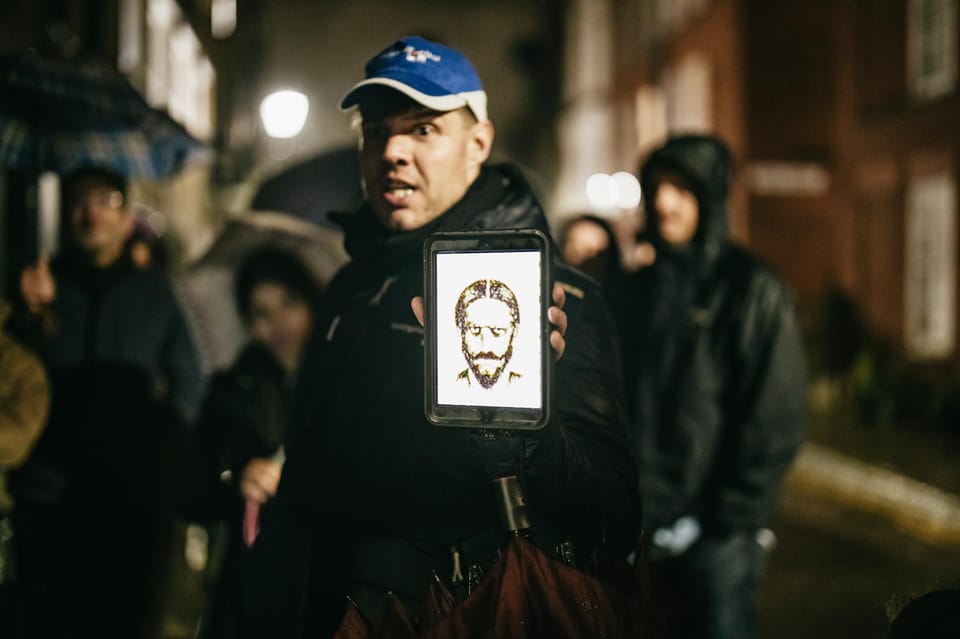
A Jack the Ripper tour that stays trapped in the gore can feel one-note. This one adds a cultural bridge. You’ll learn about the inspiration and cultural context behind Sherlock Holmes and how Victorian London shaped the public fascination with crime, detection, and storytelling.
I like this because it changes what you take home. Instead of only associating East End streets with one mystery, you start seeing the bigger pattern: people in that era were already primed to love detective narratives, to debate theories, and to treat real-world cases like public puzzles.
So when the guide talks about figures like Sherlock Holmes, you’re not just hearing name-dropping. You’re getting a sense of why this case—and cases like it—stayed in the culture long after the streets moved on.
Price and time: why $24 feels fair for what you get
At $24 per person for a 2-hour walking tour, you’re paying mainly for two things: guided interpretation and the structure that ties together multiple street stops. You’re not just paying to see buildings—you’re paying for the “why this matters” part, delivered by a Ripperologist guide.
Is it a bargain? In my view, yes, especially if you like guided stories that connect places. Two hours is also a sweet length. Long enough to build context and visit key stops, short enough that you can still fit it into a normal sightseeing day.
The only real cost you’ll add is personal: you’ll want water if the weather is warm, and you should plan for outdoor comfort since food and drinks are not included.
Who should book this tour
This is a strong fit if:
- you want a structured Jack the Ripper experience tied to real Whitechapel streets
- you prefer German-language narration
- you enjoy thinking through theories instead of only hearing one version of events
- you like city walking that mixes crime storytelling with everyday life context
It’s not the best fit if:
- you’re sensitive to graphic details and visual content
- you hate being outdoors for a sustained stretch
Should you book this German Jack the Ripper Tour?
Yes, if you want a well-guided, clue-focused walking tour that doesn’t ignore the neighborhood itself. The value is strongest when you’re open to the guide using evidence-style storytelling—especially the old photo comparisons—and when you’re comfortable with the content being graphic.
If you want only a light ghost walk, you might feel the tone is darker than you expected. But if you like crime stories with a real geographic backbone, and you want East End streets explained in clear language, this is an easy recommendation.
FAQ
How long is the Jack the Ripper tour?
The tour lasts 2 hours.
How much does the tour cost?
The price is $24 per person.
Where do I meet the guide?
Meet at the west entrance to Altab Ali Park, at the corner of White Church Lane and Whitechapel High Street, by the large iron arch gate.
What should I look for at the meeting point?
Your guide will be holding a blue flag.
What is the nearest Underground station?
The nearest station is Aldgate East.
Which languages are offered?
The live guide offers German, English, Spanish, Italian, and French.
Is the tour wheelchair accessible?
Yes, the tour is wheelchair accessible. Since it’s outdoors with varying public path conditions, people with limited mobility should be aware of ground conditions.
Is food or drink included?
No. Food and drinks are not included.
Does the tour include graphic content?
Yes. The activity contains graphic details and visual content. Participants under 18 must be accompanied by an adult.
What places does the tour visit, and where does it end?
Stops include Brick Lane, Christ Church, Spitalfields Market, Mitre Square, Petticoat Lane, and Ten Bells Pub. The finish is at The Ten Bells Spitalfields.
Can I get a full refund if I cancel?
Yes. Free cancellation is available up to 24 hours in advance for a full refund.