REVIEW · LONDON
London: Westminster and Changing of the Guard Tour
Book on GetYourGuide →Operated by Secret Chamber Tours Ltd · Bookable on GetYourGuide
The royal parade route is the main reason to do Westminster on foot. I love how this tour gets you to best viewing spots for the Changing of the Guard, and I also like the mix of royal buildings plus a quick nature break in St James’s Park. One thing to plan for: the ceremony can be altered by the British Army and, in bad weather, you may end up watching a different version of the footguard/horseguard exchange.
You’ll walk through central London’s most photo-friendly corners without spending hours guessing where to stand. The guide’s job is to time the movement and keep the group positioned so you’re not stuck behind tall umbrellas and waving camera sticks. The tour also stays practical: it’s a compact circuit, not an all-day endurance test.
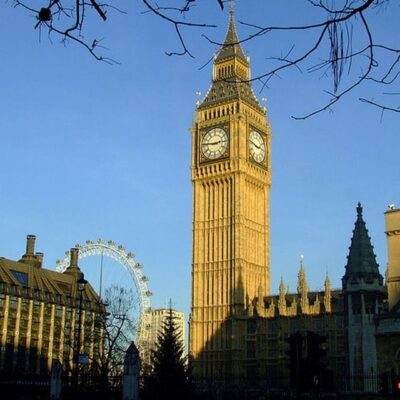
If you want the inside story behind the symbols, this kind of walk is ideal. You get context for what you’re seeing around Buckingham Palace, Westminster Abbey’s exterior, Big Ben area views, 10 Downing Street, and Whitehall. Just know it’s a walking tour, so good shoes and weather gear matter.
In This Review
- Key highlights worth getting excited about
- How this Westminster walk turns a headline into a real experience
- Meeting at Green Park and finding the start fast
- Buckingham Palace photo stop: what you can actually do in five minutes
- The Changing of the Guard (or the King’s Horse Guards): the timing swap you should know
- St James’s Park wildlife stop: a quick reset between uniforms
- Westminster Abbey exterior and the “corridor of power” feel
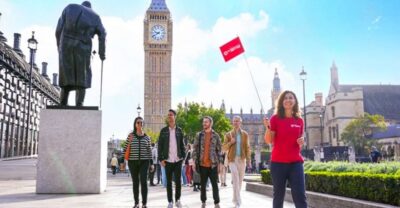
- Parliament Square and the statues you can actually understand
- 10 Downing Street and Horse Guards Parade: the ceremonial finish
- Pacing, comfort, and who this tour suits best
- Price and value: how $24.25 buys you time, not just tickets
- What is not included (and why it matters for your expectations)
- Should you book the Westminster and Changing of the Guard Tour?
- FAQ
- How long is the London Westminster and Changing of the Guard tour?
- Where do I meet the guide for this tour?
- What days does it include the Changing of the Guard ceremony?
- Does the tour include entry to Westminster Abbey?
- Will the ceremony always happen as planned?
- Is this tour suitable for wheelchair users or people with mobility impairments?
- What if I need to cancel my booking?
Key highlights worth getting excited about
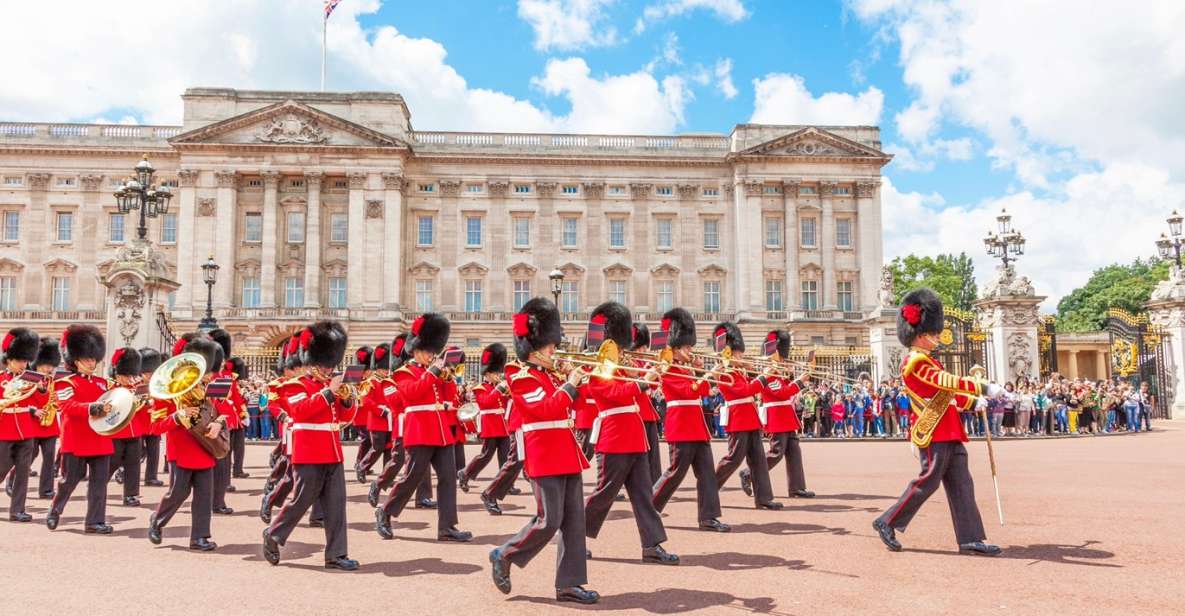
- Prime spots for the Guard exchange so you can actually see the uniforms, not just the backs of heads
- Changing schedule flexibility: on some days you’ll see the King’s Horse Guards instead
- St James’s Park wildlife with the chance to spot parakeets and pelicans
- Westminster Abbey exterior viewing plus quick context on its 1,000 years of royal connection
- Whitehall and Horse Guards Parade area focus for that ceremonial London feeling
How this Westminster walk turns a headline into a real experience
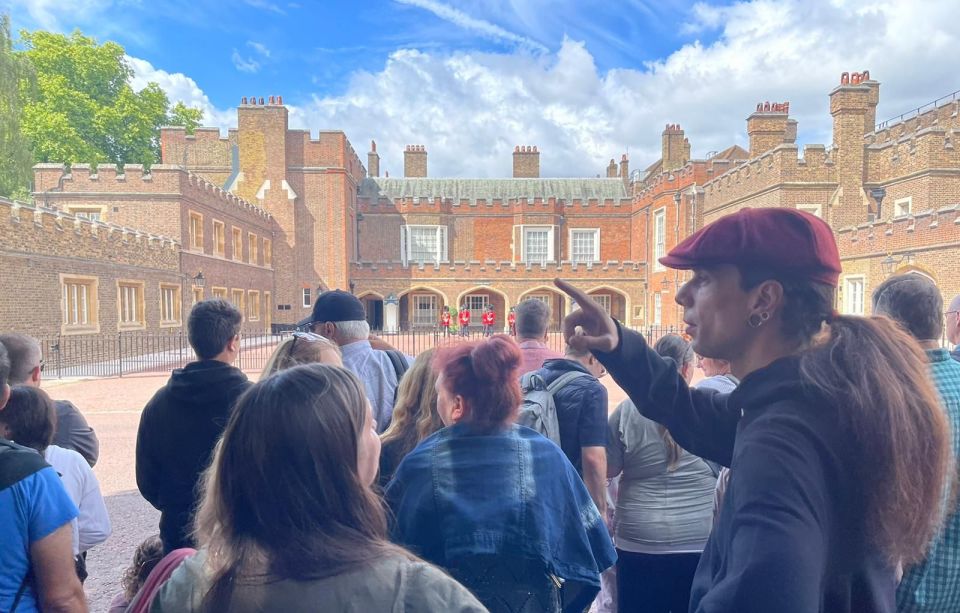
The Changing of the Guard is one of those things you can read about in 30 seconds… and then regret when you realize you chose the wrong spot in person. This tour is built to solve that. Instead of treating the parade like a random roadside moment, you get guided positioning and timing that matters for photos and for simply seeing what happens.
I also like the way the tour strings together the “power” sights in a sensible order. You start with Buckingham Palace, then you’re quickly in the rhythm of Guard parade viewing, and after that you move along the political corridor toward Big Ben area sights, Parliament-related landmarks, and 10 Downing Street. It keeps the day from feeling like a checklist.
The other smart ingredient is the nature stop. St James’s Park is a breather from the ceremonial crush, and it’s not just pretty lawns. You may spot the famous park birds, including parakeets and pelicans, which is a very London contrast: monarchy spectacle, then wildlife in the same half-day mental picture.
You can also read our reviews of more tours and experiences in London.



Meeting at Green Park and finding the start fast
Meeting points can make or break a morning in central London. Here, you start at the Goddess Diana fountain at the Ritz Corner entrance of Green Park. The key detail is which fountain this is: it’s not the Diana Memorial Fountain in Hyde Park. The meeting instructions also note an entrance next to the Ritz Hotel, and the fountain is a few steps down the footpath next to the Colicci refreshment stand.
If you’re taking the Underground, you exit via Green Park Station using the Green Park/Buckingham Palace exit. That exit is supposed to lead you directly to the fountain area. If you arrive early, use the time to orient yourself, check your route plan for the day, and confirm you’re at the correct fountain before your group gathers.
This is the kind of start that helps you avoid the two common tour problems: showing up stressed and missing the early setup. Since the Changing of the Guard is time-sensitive, being calm at the meeting point pays off later.
Buckingham Palace photo stop: what you can actually do in five minutes
The first sightseeing moment is short: a Buckingham Palace photo stop for about five minutes. That’s deliberate. Buckingham Palace looks great from multiple angles, but if you linger too long at the start, you lose flexibility for the parade timing later.
In that brief window, focus on the practical stuff. Look for a line of sight to where the parade route will be, and use the time to check the lighting and background for photos. You can’t fully “tour” the palace grounds on a walk like this, but you can get the recognizable frame you want before the Guard exchange begins.
Also, this stop sets expectations. Once you’ve seen the palace and its setting, the rest of the day makes more sense, especially when your guide explains what you’re seeing and why the ceremonial movements matter.
The Changing of the Guard (or the King’s Horse Guards): the timing swap you should know
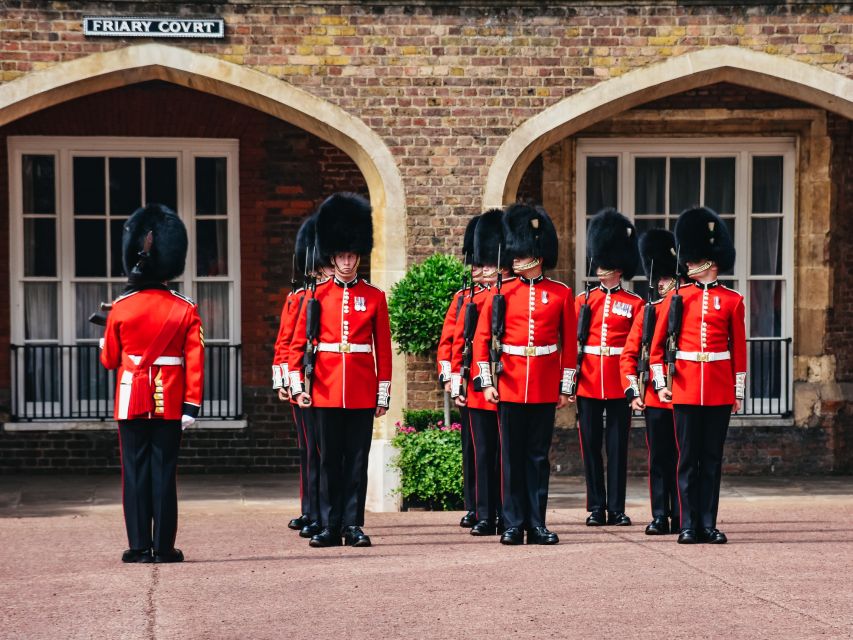
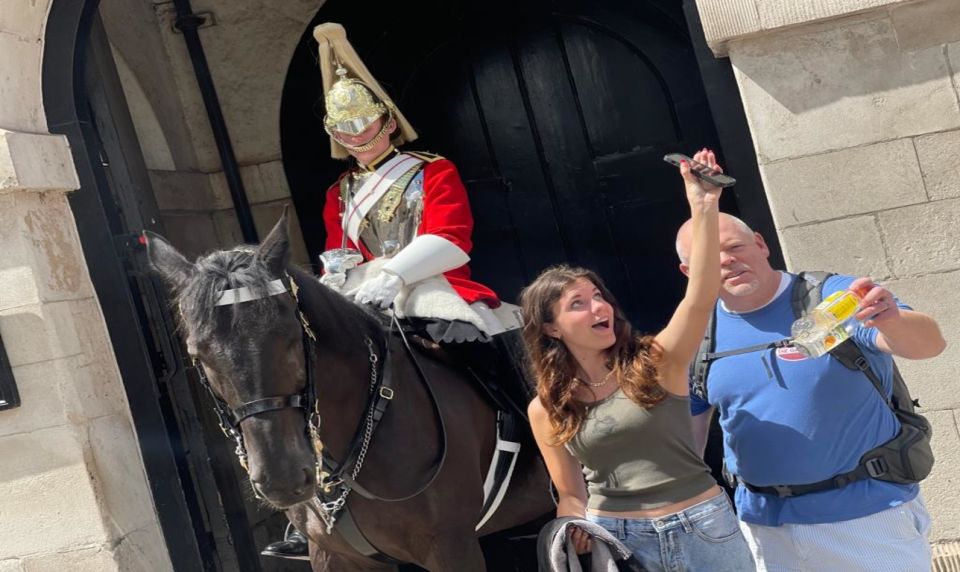
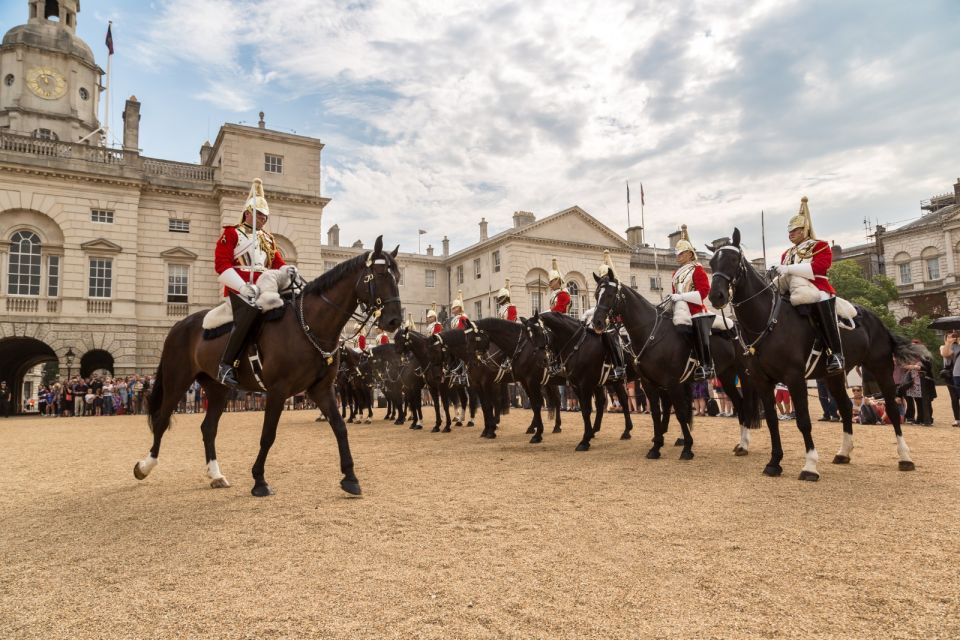
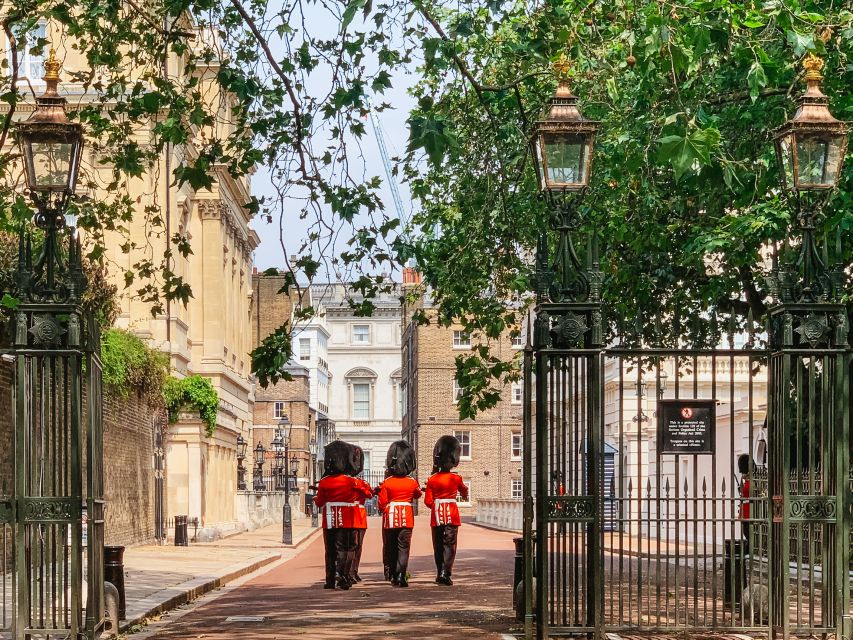
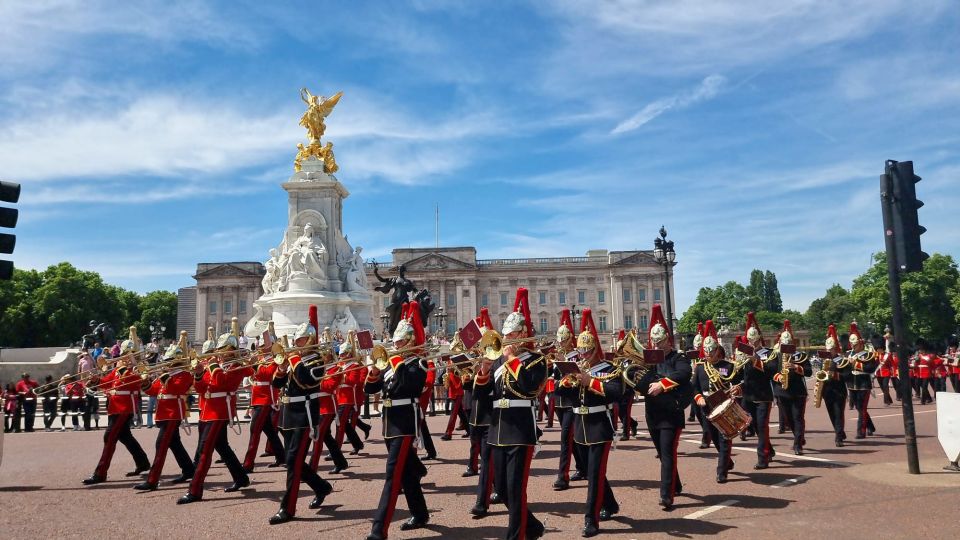
This tour is built around the Guard ceremony, but the exact parade depends on the day of the week. On Monday, Wednesday, Friday, and Sunday, you’ll witness the Changing of the Guard. On Tuesday, Thursday, and Saturday, the tour instead watches the Changing of the King’s Horse Guards at Horse Guards Parade.
Either way, you’re watching the same kind of disciplined pageantry, just with different participants and slightly different parade logistics. So if you’re choosing your day, make your decision based on your calendar—but don’t panic if your day doesn’t match the specific phrase Changing of the Guard. Your tour is designed for the swap.
Now here’s the reality check that matters: the British Army can change or cancel the ceremony without notice, and the operator can’t control that. On bad-weather days, you may be offered a version people call the wet change, where you still watch the footguards or horse guards if possible.
In the best guided runs, your guide also handles the “where should we stand” problem. From the way guides are praised, strong leadership shows up in small moments like finding the right viewing lines and keeping the group together while the crowd thickens. Guides such as Harry and Peter are repeatedly credited for placing people where they can see clearly, including for video and photo framing.
St James’s Park wildlife stop: a quick reset between uniforms
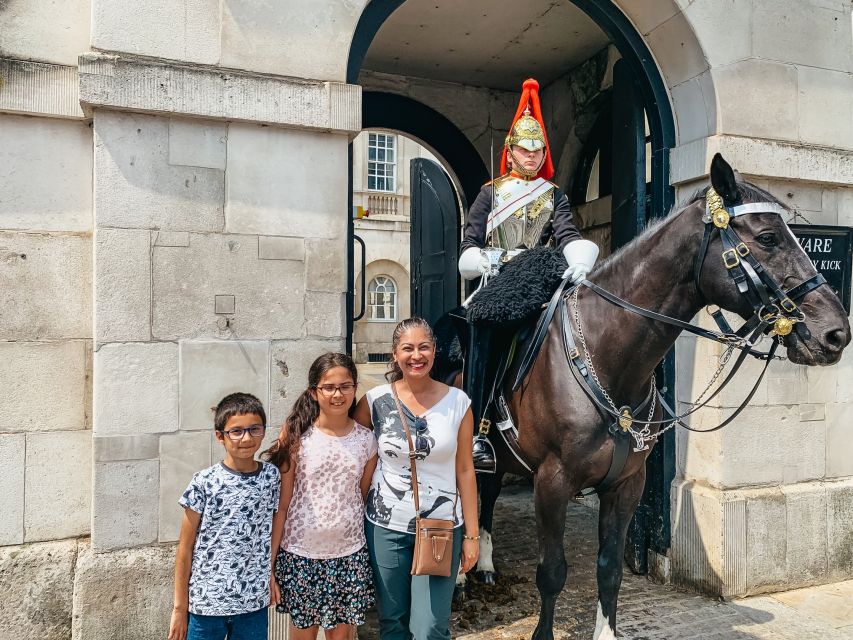
After the Guard exchange, you get a St James’s Park guided stop for about 10 minutes. This isn’t a random detour. It works because it changes the sound and feel of the day. You go from tight ceremonial movement to a calmer park setting where the birds steal some attention.
The big draw is the chance to see parakeets and pelicans. Even if you don’t spot everything, the park setting gives you that classic London contrast: royal ceremony nearby, and nature in the middle of it. It’s a great place to stretch your legs, catch your breath, and reset your brain before Westminster and political corridor sightseeing.
Because this stop is short, treat it like a focused break. If you want bird photos, be ready to shoot when you see movement. If you’re more about comfort, use it to hydrate and reposition, since the rest of the day keeps moving.

Westminster Abbey exterior and the “corridor of power” feel
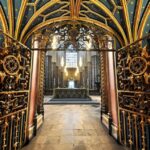
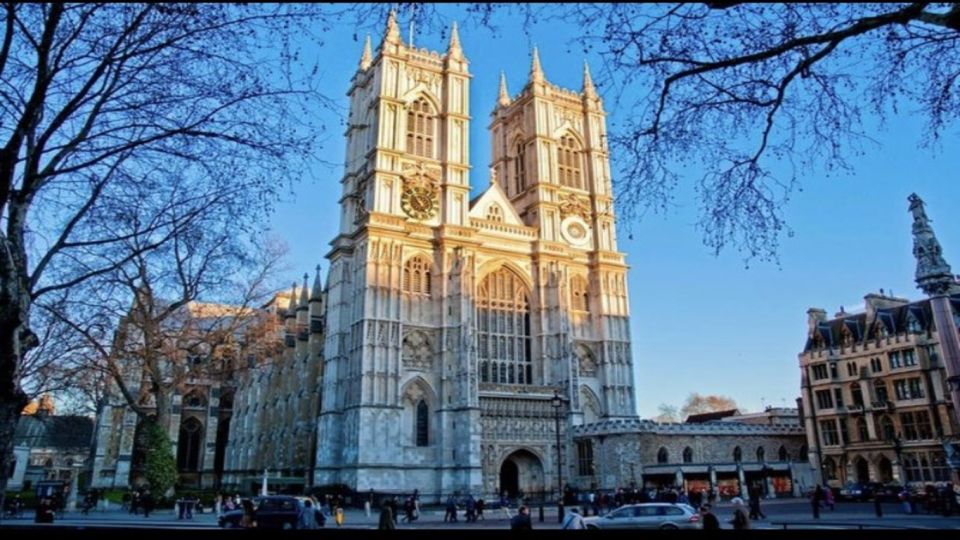
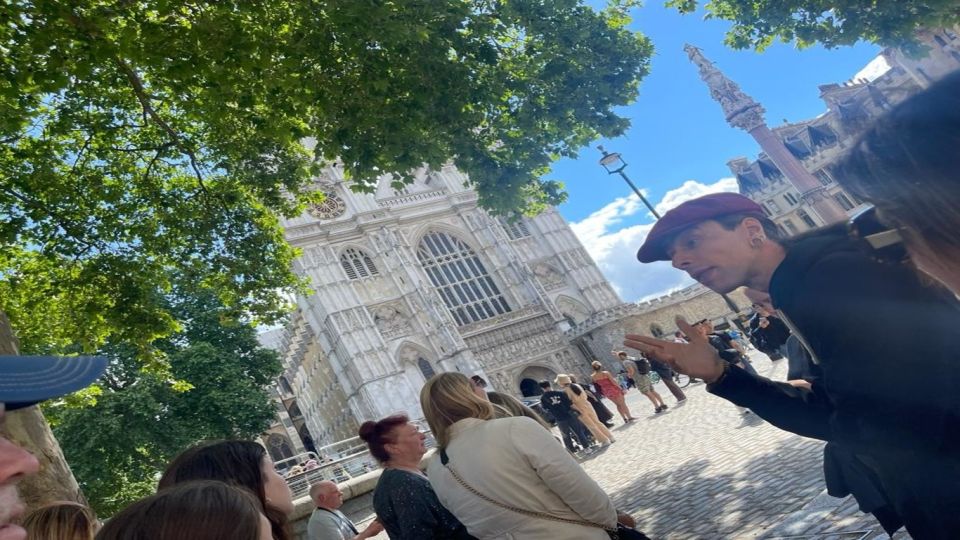
The tour includes the exterior of Westminster Abbey with a photo stop. You don’t go inside, so your value here is the visual and contextual part. You can get the scale and presence of the building without adding the time cost of an entry ticket and security lines.
Your guide also connects the Abbey to its long royal and national role, often described as about 1,000 years of royal history. That explanation makes the exterior feel less like a postcard and more like a living landmark in the middle of modern politics.
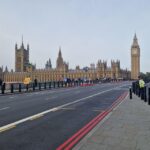
From there, you move through the broader Westminster area with a short guided tour around Westminster and nearby points (about 10 minutes). This is where Parliament-related context helps. The surrounding buildings and statues look dramatic even if you don’t know the stories yet. With a good guide, you learn why the area is called the corridor of power and how the history shows up in everyday street geography.
The practical benefit: you get oriented. After this part, 10 Downing Street and Whitehall stop sounding like random famous addresses and start lining up as a coherent route.
Parliament Square and the statues you can actually understand
Your route also includes Parliament Square context as part of the Westminster area time. Parliament Square is packed with statues and symbolism, and it’s easy to walk past it like scenery.
This tour’s advantage is that you get guided interpretation for what you’re looking at. That turns the square into something you can process instead of something you only photograph. In places like this, I think a guide’s anecdotes do real work: they help you remember names and details without turning the experience into a textbook.
If you’re the type who likes to connect current events to historical roots, Parliament Square is where the tour starts paying off emotionally, not just visually.
10 Downing Street and Horse Guards Parade: the ceremonial finish
The day’s remaining “wow” moments keep coming. You get a 10 Downing Street photo stop for about five minutes. There’s no entry here, so treat it like a checkpoint on your London map: you’re seeing the face of government, not stepping into it.
After that, you move to Horse Guards Parade at Whitehall for guided viewing. This is the other key ceremonial anchor, especially on days when you see the King’s Horse Guards swap. It’s also a great place to feel how London’s ceremonial side sits right next to working political institutions.
In the best-guided versions of this tour, guides manage crowd movement in a way that feels calm. People are repeatedly praised for being in the right spots at the right times, and for using smart positioning tools like flags to keep group alignment in busy viewing areas. The result is that you spend less energy fighting for sightlines and more energy watching what matters.
Your walk ultimately takes you toward Trafalgar Square as the finish point listed for the activity. The experience information also says the tour ends back at the meeting point, so your confirmation message may clarify the exact wrap-up location. Either way, the key for your planning is to expect a central finish where you can continue your day without a long transit.
Pacing, comfort, and who this tour suits best
This is a two-hour guided walking tour, and it packs a lot into a short window. You should expect a fairly brisk rhythm: short photo stops, short guided stops, then back on the move again.
That pacing is a plus for first-timers because it keeps you from wasting a morning on indecision. It can be a challenge if you’re sensitive to crowds or long standing. It can also be a concern for people with mobility limitations. The activity notes it’s not suitable for wheelchair users and not suitable for people with mobility impairments.
There’s also a note about health: it’s listed as not suitable for people with heart problems. If that’s you, take the safety note seriously and choose a different way to see the sights.
For families, the style can work. Some guides are praised specifically for doing a great job with younger kids, including keeping the group engaged and entertained during the Guard exchange and walks between sites. If you have kids who enjoy stories and watching uniforms, this can land well.
Finally, weather is part of the experience. Bring weather-appropriate clothing, especially because Guard ceremonies can be altered and you might need to tolerate “wet change” conditions on some days.
Price and value: how $24.25 buys you time, not just tickets
At $24.25 per person, this isn’t priced like an all-in entry-ticket day. It’s priced like what it is: a guided walk built around the Changing of the Guard moment and a string of Westminster landmarks.
So the value question is simple: are you paying for convenience and positioning? In this case, yes. The included guide is the product. The ceremony is time-based and location-based, and getting it right is hard without local expertise. Strong guides (people like Harry, Peter, John, and Alan are repeatedly highlighted) are often praised for knowing timing, finding good viewing lines, and keeping the group from getting swallowed by the crowd.
You also avoid two expensive traps in London: wandering aimlessly for the Guard exchange and buying tickets you don’t need. This tour does not include entry into attractions, and it does not include going inside Westminster Abbey. If you’re okay with exterior views and photo stops, you’re not paying for things you won’t use.
In short: if you want a focused Westminster highlight day on a budget, and you care about seeing the ceremony clearly, the price makes sense.
What is not included (and why it matters for your expectations)
Two limitations are worth absorbing early:
First, no entry tickets are included. You’ll get exterior views and guided context, plus photo stops. If you want museum interiors or to walk through Westminster Abbey, you’ll need a separate plan.
Second, the ceremony schedule can change. The British Army controls the Guard exchange, and the tour responds with a wet change option when possible. That’s not a failure; it’s the nature of the event. If you’re planning your whole trip around one exact moment, build a little flexibility into your schedule.
Also, the tour language is English, and it’s a walking format. If you’re traveling with someone who needs a slower pace or breaks, this might not be the smoothest fit.
Should you book the Westminster and Changing of the Guard Tour?
If your goal is a classic Westminster morning with the Guard exchange as the centerpiece, I’d book it. The tour’s best trait is practical: it helps you stand in the right places so you can actually watch and photograph the ceremony instead of turning it into a guessing game.
Book it especially if you like history with context. Good guides on this route are praised for turning uniforms and landmarks into stories you can remember, with humor and real direction on where to stand. If you’re traveling with kids, this tour style can work too, because the experience is short bursts of sights plus a guide who keeps the group engaged.
Skip it if you need wheelchair access or if you have health limits that make standing and walking difficult. And if you need inside access to Westminster Abbey or other interiors, plan that separately since this walk is strictly exterior/photo guided.
Overall: for most visitors, this is a smart way to get the Westminster highlights in a short amount of time, with a guide whose job is to handle the hard part, the timing and the viewing.
FAQ
How long is the London Westminster and Changing of the Guard tour?
The tour duration is about 2 hours (starting times vary by availability).
Where do I meet the guide for this tour?
Meet your guide at the Goddess Diana fountain at the Ritz Corner entrance of Green Park (near the Ritz Hotel, next to the Colicci refreshment stand).
What days does it include the Changing of the Guard ceremony?
The Changing of the Guard takes place on Monday, Wednesday, Friday, and Sunday. On Tuesday, Thursday, and Saturday, the tour watches the Changing of the King’s Horse Guards at Horse Guards Parade.
Does the tour include entry to Westminster Abbey?
No. The tour only visits Westminster Abbey’s exterior and includes a photo stop, not entry.
Will the ceremony always happen as planned?
Not necessarily. The Changing of the Guard is operated at the discretion of the British Army and can be changed or canceled without notice. On bad-weather days, the tour will try to watch the wet change of the footguards and horse guards.
Is this tour suitable for wheelchair users or people with mobility impairments?
No. It is not suitable for wheelchair users and not suitable for people with mobility impairments.
What if I need to cancel my booking?
You can cancel up to 24 hours in advance for a full refund.