REVIEW · LONDON
City of London Mystical and Dragons Walking Tour
Book on GetYourGuide →Operated by Dragon Lore Tours · Bookable on GetYourGuide
Dragons in London start where you least expect. This 2.5-hour walk turns City streets into a myth map, and I especially liked how the guide links symbolism in churches and architecture to the city’s dragon legends. The other big draw for me is the way the route touches sacred corners and forgotten waterways, then pulls you forward toward St. Paul’s. One catch: you’ll move from stop to stop fairly quickly, so it’s best if you’re happy with short, story-rich explanations rather than long museum-style time.
You also get a small group experience, limited to 8 people, which makes questions feel easy instead of rushed. If you’ve got an eye for details, you’ll like the guide’s approach to iconography and how a single motif can connect several places. And yes, you’ll find the meeting spot outside Joe & the Juice, then follow the guide you’ll recognize by longish hair and beard and a felt green dragon on their backpack.
At $25 per person, this is good value if you want London’s mystical layer explained clearly in English with a live guide. You’ll also get a post-tour PDF overview, which is handy when you’re back home and trying to remember which stop tied to which theme. My one practical consideration: it’s a walking tour, so wear shoes you can stand in for churchyard chats and short street pauses.
In This Review
- Key things that make this tour worth your time
- Why London’s dragon lore fits surprisingly well on foot
- Meeting at Joe and the Juice: get oriented fast, then get curious
- From London Stone to Bloomberg Arcade: the story begins with fragments and water
- Bank of England and St Mary-le-Bow: reading symbolism where you least expect it
- Oldest tree, St Paul’s Cathedral, and the time jump you can feel
- Churches around Ludgate and Fleet Street: St Martin Ludgate to St Dunstan-in-the-West
- Temple Church and Temple Bar Memorial: Knights Templars and the final dragon thread
- Price and value: is $25 fair for this kind of storytelling?
- Who should book (and who might not love it)
- Should you book this City of London Mystical and Dragons tour?
- FAQ
- How long is the City of London Mystical and Dragons Walking Tour?
- Where does the tour meet?
- What is the group size?
- Is the tour wheelchair accessible?
- What language is the tour guide?
- Is there a post-tour PDF?
Key things that make this tour worth your time
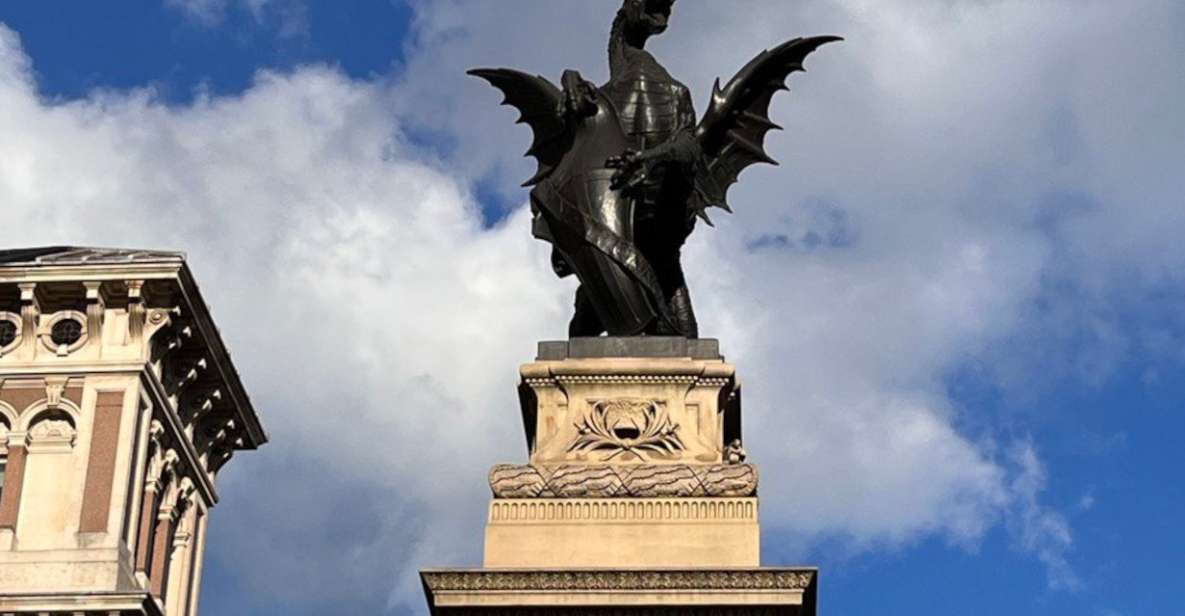
- Dragon lore through architecture: the guide connects myths to what you can actually see on buildings and churches.
- Sacred sites plus forgotten waterways: you’re not just doing ghosts and legends; the route points at water and spiritual landmarks.
- Ley lines and ancient mounds as a reading tool: you learn how the tour treats alignments and old earthwork ideas as story threads.
- A clear time-walk from ancient eras to St. Paul’s: the tour moves you forward from older traditions toward major landmarks.
- Temple Church and Knights Templars: the ending leans into medieval symbolism and how lore sticks around.
- Guides like Arjun: participants describe strong storytelling that blends story, myth, and iconography in a kind, engaging way.
Why London’s dragon lore fits surprisingly well on foot
The City of London can feel like it’s all clocks, office towers, and rules. This tour flips that mood. Instead of treating the streets as a backdrop, it teaches you to read them like clues: where a church sits, what a stone fragment suggests, why a water-related space matters, and how a dragon story can echo across centuries.
What I like about this style is that it doesn’t ask you to be an expert. You’re guided to notice patterns and meaning. The tour’s themes cover sacred places and forgotten waterways, symbolism in architecture, and the role of dragons in London’s lore for millennia. Even if you’re skeptical, you’ll probably enjoy the mental workout: how can the same motifs keep reappearing when the city keeps rebuilding itself?
If you’re the kind of person who loves walking tours but gets tired when they’re just “quick history facts,” this one has a different tempo. It uses myth and archaeology-adjacent ideas as a lens, not a lecture. And because it’s a small group (up to 8), the guide can steer the conversation when people ask questions.
You can also read our reviews of more walking tours in London


Meeting at Joe and the Juice: get oriented fast, then get curious
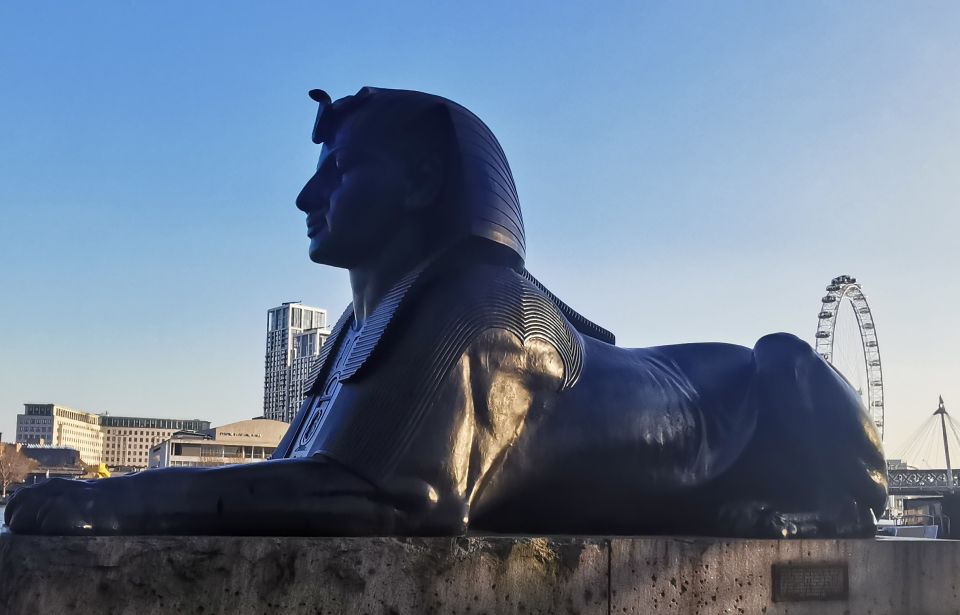
You’ll start outside Joe & the Juice, and the meeting setup is refreshingly straightforward. The guide is easy to spot: longish hair and beard, plus a felt image of a green dragon on their backpack. That sounds silly until you’re doing your first walking tour in a big city and you don’t want to wander around guessing.
Expect a relaxed lead-in where the guide sets up the two big “how to look” skills for the walk:
1) pay attention to symbols on buildings and church spaces
2) connect those symbols to the tour’s dragon-lore storyline
The route also gives you lots of “reset moments.” Some stops are brief, like quick guided looks and single-theme explanations. Others are longer enough that you can absorb the details before moving on. That pacing is part of why a 2.5-hour tour works here: you never feel stuck in one spot, but you still get enough time to register what you’re seeing.
One more practical note: it’s in the City, so you’ll likely pass through busy streets. It helps to keep your phone charged for photos and maps later, but the tour doesn’t feel like you’re racing the clock.
From London Stone to Bloomberg Arcade: the story begins with fragments and water
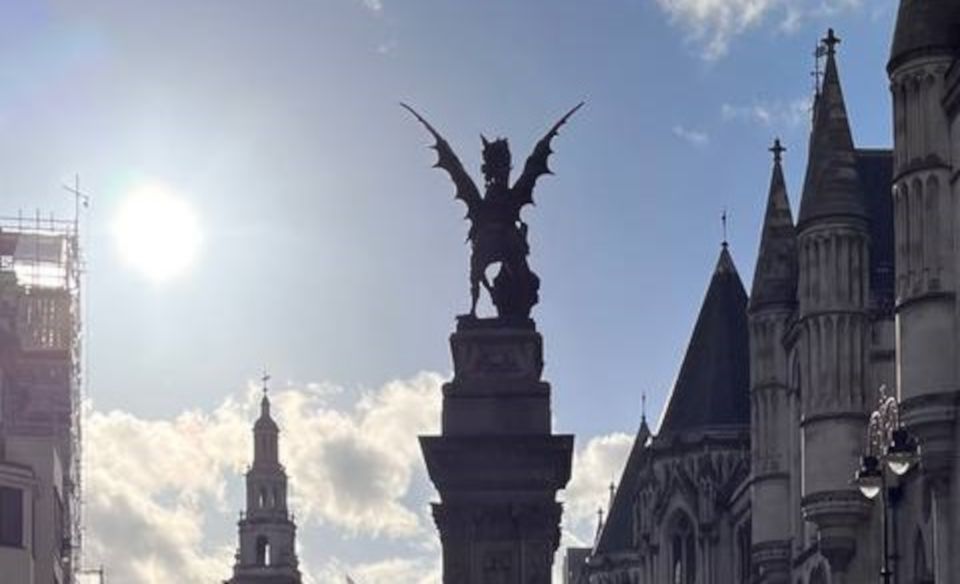
The first major stop is London Stone, specifically the remaining part. Even if you’ve heard of London Stone before, seeing it as a starting point changes the way you interpret it. Here, it’s not just a landmark; it becomes a clue that the city’s identity is built on layers. The tour’s framing connects the idea of early traditions to later storytelling, which sets you up for how dragons enter the picture.
Then you head toward Forgotten Streams in Bloomberg Arcade. This is where the tour’s “forgotten waterways” theme stops sounding abstract. A covered, urban space can hide traces of older patterns, and the guide helps you think about how water shapes sacred meaning. If you like atmosphere, this is a strong stretch because the setting makes you slow down for a moment and look for the unseen.
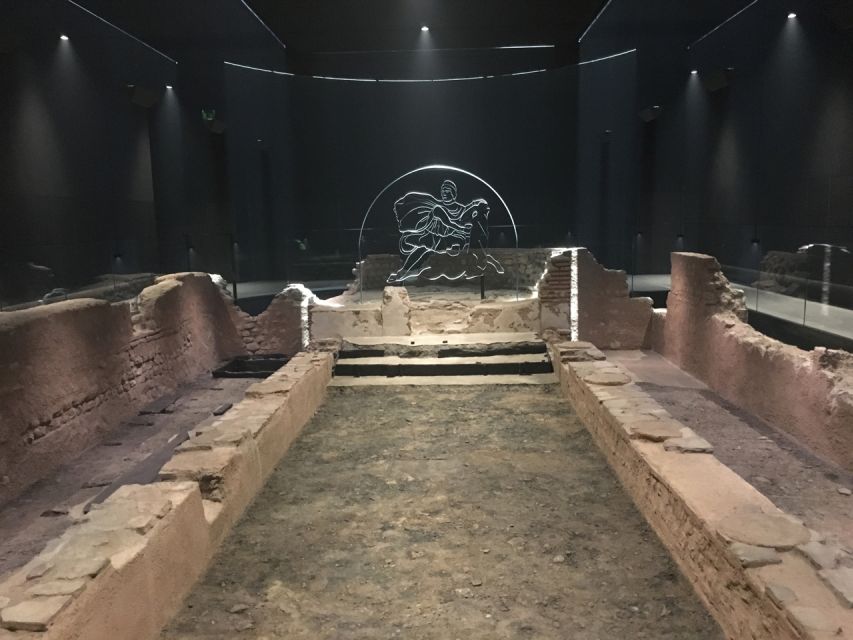
From there, you move to the London Mithraeum at Bloomberg SPACE. This stop matters because it anchors the mystical theme to a real, place-based experience. You’re not only hearing dragon stories; you’re also learning how mythic symbolism gets tied to physical sites in the City.
I like that this segment is more than “and then we saw a thing.” It trains your eyes. Once you’ve been taught what to watch for, the next stops land harder.
Bank of England and St Mary-le-Bow: reading symbolism where you least expect it
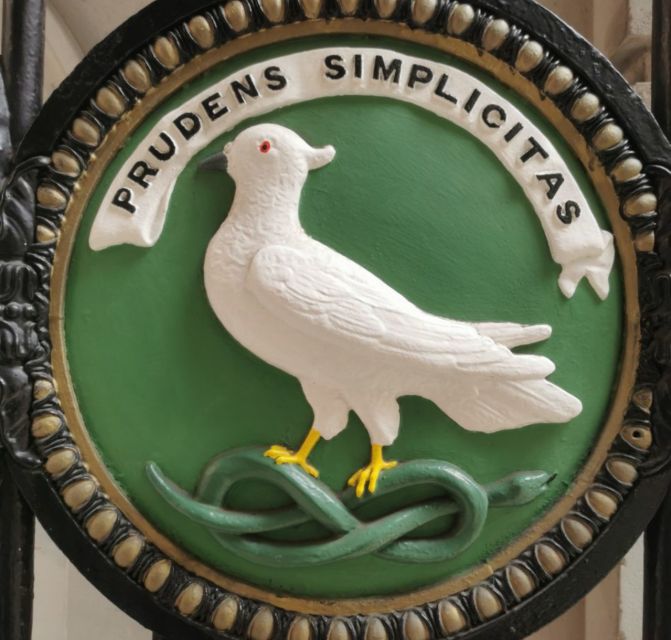
Next comes a contrast stop: the Bank of England. It’s a reminder that mysticism and money can share the same city block. In this tour, the bank isn’t treated as a random pit stop. It’s used to explain how symbols and ideas can survive inside places you wouldn’t normally connect to legends.
Then you visit St Mary-le-Bow Church. This is one of the key “architecture symbolism” moments. Churches are built like storybooks, and the guide helps you connect visible elements to the tour’s larger myths. If you’ve ever walked past a church and wondered why some features feel oddly meaningful, this is where you’ll start getting answers.
This is also where you’ll likely appreciate the guide’s method most. People often expect mythology tours to be all attitude and no clarity. Here, the explanations are tied to what you can see, so your brain has somewhere to land.
If you want a practical tip: at St Mary-le-Bow, pause for a second before you take photos. Look first for the symbolic details the guide points out, then capture it. You’ll remember the meaning better that way.
Oldest tree, St Paul’s Cathedral, and the time jump you can feel
One of the most delightful stops is the Oldest tree in City of London. A tree sounds simple until you treat it like a time marker. This stop reinforces the tour’s idea that London’s stories don’t reset when eras change. The city absorbs old life, then keeps going.
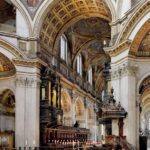
After that, you reach St Paul’s Cathedral. The tour uses this moment to connect the “ancient to modern” arc. You’ll hear how the storyline moves from older traditions (including Druidic times as part of the tour’s framing) toward one of London’s most recognizable monuments. The point isn’t to pretend everything is one straight line. It’s to show how layers of meaning pile up over centuries.
If you’re a bit of a “show me how it works” person, you’ll probably like the way the guide ties architectural symbolism back into the dragon-lore theme. This is where ley lines and ancient mounds enter the conversation more explicitly as part of how you read alignments and significance across the city.
And yes, this portion can feel a little like switching lenses. Instead of only thinking about dragons as stories, you start thinking of them as a way humans organized meaning in space.
You can also read our reviews of more city tours in London





Churches around Ludgate and Fleet Street: St Martin Ludgate to St Dunstan-in-the-West
The tour continues with The Church of St Martin Ludgate. This stop is another place where the guide uses iconography and positioning to connect back to the larger dragon narrative. In other words, the church isn’t just a building you walk into. It becomes another “symbol chapter” in the same book.
Then you pass Ludgate Circus, which works as a street-level pause. It’s a moment to step back from the dense church stops and let your brain map what you’ve already learned. Even though this part is brief, it helps you keep the tour’s themes coherent as you move toward St Bride’s Church on Fleet Street.
St Bride’s Church is a longer look, and that extra time matters. This is where you’ll be able to absorb more of the guide’s explanations and connect the dots between earlier stops and the next cluster of churches.
After St Bride’s, you reach St Dunstan-in-the-West. This is another chance to see how the tour treats symbolism as a repeating pattern. If you start feeling like you’re seeing connections everywhere, that’s intentional. The tour wants you to learn a method: notice motifs, connect them to place, and watch how stories travel through time.
Temple Church and Temple Bar Memorial: Knights Templars and the final dragon thread
The last major “anchor” is Temple Church, tied here to Knights Templars. This stop shifts you more clearly into medieval lore energy. Even if dragons aren’t the first thing you associate with the Knights Templars, the tour’s approach is to show how legends keep overlapping—how one narrative style can carry forward in a different costume.
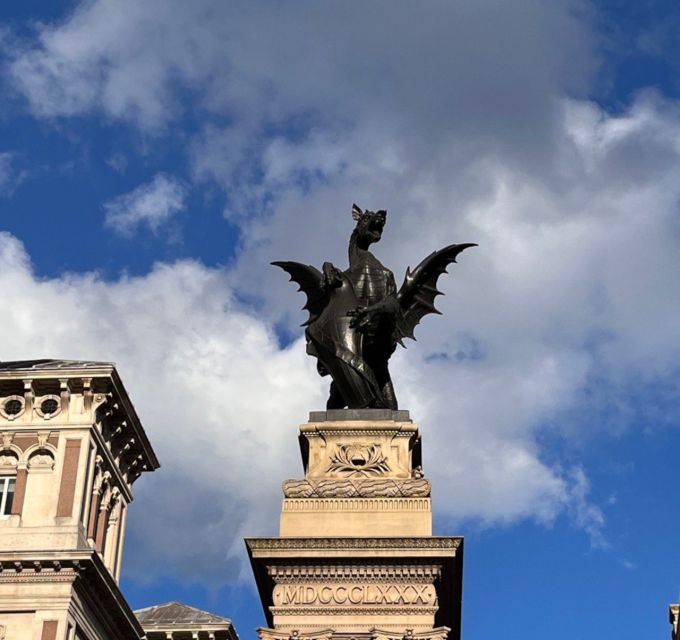
Then you finish at Temple Bar Memorial. Ending here works because it feels like a boundary line. You’re coming out of churches and old markers, and the final stop ties the overall walk together through the tour’s themes of ley lines, ancient mounds, and the dragon legacy threading through London.
If you want a practical takeaway: by the time you reach Temple Bar Memorial, you should be able to explain to yourself what the tour was doing. It wasn’t only listing sites. It was teaching you how to connect a city’s spiritual language to its physical layout.
Price and value: is $25 fair for this kind of storytelling?
At $25 per person for about 2.5 hours, the value depends on what you want from a London walk.
You’re getting:
- a live English guide
- a small group capped at 8
- a route focused on sacred sites, waterways, and architecture symbolism
- a post-tour PDF overview you can use later
That combination matters. If you were paying for just “seeing churches,” you’d have a different option. Here, you’re paying for interpretation: the guide turns London into a readable story. The $25 price feels especially reasonable when the guide is putting real effort into weaving myth, story, and iconography into a single walk, not treating each stop as separate.
Also, the pricing makes it easier to fit into a day without blowing your budget. If you’re in London for a short trip, a tour like this gives you a distinctive theme that you can carry into museums and cathedral visits later.
Who should book (and who might not love it)
This tour is a strong match if you:
- love mythology but want it attached to real places you can point to
- enjoy church architecture when someone explains what symbols might mean
- like tours that connect multiple stops through a single thread (dragons, ley lines, sacred spaces)
It might not be your best choice if you want only tightly verified, textbook-style history with no mythology framing. This experience clearly leans into mystical interpretation. You’ll still get guided context and site-focused looks, but the theme is built around dragons and symbolic meaning.
Based on the kind of praise the tour receives, one thing to take seriously is the guide quality. Participants highlight the tour guide’s ability to weave story, myth, and iconography through different sites. That matters, because this kind of walking only works when the storytelling is crisp.
Should you book this City of London Mystical and Dragons tour?
If your ideal London day includes short guided stops, story-driven explanations, and a chance to look at famous City churches through a new lens, I think you’ll be happy booking this one. The route covers recognizable sacred names plus smaller waypoints that help the dragon-lore idea feel grounded in place. The small group size and the live English guide also make it feel personal.
Go for it if you’re curious, and bring shoes you can stand in. Skip it only if you strongly prefer tours that avoid mythology themes and stick strictly to academic history. Otherwise, this is a fun way to see London as a city that still speaks in symbols.
FAQ
How long is the City of London Mystical and Dragons Walking Tour?
The tour lasts 2.5 hours.
Where does the tour meet?
You meet outside Joe and the Juice. The guide can be recognized by longish hair and beard and a felt image of a green dragon on their backpack.
What is the group size?
The tour is limited to a small group of 8 participants.
Is the tour wheelchair accessible?
Yes, the tour is wheelchair accessible.
What language is the tour guide?
The tour is conducted in English.
Is there a post-tour PDF?
Yes. A post-tour PDF overview of the tour locations and themes is included.