London gets smaller when you walk its alleys. On this Hidden Secrets of the City walking tour, I love how the route slips from big landmarks into tight passageways that feel lived-in, and how it ends with Brick Lane street art, including a Banksy you can actually see in person. You’ll also get a respectful nod to London’s darker side as you move.
One thing to consider: the tour is all outdoors, and you’ll be on public paths with changing surfaces. It’s still not a steep climb, but you’ll want good shoes, especially if the weather turns.
Five alleyway stops, one big story: Royal Exchange, Monument, Leadenhall Market, Spitalfields, and Brick Lane connect trade, survival, and street culture.
Senne’s storytelling style: He keeps the pace lively and the facts easy to follow, even when the topics get a little grim.
A Great Fire route that’s not textbook: The Monument area and nearby lanes explain survival and rebirth in plain terms.
Jack the Ripper, handled carefully: You’ll get mystery-focused context without turning it into a full “Ripper tour.”
End in Shoreditch for street art and vintage: Brick Lane is where you slow down, browse, and look closely.
In This Review
- Start at the London Troops War Memorial and Get Your Bearings Fast
- Royal Exchange to Narrow Lanes: Trade, Traps, and Footsteps
- The Monument to the Great Fire: Survival in the Shadow of Stone
- St Dunstan in the East: A Church Garden With a Living Reputation
- Leadenhall Market and the Gherkin Loop: Victorian Trade Meets Modern London
- Spitalfields and Ten Bells: Where Old Streets Start to Feel Personal
- Old Spitalfields Market Food Stop: Snack Time Without Pressure
- Jack the Ripper Notes: Spooky Context, Not a Full Detour
- Brick Lane in Shoreditch: Banksy Street Art and Vintage Browsing
- Languages, Outdoor Walking, and Who This Tour Suits
- Price and Value: Why $33 Makes Sense for This Route
- Should You Book Hidden Secrets Of The City?
- FAQ
- Where does the tour start?
- Where is the tour’s finish?
- How long is the walking tour?
- Is food included?
- Does the tour run indoors or outdoors?
- What languages are the live guides?
- Is there a cancellation policy?
Start at the London Troops War Memorial and Get Your Bearings Fast
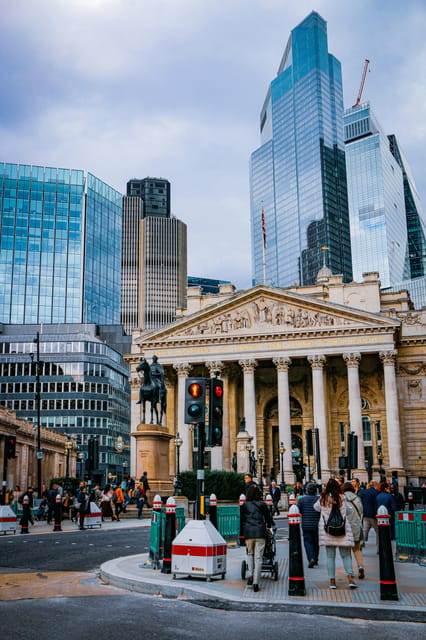
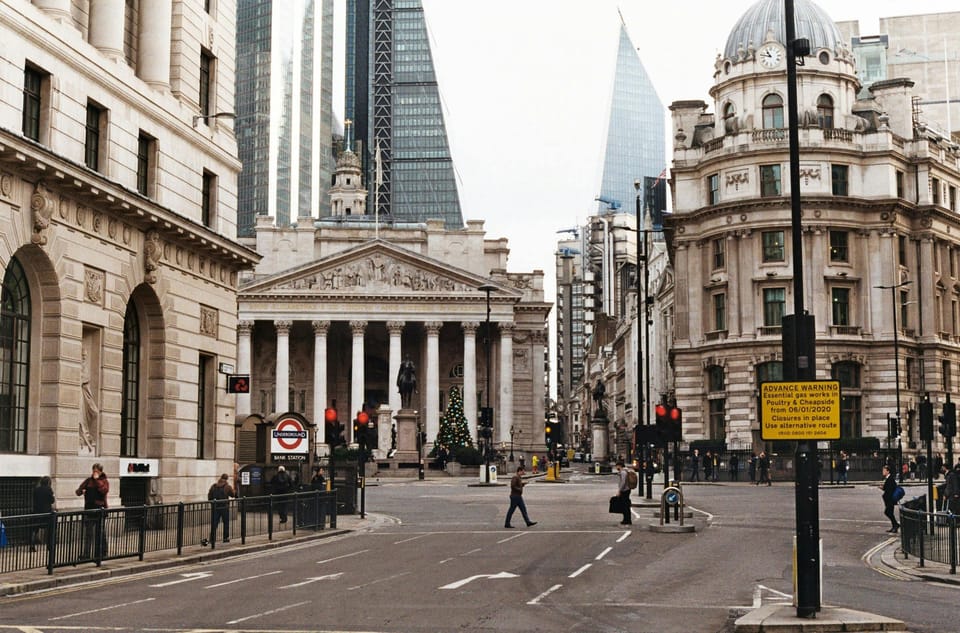
The tour begins at the London Troops War Memorial statue in front of the Royal Exchange. It’s a smart meet-up point: you’re right where the City’s trading power shows up in stone and glass. You’ll find the guide holding a blue flag by the main entrance, so you won’t have to hunt around.
I like that you start in a place that’s instantly recognizable, then the walk quickly shifts gears. In other words, you get context first, then the fun part: slipping away from the wide-open public spaces into smaller lanes where you can actually picture daily life centuries ago.
Arrive about 5–10 minutes early. The start is simple, but tight meeting points in busy areas go smoother when you’re not rushing.
Royal Exchange to Narrow Lanes: Trade, Traps, and Footsteps
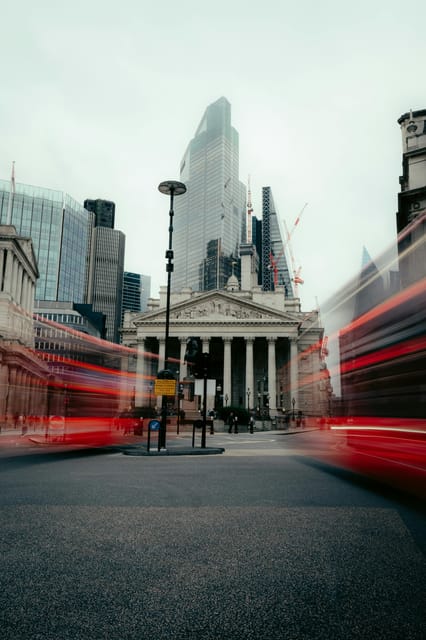
Your first major stop is the Royal Exchange, a symbol of London’s financial might and a hub tied to trading history. From there, the tour deliberately leaves the open squares behind. That change matters. The City’s power used to depend on movement—merchants, traders, and yes, people with less-than-honest intentions.
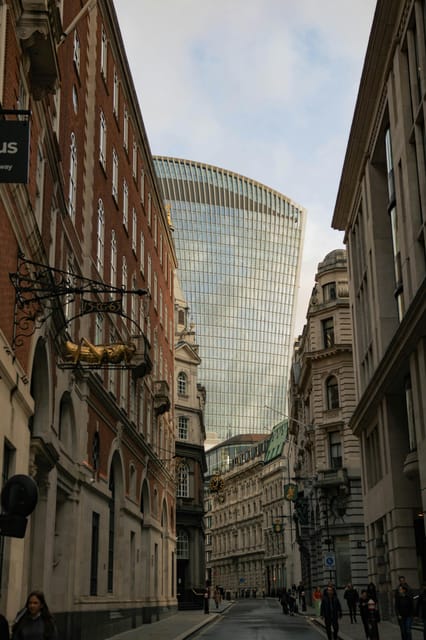
Then you get what makes this tour different: you’re guided into the narrow alleys that crisscross the area. These passageways feel like they belong to another London. Even if you’ve visited central London before, you usually don’t wander far enough into these side lanes to see how the street grid actually works at street level.
I also appreciate how the guide ties the spaces to stories. You’re not just walking past things; you’re building a mental map of how people got around and where life likely played out.
You can also read our reviews of more walking tours in London



The Monument to the Great Fire: Survival in the Shadow of Stone
Next comes the Monument to the Great Fire of London. You only stop briefly, but that quick timing works here because you’re not stuck in museum mode. You’re using the Monument as a compass point—then moving into nearby lanes for the more intimate part of the story.
The guide focuses on the devastating impact of the fire and the resilience that shaped the London people recognize today. The Monument itself is a big, dramatic marker, but the real lesson is how quickly survival became rebuilding. When you stand in the surrounding streets, you start to understand how much of the City’s look and layout came from what had to be remade.
Possible drawback: the Monument area can be a bit busy. If crowds slow your photos, just accept it and keep your attention on the side streets you’ll reach right after. That’s where the tour does its best work.
St Dunstan in the East: A Church Garden With a Living Reputation
You’ll then pass by Saint Dunstan in the East Church Garden. This is a short stop, but it’s the kind of place that breaks up the walking rhythm. Gardens and church grounds give you a quiet moment so the darker stories land better, not heavier.
I like that it’s not just a photo stop. The setting gives you a pause point before the route moves into markets and then east again. It also helps you reset your sense of scale. The City can feel like one long rush, and these small pockets make the walk feel human.
The tour moves on without lingering too long, so don’t plan on this being a long sit-down break. Treat it as a breath, then keep going.
Leadenhall Market and the Gherkin Loop: Victorian Trade Meets Modern London
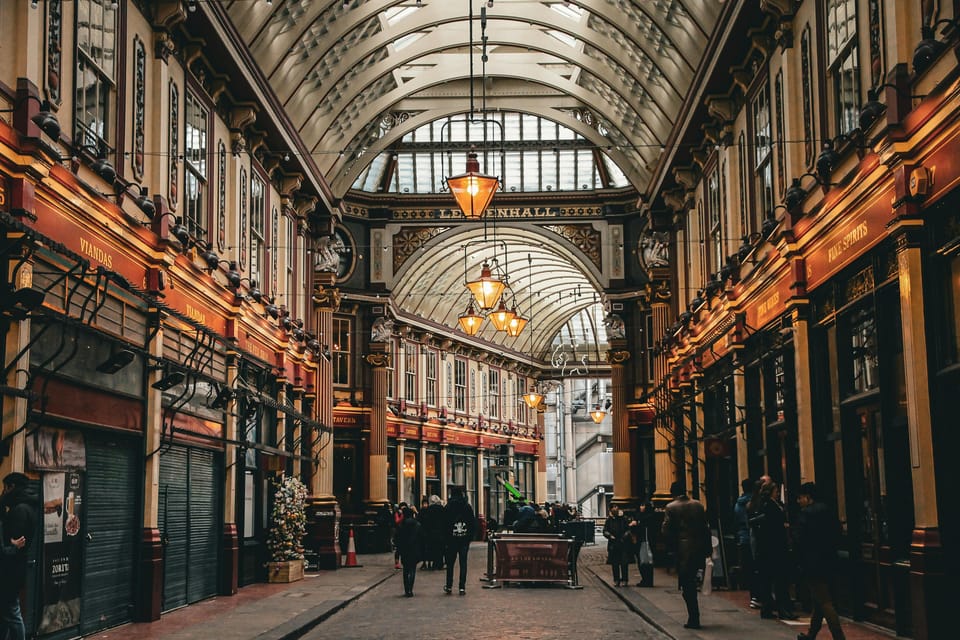
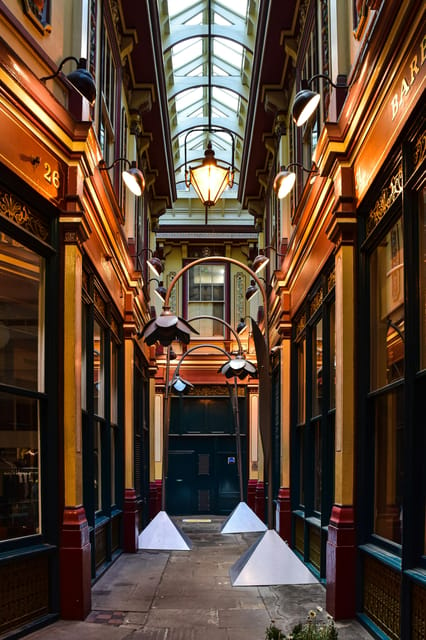
Leadenhall Market is next, and it’s one of those stops that makes you look up. This Victorian market sits right inside winding City streets, covered arcades and cobbled paths shaping how you move. It’s a market atmosphere, but with a historic frame.
If you’re a Harry Potter fan, it’s especially easy to see why people connect to Leadenhall. Even without the fandom angle, the place gives you a feel for London’s commercial energy—shops, movement, and the sense that trade was never far away.
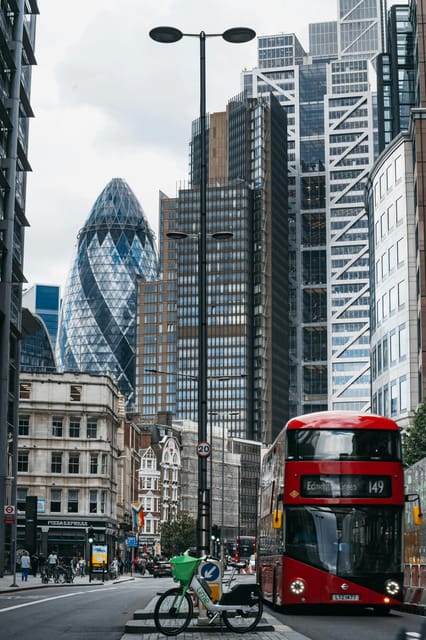
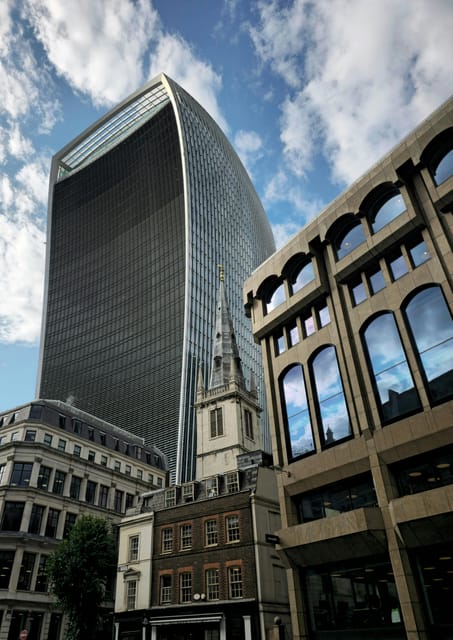
Then the walk briefly touches 30 St Mary Axe, the Gherkin. It’s a quick sighting, but it adds contrast you can’t get by staying in one era. You go from Victorian covered market passages to a modern icon in minutes. That contrast is part of the tour’s value: London doesn’t replace its past. It layers it.
Spitalfields and Ten Bells: Where Old Streets Start to Feel Personal
As the tour heads toward Spitalfields Market and Brick Lane, the mood shifts from corporate City to creative east London. You’ll stop at The Ten Bells Spitalfields—another quick stop—but one that puts a human beat into the route.
Spitalfields is where the story starts to feel more like everyday life and less like grand London landmarks. It’s also where the guide can talk about how the City’s reputation evolved, and why certain neighborhoods feel like they have their own emotional weather.
This part of the walk is a good time to slow down your eyes. Look at storefronts, archways, and the layout of streets you’d normally pass without noticing.
You can also read our reviews of more guided tours in London





Old Spitalfields Market Food Stop: Snack Time Without Pressure
The itinerary includes Old Spitalfields Market as a food market visit. You get about 15 minutes here, which means it’s not a sit-down meal; it’s a chance to grab something quick if you want it.
Food and drinks aren’t included on the tour, so budget for snacks if you’re hungry. I like this setup because it avoids the most common walking-tour problem: being forced into a meal schedule that doesn’t fit your appetite.
If you’re traveling with kids, this stop can be a win. It gives them something tangible—smells, colors, and quick choices—right in the middle of the walking story.
Jack the Ripper Notes: Spooky Context, Not a Full Detour
One of the most talked-about elements here is the way the tour handles the Jack the Ripper mystery. You’re not sent on a long, dedicated Ripper route. Instead, you get a respectful nod to the unsolved mystery and what the area might have felt like during that grim period.
I think that’s a smart choice. London’s dark history is real, but your time is limited. A careful mention lets you understand the cultural weight of the stories tied to these streets without turning the entire tour into a single theme.
As you’re walking through shadowy corners and quieter lanes, the guide helps you “feel” the atmosphere. It’s not about fear; it’s about context. You’ll leave with a stronger sense of why people still talk about these places.
Brick Lane in Shoreditch: Banksy Street Art and Vintage Browsing

The finish line is Brick Lane in Shoreditch, and this is where the tour’s energy turns outward. You end on the streets where street art lives on the walls, and the air often feels like it belongs to the present.
You’ll visit a Banksy in real life as part of this ending section. I like that the tour doesn’t treat street art like a scavenger hunt. The guide points you toward what to look for, and you get a better sense of how street art fits into the neighborhood’s story.
And then there’s the practical fun: you’ll have time to look for vintage clothing on Brick Lane. Even if you don’t buy, browsing is half the experience. If you do want to shop, keep an eye on your pocket space and your pace—you’re walking, and you’ll want enough time to browse without rushing.
This ending stop is also a nice contrast moment. The earlier parts focus on trade, fire, and survival. Here, London is loud with creativity and modern street culture. It’s a satisfying way to close a walking tour about hidden secrets.
Languages, Outdoor Walking, and Who This Tour Suits
The guide offers live commentary in Dutch and English, so you can expect clear communication in at least one of those languages. The tour is entirely outdoors, which means you’ll want to dress for weather. London in any season can change fast, and you’ll be outside for the whole 2.5 hours.
Good news: the tour doesn’t involve stairs or many inclines, though public paths can vary. If you have limited mobility, plan around uneven surfaces and be prepared for outdoor walking.
This is also the kind of tour that works well beyond first-time Londoners. People who have visited before often think they know the City—then the route proves otherwise by steering you into lanes and side spaces you’d likely skip on your own.
Kids can enjoy it too. The guide’s approach is engaging and story-led, and the route includes big visuals and street-level moments that help younger walkers stay interested.
Price and Value: Why $33 Makes Sense for This Route
At $33 per person for about 2.5 hours, this tour sits in the “more than a free stroll, less than a museum day” category. The value comes from the mix: you get City landmarks, market interiors, and a street-art finish, plus an easy-to-follow story thread.
You’re paying for someone to connect the dots. Walking the route on your own would be fine for seeing streets and famous spots—but the tour gives you the context that turns random corners into meaningful places. It also saves time by delivering a planned path from Royal Exchange to Shoreditch without you having to work out the best way through the maze.
One more value point: you don’t have to plan snacks or attractions. There’s a short market food stop if you want it, and the rest is built around the walking story itself.
Should You Book Hidden Secrets Of The City?
I’d book this tour if you want London that feels close-up. You like walking, you enjoy stories about how places got their reputations, and you want a finish with real street art and time to browse.
Skip it if you’re only interested in major landmarks and big museum stops. This tour leans into streets, lanes, and atmosphere. It’s not about long indoor time.
If you’re trying to choose between “see the sights” and “understand the City,” this walk is the practical middle path. It’s short enough to fit easily, and the ending on Brick Lane makes it feel like more than just history—it’s history you can still see.
FAQ
Where does the tour start?
You meet next to the London Troops War Memorial statue in front of the main entrance of The Royal Exchange. The guide will be holding a blue flag.
Where is the tour’s finish?
The tour ends on Brick Lane.
How long is the walking tour?
It lasts about 2.5 hours.
Is food included?
No. Food and drinks aren’t included, though there is a food market visit at Old Spitalfields Market.
Does the tour run indoors or outdoors?
It takes place entirely outdoors.
What languages are the live guides?
The live tour guide speaks Dutch and English.
Is there a cancellation policy?
Free cancellation is available up to 24 hours in advance for a full refund.