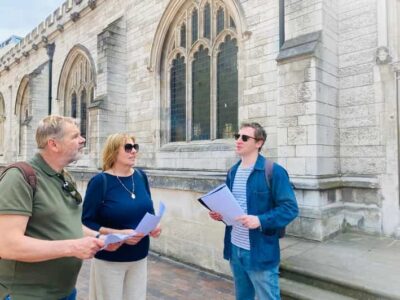
London’s past sits next to lunch queues.
This 140-minute guided walk through the City of London is interesting because it connects big landmarks—St Paul’s Cathedral, the Monument, the Tower—with smaller, practical stops that help you read the streets like a map. It’s the kind of route where you start to notice patterns: Roman traces here, a rebuilding lesson there, and finance-and-power details all around.
I especially like the mix of iconic stops plus entry tickets that save you time and add context. St Paul’s Cathedral gives you instant scale and sight lines, and the London Mithraem or Guildhall entry adds a deeper layer than you’d get from standing outside alone. You also get time to connect what you’re seeing to why the City keeps reinventing itself.
One possible drawback: because it’s packed into 140 minutes, you’ll want comfy shoes and realistic expectations. If you’re looking for slow, inside-every-room wandering, this may feel a bit fast, especially around the most popular sights like the Tower of London.
In This Review
- Key highlights you’ll care about
- A 140-minute City of London story you can actually finish
- Roman London stops: London Mithraem or the Guildhall
- St Paul’s Cathedral: scale, angles, and why it matters
- The Monument to the Great Fire: seeing London’s reset in 1666 terms
- Bank of England: the modern powerhouse in historic clothing
- Leadenhall Market plus 120 the Garden: street texture and sky views
- Tower of London: ending with the big dramatic anchor
- Price and value: why $24 feels fair for this mix
- Who should book this tour (and who should rethink it)
- A quick word on timing and pace
- Should you book this City of London history tour?
- FAQ
- How long is the Hidden Gems Tour of the City of London?
- How much does the tour cost?
- Is the tour wheelchair accessible?
- What’s included with the tour ticket?
- What language is the tour guide?
- Can I cancel for a full refund?
- Is it suitable for babies or very elderly visitors?
Key highlights you’ll care about

- Entry included to London Mithraem or The Guildhall, plus access to the viewing platform at 120 the Garden
- A 140-minute route that hits St Paul’s, the Monument, Bank, Leadenhall Market, and the Tower of London
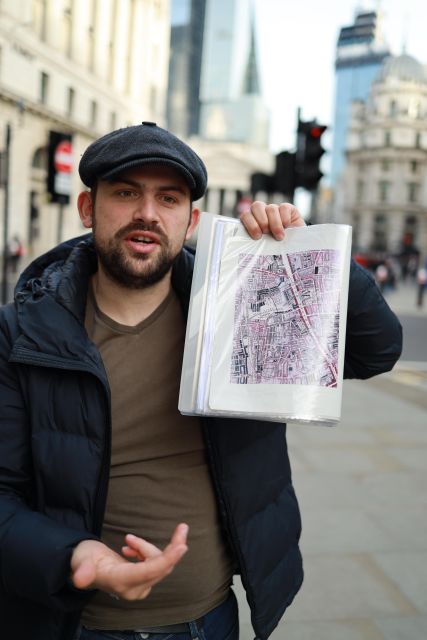
- Live English guide who keeps you moving and explains what you’re looking at (Nick is mentioned for loving the tour and teaching a lot)
- Wheelchair accessible, making it easier for more visitors to join in
- Runs with small numbers at times, which can mean more space for questions
A 140-minute City of London story you can actually finish
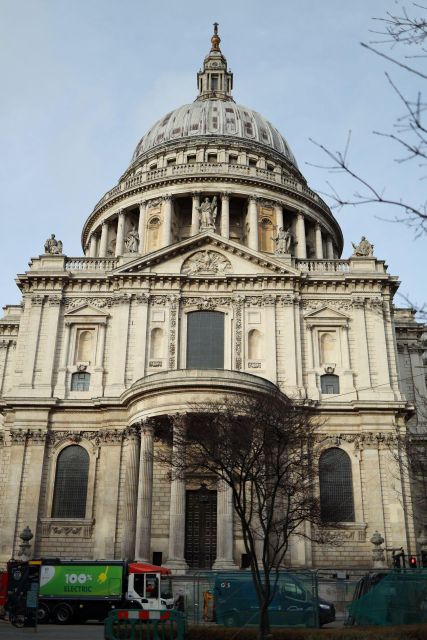
The City of London can feel like it has two faces. One is classic London—the domes, towers, historic stone. The other is office towers, rush-hour footsteps, and streets that look modern even when they’re built on older ground.
This tour works because it knits those faces together. In about 140 minutes, you get a guided pass through major landmarks plus the kind of stop that helps you understand the layers. It’s a smart length for a first visit, or a second visit when you want to see more than the postcard version.
You can also read our reviews of more city tours in London



Roman London stops: London Mithraem or the Guildhall
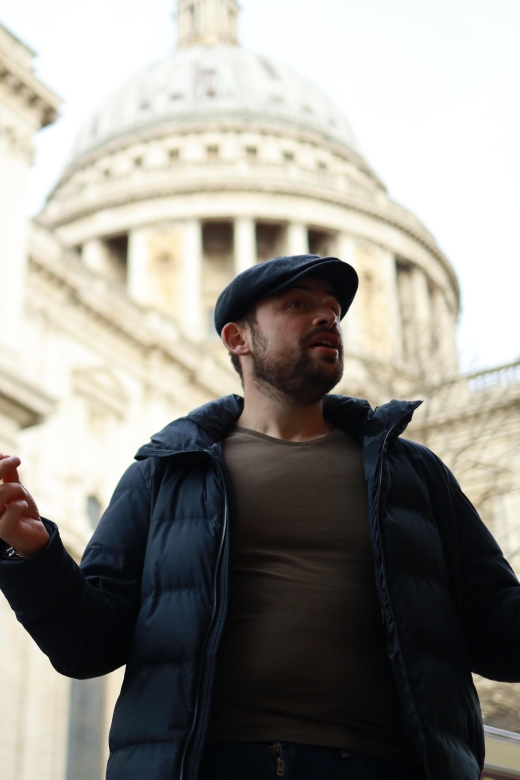
You start (or at least connect) with the idea that the City’s story didn’t begin with the medieval era. The included entry ticket to London Mithraem or The Guildhall matters because it turns the Roman and early-England story from background noise into something you can point to.
If you’re the type who likes evidence—stones, rooms, layouts—this is a useful add-on. It also helps the rest of the walk click. When you later see how power and authority took different forms, you’ll have a better sense of continuity.
Practical note: because the included entry is either London Mithraem or The Guildhall, what you experience indoors may vary by your time slot. Either way, you’re getting a real entry, not just a street-side explanation.
St Paul’s Cathedral: scale, angles, and why it matters

St Paul’s Cathedral is one of those places where the moment you arrive, you see why it became a symbol. The dome and the geometry make the building feel like it’s designed to guide your eyes—toward the skyline, toward the City, toward the next landmark on your route.
A good guided pass helps you focus on more than the obvious photos. You’ll likely get pointers on what to notice from street level: how the cathedral relates to the surrounding streets, how the sight lines work, and how it fits into London’s long pattern of rebuilding and reinvention.
It’s also a great stop for solo travelers. Even if you’re not sure what to look for, the guide gives you a way to read the space quickly.
The Monument to the Great Fire: seeing London’s reset in 1666 terms
The Monument to the Great Fire of London is basically London’s history lesson made physical. It marks a moment when the city was forced to change, not just remember.
On a walk like this, the Monument becomes more than a photo stop. It’s a turning point that helps you connect later architecture and planning choices to the disaster that shaped them. In other words: you’re not just learning a date. You’re learning why certain “rules” of rebuilding mattered.
If the weather is grey, the Monument can still feel dramatic. The stone presence and the surrounding streets give you an easy sense of direction—where you are now versus what happened before.
Bank of England: the modern powerhouse in historic clothing
The Bank of England area is where London’s past and present rub elbows. From the street, it can be tempting to think of the City as only finance and paperwork. But the guide’s explanations help you see the deeper story behind why this zone became central.
What I like about hitting Bank during this kind of tour is that it changes the angle of your sightseeing. You start thinking in systems: trade routes, authority, money, rebuilding after shocks. You’re not just walking between famous buildings—you’re learning why those buildings exist where they do.
Also, Bank is a good “mental breather” point. You can take in the scale of modern London while still knowing you’re standing on top of older layers.





Leadenhall Market plus 120 the Garden: street texture and sky views

Leadenhall Market brings back a more human scale. You get covered space, classic market energy, and the sense that the City isn’t only about offices and institutions. Even if you’re not shopping, it’s a satisfying stop because it feels lived-in.
Then you get the practical luxury of going up: entry to the viewing platform at 120 the Garden. A skyline view does two useful things on a walking tour. First, it helps you place what you just saw. Second, it gives you a sense of how tight the City’s geography is—how landmarks cluster and how movement through the area makes sense.
If you like photos, this is one of your best chances to get a skyline shot that looks different from the usual Thames-and-bridge angles.
Tower of London: ending with the big dramatic anchor
Closing near the Tower of London is a smart way to finish, because it’s big enough to feel like a conclusion even if you still have questions. The Tower is the kind of site that makes history feel personal—power, conflict, control, survival.
A guided approach helps you avoid the common problem: seeing a famous place but leaving with only a vague feeling. The guide’s job is to connect the Tower to the earlier parts of the walk—Roman beginnings, major rebuilding moments, and the City’s long shift from one kind of strength to another.
If you’re short on time, finishing here also gives you the option to linger. You can stay with the atmosphere and decide what you want to revisit on a future trip.
Price and value: why $24 feels fair for this mix
At $24 per person for 140 minutes, this tour is value-forward—mostly because it includes entry to more than just open-air landmarks. You’re not paying extra to “maybe” see inside something. You’re getting included admissions to London Mithraem or The Guildhall, plus access to the viewing platform at 120 the Garden.
That matters in London, where entry costs add up fast. Even if you’re only half-interested in one of the indoors stops, the other included experiences help balance it out. You also get a live English guide, which is where the real payoff comes from: context, pacing, and the ability to ask what things mean.
For best value, go when you have other sightseeing plans nearby. Then the tour acts like your structured backbone for the day.
Who should book this tour (and who should rethink it)
This fits well if you want a guided highlights route with real entry stops. It’s also a good choice if you like walking but don’t want to spend the whole day in transit.
It’s wheelchair accessible, which is a big plus for planning your London days. It’s also only listed in English, so if you need another language you’ll want to double-check what else is offered.
On suitability: the tour isn’t recommended for babies under 1 year and people over 95 years. If you’re in either of those age ranges, you may want to look for a different option with more flexible pacing.
A quick word on timing and pace
The duration is 140 minutes, so you’ll cover several major points without long stops at each one. That’s not a bad thing—it’s often the difference between “I saw London” and “I actually understand it.”
If you tend to pause often for photos, plan for that. Bring water, wear shoes you can walk in, and give yourself permission to move quickly for the first half, then slow down during your favorite section.
Should you book this City of London history tour?
If you want a focused introduction to the City of London that includes more than just exterior sights, I’d say yes. The combination of St Paul’s, the Monument, Bank, Leadenhall Market, and a Tower-of-London finish is a strong backbone, and the included admissions to London Mithraem or The Guildhall plus the 120 the Garden viewing platform makes it feel like more than a simple stroll.
Book it if:
- you like guided explanations and want your landmarks connected by theme
- you want entry experiences without building a separate plan
- you’re visiting for a short window and want efficient coverage
Skip it or consider an alternative if:
- you want long, slow time inside major sites
- you prefer very flexible pacing with lots of free time between stops
FAQ
How long is the Hidden Gems Tour of the City of London?
The tour lasts 140 minutes.
How much does the tour cost?
The price is $24 per person.
Is the tour wheelchair accessible?
Yes, the tour is listed as wheelchair accessible.
What’s included with the tour ticket?
Entry is included to London Mithraem or The Guildhall, plus entry to the viewing platform of 120 the Garden.
What language is the tour guide?
The live tour guide speaks English.
Can I cancel for a full refund?
Yes. You can cancel up to 24 hours in advance for a full refund.
Is it suitable for babies or very elderly visitors?
It is listed as not suitable for babies under 1 year and people over 95 years.