REVIEW · LONDON
The Great Brixton History & Culture Experience Private Tour
Book on Viator →Operated by The Great Weekender · Bookable on Viator
Brixton stories start on street corners. This private walking tour connects Brixton’s music venues and community landmarks with market life, street-level culture, and the names that shaped local identity. With a local guide named Wesley (he’s been praised for making the neighborhood feel personal), you’ll get the kind of context that turns a quick walk into real understanding.
I especially like that the route mixes everyday places with major cultural stops, so you’re not stuck only on plaques and photos. You’ll also spend meaningful time around Electric Avenue and Windrush Square, not just passing by them. One consideration: it’s designed for good weather, so plan to dress for walking and be ready for a possible date change if conditions aren’t right.
In This Review
- Key points before you go
- Why this Brixton tour feels different than a quick walk
- Getting to the meeting point (and why it’s a smart start)
- Electric Avenue to Brixton Market: where the story starts moving
- O2 Academy Brixton and the Department Store: culture in buildings
- Pop Brixton and Bowie’s birthplace: food smells and name power
- Windrush Square: the stop that turns sightseeing into meaning
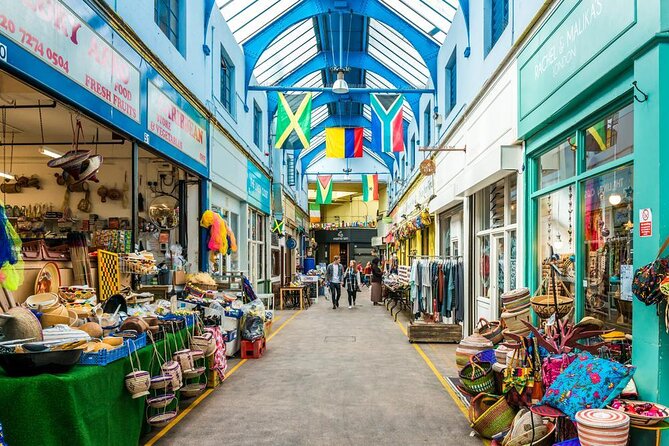
- Brixton Village: the old meets the new, under cover
- Brixton House Theatre: why arts history belongs on this route
- Walking pace, timing, and what to wear
- Private guide factor: what you’re really paying for
- Price and value: is $368.95 per group a good deal?
- Who should book this Brixton history and culture tour?
- Should you book this Brixton private walking tour?
- FAQ
- How long is the Brixton history and culture private tour?
- What does the tour cost, and how many people can be in a group?
- Where does the tour start, and does it end nearby?
- Is this tour private?
- What’s included with the tour besides the guide?
- Do I need to buy tickets for each stop?
- Is a mobile ticket used?
- What happens if the weather is bad?
- Can I cancel for free?
Key points before you go
- Private group, up to 15 people: you keep control of pace and questions.
- Markets plus music venues: you see the “how people live” side of Brixton.
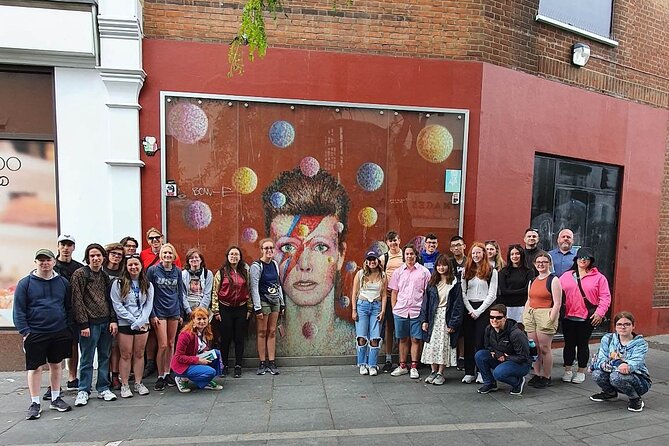
- Start at the David Bowie Memorial: the opening sets the theme fast.
- Some admissions are handled for you: several stops include entry so you’re not juggling ticket booths.
- Windrush Square and theatre stop included: you get context beyond shopping streets.
Why this Brixton tour feels different than a quick walk
Brixton can look like one thing from a distance. Up close, it’s layers: working-class markets, creative spaces, music history, and a big thread of migration and community memory. This 2 to 2.5 hour private route is built to show those layers in a human way, at walking speed.
What I like most is the balance. You’re not only chasing famous names, and you’re not only shopping or snapping photos. The tour uses recognizable hubs—markets, concert spaces, a revived department store, and public squares—to explain how different eras left their mark.
If you like neighborhoods where everyday life is part of the story, you’ll enjoy how the guide frames what you’re seeing. It’s a practical way to understand Brixton’s past while still catching its present-day energy.
You can also read our reviews of more private tours in London

Getting to the meeting point (and why it’s a smart start)
You meet at the David Bowie Memorial, 463 A23, London SW9 8BN. That start matters because Bowie is a shortcut into Brixton’s cultural identity. Even if you’re not an encyclopedia type, the tour sets expectations right away: this won’t be a generic history lecture.
From there, the walk stays focused and doesn’t feel scattered. The tour ends back at the meeting point, so you’re not trying to map your way home mid-walk.
This experience is near public transportation, which is a relief in London. You won’t need a long pre-walk just to get positioned. The only other physical note: it’s listed as moderate fitness, so bring comfortable shoes and expect some walking between stops.
Electric Avenue to Brixton Market: where the story starts moving
Your first stop is Brixton itself, including key sights around the markets area and Electric Avenue. You also get time at major anchors like the department store and the O2 area right as the tour begins. This is the part that helps you place everything else—who lived here, how the streets changed, and why the area became known for so much cultural output.
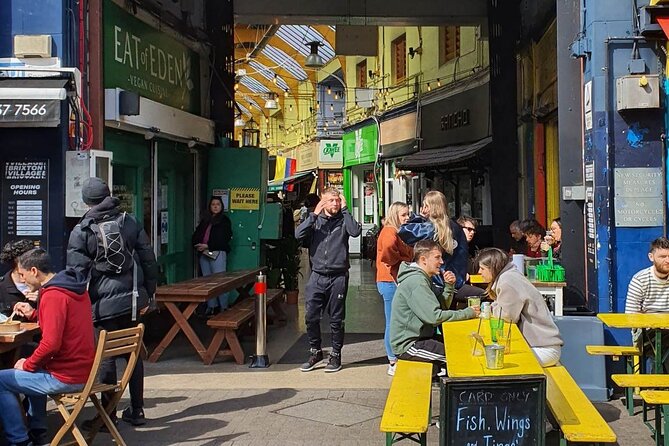
Then you move into Brixton Market and the connected covered areas. The stop is short, but it’s timed well: you get a quick look at how the market environment shifts from open-air street trade to the arcade-style lanes around Reliance Arcade, Market Row, and Granville Arcade.
Why this segment is valuable: markets are living history. They show what people needed, what people sold, and how community culture organizes itself. You’ll likely notice that the guide’s commentary makes the architecture feel purposeful, not random.
Possible drawback: because the walk is time-efficient, you won’t have a long, shop-by-shop browsing session. If your favorite part of London is lingering over stalls for an hour, you may want extra time before or after your tour.
O2 Academy Brixton and the Department Store: culture in buildings
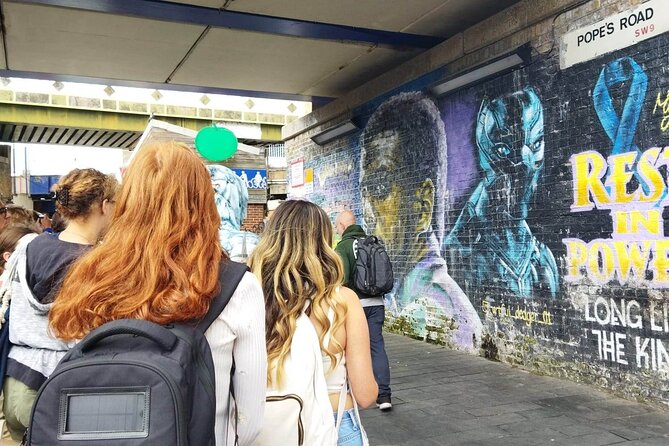
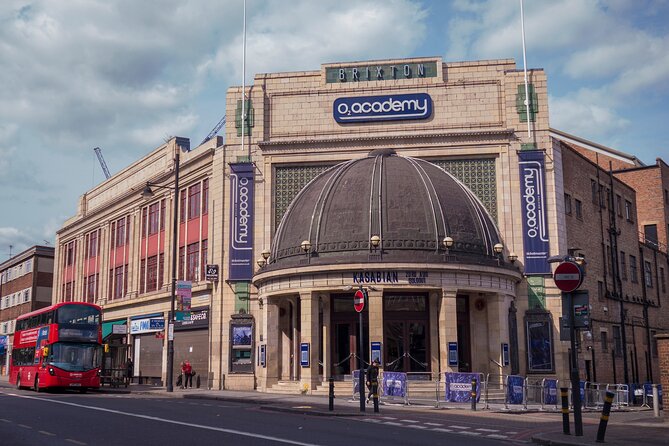
Next up is O2 Academy Brixton, described as a mid-sized concert venue in South West London (Lambeth district of Brixton). The value here isn’t just recognizing the venue. It’s using it as a lens for how music and performance helped shape Brixton’s public identity. Concert halls can feel separate from street life, but the guide ties them together with what you’re seeing outside.
Right after that, you’ll stop at the Department Store, an award-winning refurbishment of a dilapidated Edwardian building. That contrast—old structure, renewed use—is one of those London themes that’s easy to appreciate when you’re standing in front of it. You can literally see how a place got second life, and the tour’s context helps you understand why the refurbishment matters to the neighborhood.
This is one of the best parts if you care about cities as living systems. People often think history is only old stone. Here, history includes what communities choose to restore, reuse, and keep public.
Small practical note: you’ll spend about 10 minutes at each of these stops, so it’s enough time for orientation and story, not enough time for a full venue visit or long interior exploration.
Pop Brixton and Bowie’s birthplace: food smells and name power
At Pop Brixton, you’ll connect with the area’s Bowie connection—David Bowie is noted as being born here. The stop also has a sensory element: you may pick up the smells around the food in the area. That’s not a random detail. It’s a reminder that cultural identity in Brixton isn’t stuck in the past. It shows up in what people buy, eat, and gather for.
This stop works well because it mixes two things:
- celebrity and cultural recognition (Bowie as a signpost)
- everyday life around food and casual hangouts
If you’re a music fan, the Bowie context helps. If you’re not, the practical lesson still lands: Brixton’s fame didn’t replace local routines. It grew on top of them.
You can also read our reviews of more historical tours in London


Windrush Square: the stop that turns sightseeing into meaning
Then you’re at Windrush Square, and the focus shifts to history. This is one of those places where context changes how you see the space. Instead of treating it as a landmark you pass through, the tour explains why it’s iconic and why it matters to community memory.
I like this timing. After the market and entertainment-oriented stops, Windrush Square gives the tour weight. You get a clearer sense of the migrations and cultural currents that helped build the neighborhood’s identity.
This stop is also a good reminder for you as you explore on your own afterward. If you know what to look for—street-level symbols, public space choices, and the way communities commemorate—you start noticing more than you would on your first London walk.
Brixton Village: the old meets the new, under cover
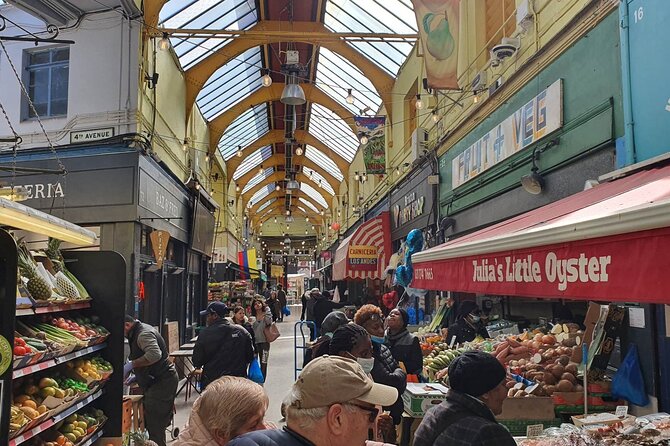
Your next market stop is Brixton Village, described as an undercover market that brings together old and new Brixton. That description is exactly what makes it worth stopping: it’s not only about the stalls. It’s about how the market format itself reflects changing needs.
This is an easy win on a day where London weather could switch lanes. Covered markets mean you can keep moving even if the sky decides to be dramatic.
The tour uses this stop to show continuity. Even when the storefronts and layout evolve, the point remains: Brixton people gather here, trade here, and express culture through daily habits.
If you want to do more than a quick look, you can treat this as your cue. After the tour, you’ll know what to target—snacks, browsing time, or a second visit when you have time to linger.
Brixton House Theatre: why arts history belongs on this route
The final stop is Brixton House Theatre, where you hear about the artistic and cultural history of the area. This is a smart closing act because it ties everything together. Markets show community life. Music venues show performance culture. Windrush Square adds memory and meaning. The theatre stop shows how creativity continues to develop in the neighborhood.
It’s also a helpful perspective for you if you tend to think of London arts as concentrated in a few famous zones. Brixton’s arts story is part of the broader network of London culture.
The stop runs around 20 minutes, giving you enough time to absorb the “why” behind the creative footprint, not just the “what” of locations.
Walking pace, timing, and what to wear
The tour runs about 2 hours to 2.5 hours, with short stops that add up to a focused loop. Expect several 10-minute segments and one longer theatre stop. That’s ideal if you want a structured overview without committing to a full day of walking.
Since the experience calls for moderate physical fitness, I’d plan for steady walking and a few outdoor stretches between stops. Wear comfortable shoes you can handle on sidewalks, steps, and curb cuts.
And yes, it’s weather-dependent. When conditions aren’t good, you’ll be offered a different date or a full refund. So bring a light layer you can work into your day, especially if you’re going in shoulder seasons.
Private guide factor: what you’re really paying for
This tour is private, which changes the whole feel. You’re not sharing your guide with strangers, and you can ask follow-ups as you go.
The best praise centers on the introduction and how it frames Brixton’s past and present as connected. A local guide like Wesley is noted for sharing insights into the community and its changing story, so you’re not just collecting stop names—you’re learning how they relate.
That guide factor is especially valuable in Brixton, where street signage, architecture, and public spaces can look ordinary until you know what they represent. When the guide explains the why, you’ll walk away seeing patterns you wouldn’t catch on your own.
Price and value: is $368.95 per group a good deal?
The price is $368.95 per group (up to 15 people) for the full tour. That’s the key detail: it’s not priced per person, it’s priced for your group size. If you’re traveling as a family or a small set of friends, this can be much better value than a per-person tour—especially in London, where guided time often gets expensive fast.
Think of it this way:
- If you book for a small group, the cost per person is higher.
- If you can fill the group up to 15, the per-person value improves a lot.
Also consider what’s included. You have the local tour guide, plus admission tickets included at multiple stops (Brixton Market, O2 Academy Brixton, the Department Store, Pop Brixton). Some other stops are marked free. That mix helps you avoid “surprise costs” mid-walk.
So, value depends on your group. For solo travelers, it may feel steep. For families, friend groups, or small clubs who want a shared experience with minimal hassle, it can be a strong way to buy time and context.
Who should book this Brixton history and culture tour?
I think it’s best for you if:
- you want a walkable overview of Brixton’s culture and history in a short time
- you care about music and performance spaces alongside markets and public squares
- you like tours where a guide explains what you’re looking at, not just where to stand for photos
- you’re traveling with a group and can split the cost meaningfully
It’s also a good choice if you’re already in central London and you want a different slice of the city, one that feels shaped by everyday community life and creative work.
Should you book this Brixton private walking tour?
I’d book it if you want a guided route that treats Brixton like a real neighborhood with layers, not a checklist. The combination of Electric Avenue, Windrush Square, O2 Academy Brixton, and Brixton House Theatre gives you both culture and context, and the private format makes it easy to ask questions.
I’d hesitate if you’re expecting a slow, wandering food market crawl. This is structured and time-efficient, and you’ll get the story first, with shopping time limited by the schedule.
If you can handle moderate walking and you’re going when the weather is likely cooperative, it’s a smart way to understand Brixton fast, and still leave room to explore afterward with better instincts.
FAQ
How long is the Brixton history and culture private tour?
It lasts about 2 hours to 2 hours 30 minutes.
What does the tour cost, and how many people can be in a group?
It costs $368.95 per group for up to 15 people.
Where does the tour start, and does it end nearby?
You start at the David Bowie Memorial, 463 A23, London SW9 8BN, UK, and the tour ends back at the meeting point.
Is this tour private?
Yes. It’s a private tour/activity, and only your group participates.
What’s included with the tour besides the guide?
A local tour guide is included. Admission tickets are included for several stops, including Brixton Market, O2 Academy Brixton, the Department Store, and Pop Brixton.
Do I need to buy tickets for each stop?
Some stops include admission tickets, while others are marked free. You won’t need to purchase admission for the stops that are listed as included.
Is a mobile ticket used?
Yes. The tour uses a mobile ticket.
What happens if the weather is bad?
The experience requires good weather. If it’s canceled due to poor weather, you’ll be offered a different date or a full refund.
Can I cancel for free?
Yes. You can cancel up to 24 hours in advance for a full refund. If you cancel less than 24 hours before the start time, the amount you paid won’t be refunded.