REVIEW · LONDON
London: Sherlock Holmes-Themed Walking Tour
Book on GetYourGuide →Operated by Brit Movie Tours · Bookable on GetYourGuide
London turns detective for two hours. This Sherlock Holmes walking tour starts at 224 Piccadilly, tied to the first Holmes and Watson meeting, and it connects book moments to BBC filming locations spanning Jeremy Brett, Benedict Cumberbatch, and Robert Downey Jr. The main drawback to plan for: it is a steady walk with limited places to sit, so pack comfortable shoes.
I like that you get a focused storyline without the museum-time drag. For about $18 for 2 hours, you are spending your time in the streets where the clues actually live—starting near Piccadilly Circus, with the tube making the meetup easy.
Guides such as Spencer, Owen, Ian, Fiona, and others bring a fast, story-driven style. If you like London that feels specific (not generic), this is a fun way to get it in one go, with plenty of chances to stop for photos and look up at the buildings you’ve seen on screen.
In This Review
- Key things to know before you go
- Meeting at 224 Piccadilly Circus: Where the tour starts fast
- The first Holmes and Watson meeting: Making fiction feel real
- What you see next: Gentlemen’s clubs and grand hotel settings
- Conan Doyle’s inspiration: How London shaped the stories
- Filming locations: From classic Sherlock to modern screen versions
- How the walk feels in real time: Pacing, photos, and staying comfortable
- Price and value: Is $18 worth two hours of Sherlock London?
- Who should book this Sherlock Holmes walk?
- Practical tips to make your 2 hours smoother
- Should you book this Sherlock Holmes walking tour?
- FAQ
- Where is the meeting point for the London Sherlock Holmes walking tour?
- How do I get to the meeting point by public transit?
- How long is the tour?
- What is the price per person?
- Is there a live guide, and what language is the tour in?
- Is the tour suitable for wheelchair users?
- Are baby carriages allowed?
- Can I cancel for a full refund?
- Do I have to pay right away?
- Is this tour only for experts on Sherlock Holmes?
Key things to know before you go
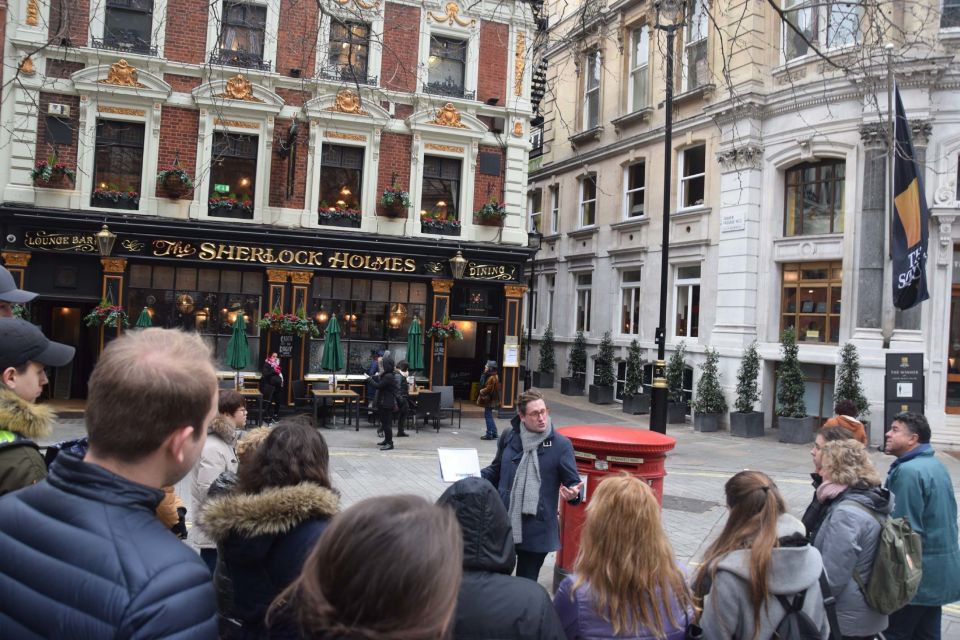
- Meet at 224 Piccadilly by the Eros statue, by the Criterion Theatre entrance (Piccadilly Circus)
- Start at the real spot linked to Holmes and Watson’s first meeting
- Follow Conan Doyle’s London trail, including landmarks that inspired the books
- Hit filming locations tied to major Sherlock Holmes screen versions, including BBC adaptations
- Expect a mostly walking experience with a lively pace and photo stops
- Plan ahead for access needs: wheelchair users aren’t suitable, and baby carriages aren’t allowed
Meeting at 224 Piccadilly Circus: Where the tour starts fast
Your day begins outside 224 Piccadilly, in the middle of Piccadilly Circus life, right by the Eros statue. Look for the blue sign above the entrance that mentions Criterion Est 1874. It’s a busy area, but that also means you will have plenty of visual landmarks to orient yourself.
Getting there is straightforward on the Underground. The closest tube stop is Piccadilly Circus served by both the Bakerloo and Piccadilly lines. I’d arrive a few minutes early just to settle your bearings—this kind of walking tour works best when you start together, not sprinting across the square at the last second.
Once you spot the group, the vibe is usually what you want for this sort of themed walk: ready to move, ready to look closely, and ready for the guide to start connecting story dots immediately.
You can also read our reviews of more walking tours in London


The first Holmes and Watson meeting: Making fiction feel real
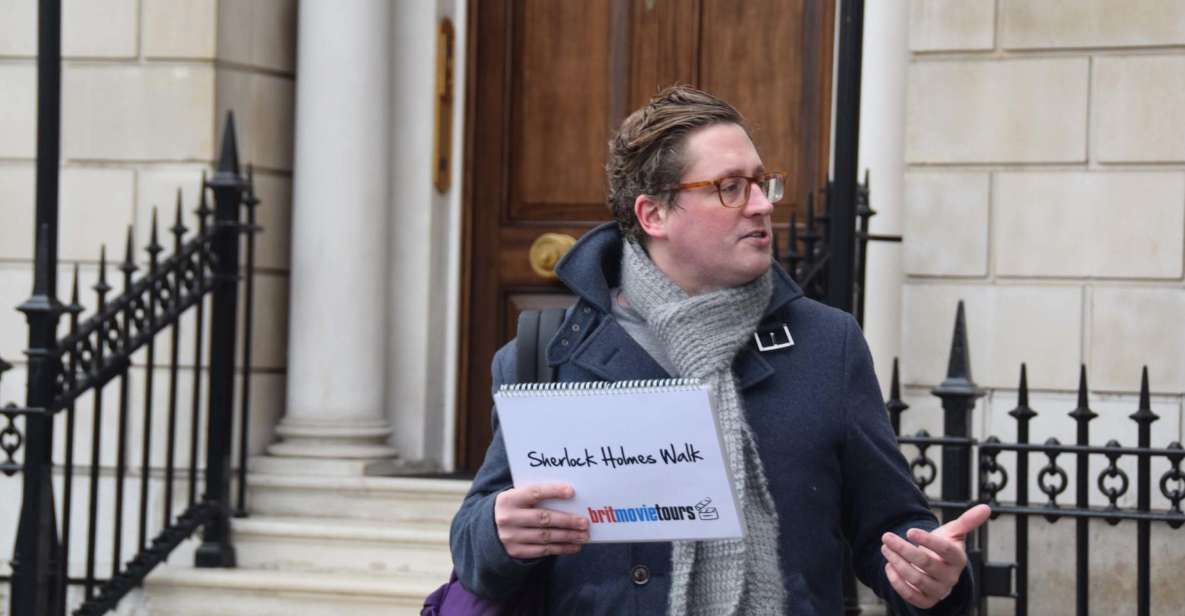
The tour’s hook is that you don’t begin with a random “Sherlock intro.” Instead, you start at the actual place associated with Holmes and Watson meeting for the first time. That matters, because it turns the whole experience from trivia into place-based storytelling.
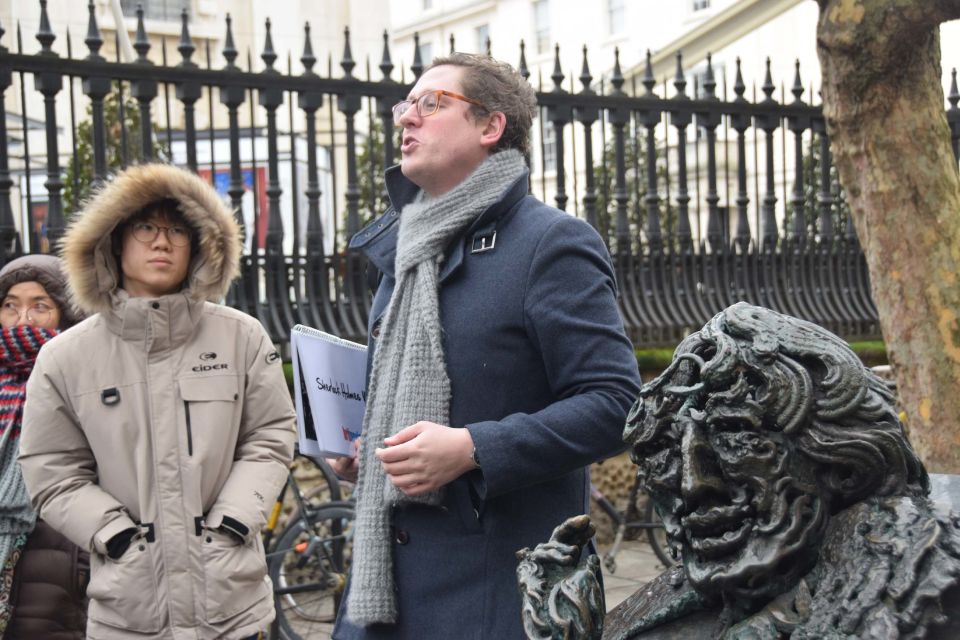
As you walk, the guide ties what you see to the way Conan Doyle wrote the city—streets, building fronts, and the social world around the characters. It’s not just about naming sites. You’re learning how London as a real machine of streets and institutions became the engine for the stories.
If you love the feeling of detective work, this opening is a great way to train your eyes. Suddenly you’re not just passing architecture. You’re looking for cues: entrances, facades, street corners, and the “wouldn’t this scene make sense right here?” effect that makes Sherlock London addictive.
What you see next: Gentlemen’s clubs and grand hotel settings

After that opening beat, the walk shifts into the world of gentlemen’s clubs and grand hotels that show up across the Holmes canon. These are the kinds of London locations that feel instantly familiar even if you haven’t memorized every story—because the clubs and hotels are where the characters’ power and manners play out.
This part of the tour is valuable because it helps you understand the social stage behind the mystery. Holmes isn’t just solving puzzles in a vacuum. He’s operating inside a particular London culture: respectable, hierarchical, and full of quiet conversations that can hide a lot.
The guide’s job here is to connect those institutions to the narrative patterns you recognize—where characters would plausibly meet, where information might move, and why certain settings keep reappearing. It’s a good reminder that Conan Doyle’s London is also a London of routines and networks.
And yes, you’ll be able to take photos along the way. The route keeps you near enough to the buildings to get good angles without the stress of trying to line up shots while the group is already moving.
Conan Doyle’s inspiration: How London shaped the stories

One of the best parts is how the tour explains the idea of inspiration in practical terms. Instead of treating the novels like they sprang fully formed from imagination, you get a sense of what in London actually fed Conan Doyle’s world-building.
You learn which aspects of the city inspired the detective’s atmosphere—things like the look and feel of central streets, the mix of public and private spaces, and the way certain areas could host both everyday life and high-stakes intrigue. That context makes the stories easier to read, because you start to see how Doyle might have mapped his characters onto real geography.
This is also where the guide’s personality helps. If you get a guide with a bit of humor and a knack for storytelling rhythm (you’ll see that style in guides like Owen, Fiona, and Spencer), the time passes fast. You stop feeling like you’re “being told facts” and start feeling like you’re following a running thread.
Filming locations: From classic Sherlock to modern screen versions
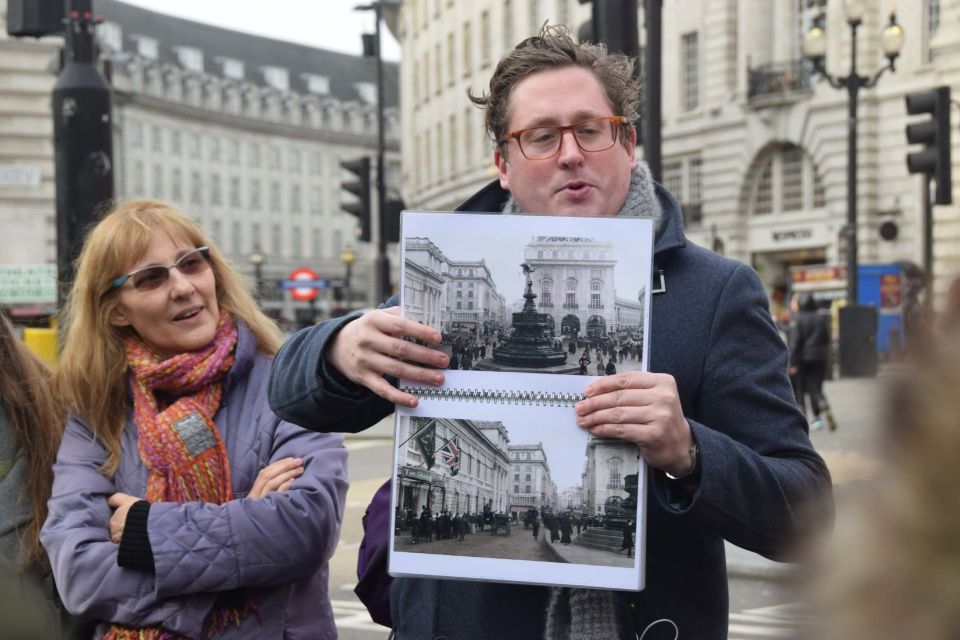
The tour also includes several filming locations used in popular Sherlock Holmes screen adaptations. You’ll move through central London spots tied to major portrayals, including versions associated with Jeremy Brett, Benedict Cumberbatch, and Robert Downey Jr.
This section works especially well if you watch adaptations on repeat, because it encourages a kind of re-watching. After you see the building in real life, scenes start to make more sense: camera angles, street widths, and the way productions choose locations that look good in motion.
It also gives you a satisfying cross-connection between book and screen. Rather than treating each adaptation like a separate universe, the guide keeps pointing out how London locations get reused, reinterpreted, or updated for different eras and styles.
If you’re a die-hard fan, this part is a highlight. If you’re newer to Sherlock, it still helps because it makes the city feel like a character, not a backdrop.




How the walk feels in real time: Pacing, photos, and staying comfortable
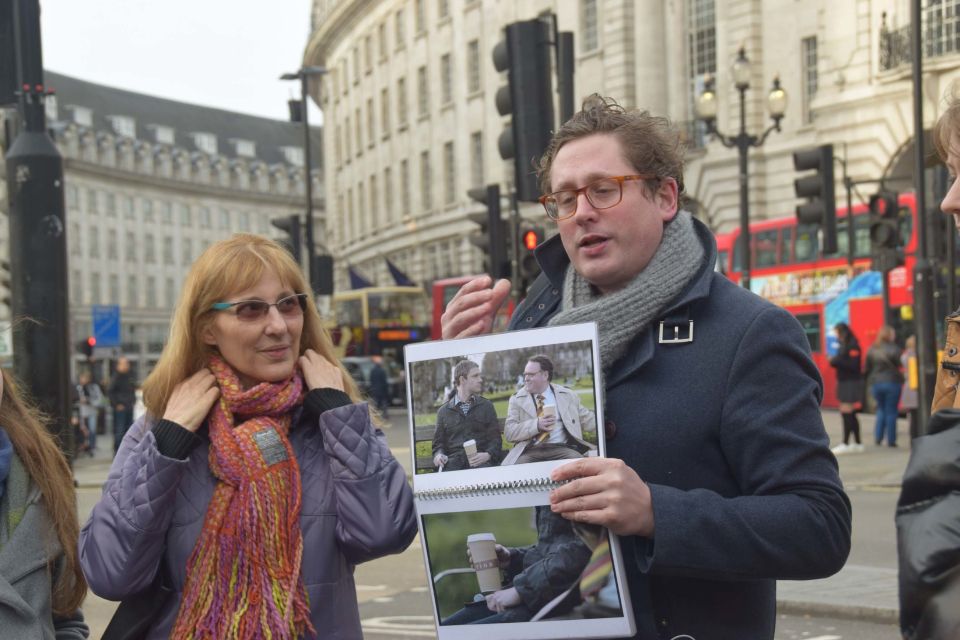
This is a 2-hour walking tour, so think of it as an active, central-London afternoon. The upside is you get a lot of story coverage without needing a full day. The downside is exactly what one thing you should plan for: your body is part of the experience.
A few guided walks benefit from regular rest points. This one has a running rhythm with photo stops rather than a lot of sitting time. So I’d come prepared for that reality—bring water, wear grippy shoes, and dress for the weather. London weather can change quickly, and you’ll be out on open streets for much of the route.
The good news: the route is central, and the stops are close enough that the sightseeing stays tight. You’re not spending the tour wandering through empty areas or doubling back. It’s built for momentum.
Price and value: Is $18 worth two hours of Sherlock London?
At about $18 per person for 2 hours, this is one of those London activities that’s easy to justify—especially if you like themed experiences that use real streets instead of endless indoor waiting.
Here’s why the value works:
- You’re paying for a guide to do the linking work: turning buildings into story understanding.
- You get both Conan Doyle inspiration and screen filming connections. That reduces the risk of the tour feeling like it only works for hardcore fans.
- It starts right at a major landmark area (Piccadilly Circus), which keeps the overhead simple. You’re not spending your whole trip on transportation.
So, is it “cheap” in absolute terms? Not the point. The question is whether it gives you more than just taking photos. With the mix of story-meets-city and the filming-location component, it usually does—because the guide makes the connections while you’re standing in front of the locations.
Who should book this Sherlock Holmes walk?
I’d steer you toward this tour if:
- You enjoy Sherlock Holmes more than you enjoy sitting in one place.
- You want a guided way to see central London through both book and screen lenses.
- You like your tour guides as performers, not just reciters of dates.
It’s also a nice fit for people who are part Sherlock fan and part London curious. The tour isn’t only about mysteries. It explains the London settings that shaped the characters’ world, so even if you’re not deep into every adaptation, you’ll still get value.
On the flip side, it may not suit you if:
- You need wheelchair access (this tour is not suitable for wheelchair users).
- You’re bringing a baby carriage (not allowed).
Practical tips to make your 2 hours smoother
- Wear comfortable, supportive shoes. Expect a solid walking session.
- Bring a light layer. Weather changes quickly in central London.
- Keep your phone camera ready. There are multiple photo-friendly moments.
- If you’re a fan of BBC Sherlock, Jeremy Brett, or the Robert Downey Jr era, keep your eyes up. The guide links what you’ve seen to where it was filmed or inspired.
Should you book this Sherlock Holmes walking tour?
If you want Sherlock London that feels grounded in real streets—and you’re happy with a mostly standing and walking experience—this tour is a strong buy. The standout strength is the start at the linked meeting point in Piccadilly, then the way the walk builds connections between Conan Doyle’s inspiration and major screen filming locations.
The decision comes down to one simple question: can you do two hours of walking with minimal seating? If yes, book it. If not, look for a shorter, more rest-friendly option.
FAQ
Where is the meeting point for the London Sherlock Holmes walking tour?
Meet outside 224 Piccadilly (with the blue sign above the entrance that also says Criterion Est 1874. Restaurant), near the Eros statue at Piccadilly Circus next to the Criterion Theatre.
How do I get to the meeting point by public transit?
Use the tube to reach Piccadilly Circus (Bakerloo and Piccadilly lines).
How long is the tour?
The duration is 2 hours.
What is the price per person?
The price is $18 per person.
Is there a live guide, and what language is the tour in?
Yes, there is a live tour guide, and the tour is in English.
Is the tour suitable for wheelchair users?
No. The tour is not suitable for wheelchair users.
Are baby carriages allowed?
No, baby carriages are not allowed.
Can I cancel for a full refund?
Yes. Free cancellation is available up to 24 hours in advance for a full refund.
Do I have to pay right away?
You can reserve now and pay later.
Is this tour only for experts on Sherlock Holmes?
No. It works well for both Holmes novices and fans, since the guide explains both the stories and the city locations.