REVIEW · LONDON
Mayfair, London’s famous aristocratic village – Exclusive, Private Walking Tour
Book on Viator →Operated by Hobnob Tours · Bookable on Viator
Mayfair isn’t just fancy; it’s full of sharp stories. On this exclusive, private walking tour, you’ll meet Sandy Rhodes and get Mayfair’s behind-the-wall details, from aristocratic shopping plans to royal-adjacent surprises. I like how the small group size keeps it personal, and I love that every stop is chosen for what it reveals, not just what it looks like.
One thing to plan for: you’ll cover about 2–3 miles on foot over roughly 2½ to 3 hours, and it’s rain-or-shine outdoors (with only one indoor stop).
In This Review
- Key things you’ll notice on this Mayfair tour
- The Mayfair advantage: why a private walk changes everything
- Starting point at Le Deli Robuchon: getting oriented fast
- Fortnum & Mason: a luxury store with a market-stall origin
- Royal Academy of Arts: when private homes become public institutions
- Burlington Arcade: shopping by design, with beadles in charge
- Bond Street and Old vs. New Bond: why the street layout matters
- Bruton Street and the birth site connection to Queen Elizabeth II
- Berkeley Square: plane trees, the singing legend, and that river detail
- Bonus personalization angle you should know about
- Mount Street Gardens: a quiet pause with a darker side
- Shepherd Market: James II’s origins and a past that’s not what you expect
- Price check: is $189 per group good value?
- Who should book this Mayfair walking tour (and who might skip it)
- FAQ
- FAQ
- How many people are included in the private group?
- How long does the Mayfair walking tour last?
- What does the tour cost?
- What’s included in the price?
- Is transportation included?
- Where do we meet and when does it start?
- Is there an indoor stop?
- Does the tour run in bad weather?
- Can I cancel and get a refund?
Key things you’ll notice on this Mayfair tour
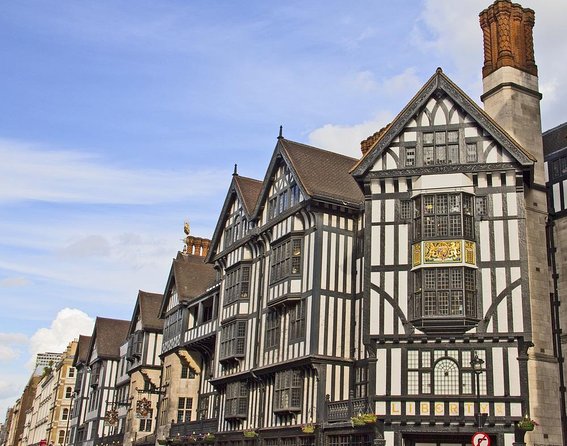
- Sandy Rhodes runs a tight, question-friendly tour for up to five people
- Fortnum & Mason gets a fast origin-story “turnaround” inside the store
- Burlington Arcade includes the 200-year shopping-arcade details and its beadles
- Bond Street is treated as a real-world fashion and wealth corridor, not a postcard
- Berkeley Square legends, plane trees, and the river connection get explained on the walk
- Shepherd Market’s strange role in Mayfair’s early identity is part of the route
The Mayfair advantage: why a private walk changes everything
Mayfair has a way of looking finished. The streets feel polished, and the buildings can make you assume there’s nothing left to discover. That’s where a private guide matters. You’re not just watching London move past—you’re being pointed at the bits that explain why this neighborhood is the way it is.
I like that Sandy guides just five areas of London, with Mayfair as one of them. That focus shows. The tour doesn’t feel like a generic loop around famous streets. It connects the dots: aristocratic life, elite retail, and the way streets like Bond Street and passages like Burlington Arcade were shaped to control who could do what.
For you, the practical win is simple: you can ask questions as you go. Want to know why a particular building exists? Curious about how Mayfair’s “village” identity formed? You can steer the conversation without stopping the whole group.
The other big value: the pacing stays human. You cover about 2–3 miles, but the timing between stops is short enough to stay fresh, and long enough to actually understand what you’re looking at.
You can also read our reviews of more walking tours in London



Starting point at Le Deli Robuchon: getting oriented fast
The tour meets outside Le Deli Robuchon Piccadilly, at the corner of Piccadilly and Bolton Street. It starts at 10:00 am and ends back at the meeting point, so you don’t have to think about transportation for the walk itself.
This matters more than you’d think. Mayfair streets can feel tricky to “read” at first—lane after lane of big storefronts and gated facades. When you begin with a guide who knows the area deeply, you get your bearings quickly, then the neighborhood starts to make sense.
Sandy also makes room for real-life needs. If you need a comfort break or a quick pause for coffee, you can let her know. You’re not on a strict cattle-car schedule.
And yes, you should wear comfortable shoes. The tour runs come rain or shine, so bring waterproofs if the forecast looks shaky.
Fortnum & Mason: a luxury store with a market-stall origin
Fortnum & Mason is one of those places you can walk past and still not understand. From the street it looks like pure refinement. Step inside and you’re reminded that many big-name institutions started with ordinary hustle.
Here, Sandy keeps the focus on the origin story: Fortnum & Mason began as a market stall. William Fortnum, a footman tied to Queen Anne’s era, took half-used Royal candles and sold them with house mates at a stall—then the enterprise grew from there. It’s a great reminder that aristocracy didn’t just appear fully formed; it often grew out of clever business decisions.
You get a quick 15-minute turnaround of the ground floor. That’s not enough time to shop like a marathoner, but it’s perfect for building context. By the time you step back out, you’ll be looking at the store like a living story instead of a display window.
Possible drawback to consider: because this stop is short, you won’t have time for a long browse unless you’re okay with doing a bit of exploring on your own after the tour.
Royal Academy of Arts: when private homes become public institutions
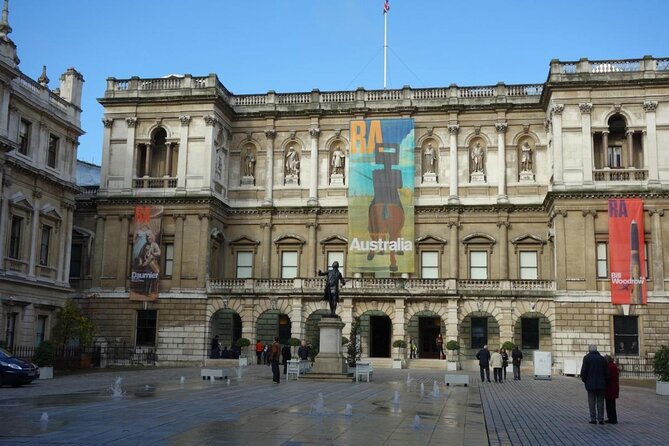
Next comes the Royal Academy of Arts, with a quick 10-minute look at a building that has reinvented itself over and over. The plot point Sandy emphasizes is the shift from private ownership to a world-famous art setting.
The property’s origins trace back to the Earls of Burlington, and since the 1660s, multiple architects have shaped it. Even with a short stop, it’s enough time to understand the basic “why it changed” story: elite spaces become cultural spaces, and the architecture evolves to match the new job it has to do.
This stop works well for you if you like seeing how London’s power centers shift roles over time. It’s not just a building—it’s a case study in how status and culture can overlap.
Burlington Arcade: shopping by design, with beadles in charge
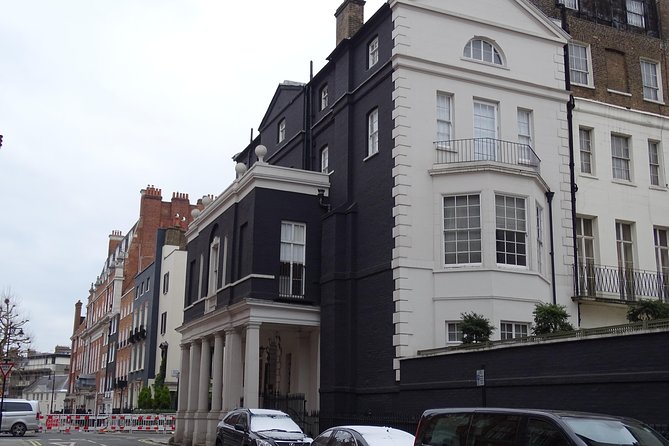
Burlington Arcade is the kind of place you might think you already know—until you learn why it was built. This arcade marks its 200-year anniversary, and Sandy brings out the backstory: George Cavendish, one of the Earls of Burlington, built it so his wife and her circle could shop without being pestered by beggars.
That “designed for comfort” detail turns a pretty arcade into a window on social control—who was allowed, who could linger, and how the wealthy protected their routines.
You’ll also hear about the arcade’s guardians, the Beadles. It’s a small detail, but it makes the space feel alive rather than decorative. Expect a pleasant stroll of about 10 minutes, plus a bit of window shopping if you want it.
This is also a smart pause in the day. After heavier architecture talk, the arcade lets your eyes rest while you take in the design.
You can also read our reviews of more private tours in London




Bond Street and Old vs. New Bond: why the street layout matters
Bond Street isn’t just famous; it’s strategically positioned. Sandy points out that it’s the road connecting Piccadilly and Oxford Street, and that it’s one of the most expensive stretches of real estate anywhere.
You’ll walk along Old Bond Street and part of New Bond Street for around 10 minutes, watching storefronts and window displays change what you notice. It’s not only about brands; it’s about how the street works as a display system for wealth.
Then comes a fashion-minded detour: you’ll see the home of Norman Hartnell, one of the most famous designers from the 1950s and 60s. Even if you’re not a fashion specialist, this gives Bond Street a human anchor—people’s names and professions, not just labels.
Why this matters for value: on a self-guided walk, it’s easy to see Bond Street as only expensive. With a guide, you see it as a designed stage for a specific social class.
Bruton Street and the birth site connection to Queen Elizabeth II
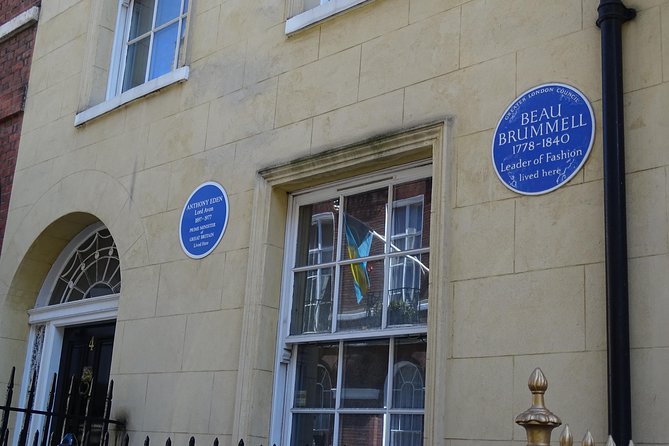
Bruton Street is brief but memorable. The tour passes the site where late Queen Elizabeth II was born, even though the original building no longer stands.
This moment works because it links Mayfair’s elite identity to a real, widely recognized figure. In a couple of minutes, you get a “big picture” emotional connection, then you’re back to studying the neighborhood’s architecture and street logic.
If you’re pressed for time, this is a good stop to have on the schedule because it adds meaning fast.
Berkeley Square: plane trees, the singing legend, and that river detail
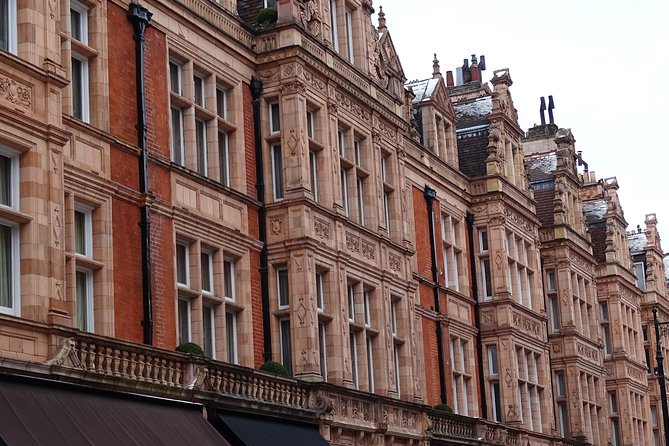
Berkeley Square is one of those places that feels like it belongs in a movie—until you learn the specifics. Sandy ties it to legend first, including the nightingale singing story. Then she brings it back down to what you can actually see: grade listed buildings around the edges and a setting that feels calm compared with surrounding streets.
You also get a visual detail that surprises a lot of people: a river runs through it. It reframes what “square” means in London. It’s not just a patch of greenery—it’s part of the city’s water-and-street engineering story.
You’ll spend about 10 minutes here, enough time to take in the plane trees (they’re highlighted as a big presence), plus the buildings’ edges that define the square.
Bonus personalization angle you should know about
One of the strengths of Sandy’s guiding style is adapting to your interests. If your group includes kids or teens who light up at cars, fashion, or odd facts, Sandy has a track record of tailoring what she shows—down to arranging access to specific nearby places like Bentley and Ferrari car garages around Berkeley Square for a family with two car-loving boys. If that’s your vibe, tell Sandy what your group cares about.
Mount Street Gardens: a quiet pause with a darker side
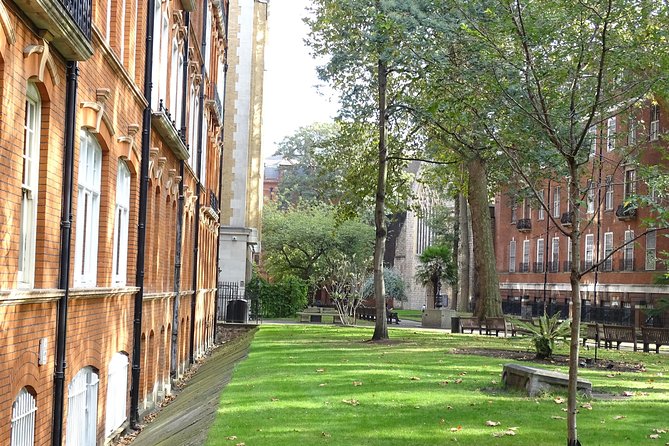
Mount Street Gardens is the tour’s reset button. It’s a tranquil oasis in the middle of a city that keeps moving. Sandy uses the calm setting to talk about the contrast between what’s peaceful now and what used to be there.
You get about 10 minutes in the gardens, and the point isn’t shock for shock’s sake. It’s how London keeps layers under its surface—what used to occupy an area can be different from what you assume after you look at the present-day greenery.
Sandy also points out what lies beneath your feet and mentions a gruesome building that used to grace the side of the gardens. Even if you don’t remember every detail, you’ll walk away thinking differently about “pretty” places in cities like London.
Shepherd Market: James II’s origins and a past that’s not what you expect
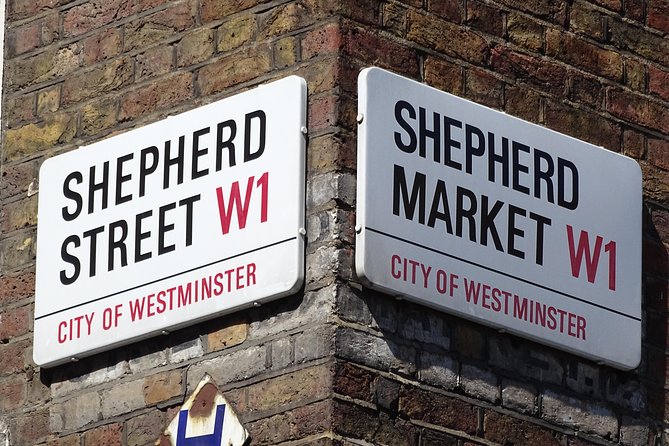
Shepherd Market finishes the route, and it has one of the most interesting origin stories in the walk. Sandy explains that it was set up in the reign of James II, and that the market helped give Mayfair its name.
Then comes the part that changes your mental image of Mayfair. For centuries, Shepherd Market was Mayfair’s well-known red light district. The tour also includes a specific historical twist: Sandy will share which MP lost his reputation there.
Even with a 10-minute stop, the effect is strong. The neighborhood stops being only a shopping district and becomes a place where power, money, and rule-bending all interacted.
Price check: is $189 per group good value?
At $189 per group (up to five people), the math depends on how many of you are in the group. For solo travelers or couples, it can feel steep. For a family or small group, it can be one of the better ways to get real local context without paying for a bigger crowd.
Here’s the value logic I’d use:
- You’re paying for a private guide and the ability to ask questions.
- The tour includes a small indoor stop at Fortnum & Mason, plus multiple well-chosen public sights.
- The route covers about 2–3 miles in roughly 2½ to 3 hours, which is a solid block of time in central London.
In other words, you’re buying clarity. If you want to understand Mayfair in the way a local would—shopping arcades with social rules, squares with legends and practical details, and neighborhoods that change jobs over time—this price can make sense.
If you only want photos and casual wandering, you might not need a private guide. But if you want the “how and why” behind the streets, that’s where the money goes.
Who should book this Mayfair walking tour (and who might skip it)
You’ll likely love this if:
- Your group wants a private experience with room for questions.
- You like history that connects to what you’re seeing today (retail, architecture, street design).
- You’re in London for a short stay and want to understand one area deeply in a few hours.
You might skip it if:
- You hate walking for 2–3 miles total, even at a moderate pace.
- Your idea of sightseeing is mostly looking and taking photos, with little interest in stories behind buildings.
- Your schedule is so tight that a 2½–3 hour block at 10:00 am is hard to fit.
In my opinion, Mayfair is the kind of neighborhood where a guide pays off quickly. It looks elegant, but it’s never “just pretty” once you know what to notice.
FAQ
FAQ
How many people are included in the private group?
The tour is private and priced for a group of up to 5 people.
How long does the Mayfair walking tour last?
It typically lasts between 2 hours 30 minutes and 3 hours, about up to 3 hours.
What does the tour cost?
It costs $189 per group (up to 5).
What’s included in the price?
You get a professional local guide (accredited by the ITG & University of Westminster). Admission tickets mentioned on the stops are free, but food and drinks are not included.
Is transportation included?
No. You’ll need to arrange transport to and from the start point yourself.
Where do we meet and when does it start?
You meet outside Le Deli Robuchon Piccadilly, at 82 Piccadilly, London W1J 8JA (on the corner of Piccadilly and Bolton Street). Start time is 10:00 am, and the tour ends back at the meeting point.
Is there an indoor stop?
Yes. The tour is mostly outdoors, but it includes an internal stop at one of Mayfair’s department stores.
Does the tour run in bad weather?
Yes. It goes ahead come rain or shine, so wear comfortable shoes and consider waterproofs or an umbrella.
Can I cancel and get a refund?
Free cancellation is available if you cancel up to 24 hours in advance of the experience’s start time for a full refund.
Would you like me to tailor a short “best for your interests” checklist (fashion, royals, odd history, shopping, or family-friendly) for your group before you book?