REVIEW · LONDON
Tower of London Crown Jewels and English Royal History Tour
Book on Viator →Operated by LetzGo City Tours GBP · Bookable on Viator
Crown jewels and grim stone, right on schedule. This 3-hour London tour pairs Crown Jewels access with a Blue Badge guide’s clear explanations of how the Tower shaped English royalty from William the Conqueror onward.
I especially like the guaranteed timed access, because it helps you spend your time seeing, not queuing. I also love how the guide connects rooms like the White Tower and St Peter ad Vincula with the big royal stories people hear in headlines.
One heads-up: it’s a lot of walking on uneven ground, with stairs and inclines, plus some genuinely dark content (including the torture instruments). Bring comfortable shoes and be ready for heavy themes.
In This Review
- Key things I’d plan around
- The Tower of London works as a guided story, not just a sightseeing stop
- Timed access and the meeting point: start simple, start on time
- Crown Jewels Exhibition: the famous crowns are impressive in person
- Tower of London intro: from fortress to prison to political message
- White Tower: Norman architecture meets Tudor-era power
- Tower Armory: tournament armor and the theater of kings
- St Peter ad Vincula and St John’s Chapel: quieter space, heavy meaning
- Battlements and Raven House: views plus the Tower’s living legend
- Lower Wakefield Tower: the darkness gets specific
- Price and value: what you’re really paying for
- Who this tour suits best
- Booking advice: when timing matters most
- Should you book this Tower of London Crown Jewels and English Royal History tour?
- FAQ
- How long is the Tower of London Crown Jewels and English Royal History Tour?
- How much does the tour cost?
- What’s included with the ticket?
- Do I get timed access to the Crown Jewels?
- Where do we meet, and where does the tour end?
- Is this tour suitable for limited mobility?
- What should I wear or expect for the tour?
Key things I’d plan around
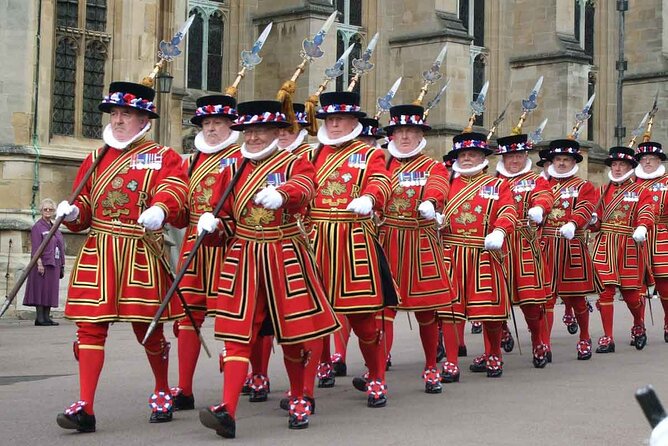
- Guaranteed timed access for the Tower of London and the Crown Jewels Exhibition
- Blue Badge London guide who answers questions as you go
- Imperial State Crown, Koh-i-Noor Crown, and Sovereign’s Sceptre with Cross up close
- White Tower + Armory linking Norman power, Tudor spectacle, and royal control
- Church of St Peter ad Vincula and St John’s Chapel for a quieter, sobering stop
- Lower Wakefield Tower for a look at torture instruments and the Tower’s darker reputation
The Tower of London works as a guided story, not just a sightseeing stop
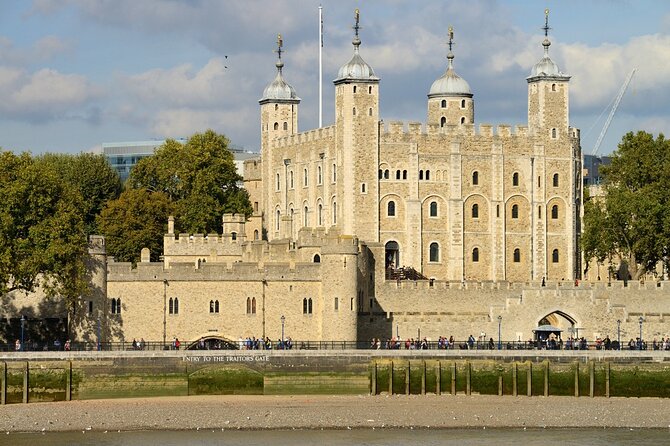
The Tower is one of those places where the walls already do part of the talking. But what makes this tour worthwhile is that you’re not left to piece together the timeline on your own. I like having a guide who can point to the fortress layout and then explain why rulers kept coming back to this exact site.
This is also a smart setup for a London day. You get a clear structure in about three hours, but it doesn’t feel like a rushed check-list. The group size is kept to a maximum of 30, so you can usually hear your guide and still move with the crowd without getting tangled.
You can also read our reviews of more historical tours in London



Timed access and the meeting point: start simple, start on time
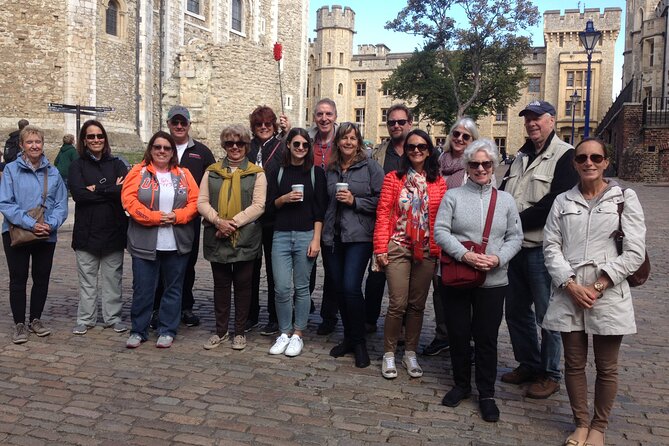
You meet at Starbucks Coffee, 3 Tower Place, London EC3R 5BT. It’s an easy landmark, and it also keeps the start practical if you’re coming in by public transport. The tour begins outside the Tower, so you get a quick “where you are and why it matters” orientation before you step deeper into the complex.
The big value here is guaranteed timed access. The Crown Jewels area is popular, and timed entry matters because it reduces the time you might otherwise spend waiting. With a timed ticket, you can pace yourself better across the whole experience.
At the other end, the tour finishes at Tower of London, London EC3N 4AB. That matters if you’re planning onward sightseeing or dinner. You’ll likely still be in a good zone for walking around the Thames area.
Crown Jewels Exhibition: the famous crowns are impressive in person
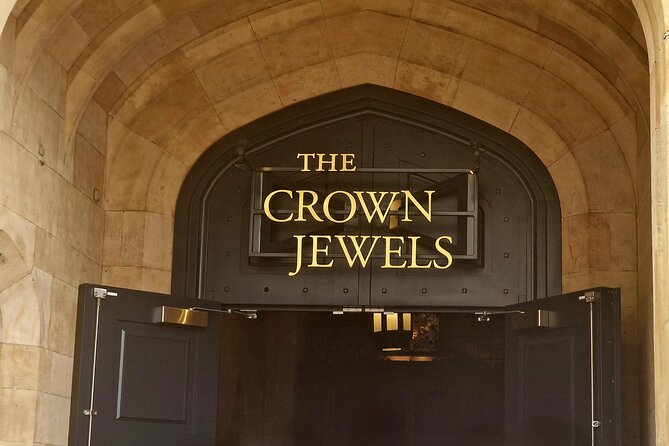
The Crown Jewels Exhibition is where most people’s eyes go first, and it’s the obvious headline for a reason. On this tour, you’ll have included entry to the Crown Jewels Exhibition and the Tower admission that gets you there.
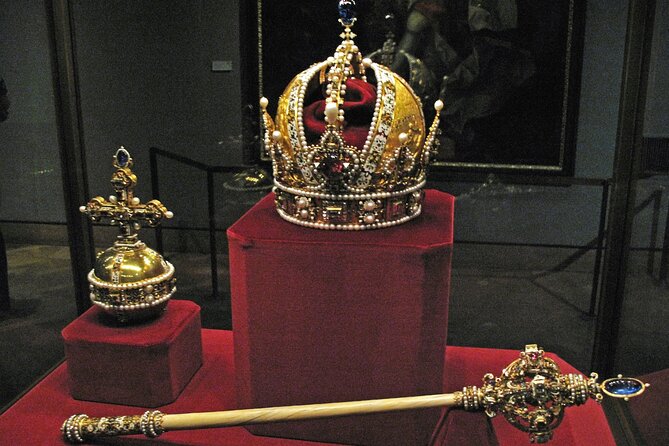
The specific pieces you’ll see include the Imperial State Crown, the Koh-i-Noor Crown, and the Sovereign’s Sceptre with Cross. Seeing these objects in a controlled exhibition setting changes the experience. Photos can’t show scale or material presence, and the display context helps you understand why these items were about more than decoration.
I also like that the guide’s explanations don’t stop at the objects themselves. They frame the crowns within the idea of authority. In other words, you’re not just looking at gold and gemstones. You’re watching power get performed.
Practical tip: the exhibition can mean you stand and look for stretches. Build in a slower browsing rhythm rather than trying to speed-run everything. You’ll get more out of it if you let the guide’s commentary anchor what you’re seeing.
Tower of London intro: from fortress to prison to political message
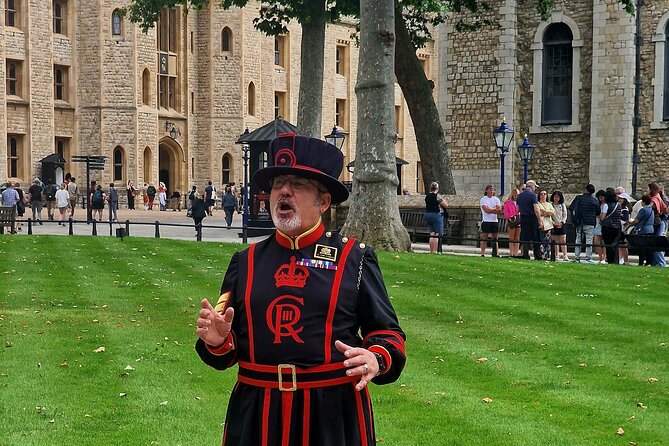
Before you’re deep in the buildings, your guide sets the scene. You start with a look at the fortress structure that was built by William the Conqueror in the 1070s. That early Norman foundation is key, because it explains why this site kept working for later rulers.
From there, the tour shifts toward what the Tower became known for: imprisonment and punishment, including executions. It’s not “just” a royal museum. The Tower’s story includes fear, confinement, and political control, and this guide does a good job making the darkness feel contextual rather than random.
This is where you’ll feel the tour’s tone most strongly. If you came expecting only regal pageantry, this stop re-frames the place quickly. It can be a relief to have a guide who keeps the stories clear, because the Tower’s timeline moves through a lot of reigns and turning points.
White Tower: Norman architecture meets Tudor-era power
The visit to the White Tower is a highlight for people who like solid buildings, not only artifacts. This part of the tour is focused on how the fortress changed as royal needs shifted.
You’ll learn how Henry III transformed the Tower into a more lavish royal residence. Then your guide covers how Edward I fortified it further, and how later rulers used the Tower in different ways—sometimes as a strategic base, sometimes as a holding place for enemies or inconvenient family members.
This is also where the Tower’s royal mythos starts to feel real. The tour includes the story commonly called the Princes in the Tower, involving Edward V and his brother Richard, who disappeared while under the guardianship of their uncle, Richard III. Even if you already know the legend, the guide’s explanation gives you a clearer sense of why the Tower mattered for custody, control, and political messaging.
Another reason I like this stop is that the White Tower helps you visualize the “who had the leverage” theme. The architecture isn’t just old stone. It’s part of the system.





Tower Armory: tournament armor and the theater of kings
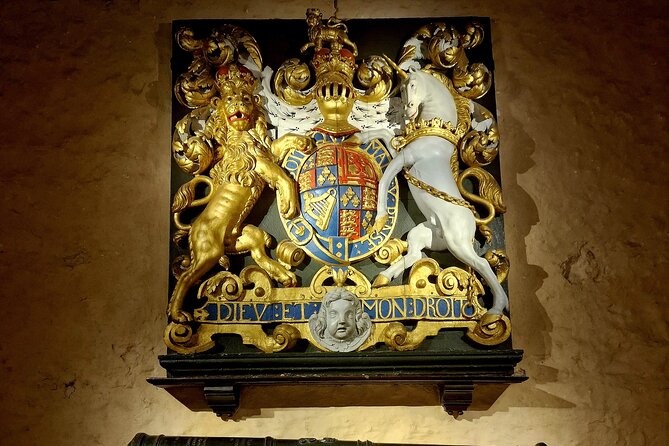
Next comes the Tower Armory, including access that lets you view tournament armor associated with Henry VIII and other kings. This stop is a useful contrast to the prison story.
Armor is a direct way to understand power, because it’s built around protection, status, and display. Tournament armor also reminds you that medieval and Tudor kings weren’t always living inside grim cells. They were also staging public strength, pageantry, and dominance.
I think this balance is one of the tour’s best strengths: it doesn’t treat the Tower as only one kind of place. You get the harsh side, but you also see the spectacle side of rule.
Tip: if you’re interested in specific eras, listen closely when your guide moves between them. The Armory can feel like “cool metal” unless someone connects it to the reign you’re currently studying.
St Peter ad Vincula and St John’s Chapel: quieter space, heavy meaning
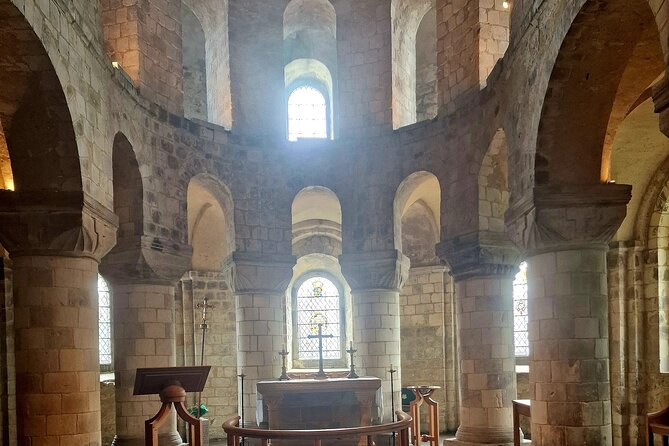
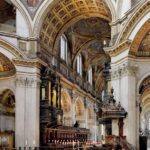
Included in the tour are the Church of St Peter ad Vincula and St John’s Chapel. This is one of those moments where the pace can slow naturally, because the setting invites a more reflective kind of attention.
The Tower is famous for punishment, and these chapel spaces add a human scale to that reputation. Even if you’re not religious, it’s the kind of stop that makes the Tower’s cruelty feel personal instead of abstract.
What makes it work with a guide is that you’re not just walking through quiet rooms. You’re learning how these spaces fit into the broader Tower story—how the site could be both a place of imprisonment and a place of ceremonial or spiritual significance.
Battlements and Raven House: views plus the Tower’s living legend
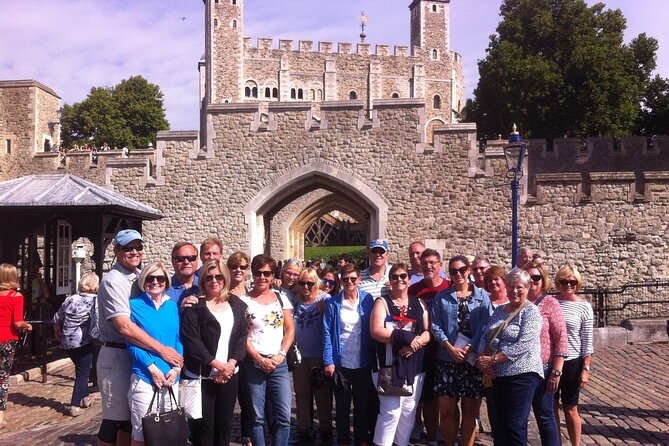
From the battlements, you get a sense of the Tower’s defensive thinking. You can see why a fortified place like this mattered in medieval London. This is also where the Tower becomes easier to understand spatially—walls, angles, sight lines, and the way the fortress controls movement.
Then there’s Raven House, described in the tour as the home to the most famous birds in London. If you’ve never seen the Tower’s ravens up close, this is one of those small moments that cuts through the darker material. The birds make it feel less like a sealed history exhibit and more like a working, living site.
I like adding this stop to the tour because it breaks tension. After stories of power and punishment, seeing something alive and curious—on stone ground inside an enormous fortress—helps the whole day land more cleanly in your mind.
Lower Wakefield Tower: the darkness gets specific
The included visit to the Lower Wakefield Tower is where the tour leans into the Tower’s reputation for torture. You’ll see the instruments of torture and hear stories connected to them.
This is absolutely not a “light” stop. If you’re sensitive to graphic or disturbing topics, give yourself permission to step back mentally during this portion. A guide can keep the information organized and factual, but the subject itself stays heavy.
Still, I think this inclusion makes the overall tour feel honest. The Tower wasn’t only a backdrop for crowns. It was a place where the state used fear. Seeing the instruments (even in a museum-like context) turns “history” into something more concrete.
Practical note: if you know you’ll struggle with this topic, you’ll get more comfort from sticking with the group and listening selectively. Wandering off during this segment isn’t a great plan.
Price and value: what you’re really paying for
At $122.49 per person, this tour isn’t the cheapest way to see the Tower. But it does group together a lot of paid entry components under one guided umbrella.
You get:
- Entry to the Tower of London (including White Tower & Armory)
- Entry to the Crown Jewels Exhibition
- Visits that include St Peter ad Vincula and St John’s Chapel
- Time on the battlements and Raven House
- Entry into the Lower Wakefield Tower
For me, the best value piece is the guaranteed timed access. Crown Jewels time slots can be the difference between an enjoyable morning and a frustrating wait. If you’re planning only one Tower-focused experience, this format helps you cover the major highlights without turning the day into logistics.
Who this tour suits best
This is a strong match if you want:
- A guide who explains how English royal power played out in real spaces
- Both the regal and the grim sides of the Tower
- A structured 3-hour plan that hits Crown Jewels, White Tower, Armory, and the church spaces
It may not be ideal if you:
- Don’t handle long walking well, since the tour includes cobblestones, hills, stairs, and uneven surfaces
- Need step-free access, because it’s not recommended for travelers with limited mobility
Booking advice: when timing matters most
This tour is typically booked well ahead (on average, 82 days in advance). That doesn’t mean you should panic, but it does suggest demand is high—especially for popular time slots tied to Crown Jewels access. If your London dates are firm, it’s smart to book early rather than hope.
Also, remember this experience runs in all weather, so don’t plan around perfect conditions. If you’ll be out in rain or cold wind, wear layers and bring a weather-appropriate outer layer.
Should you book this Tower of London Crown Jewels and English Royal History tour?
If you want one guided way to see the Tower’s biggest names—Crown Jewels, White Tower, Armory, St Peter ad Vincula, and Lower Wakefield Tower—this is a solid pick. You’re also getting the key “how to make sense of it” advantage: a Blue Badge guide who can answer questions and connect scenes across reigns.
I’d book it if you enjoy story-driven history and you’re comfortable with darker themes. I’d think twice if walking over uneven ground is a problem for you, or if torture-related content would put you on edge.
FAQ
How long is the Tower of London Crown Jewels and English Royal History Tour?
It runs for about 3 hours total.
How much does the tour cost?
The price is $122.49 per person.
What’s included with the ticket?
You get entry to the Tower of London and Crown Jewels Exhibition, plus entry to the White Tower & Armory. You also visit Church of St Peter ad Vincula and St John’s Chapel, the battlements and Raven House, and you enter the Lower Wakefield Tower.
Do I get timed access to the Crown Jewels?
Yes. The tour includes guaranteed timed access tickets for the Tower of London and entry to the Crown Jewels Exhibition.
Where do we meet, and where does the tour end?
You meet at Starbucks Coffee, 3 Tower Place, London EC3R 5BT, UK, and the tour ends at Tower of London, London EC3N 4AB, UK.
Is this tour suitable for limited mobility?
It’s not recommended for travelers with limited mobility.
What should I wear or expect for the tour?
Wear comfortable shoes. The tour involves walking on uneven surfaces, cobblestones, hills, inclines/declines, and stairs. It operates in all weather conditions, so dress appropriately.