REVIEW · LONDON
London: Medieval History Walking Tour from The Tower
Book on GetYourGuide →Operated by The Sights of London Tour · Bookable on GetYourGuide
Medieval London walks right beside the Tube. This 2-hour Thames-side tour strings together big-name landmarks and lesser-seen stops, with an expert historian guide who explains what you’re looking at in context, not just dates.
I especially love how the walk links power, politics, and everyday life across centuries. I also like the route balance: you get major sights like Tower Bridge and St Paul’s, plus stops that help the river feel like a living highway, not a backdrop. One thing to consider: it runs in all weathers, so you’ll want genuinely comfortable shoes and weather-appropriate clothing.
In This Review
- Key highlights to look forward to
- What this 2-hour Thames walk is really good at
- Tower Hill start: setting the tone before you even cross the river
- Tower of London: why this fortress sits at the center of medieval London
- Tower Bridge crossing: the landmark explained beyond postcard photos
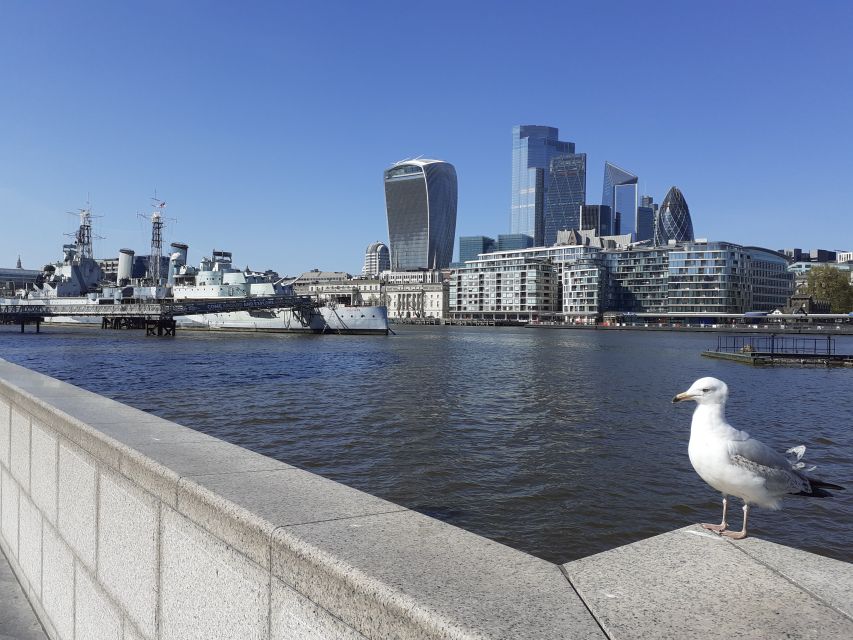
- HMS Belfast: war history on the same river route
- Southwark Cathedral and Borough Market: religion meets trade
- The Golden Hinde and Shakespeare’s Globe: culture, storytelling, and the river’s pull
- Winchester Palace and St Paul’s: the skyline gets a medieval spine
- Millennium Bridge and the finish near EC4M 8AD: wrap-up with fresh bearings
- Price and value: $24 for two hours along the Thames
- Who should book this tour (and who might skip it)
- Should you book the London Medieval History Walking Tour from the Tower?
- FAQ
- How long is the tour?
- Where do I meet the guide?
- What is the price per person?
- What major sights are included along the route?
- Does the tour run in all weather?
- What language is the tour guide?
- Is the tour wheelchair accessible?
- What should I bring for the walk?
- Is free cancellation available?
- Is pay later an option?
Key highlights to look forward to
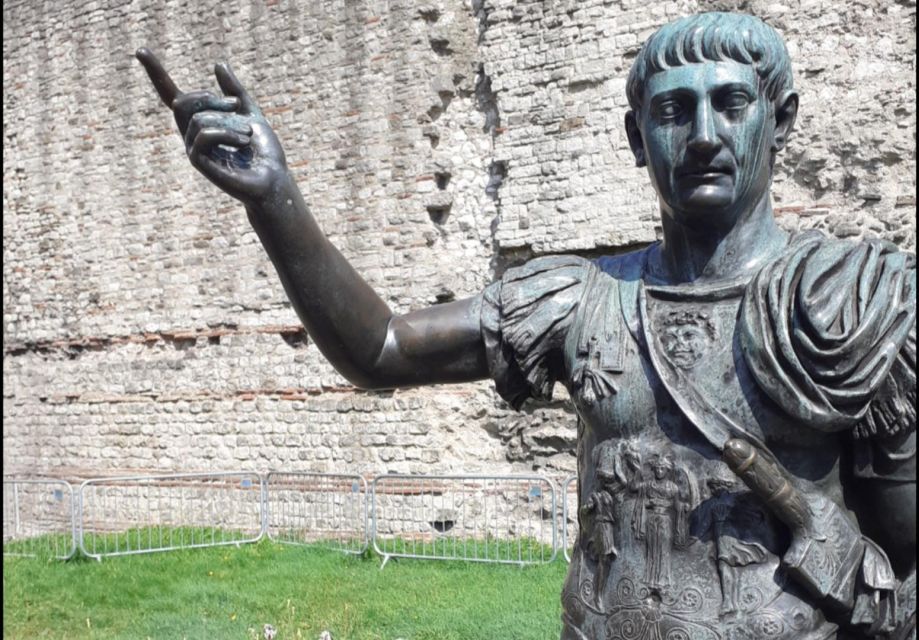
- Tower of London context near Tower Hill: you start where London’s medieval story concentrates
- Tower Bridge build explained: see the landmark up close and learn how it came to be
- HMS Belfast and D-Day connections: the route moves beyond the medieval era into 20th-century history
- Southwark Cathedral and Borough Market: religion and trade side by side along the south bank
- Shakespeare’s Globe and the Thames culture loop: art, commerce, and river life in one line of walking
- St Paul’s and Winchester Palace impact: you finish with two architectural anchors that help the whole timeline click
What this 2-hour Thames walk is really good at
This is the kind of tour that helps you understand London fast. In just 2 hours, you cover a corridor along the Thames where centuries overlap: Roman-era footprints, medieval power, religious institutions, mercantile life, and then the modern world stepping in. The payoff is that the skyline stops feeling like random famous buildings and starts feeling like a map of cause and effect.
The other big advantage is the guide. Names that come up in the experience include Mick Priestly (and other guides like Mick/Mike/Michael depending on the day). People repeatedly praise the way these guides answer questions with real depth and bring the subject down to human scale—politics you can picture, religion you can place, and daily life you can imagine.
You can also read our reviews of more walking tours in London



Tower Hill start: setting the tone before you even cross the river
You meet outside the western exit of Tower Hill tube station, near Trinity Square and the Citizen M Hotel, close to the Tower Hill Tram burger van. Your guide holds a flagpole with a flag flying from it, which is a small detail—but it makes meeting up easier when the area is busy.
The start matters because Tower Hill is the mental doorway to the whole story. From the first minutes, you’re framed to notice how the river shaped security, trade, and control. Even before you hit the big photo stops, you’ll get the theme: London grew by grabbing advantages along the Thames.
Practical tip: plan to stand and walk consistently for the whole session. People mention the route can feel like a lot on the feet, so treat it like a brisk city walk, not a slow stroll.
Tower of London: why this fortress sits at the center of medieval London
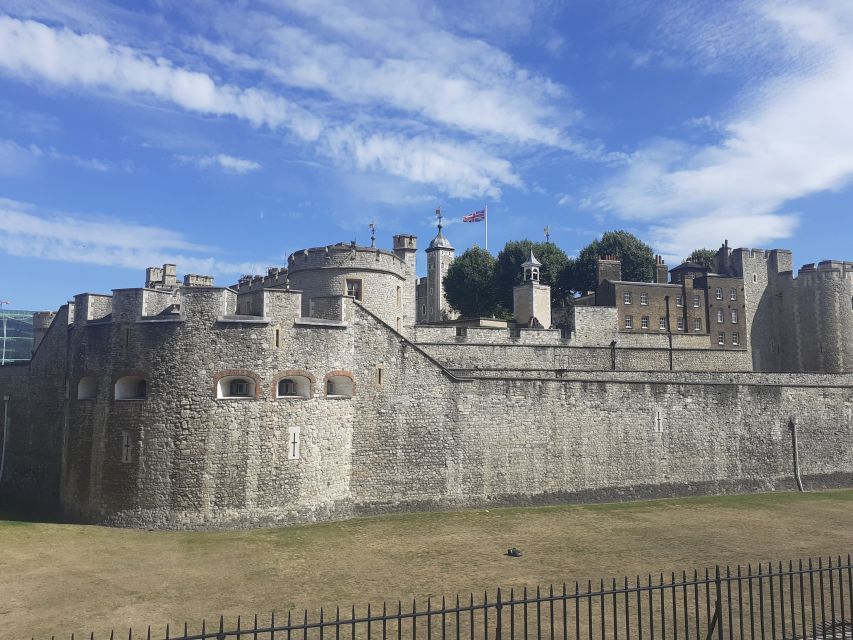
The tour gets right into the Tower of London, with guided sightseeing that sets up its roughly 1000-year significance. This isn’t just a “look at the walls” moment. You learn why this place mattered—because medieval power needed visible, intimidating proof. The Tower wasn’t only a building; it was a system for control, punishment, administration, and messaging.
Even if you don’t go far inside (the data here emphasizes guided viewing and sightseeing), the guide’s explanations help you read what you see from outside. You start noticing how fortifications and institutions work together, and how the Thames location amplified everything: movement of people, supply lines, and strategic advantage.
If you’re interested in medieval politics and religion, this stop gives you the language to understand why later stops along the south bank aren’t separate stories. They’re part of the same machine.
Tower Bridge crossing: the landmark explained beyond postcard photos
Crossing the Thames on Tower Bridge is the “yes, you’re in London” moment—but the value is the how. The tour includes guided context about how Tower Bridge was built, so the bridge becomes more than a viewpoint.
This is also where the walking tour format pays off. On a bus, Tower Bridge is a quick pass. On foot, you get time to register details and connect the bridge to the river’s role in moving goods and people. You learn to see the bridge as infrastructure that changes how the city functions, not just architecture meant for photos.
Also, plan for crowds around the bridge at peak times. The good news: the tour keeps you moving and gives you a reason to look closely while others are simply trying to get the perfect picture.
HMS Belfast: war history on the same river route
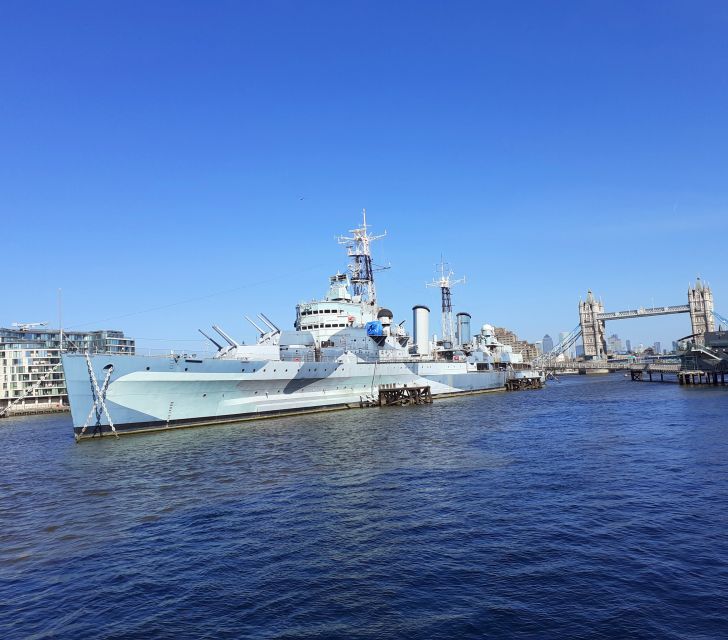
A key pivot in this tour is HMS Belfast, the ship that took part in the D-Day landings of WWII. That sounds like a left turn if you booked it for medieval London, but it’s a smart one—because it puts the medieval timeline into a broader national story.
Why it works: the Thames has always been about Britain’s connection to the sea. You can feel that continuity between fortress London and later global conflict. The guide’s job here is to connect the river’s strategic importance across eras, so HMS Belfast doesn’t feel tacked on. It feels like the river’s next chapter.
If your main goal is strictly medieval, you might wonder why this stop appears. Still, the route’s strength is that it teaches you how London’s identity evolved, step by step.
You can also read our reviews of more historical tours in London






Southwark Cathedral and Borough Market: religion meets trade
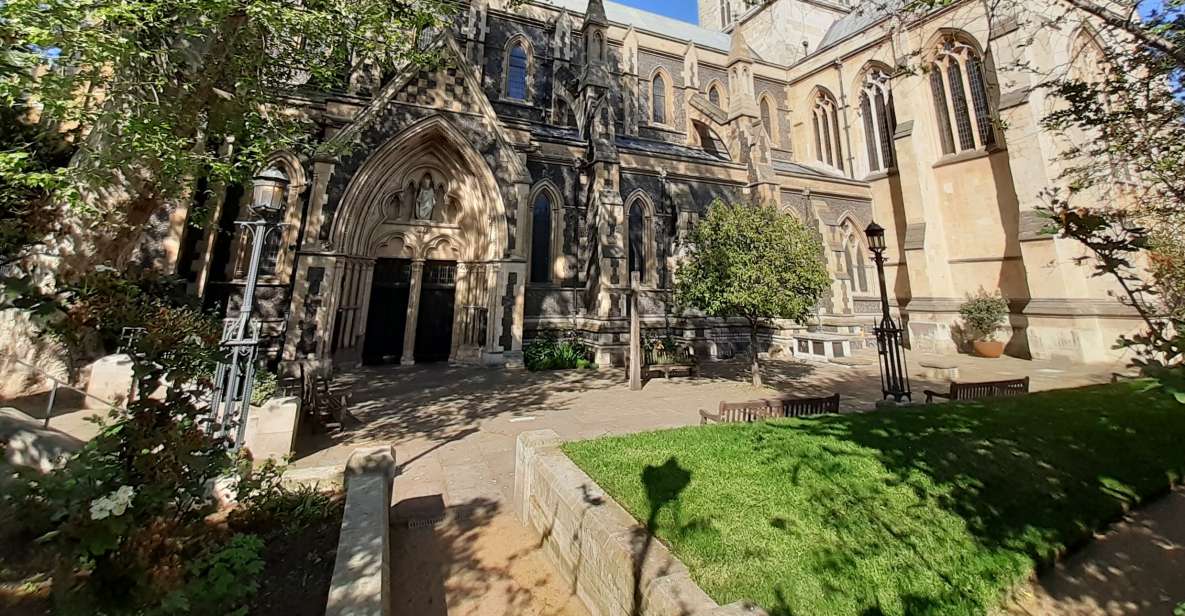
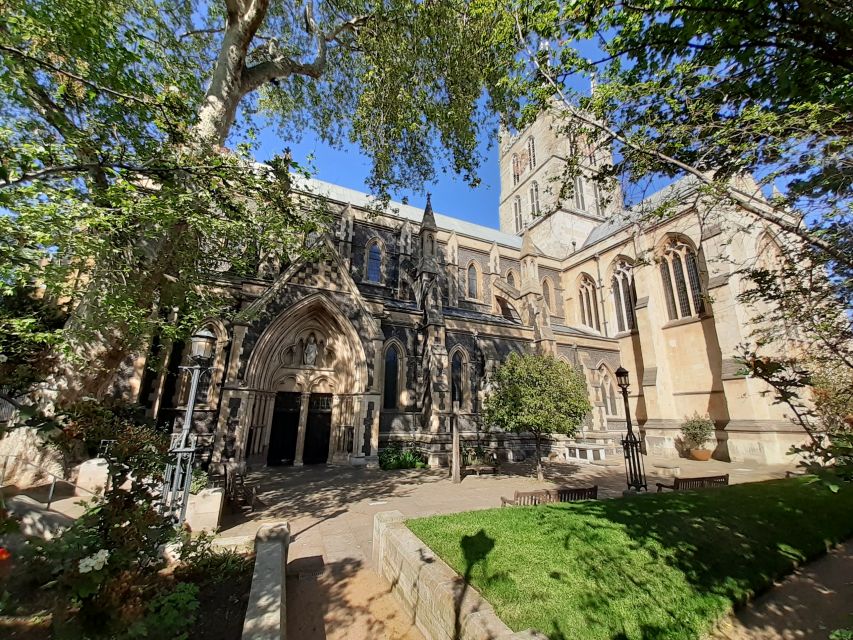
Once you’re on the south bank, you hit two stops that help London feel real. Southwark Cathedral brings religion into the story, while Borough Market brings commerce into it. These aren’t abstract concepts; the guide shows how these forces shaped daily life and how the river zone supported both spiritual authority and economic activity.
A standout detail: Southwark Cathedral is described as 15th-century, and you’ll hear how its presence relates to the medieval city pattern around the river. Borough Market is another anchor because markets are where history becomes tangible. Even when you’re only viewing and pausing, the guide’s framing helps you imagine the flow of food, goods, and people that would have made this stretch of the Thames feel busy long before modern storefronts.
If you love “how people actually lived,” this portion is a highlight.
The Golden Hinde and Shakespeare’s Globe: culture, storytelling, and the river’s pull
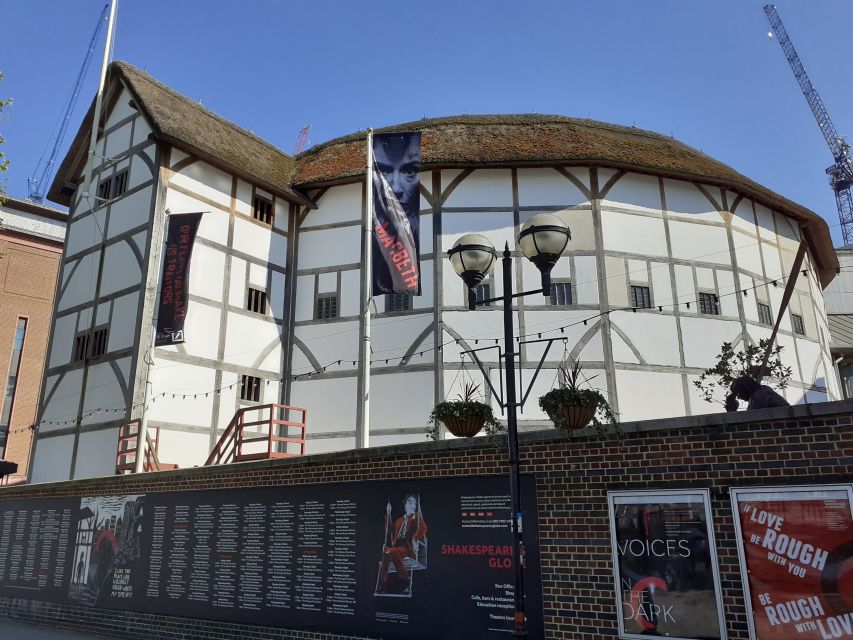
The tour includes London Bridge and then makes time for stops tied to river culture and storytelling: the Golden Hinde and Shakespeare’s Globe Theatre.
The Golden Hinde is presented via a vessel connection linked to Sir Francis Drake (the experience highlights an appropriate replica). Even if you don’t treat it as a technical maritime lesson, it gives you a way to connect exploration and empire to the Thames corridor. In other words: the river wasn’t only commerce; it was also a launching point for ambitions.
Then there’s Shakespeare’s Globe. You see the famous riverside theatre and hear how the guide connects it to London’s broader story. This stop is valuable even for non-theatre people, because it shows how London’s cultural life grew out of the same urban pressures: audiences, money, reputation, and public storytelling.
If you’re the type who enjoys walking tours that help you “read” a city like a book, this part is where London stops being a skyline and becomes a narrative.
Winchester Palace and St Paul’s: the skyline gets a medieval spine
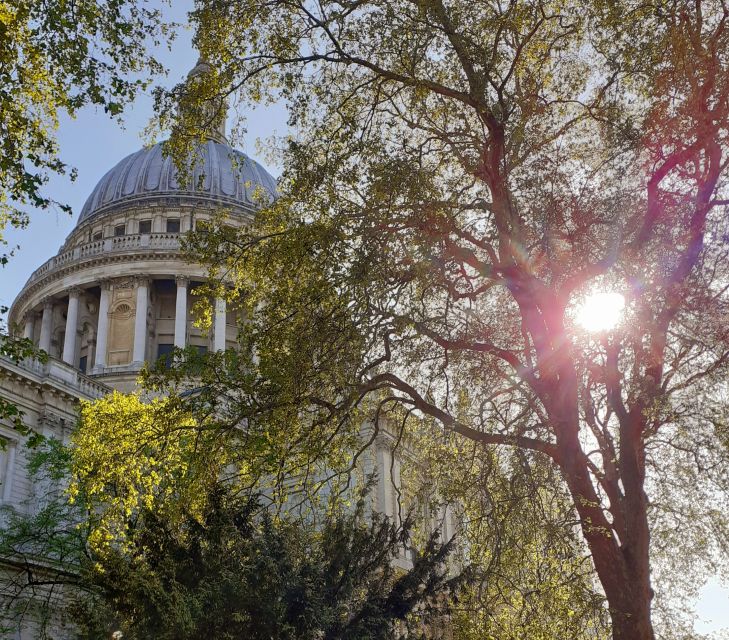
By the time you reach Winchester Palace (noted as 12th-century) and St Paul’s Cathedral, the tour changes tone in a good way. These are architectural anchors that help you understand how medieval London used buildings to project authority—church power, governance, and prestige.
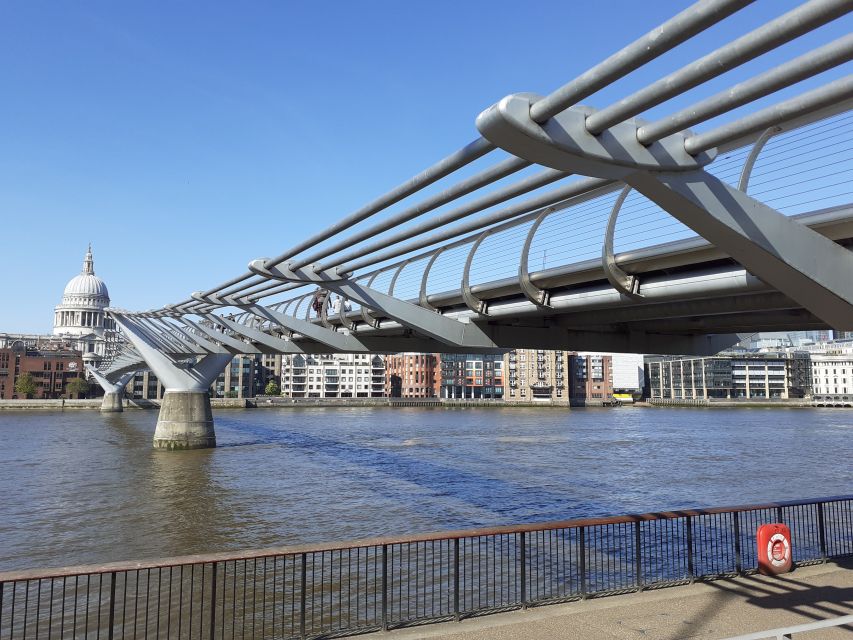
St Paul’s Cathedral is described as majestic in the experience highlights, and the guide’s approach seems to be about making it legible. When you hear the context while looking at the setting, St Paul’s feels less like a single famous stop and more like the end of a chain you’ve been following.
The Winchester Palace stop matters because it provides a medieval counterpart to the later grandeur. Together, they help you sense continuity: the city’s institutions changed over time, but the habit of using monumental spaces to communicate power stayed.
Millennium Bridge and the finish near EC4M 8AD: wrap-up with fresh bearings
You end near EC4M 8AD after the tour includes the Millennium Bridge. This final section matters because it helps you reorient. After seeing Tower Bridge, the Globe area, and the St Paul’s zone, the walk gives you a clearer sense of how the Thames line ties everything together.
The finish location being specific (EC4M 8AD) is also useful. It means you’re not left wandering for your next plan—you can quickly pivot to your next stop with the map in your head already getting clearer.
Price and value: $24 for two hours along the Thames
At $24 per person for 2 hours, this tour aims at real value: lots of major stops plus an expert historian guide, delivered as a concentrated walking experience. You’re not paying for a long travel day or a slow, stop-light style sightseeing loop.
Here’s the honest way to think about value: you’re buying interpretation. London’s landmarks are famous enough that you can see them on your own. The advantage here is that the guide links them into a timeline—medieval power near the Tower, river trade and institutions on the south bank, culture around the Globe, then the cathedral scale of St Paul’s.
If you like museum-style explanations but also want fresh air and street-level views, $24 can feel like a bargain. If you only want quick photos and you hate walking, then any guided history tour like this can feel like too much. But for the history-minded, it’s a strong deal.
Who should book this tour (and who might skip it)
You should book this if:
- You want a focused 2-hour introduction to medieval London along the Thames.
- You like your history connected to places—politics, religion, and daily life, not just dates.
- You enjoy guided storytelling and you’re the type who asks questions.
You might skip it if:
- You’re expecting a purely medieval route with no WWII stop. HMS Belfast is a deliberate pivot.
- You’re very sensitive about walking in all weather. This tour runs in rain or shine.
Should you book the London Medieval History Walking Tour from the Tower?
Yes, if you want the fastest way to turn famous landmarks into something you understand. The guide-led format is the real reason to choose this over self-guided photos: you get context that makes the route feel like a single story from Tower Hill to St Paul’s.
My advice: wear comfortable shoes, dress for the weather, and come curious. If you like asking questions, this tour rewards that habit. The people who love it most seem to enjoy the guide’s ability to connect the big picture to the street-level details you can actually see.
If you’re doing London for the first time—or you want a sharper second look—this is a good way to get your bearings fast and learn what matters along the Thames.
FAQ
How long is the tour?
The tour lasts 2 hours.
Where do I meet the guide?
Meet outside the western exit of Tower Hill tube station near Trinity Square and the Citizen M Hotel, close to the Tower Hill Tram burger van. The guide will be holding a flagpole with a flag.
What is the price per person?
The price is listed as $24 per person.
What major sights are included along the route?
The tour highlights include the Tower of London, Tower Bridge, HMS Belfast, London Bridge, Borough Market, Southwark Cathedral, the Golden Hinde, Winchester Palace, Shakespeare’s Globe, the River Thames, Millennium Bridge, and St Paul’s Cathedral.
Does the tour run in all weather?
Yes. The tour takes place in all weathers, rain or shine.
What language is the tour guide?
The tour guide is listed as English.
Is the tour wheelchair accessible?
Yes, the tour is listed as wheelchair accessible.
What should I bring for the walk?
Bring comfortable shoes and weather-appropriate clothing.
Is free cancellation available?
Free cancellation is available up to 24 hours in advance for a full refund.
Is pay later an option?
Yes, reserve now & pay later is listed as available.