REVIEW · LONDON
Burnings, Butchery & Black Death: A Walking Tour of London’s Bloody Past
Book on Viator →Operated by Historic London Tours · Bookable on Viator
London turns dark when you follow the past. This walking tour threads together plague, executions, and city life from the Middle Ages through Victorian London, all in about two hours. You cover a tight patch of the City of London, where the stories feel close enough to touch.
I like two things most. First, the pace is built for attention: groups are capped at 15, so you actually hear the guide and can ask questions. Second, the tour moves through famous landmarks and also the quieter corners that are easy to walk past on your own.
One thing to consider: the subject matter is grim. You’ll hear about plague, slaughterhouse-era London, and other dark episodes, so if you want light and breezy history, this may not match your mood.
In This Review
- Key things I’d watch for on this tour
- Two Hours Through London’s Bloody Layers
- Meeting Point, Route Flow, and How to Stay On Track
- Charterhouse: A 14th-Century Monastery and Plague Pit
- Smithfield Market: When Food, Power, and Disease Lived Side by Side
- St John’s Gate and the Knights Hospitallers: Medieval Care and Control
- Cloth Fair and William Wallace: Quiet Streets with Loud Footnotes
- St Bartholomew the Great: London’s Oldest Surviving Parish Church
- Golden Boy of Pye Corner: The Great Fire Ends, the Ghost Talk Begins
- Holborn Viaduct and the River Fleet: Victorian London’s Open Air Sewer
- Ye Olde Mitre: A Pub Stop That Fits the Mood
- Saint Bartholomew’s Hospital Museum: Old Care, New Perspective
- Price and Value: What $27.73 Buys You in Real Terms
- Who This Tour Is Best For (and Who Should Skip It)
- Should You Book This Dark London Walk?
- FAQ
- How long is the walking tour?
- What does the tour cost?
- Where does the tour start and where does it end?
- Is the tour in English?
- How many people are in a group?
- Do I need to pay extra for attractions?
- Is a mobile ticket provided?
- Do you get confirmation after booking?
- Is the tour near public transportation?
- What happens if weather is bad?
Key things I’d watch for on this tour
- A 2-hour sweep across roughly 1,000 years of London’s most brutal moments
- Small group size (max 15) for clearer listening and more back-and-forth
- Stop mix that avoids one-trick themes, with plenty beyond Jack the Ripper
- Most admissions are free, plus one church you get entry for during the walk
- A pub stop that makes sense at the right time, not at the end of the tour when you’re tired
Two Hours Through London’s Bloody Layers
This is the kind of tour that makes you look at the City of London differently. In a short stretch, you go from medieval institutions to later city systems and public health failures, then you land in places tied to fire, rumor, and recovery.
What makes it work is focus. You’re not trying to see everything London offers; you’re learning how one area kept reinventing itself while living with constant pressure—disease, overcrowding, crime, and fire.
If you’re the type who likes history with cause-and-effect, this hits the mark. You’ll connect what people did for food and survival to what happened when the city got sick or overwhelmed.
You can also read our reviews of more walking tours in London



Meeting Point, Route Flow, and How to Stay On Track
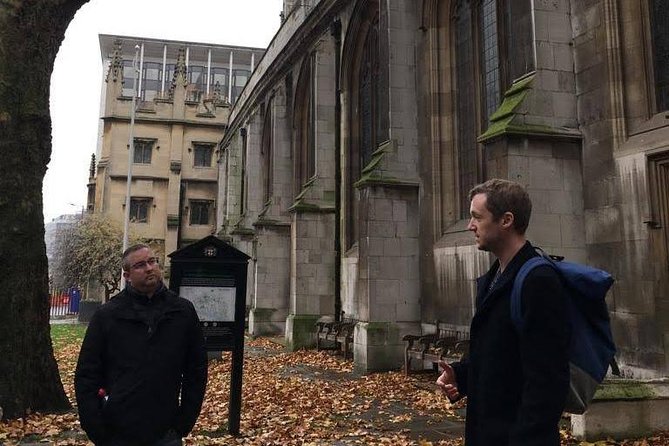
The walk begins at Underground Ltd, Aldersgate St in the Barbican area, and it ends on Ely Place near Farringdon Station. That end point is handy if you want to grab a train or continue exploring the West End or the City right after.
You’ll get a mobile ticket, and the tour is in English. Confirmation happens at booking, so you’re not left guessing whether you’re in.
With a maximum of 15 people, your group stays small enough that the guide can keep everyone together without turning the whole thing into a slow shuffle. Still, do yourself a favor: arrive a bit early, and plan to keep your phone put away once you’re walking. The route is built for stories, and the best parts come when you’re listening at each stop.
Charterhouse: A 14th-Century Monastery and Plague Pit
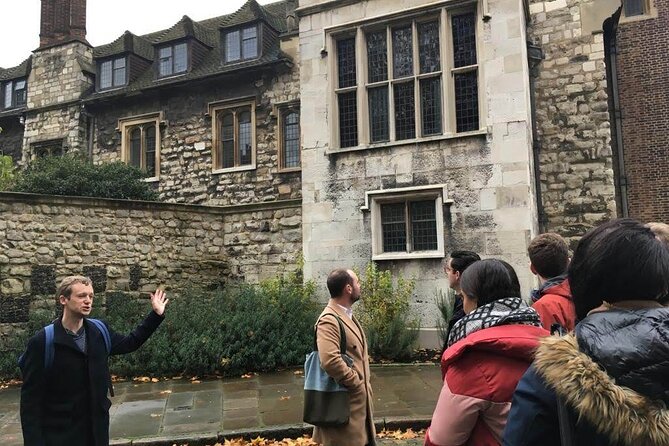
Your first stop sets the tone. The Charterhouse is a fourteenth-century monastery tied to a plague pit, and it’s the right starting point if you want to understand London as a place where disease shaped daily life.
This is also where the tour style shows. Instead of tossing random dark facts at you, the guide connects the physical space to why it mattered. You get a sense of how institutions could be both religious and practical—especially when the city was dealing with death on an industrial scale.
The stop also comes with free admission, which makes it easy to commit fully without thinking about additional entry fees or paperwork.
Smithfield Market: When Food, Power, and Disease Lived Side by Side
Next comes Smithfield Market, described as a one thousand-year-old meat market. This isn’t just a history lesson about commerce; it’s about how a city’s food system can also become a public-health problem when conditions get rough.
Smithfield is a great choice early in the tour because it helps you visualize the daily grind underneath the headline events. You start to see how London’s grit wasn’t only in battlefields or cathedrals—it was in the places where people bought food and where waste and illness could accumulate.
Admission here is free as well, so you can focus on the story rather than managing your budget in real time.
St John’s Gate and the Knights Hospitallers: Medieval Care and Control
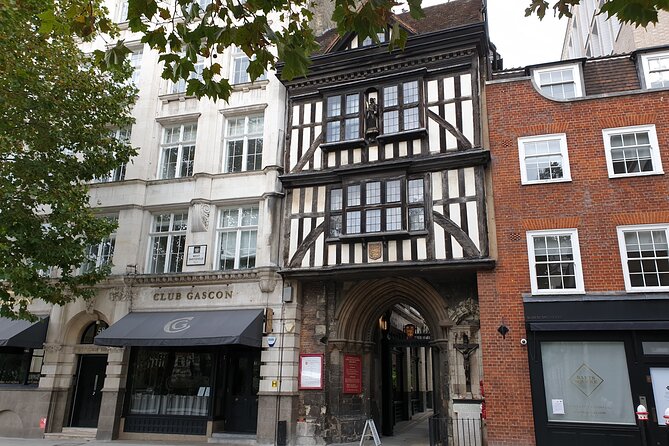
At St John’s Gate, you step into a medieval world connected to the Knights Hospitallers. The point of this stop isn’t only to admire a structure; it’s to understand how power, religion, and care worked together.
This is the “why it mattered” stop. When you hear about the Hospitallers, you can connect it back to earlier disease themes. Hospitals and caregiving weren’t abstract ideas in medieval London. They were responses—often imperfect ones—to real suffering.
Again, admission is free for this stop, which keeps the walk moving without surprise costs.




Cloth Fair and William Wallace: Quiet Streets with Loud Footnotes
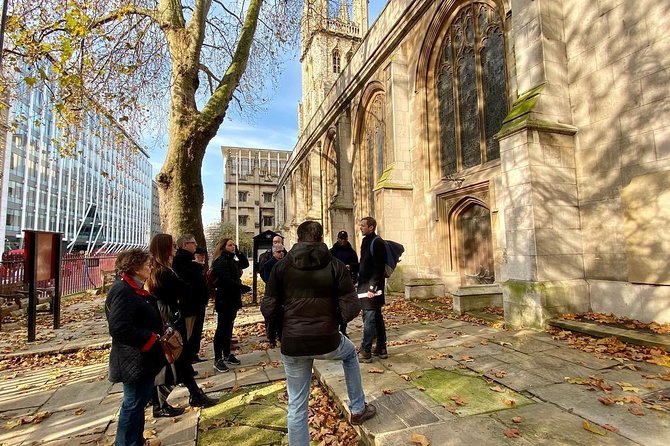
From there, you visit Cloth Fair, a quiet alley with a noisy history. It’s exactly the kind of London detail that’s hard to spot on your own. The street looks calm now, but the tour explains that the past wasn’t.
Then you reach a different kind of historical anchor: the William Wallace Memorial. It’s the memorial to William Wallace, the man known from Braveheart. Even if you only know the name from films, this moment helps you see how cultural memory and politics leave marks in surprising places.
These two stops also balance the tour’s tone. They prevent the whole walk from feeling like one long grim march. You get variety—medieval institutional power, then a cultural symbol tied to resistance and identity.
St Bartholomew the Great: London’s Oldest Surviving Parish Church
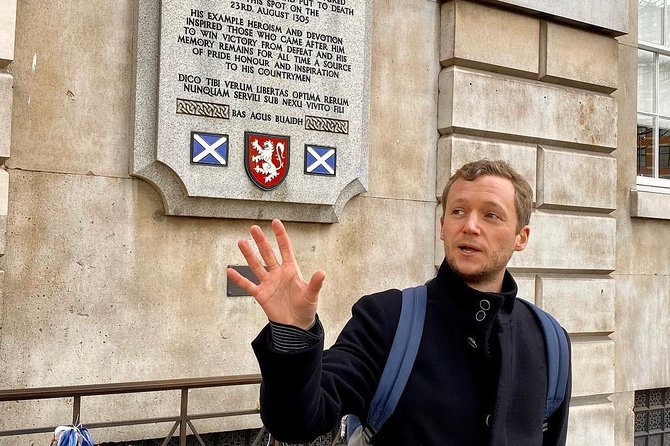
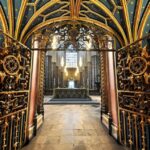
St Bartholomew the Great is where the tour turns from stories of crisis to endurance. It’s described as London’s oldest surviving parish church, and it includes admission during the tour.
This stop changes your perspective in a useful way. You’re not only learning about collapse and suffering. You’re also seeing what stuck around—religious institutions that outlasted regimes, disasters, and the constant threat of rebuilding from scratch.
If your favorite type of travel history is place-based—reading the city through buildings—this church stop is a strong reason to join.
Golden Boy of Pye Corner: The Great Fire Ends, the Ghost Talk Begins
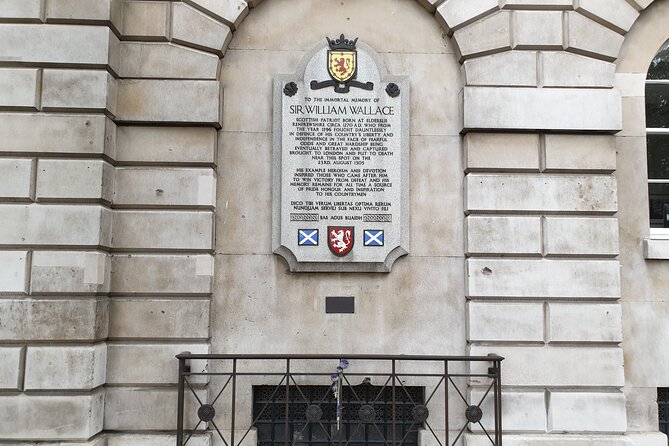
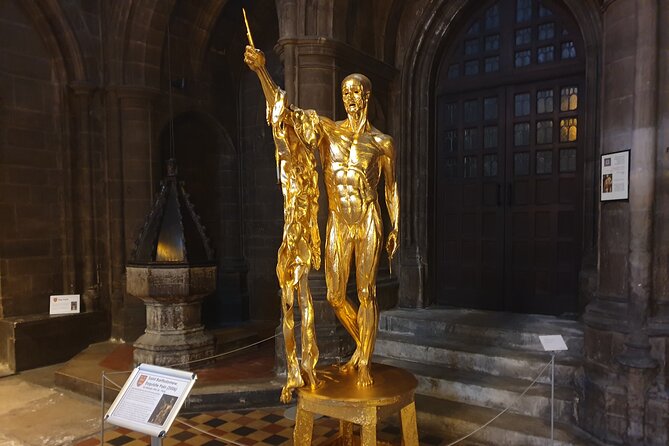
At Pye Corner, you’ll hear about the Golden Boy. The site is linked to where the Great Fire of 1666 died out, and it’s also tied to eighteenth-century ghost hysteria.
This combination is clever. The Great Fire connection gives you a real-world event with major consequences. Then the ghost hysteria angle shows how people handled fear afterward—through rumor, interpretation, and stories.
It’s a free stop, so you can pause, listen, and take a breather without feeling like you’re spending again.
Holborn Viaduct and the River Fleet: Victorian London’s Open Air Sewer
Holborn Viaduct marks the site of the River Fleet, described as Victorian London’s largest open-air sewer. This is one of the most practical history moments on the walk, because it connects to how sanitation, engineering, and public health evolve.
Once you hear the scale and the setting, it’s easier to understand why Victorian cities pushed for improvements. Bad water and bad waste management weren’t small problems. They shaped health, smell, and daily life for huge numbers of people.
It’s a free stop, but it’s one you’ll remember, mainly because the idea is so visual. This isn’t abstract history. It’s a map of how the city worked when modern systems didn’t.
Ye Olde Mitre: A Pub Stop That Fits the Mood
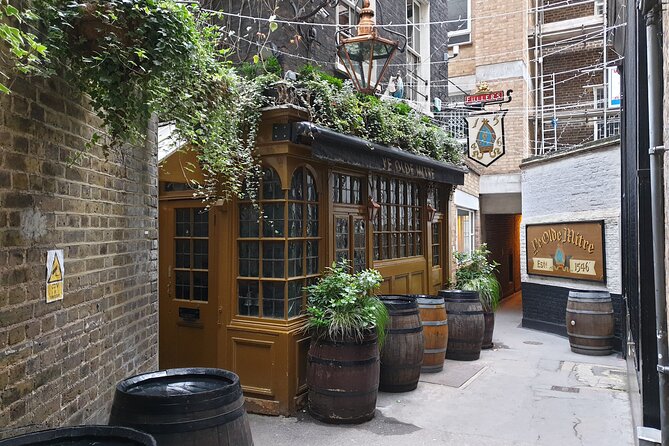
You finish with Ye Olde Mitre, a pub hidden down an alleyway. This is a smart inclusion. After plague pits, markets, and sewer stories, you need a human-scale break—something warm, something familiar.
The tour doesn’t just drop you in a pub as an afterthought. Feedback highlights classic comfort items like cheese toasties and pork pies, and the place feels old and atmospheric. Even if you just grab a drink, it’s a way to keep the day enjoyable while still soaking in the history you’ve been hearing.
If you plan to eat, this stop is the moment to do it. By now, you’ve had enough story time to make it feel earned.
Saint Bartholomew’s Hospital Museum: Old Care, New Perspective
The walk ends at Saint Bartholomew’s Hospital Museum, described as the oldest surviving hospital in the country. This is a powerful final pivot.
After everything grim, the theme changes from survival under pressure to the systems built to treat people. Even if you’re not a museum person, it’s a meaningful ending because it reminds you that care and infrastructure were part of London’s long story—alongside violence and disease.
Admission is listed as free for this stop, so it’s a full-stop experience without extra charges.
Price and Value: What $27.73 Buys You in Real Terms
At about $27.73 per person for roughly two hours, this tour is priced like a focused experience, not a long-day marathon. The value mostly comes from how the time is used.
Here’s what you’re really paying for:
- A guided narrative that strings together medieval, fire-era, and Victorian London in one route
- A small group cap (15 max) that keeps the tour from becoming noise
- A structure where many stops have free admission tickets, and at least one major site includes entry during the walk
- A mobile ticket for a smoother start
One more value point: booking patterns suggest demand. The tour is often booked well in advance (around 47 days on average), which usually means popular guides and convenient scheduling. If you have fixed dates, I’d treat it like a “book it early” activity rather than a last-minute hope.
Who This Tour Is Best For (and Who Should Skip It)
This walk is ideal if you like London with an edge. If you enjoy plague-era stories, public health history, and the way markets and infrastructure shape cities, you’ll get a lot out of it.
It’s also a good fit if you’re tired of generic takes on London. The stop choices don’t revolve around one headline character. You get markets, gates, fairs, churches, fire landmarks, and the remains of sanitation history.
The one group that might want to pass is anyone who wants light entertainment. This is a bloody past tour by design, and it doesn’t hide the darkness.
Should You Book This Dark London Walk?
I think you should book if you want a compact way to understand how London’s modern city shape was forced by older problems. Two hours is short, but the route covers enough ground—plague, food systems, fire, and Victorian sanitation—that you’ll leave with a stronger map in your head.
Book it especially if you care about hearing the guide clearly and not being lost in a crowd. The small group limit is a real quality driver here.
If your idea of history is mostly museums with neutral vibes, this might feel too intense. But if you’re open to grim stories told with clarity and humor, this is a smart, high-value way to see parts of the City you’d normally miss.
FAQ
How long is the walking tour?
It runs for about 2 hours.
What does the tour cost?
The price is listed as $27.73 per person.
Where does the tour start and where does it end?
It starts at Underground Ltd on Aldersgate St in the Barbican area. It ends on Ely Place, around the corner from Farringdon Station.
Is the tour in English?
Yes, it’s offered in English.
How many people are in a group?
The maximum group size is 15.
Do I need to pay extra for attractions?
Most stops are listed with free admission tickets. Church of St. Bartholomew The Great includes admission during the tour.
Is a mobile ticket provided?
Yes, you get a mobile ticket.
Do you get confirmation after booking?
You’ll receive confirmation at the time of booking.
Is the tour near public transportation?
Yes, it’s near public transportation.
What happens if weather is bad?
This experience requires good weather. If it’s canceled due to poor weather, you’ll be offered a different date or a full refund.