REVIEW · LONDON
Clapham South: Subterranean Shelter Guided Tour
Book on GetYourGuide →Operated by London Transport Museum · Bookable on GetYourGuide
This London shelter runs beneath your feet. It’s a guided trip 30 metres down into a mile of tunnels, hidden under Clapham South station. You’ll hear first-person-style stories from WWII shelterers and later Windrush arrivals, then you’ll see the original cramped bunks where thousands slept through air raids.
I especially like the way the guides turn a set of tunnels into a night-in-the-shelter experience. The ARP Warden role-play and the real artefacts (like genuine WWII torches and period items) make it feel less like a lecture and more like you’ve stepped into a working wartime site. The original graffiti left by occupants adds a human layer you can’t fake.
One thing to think about up front: this tour isn’t for claustrophobia. You’ll be underground with low lighting and some uneven ground, plus there’s walking up and down static escalators.
In This Review
- Key Highlights You’ll Care About
- Entering Clapham South’s Underground Shelter: The Descent That Sets the Mood
- The Mile of Tunnels: How Deep-Level Shelters Changed Wartime Survival
- Wartime Spaces You’ll See: Bunks, Canteen, Medical Stations, and Period Details
- The Guides in Action: ARP Warden Role Play That Makes It Click
- WWII to Windrush: The Same Shelter, a Very Different Chapter
- Handling Authentic Artefacts: Small Objects With Big Story Power
- Practical Tips for an Underground Tour (Comfort Matters)
- Price and Timing: Is $51 for 75 Minutes Worth It?
- Who This Tour Suits Best (And Who Should Rethink It)
- Should You Book the Clapham South Subterranean Shelter Tour?
- FAQ
- How long is the Clapham South subterranean shelter guided tour?
- Where do I meet for the tour?
- What should I bring and wear?
- Is it suitable for children?
- What items are not allowed during the tour?
- Is the tour refundable if plans change?
Key Highlights You’ll Care About
- The 11-storey descent into a deep-level shelter with trains rumbling overhead
- A mile-long tunnel route through a maze designed to protect thousands
- Original bunk beds (now turned into benches) and surviving period details
- WWII artefacts you can handle, including torches and period shelter objects
- Graffiti and personal accounts that connect shelter life to later Windrush arrivals
- Post-war repurposing stories tied to HMT Empire Windrush
Entering Clapham South’s Underground Shelter: The Descent That Sets the Mood
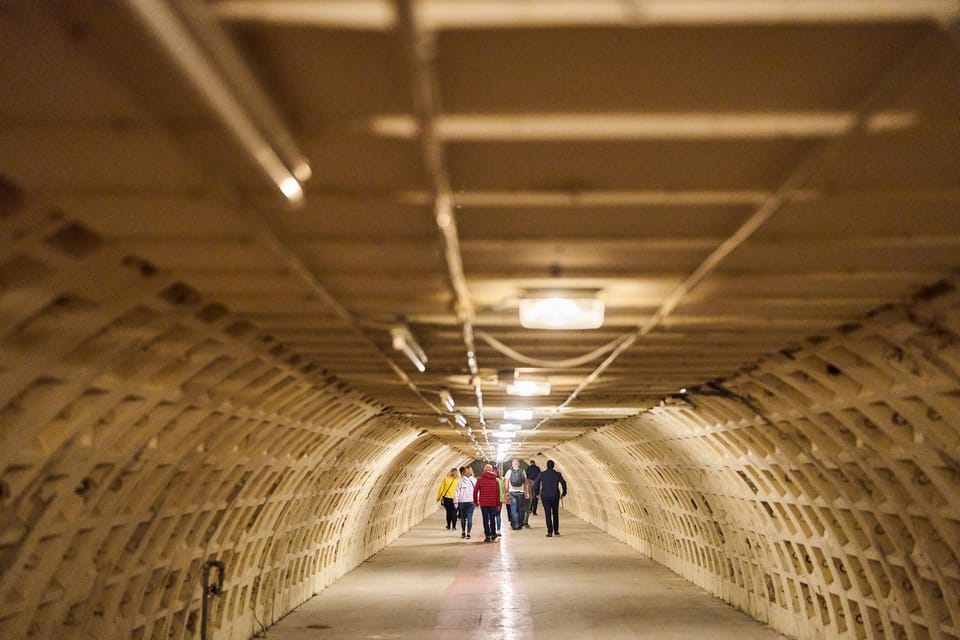
The experience starts aboveground, but it doesn’t waste time. You meet by Marks & Spencer Food Hall on Balham HIII, SW12 9EA, then take a short walk to the entrance. Arrive 15 minutes early if you can. Once you’re with the group, you’re guided into a serious “you are going underground” transition.
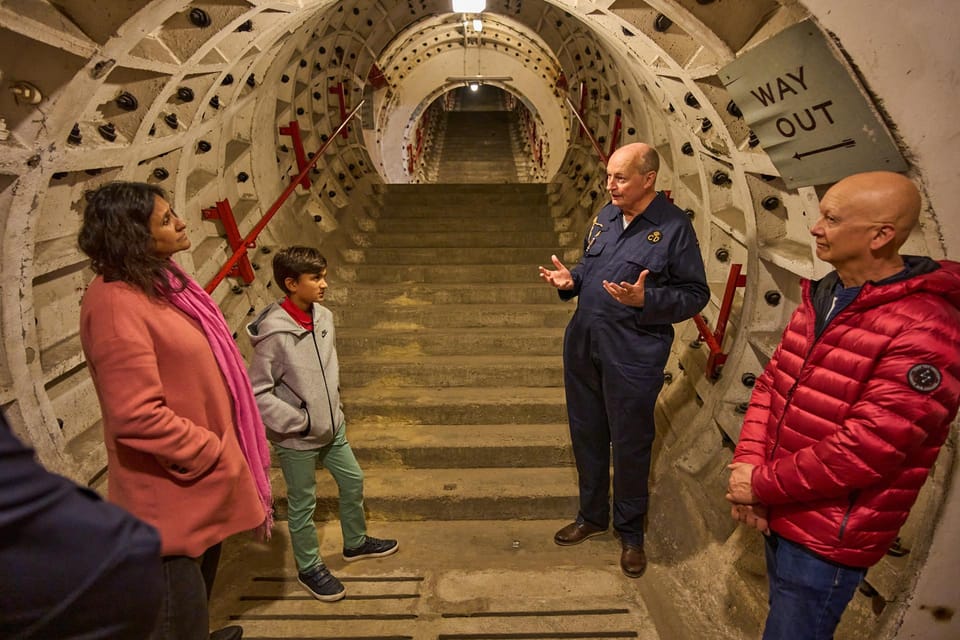
Then comes the defining moment: you descend 11 stories underground to reach the shelter level. That’s not a quick basement drop. It’s a slow, deliberate movement into the dark where your brain finally catches up with the idea that this is a hidden world under a busy Tube station.
And the sound design helps. As you move around below street level, you can feel the presence of the Northern line above you. It’s a reminder that daily London life kept running, even while this secret space was built for emergencies.
You can also read our reviews of more guided tours in London



The Mile of Tunnels: How Deep-Level Shelters Changed Wartime Survival
This shelter was opened in 1944 and built to shelter over 8,000 people during air raids. That number matters, because it explains the architecture you’ll see: it’s not a couple of rooms. It’s a warren of tunnels—over a mile long—laid out to handle crowd pressure and keep people protected.
On the tour route, you’ll get a strong sense of scale. Even with a guided group moving through, it’s easy to picture how movement and waiting would work when the air-raid alarms were doing their job and everyone had to get moving fast.
Here’s what I think you’ll appreciate: you’re not just seeing history. You’re seeing the logic of wartime planning. The design had to work under stress—low visibility, cramped spaces, and limited comfort—while still functioning as a shelter with practical support areas.
Wartime Spaces You’ll See: Bunks, Canteen, Medical Stations, and Period Details
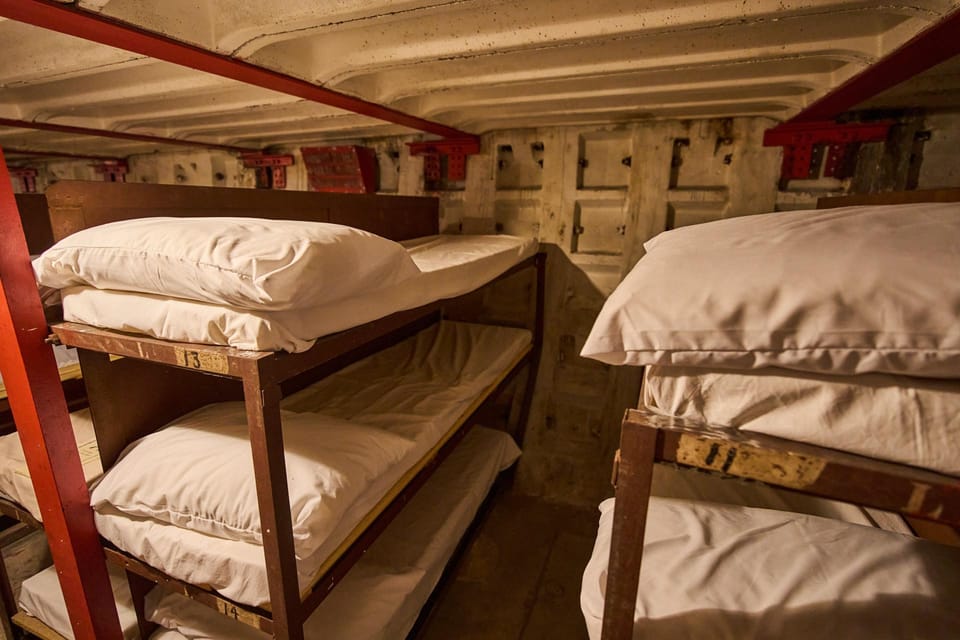
A big reason people love this tour is that the shelter feels lived-in, not displayed like a showpiece. You’ll learn about spaces like the canteen and medical stations, and you’ll also get to see the layout of sleeping quarters in a way that makes the cramped conditions unavoidable.
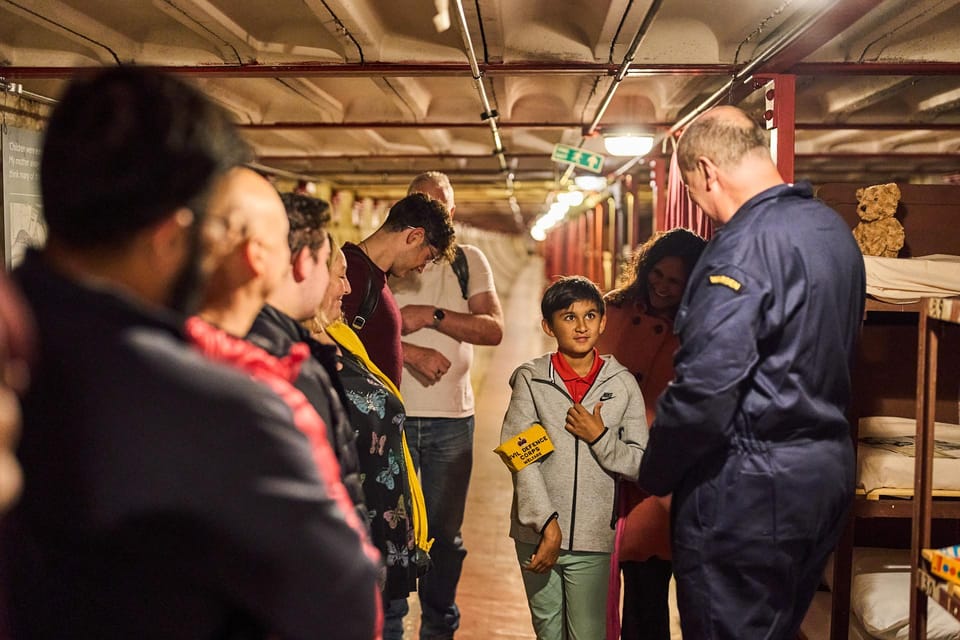
One of the most moving sights is the original bunks. They’re extremely cramped by modern standards, and the tour helps you understand what that meant at night, when thousands were trying to rest while air raids threatened overhead. You can even sit on original bunk beds that have been turned into benches—so you feel the size and angle of the sleeping space rather than just looking at it from a distance.
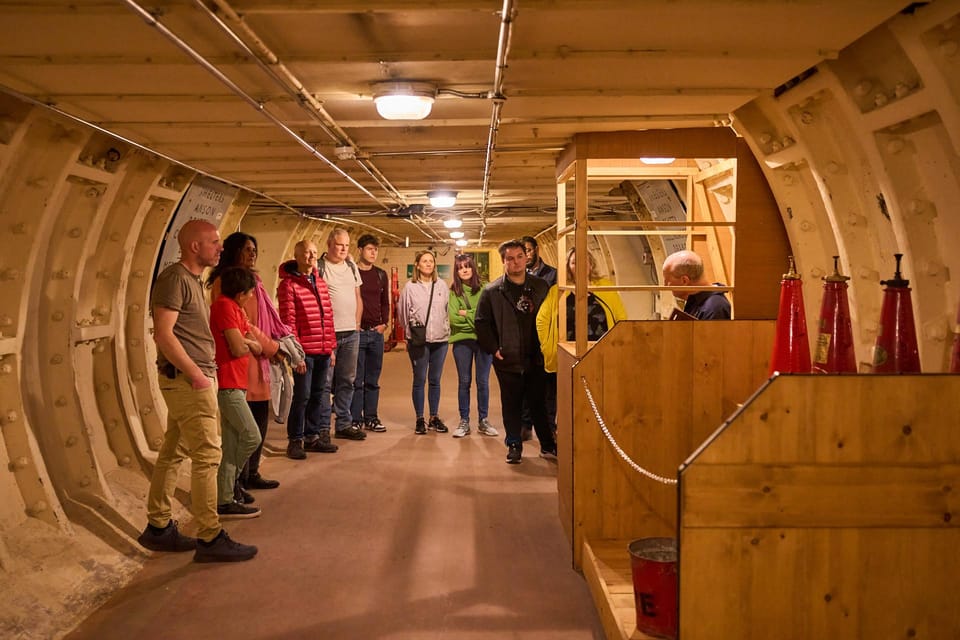
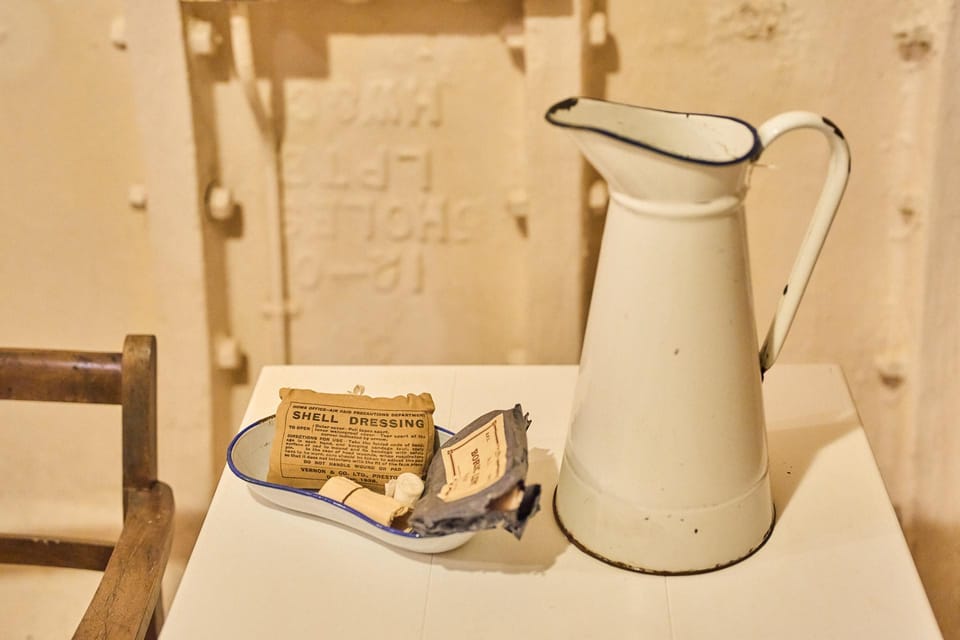
The tour also brings forward newly refurbished areas, including the warden’s cabin and the canteen. These aren’t vague reconstructions. The spaces are recreated to their 1940s state using careful historical research. That matters because it keeps the story grounded instead of turning into a themed set with guesswork.
Add to that the historical graffiti. You’re not just hearing accounts—you’re seeing marks left behind by people who stayed there. It’s one of those details that quietly makes the whole visit more personal, because it turns the shelter into a place where real people waited, slept, joked, and coped.
The Guides in Action: ARP Warden Role Play That Makes It Click
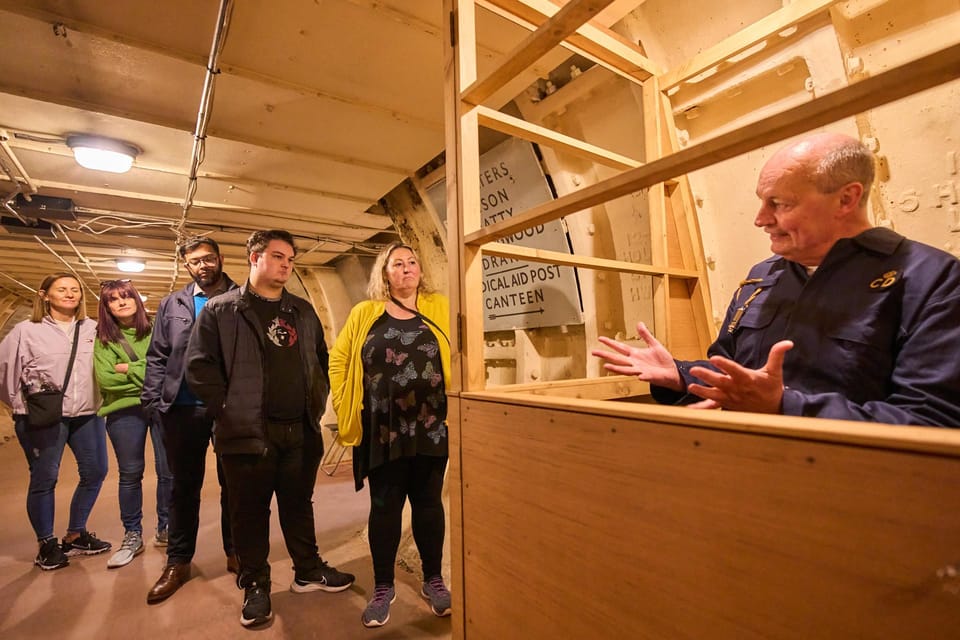
The tour uses two expert guides. One of them takes on the role of a 1940s ARP Warden. That’s a smart choice for a subject like this, because it gives you a framework for what you’re seeing and why it worked.
In practice, the role-play doesn’t feel like theatre for theatre’s sake. It’s a way to connect the spaces to the responsibilities of the people running the shelter—what they managed, how they guided shelterers through stressful nights, and what “keeping order” meant when there were thousands of people below ground.
You’ll also follow a family-style timeline in a way that helps you track what happens when the first night begins. When the guides describe the first night experience, your attention sharpens: you start noticing how the bunks, the canteen, and the warden areas form a practical system for survival, not just a dark place to hide.
If you like history that comes with voices and context, this is one of the tour’s strongest points. The guides bring both structure and energy, and you’ll leave with a clearer picture of shelter life beyond the headline facts.
WWII to Windrush: The Same Shelter, a Very Different Chapter
Here’s where the tour gets especially meaningful. After the war, the shelter didn’t just disappear. It was repurposed in post-war years, and you’ll learn how it even became housing for the first Caribbean migrants to Britain.
The story connects to HMT Empire Windrush, which carried arrivals to Britain that marked an important moment in UK history. You’ll hear about how the shelter was used after the wartime period—and you’ll also learn about visitors connected to the Festival of Britain.
That time-jump is handled in a way that adds depth without making the older history feel like a prop. What I like about the approach is that you see continuity in the same physical spaces: people again needed safety and shelter, just under different pressures and with different hopes.
So instead of ending with “and then the war was over,” the tour encourages you to think about how buildings can carry memory forward. The same tunnels that were built to protect thousands from bombs later mattered to people rebuilding their lives in a new country.






Handling Authentic Artefacts: Small Objects With Big Story Power
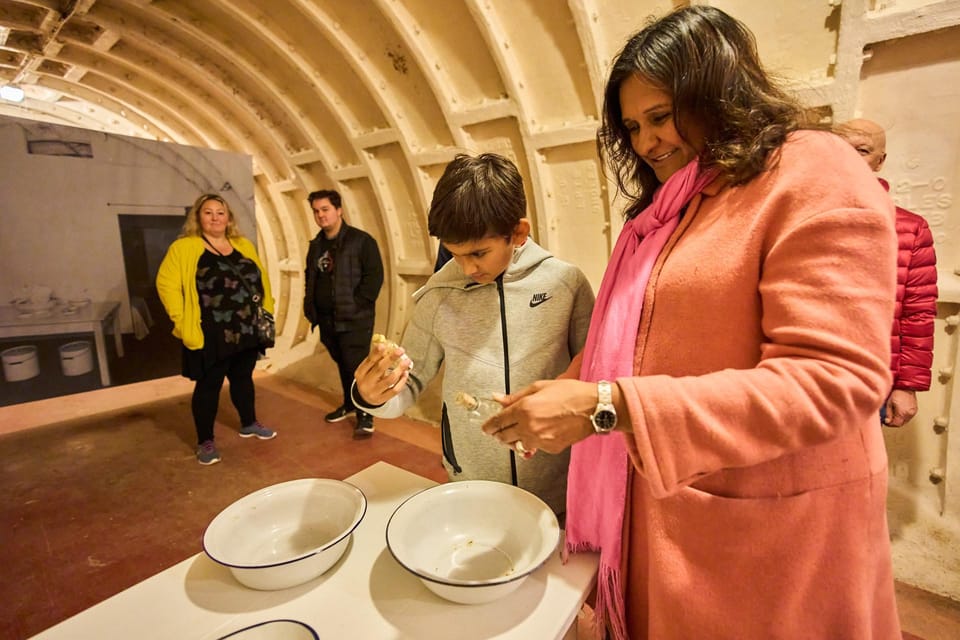
You’ll get hands-on moments during the tour, including with genuine Second World War torches. Even if you’ve read about air raids before, these objects make the past feel heavier and more concrete.
There’s also a chance to see what an Anderson shelter looked like—another key piece of the wider air-raid story. Seeing these period objects matters because it connects the deep-level shelter to the larger network of home-front protection systems.
And then there are the “everyday” details: the cabin spaces, the recreated wartime areas, and the way benches and sitting areas replicate how people would have spent time when they weren’t asleep. The goal here isn’t to turn the site into a museum classroom. It’s to help you understand what it would feel like to occupy the space.
If you’re the kind of person who likes history you can touch (carefully, safely, and under guide direction), you’ll probably find this portion a highlight.
Practical Tips for an Underground Tour (Comfort Matters)
This is one of those tours where preparation makes a real difference.
Wear comfortable, sturdy shoes. The tour involves a lot of walking, including areas of uneven ground and low lighting. You’re also not step-free, and the route includes walking up and down static escalators. That means you should expect a bit of physical effort, even though the total duration is only 75 minutes.
Lighting is another point. Underground spaces can feel darker than you expect, so keep your eyes flexible and don’t plan on quick photo checks every minute. Think about how you’ll move calmly in low-light areas.
Also plan for no cloakroom. Keep bags minimal. Food and drinks aren’t allowed during the tour, and open-toed shoes are not permitted. Leave luggage or large bags behind.
And if you’re coming from another part of London, it helps to arrive with a realistic timetable. The meeting point is close to Clapham South station—about a 2-minute walk—so you’re not stuck searching for a bus stop once you’re running late. Still, underground tours are unforgiving with timing, so arrive on time and you’ll enjoy the experience more.
Price and Timing: Is $51 for 75 Minutes Worth It?
At around $51 per person for a 75-minute guided visit, this tour isn’t trying to be cheap entertainment. It’s priced like a specialized historical experience—and it largely earns that value through access.
You’re not just looking at a labeled display. You’re guided through a disused WWII deep-level shelter with original bunks, recreated wartime spaces, and authentic artefacts. You’re also hearing stories that connect WWII survival to the later Windrush chapter, using the same underground setting.
That “two histories in one place” factor is a big deal for value. Plenty of tours cover one era well. This one connects wartime sheltering to post-war repurposing, including the Windrush arrivals linked to HMT Empire Windrush. If that matters to you, $51 starts to feel reasonable.
Also, the duration is tight enough to keep your attention without dragging, but long enough for you to see the key rooms and learn the story arc. If you want something that fits into a day plan without eating up most of your afternoon, this timing is practical.
Who This Tour Suits Best (And Who Should Rethink It)
This is best for adults and older kids. Children under 10 aren’t suitable for this tour, and it’s also not suitable for people with mobility impairments. Claustrophobia is a clear no-go: you’ll spend time underground in enclosed spaces with low lighting, plus you’ll navigate some uneven ground.
If you’re comfortable with a moderate amount of walking and you like well-paced storytelling, you’ll probably enjoy it a lot. The combination of a deep-level shelter site, guided context, and hands-on period objects makes it feel like you got a real experience, not just a surface tour.
You should also consider booking if you’re interested in how WWII infrastructure connects to later social history. The Windrush link is a major part of the emotional impact, and it gives the tour more weight than a standard WWII walkthrough.
Should You Book the Clapham South Subterranean Shelter Tour?
If you want a memorable, hands-on way to understand WWII air-raid protection—and you also care about how the same spaces shaped post-war life—this is an excellent choice. The ARP Warden role-play, the original bunks, the authentic WWII objects, and the graffiti all work together to make the shelter feel real, not distant.
But if you’re claustrophobic or you need step-free access, you’ll likely feel uncomfortable. For everyone else who can handle underground walking and low light, I think this tour is a strong use of an hour and a quarter in London—especially if you like history that has voices, objects, and real physical scale.
FAQ
How long is the Clapham South subterranean shelter guided tour?
The tour lasts 75 minutes.
Where do I meet for the tour?
Meet in front of the Marks & Spencer Food Hall on Balham HIII, SW12 9EA. It’s about a 2-minute walk from Clapham South station; turn right when you exit.
What should I bring and wear?
Bring comfortable shoes and weather-appropriate clothing. You should also bring a passport or ID card.
Is it suitable for children?
Children under 10 years old are not suitable for this tour.
What items are not allowed during the tour?
Open-toed shoes, food and drinks, and luggage or large bags are not allowed.
Is the tour refundable if plans change?
Yes. There is free cancellation up to 24 hours in advance for a full refund.