REVIEW · LONDON
Covent Garden to Piccadilly Circus Walking Tour with an App
Book on GetYourGuide →Operated by Trippy Tour Guide · Bookable on GetYourGuide
Two hours can feel like a whole West End day. This Covent Garden to Piccadilly Circus walk uses an app to guide you through top theatre stops and ends with the neon buzz of Piccadilly Circus.
What I like: starting at the Royal Opera House gives you a strong arts-first vibe, and the finish at Piccadilly Circus is the kind of sight you’ll remember the minute you see it. One caution: you’re fully dependent on your phone, your headphones, and enough internet to get the tour loaded and working.
You’ll be walking through the theatre corridor and nearby side streets at a pace you control, not at a fixed “follow the guide” rhythm. The route passes landmarks like London Coliseum, Seven Dials, Shaftesbury Avenue, and a Chinatown gate, plus quieter historical grounding at Saint Paul’s Church.
If you prefer a live person to explain what you’re looking at, the app-only format may feel less inspiring—especially since there’s feedback about audio not landing well.
In This Review
- Key highlights to know before you go
- Why this West End walk is such a smart 2-hour plan
- App setup: the one place you can’t wing it
- Royal Opera House: the arts-first start you can’t fake
- Jubilee Market and Covent Garden streets: your easy break
- Saint Paul’s Church: a quieter counterpoint
- London Coliseum and the theatre belt: more stages than you expect
- Seven Dials and Shaftesbury Avenue: where the route finds momentum
- Chinatown gate and the Leicester Square lead-in
- Piccadilly Circus finale: make the neon moment last
- What you’re really paying for: value at $9
- Languages and audio control: useful, but don’t forget the basics
- Who should book this tour (and who might not love it)
- Should you book this Covent Garden to Piccadilly Circus walking tour?
- FAQ
- How long is the walking tour?
- Where does the tour start and where does it end?
- Is there an in-person guide included?
- What’s included in the price?
- What language options are available?
- Do I need headphones?
- Do I need Wi-Fi?
- Can I control the audio while walking?
- Are entry fees included for attractions?
Key highlights to know before you go
- Royal Opera House start sets a serious cultural tone right away
- Piccadilly Circus finale is your neon payoff after a focused 2-hour walk
- 23+ narration points help you connect the dots instead of just taking photos
- Theatre stretch on Shaftesbury Avenue links big names and smaller stages in one loop
- Jubilee Market stop gives you a practical place to browse, snack, or slow down
- Seven Dials to Chinatown adds contrast with street-level character and color
Why this West End walk is such a smart 2-hour plan
This tour is built for people who want the highlights of the West End without locking into a long day. In 2 hours, you cover a line of major sights that usually takes longer to stitch together yourself, mainly because the audio acts like a walking map.
I like routes like this because they solve the hardest part of “doing London”: deciding where to go next while you’re already surrounded by interesting options. Here, the app nudges you from stop to stop, with directions and narration that play automatically as you move.
And the “bookend” matters. You start at a big cultural landmark (the Royal Opera House), then you end at Piccadilly Circus, one of the most recognizable places in the city for a reason. You get both the daytime theatre feel and the nighttime-style visual energy—without needing to plan an evening separately.
You can also read our reviews of more walking tours in London



App setup: the one place you can’t wing it
This is an audio tour on the Trippy Tour Guide app, and that’s the make-or-break factor. Before anything starts, you need to check your email for instructions and credentials to access and download the tour inside the app. It’s also not part of the GetYourGuide app.
Here’s what you should do so you don’t waste time at the start:
- Use Wi-Fi to download the tour ahead of time if you can. The tour notes say you’ll need a strong internet connection for these steps.
- Bring headphones and make sure your smartphone is charged.
- When you arrive at the starting location, launch the tour in the app and start it there. The tour begins when you do.
This is also where you’ll feel the biggest downside if the app doesn’t work smoothly. Since some feedback points to difficulty getting the audio running, I treat setup as your first mission. Don’t plan to sort out phone problems once you’re standing in the crowd.
Royal Opera House: the arts-first start you can’t fake
The route starts at the Royal Opera House, and that matters because it puts you in “big arts” territory immediately. Instead of starting with generic streets and working your way toward landmarks, you begin with a place that signals you’re in the West End for performance and stage life.
The audio narration is designed to give you more than just a photo-op moment. You’ll get guidance at key points, and the overall route structure pushes you to notice the theatre world as a single connected area—starting right where London’s stage culture is easy to feel.
Practical tip: if you like a calm start, arrive a touch early and take a minute just to orient yourself. Once the tour starts, you’ll be following the audio cues and directions rather than stopping to read everything.
Jubilee Market and Covent Garden streets: your easy break
After the theatre-heavy beginning, you shift into market life with the Jubilee Market stop. This is a useful part of the walk because it gives you an “in-between” experience: shopping, dining, and wandering.
What I like about adding a market stop mid-walk is that it gives you permission to slow down without breaking the flow. You can grab a snack, browse for souvenirs, or just step aside and watch people for a few minutes—then rejoin the route when you’re ready.
Also, having a real “pause point” helps if your feet get ahead of your plan. With only 2 hours total, you’ll appreciate any spot that makes it easy to reset.
Saint Paul’s Church: a quieter counterpoint
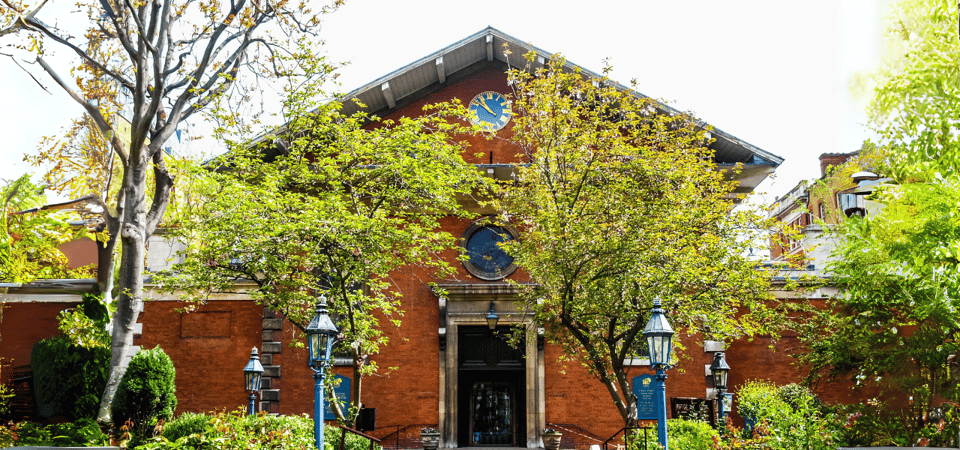
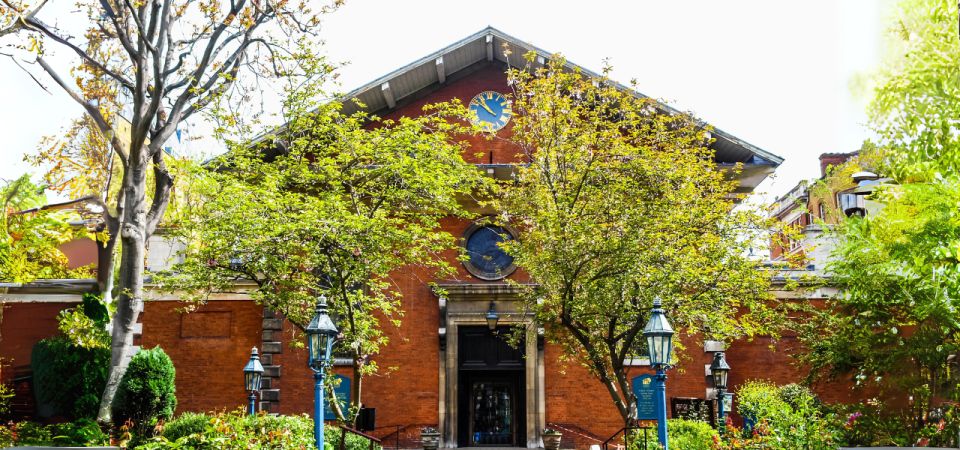
The walk includes Saint Paul’s Church, described as a place to step into history. Even if you’re not a deep-history person, this kind of stop is valuable because it breaks up the constant theatre energy with something calmer and more grounded.
This part of the route is a good reminder that the West End isn’t only posters and marquees. You’ll get a different mood—less performance lighting, more everyday spiritual space—without having to detour far.
Practical takeaway: if you’re the type who likes to take in details slowly, use this moment to pause, look around, and catch your breath before the next round of theatre landmarks.
You can also read our reviews of more tours and experiences in London






London Coliseum and the theatre belt: more stages than you expect
One of the biggest strengths of this walk is that it doesn’t just funnel you past one famous building. It strings together multiple theatre locations so the area starts to feel like a living cluster.
You’ll encounter:
- London Coliseum, highlighted for grand performances
- the Arts Theatre
- Saint Martin’s Theatre
The useful angle here is variety. Even within the theatre district, not every stop is the same size or vibe, and the walk makes it easy to compare what “theatre architecture and street energy” feel like as you move along.
If you’re theatre-curious, this section is where the audio earns its keep. Instead of you guessing what each place is best known for, the narration points guide your attention to what matters in the moment.
Drawback to keep in mind: because this is app-led, you won’t get the kind of live storytelling that adapts to questions or interests. If you want that back-and-forth, you may find it a little flat.
Seven Dials and Shaftesbury Avenue: where the route finds momentum
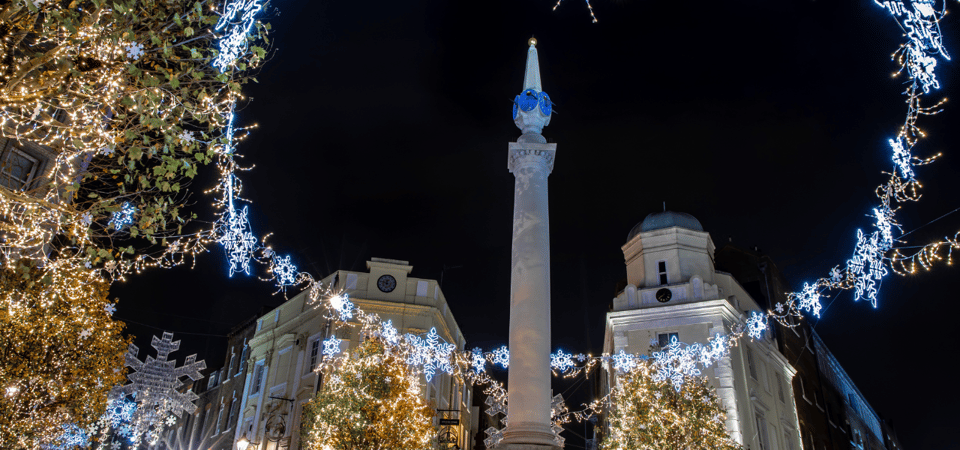
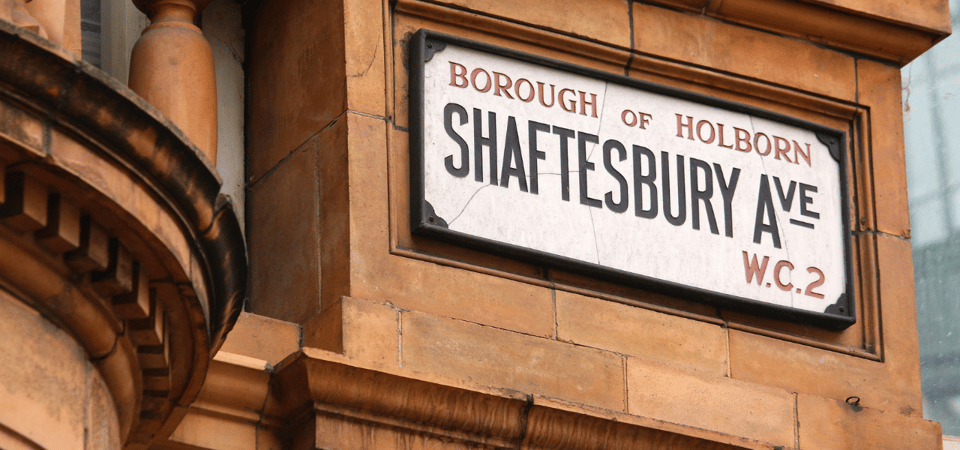
After the major theatre stops, the walk moves into a more street-level zone with Seven Dials and then along Shaftesbury Avenue, described as the spine of London’s theatreland.
Seven Dials is a particularly interesting inclusion because it functions like a crossing of different moods—less about one building, more about how the streets and people interact. It helps the route feel connected, not like a list of random stops.
Then Shaftesbury Avenue gives you the momentum. This is the part of the walk where the area starts to feel like it’s pulsing. You’re moving along one of the central arteries for theatre audiences, and the audio keeps you aligned with the right points so you don’t lose time.
My advice: don’t rush this stretch. Even if you’re moving quickly, let yourself slow down for 20–30 seconds at the best sightlines. In a straight line, small changes in angles are what make photos look better.
Chinatown gate and the Leicester Square lead-in
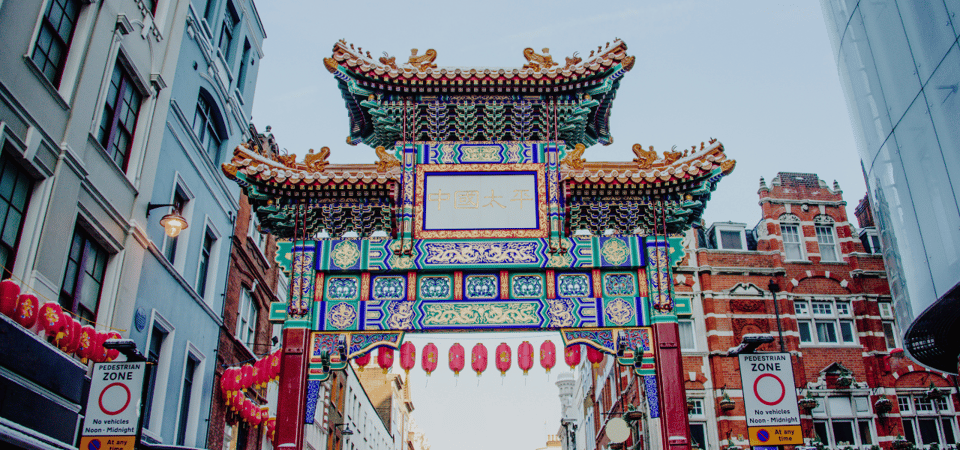
Near the end, the route threads in Chinatown’s unmistakable gate, then heads toward Leicester Square and the Prince of Wales Theatre.
This ending portion is smart because it shifts from theatre-only landmarks to a broader West End mix. The Chinatown gate gives you a visual and cultural contrast without needing you to travel across London. And Leicester Square is the kind of hub where lots of people already gravitate, so it’s easier to feel the energy without forcing it.
Practical idea: keep an eye on your timing here. Since you only have a 2-hour total, the closer you get to Piccadilly Circus, the more you’ll want to stay present instead of reading everything and stopping too often.
Piccadilly Circus finale: make the neon moment last
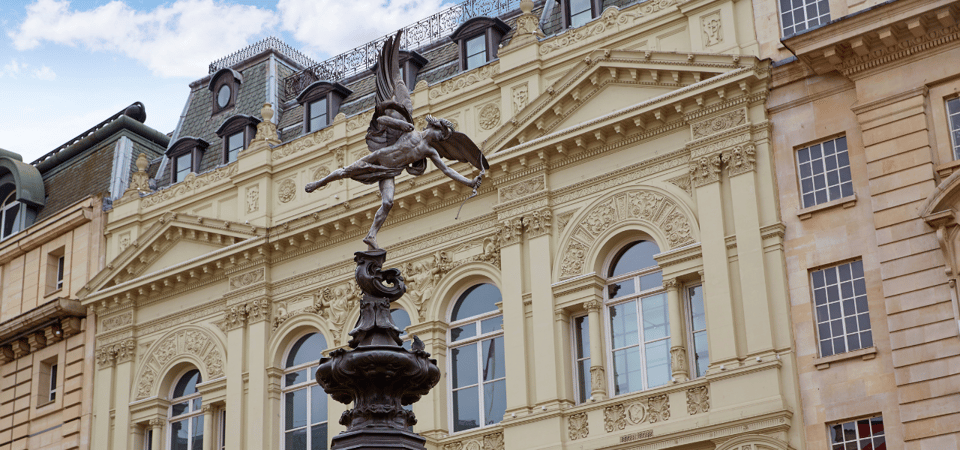
The tour culminates at Piccadilly Circus, described as ever-bustling and neon-lit. This is the payoff location, the one you’ll probably recognize instantly even if you haven’t been here before.
Because the tour is audio-led, you can tailor the last minutes to what you want most:
- If you like photos, linger near the angles that look best.
- If you’re more people-watching than camera-hunting, stand back and take in how traffic and pedestrians flow around you.
Also, remember that the audio can be controlled. The tour notes say you can start, stop, replay, or rewind as you like. So if you want to catch a narration point again while you’re standing at Piccadilly, you can.
If you’re someone who hates being told what to look at, use that control. Let the audio guide you, but keep the final decision on your own pace.
What you’re really paying for: value at $9
At $9 per person for a 2-hour audio walk, this is priced like a budget-friendly way to get an organized route without paying for a full guided tour. The value comes from three things you actually get:
- access to the Trippy Tour Guide tour in the app
- 23+ narration points across popular locations
- detailed directions not just to major landmarks, but also to hidden spots
In other words, you’re paying for reduced planning time. Instead of mapping out a theatre route and then guessing where the next best stop is, you follow the audio cues and directions.
Is it perfect value? Only if the app works well for you. If your setup fails or you don’t like the style of audio narration, the “cheap” price won’t feel like value at all. That’s why I’d treat the app as the core product here, not a bonus.
Languages and audio control: useful, but don’t forget the basics
Audio is offered in English, Spanish, French, and German. That’s a real benefit if you want to understand everything clearly without relying on your own English level.
And audio controls matter more than people think. You can start, stop, replay, or rewind. That’s handy if you:
- walk slower than expected
- miss a narration cue
- want to hear a stop’s explanation again before moving on
One thing to watch: you still need headphones and a functioning phone. There’s no in-person guide to fill the gaps, so your gear and battery life are part of the deal.
Who should book this tour (and who might not love it)
This tour makes sense for you if:
- you want a compact West End route without booking a long guided day
- you like using audio to learn while you walk
- you’re okay following directions and landmarks on your own
It may not be the best match if:
- you strongly prefer a human guide who can answer questions
- you don’t like app-based narration (especially if you’ve been frustrated by tech in the past)
- you want lots of entry-ticket flexibility, since entry fees are not included
Based on the overall rating and the fact that there have been reports about audio not being usable or the app failing to run, I’d recommend testing your setup carefully before you commit your time to the route.
Should you book this Covent Garden to Piccadilly Circus walking tour?
Yes, if you’re comfortable with an app-led walk and you’ll take setup seriously. For $9, it’s a low-stress way to connect Royal Opera House, Covent Garden market life, key theatre stops, and a dramatic Piccadilly Circus finish in just 2 hours—especially with 23+ narration points and directions to hidden spots.
Skip it or consider an alternative if you know you dislike audio guides, or if you’ve had trouble with the idea of launching and running tours on your phone while on the move. If that’s you, the odds of disappointment go up fast.
If you do book, come prepared: download with Wi-Fi, bring headphones, charge your phone, and start the tour only when you’re at the starting point. That’s the difference between an easy West End highlight walk and a frustrating tech detour.
FAQ
How long is the walking tour?
The tour is listed as 2 hours.
Where does the tour start and where does it end?
It begins at the Royal Opera House and ends at Piccadilly Circus.
Is there an in-person guide included?
No. An in-person guide is not included; it’s an app-based audio experience.
What’s included in the price?
You get access to the Covent Garden to Piccadilly Circus walking tour inside the Trippy Tour Guide app, plus 23+ narration points and detailed directions.
What language options are available?
Audio is available in English, Spanish, French, and German.
Do I need headphones?
Yes. You should bring headphones so you can hear the narration.
Do I need Wi-Fi?
You’ll need a strong internet connection to install and download the tour in the Trippy Tour Guide app using Wi-Fi.
Can I control the audio while walking?
Yes. You can start, stop, replay, or rewind the audio as you go.
Are entry fees included for attractions?
No. Entry fees are not included.