REVIEW · LONDON
London: British Museum Audio Tour & Priority Entrance Ticket
Book on GetYourGuide →Operated by Vox City International · Bookable on GetYourGuide
Skip the museum line and hear the stones talk. This British Museum experience pairs priority reserved entry with a 50+ stop digital audio guide so you can move faster and learn more without being herded. I like the mix: a simple start with staff support at Russell Square, plus enough structure to keep you from wandering for hours in the wrong galleries.
The big value here is that you’re visiting a museum with free admission, but you’re paying for convenience and guidance. One thing to plan for: you’ll need your own headphones and a charged smartphone, and you can’t bring large bags inside (cloakroom costs if you’re carrying coats or small luggage).
In This Review
- Key things to know before you go
- Entering the British Museum via Russell Square
- Priority reserved entry: what it does (and what it doesn’t)
- Your phone audio guide: 50+ highlights with built-in direction
- Starting in Egypt: Rosetta Stone, mummies, and Ramesses II
- Greek and Roman galleries: Parthenon sculptures to Discobolus
- The Lion of Knidos: one stop that changes the mood
- The Enlightenment Room: human curiosity in a different key
- How long is enough: making the 3-hour window work
- Pushchairs and bags: what’s allowed in real life
- Price and value: paying for convenience at a free-entry museum
- Who should book this audio tour (and who might skip it)
- Should you book the British Museum audio tour with priority entry?
- FAQ
- Where do I meet for the British Museum audio tour?
- Is priority entry included?
- Do I need to bring headphones or a phone?
- How does the audio guide work?
- What languages are available for the audio guide?
- Are cloakroom fees included?
Key things to know before you go
- Russell Square start point: Meet at the fountain in Russell Square (WC1B 5EH) and swap your voucher with Vox City staff.
- Priority reserved entry: You get fast access so you’re not stuck in the main ticket crush.
- 50+ audio points on your phone: The guide is built around highlights across multiple eras.
- Audio in many languages: English, Italian, French, German, Spanish, and Chinese are included.
- Don’t miss the classics: Rosetta Stone, Parthenon sculptures, Discobolus, and the Lion of Knidos are all part of the route.
- Extra bonus app: The package also includes a self-guided “Political London” sightseeing tour.
Entering the British Museum via Russell Square
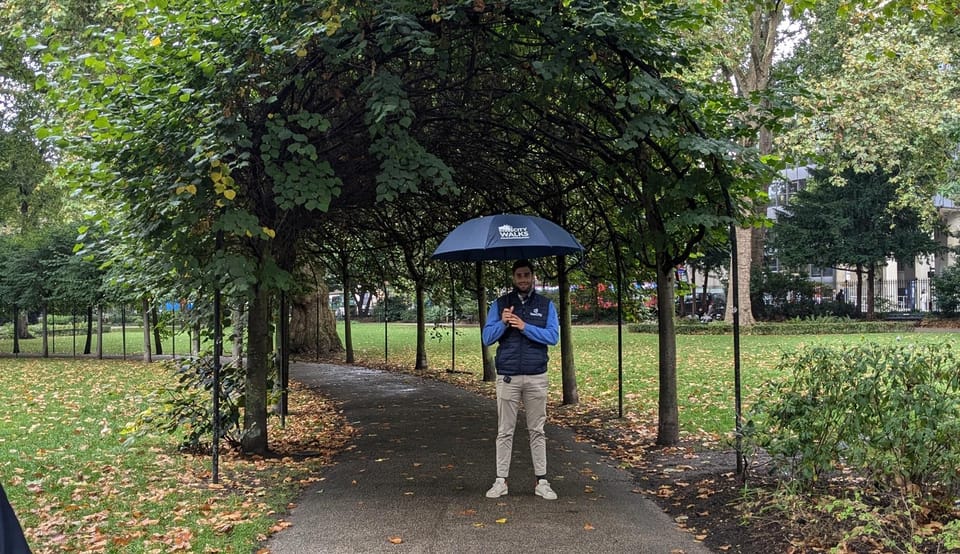
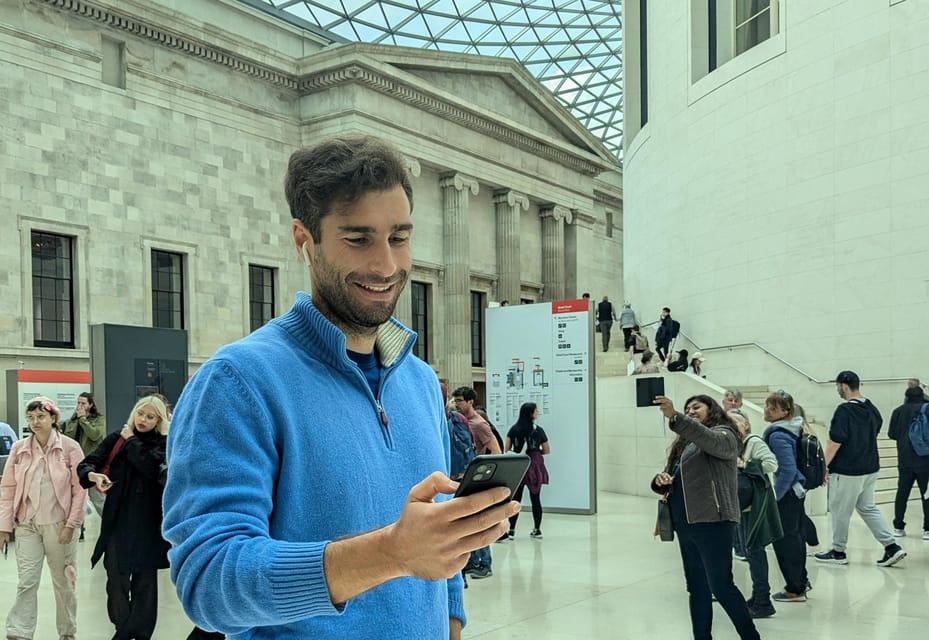
Getting going is half the battle at the British Museum. The meeting point is outside the museum area at Russell Square, at the fountain in Russell Square (WC1B 5EH). You’ll exchange your voucher with a Vox City staff member. People in the reviews talked about greeters like David, Roberto, Connor, and Regan, so you may meet a different host depending on the day, but the process is consistent: show up, confirm your ticket, and get directed in.
Arrive about 5 minutes early. It’s an easy place to find once you’re looking for the Vox City uniform (the color can vary in the details you’ll see, but it’ll be clearly marked). The activity ends back at the same meeting point, so you’re not forced into a rigid loop through the entire museum.
This setup is especially helpful if you want a calmer start. The British Museum can feel like a maze when you’re just walking in cold. With priority access, you shave off time where it matters most: the first moments when everyone is trying to get inside at once.
You can also read our reviews of more tours and experiences in London


Priority reserved entry: what it does (and what it doesn’t)

Priority entry here doesn’t turn the British Museum into a private tour. You still walk the museum yourself, at your own pace. What it does do is reduce the friction.
Think of it like this:
- You show up with your reserved slot.
- You skip the big line movement phase.
- Then you get to start sightseeing while other people are still sorting out tickets.
That’s the main advantage. You’re buying time and confidence, not a scripted guide telling you what to do every minute.
One practical catch: the museum is huge. Even with priority entry, you’ll still need to choose what matters most to you. If you only have a short window, use the audio guide as your spine. If you have longer, you can always stay beyond the main route once you’ve hit the big-ticket galleries.
Your phone audio guide: 50+ highlights with built-in direction
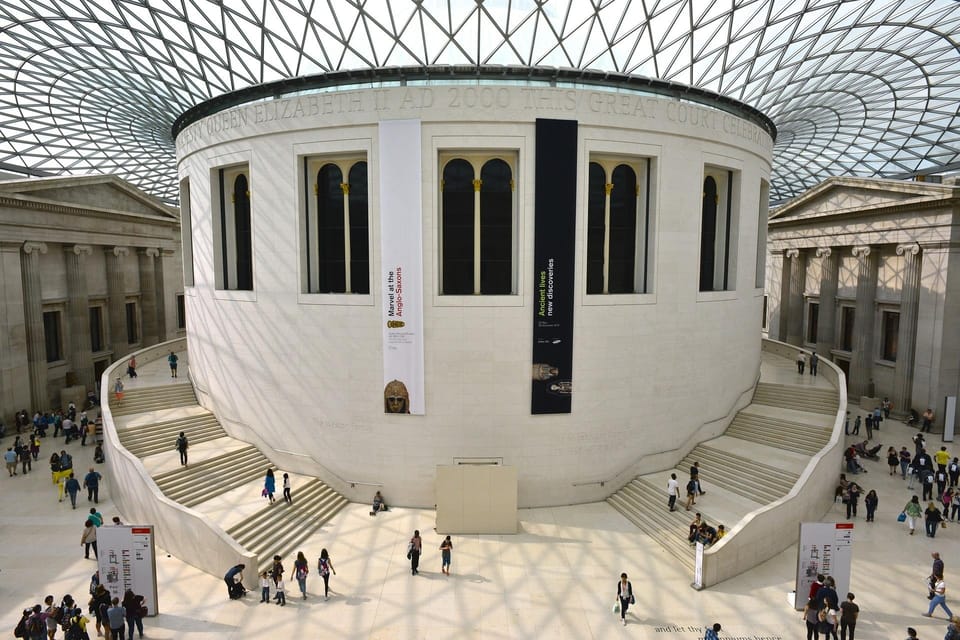
This experience includes a digital audio guide with more than 50 listening points. The plan is designed for self-guided visiting, so the “tour” is really a set of suggested stops and story prompts you can follow in the order that works best for you.
Before you arrive, scan the QR code from your voucher to download the app and audio guide. Do this ahead of time if you can. It saves you from doing tech support inside the museum, where signal and time both tend to be unpredictable.
You also need to bring:
- Headphones
- A charged smartphone
No headset is included, and the mobile device isn’t provided. So if you travel light, that’s fine, but if you forget headphones, you’ll lose the main benefit of the ticket.
Good news: the audio isn’t locked to English. You can switch among English, Italian, French, German, Spanish, and Chinese. That’s a strong choice when you’re traveling as a group with mixed language comfort.
Starting in Egypt: Rosetta Stone, mummies, and Ramesses II
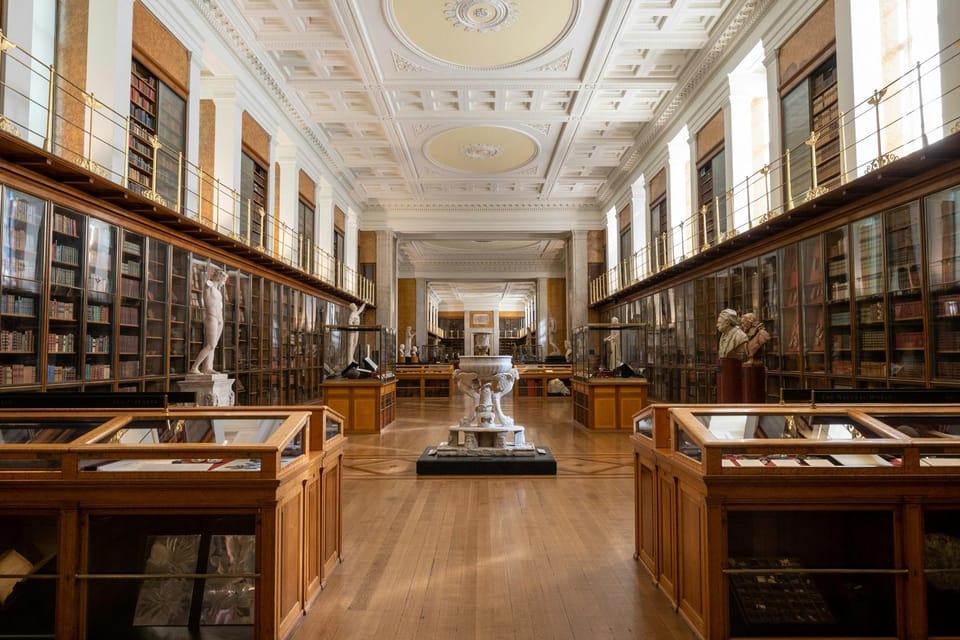
The route begins in the Egyptian galleries, and that choice makes sense. Egypt is the museum’s fastest path to instant wow. The audio guide spotlights major anchors so you’re not just drifting through rooms that blend together.
Here’s what the audio route steers you toward in this first stretch:
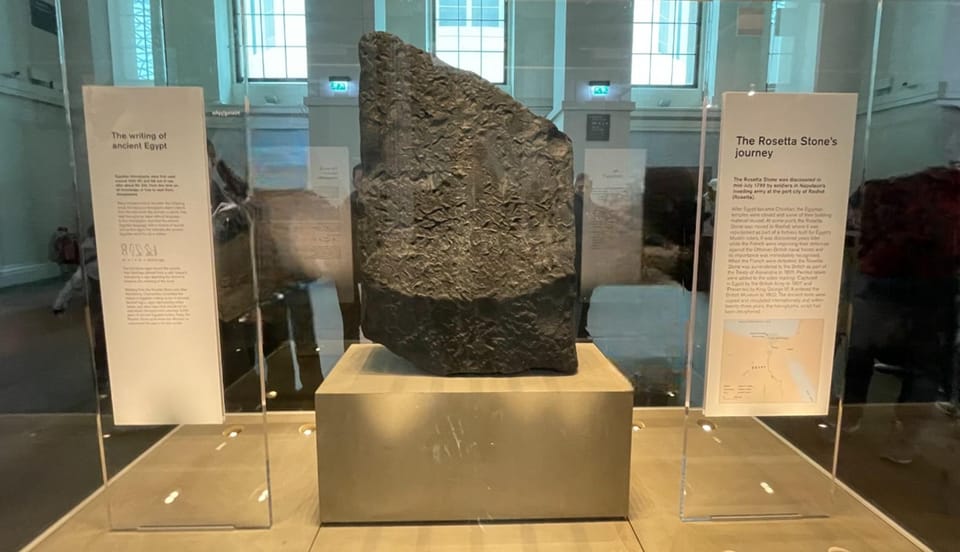
- The Rosetta Stone, famously tied to deciphering Egyptian hieroglyphs
- Egyptian mummies, with context around burial practices
- A major Ramesses II statue, presented as a symbol of Egypt’s power
What I like about starting in Egypt is the momentum. You get meaningful landmarks early, so your brain has something to grab onto. Then when you move into Greek and Roman sections, you’re not starting from scratch.
Practical tip: don’t rush past the first Egyptian rooms. The Rosetta Stone area can be busy, and the audio helps you understand what you’re looking at beyond the surface facts. If you’re a “look closely” visitor, this is where you’ll feel the payoff most.
Greek and Roman galleries: Parthenon sculptures to Discobolus
After Egypt, the guide walks you into Greek and Roman territory, where the museum’s collection feels almost architectural. This is where you see art that connects to famous places outside London.
Key stops in this section include:
- The Parthenon sculptures, originally part of the temple in Athens
- Discobolus, the famous statue associated with ancient Greek athleticism
- Roman galleries with impressive statues and mosaics showing Roman art and culture
This part works well for “choose-your-own-depth” sightseeing. If you only have time to look and move, the audio points keep you oriented. If you stop for photos, the listening notes give you enough context to make your time feel purposeful.
A small planning note: the Greek and Roman areas can have dense clusters of famous objects. If you’re traveling with anyone who gets overwhelmed by crowds, use the audio guide’s order as a cue to pick a lane. You’ll still see the highlights without stopping every few steps to figure out where you are.
You can also read our reviews of more museum experiences in London






The Lion of Knidos: one stop that changes the mood
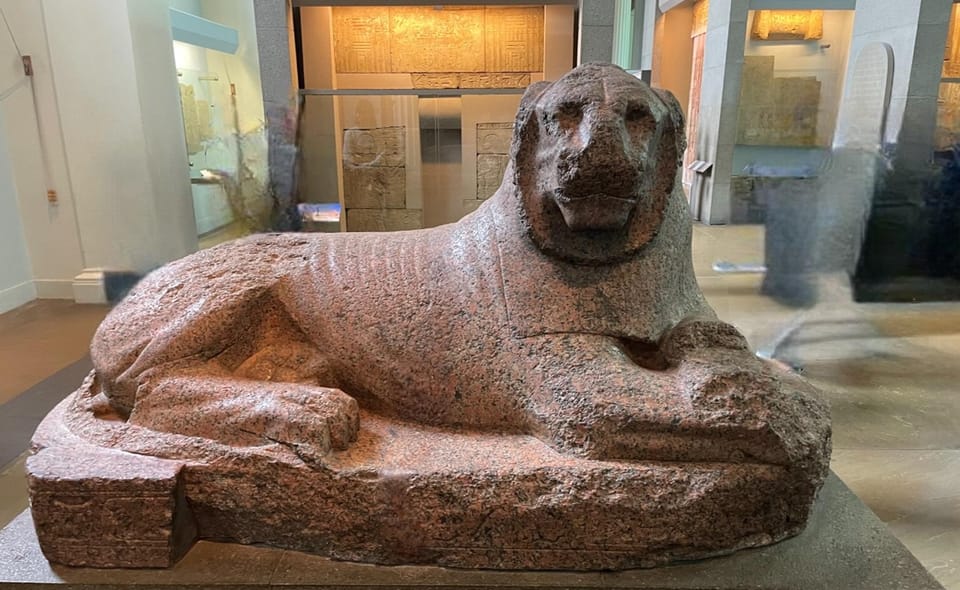
One of the most striking named highlights is the Lion of Knidos. This marble sculpture is presented as a powerful symbol of ancient Greek artistry, and it once stood guarding the ancient harbor of Knidos.
Why this stop matters in a self-guided audio plan: it breaks up the “room after room” feeling. The Lion is a specific object with a dramatic presence. You’re not just wandering across themed galleries; you’re aiming at a single moment.
If you like the craft angle, this is a great place to slow down. The guide’s stories can help you see the sculpture as more than a landmark photo.
The Enlightenment Room: human curiosity in a different key
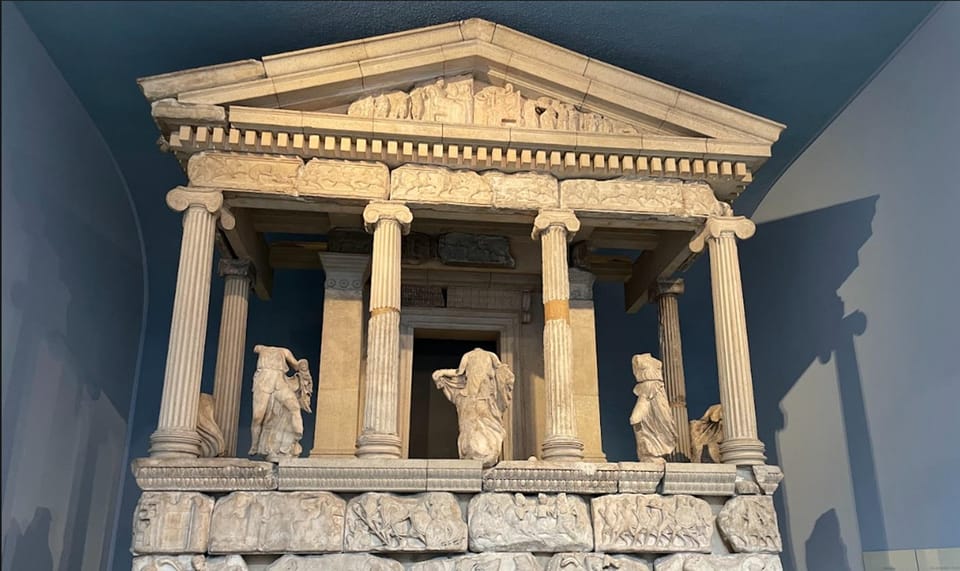
The audio guide also includes a stop in the Enlightenment Room, where you’ll find objects connected to human curiosity and the pursuit of knowledge.
This is a nice reset if you’ve been primarily focused on ancient eras. The British Museum isn’t only about classical civilizations. This kind of room gives you a glimpse of how the museum frames the story of knowledge itself.
If you’re the type who likes learning in “themes” rather than time periods, this is one of the better matches. It can also keep kids and teens engaged, because it often feels less like you’re staring at old stone and more like you’re exploring tools and ideas.
How long is enough: making the 3-hour window work
The experience is listed as 3 hours, with starting times you can check for availability. That’s a real constraint, and it helps to plan with the right expectations.
The British Museum is enormous, and even a smart highlight route can feel rushed if you stop to read every sign and photograph everything. One reviewer-style takeaway from the real world is simple: people often want more time than they expect.
So here’s the honest way to handle it:
- Treat the 3-hour plan as the best-of highlights route.
- If you love museums, plan to stretch your visit beyond the audio guide after you hit the major named objects.
- If you’re short on time, commit to the audio stops and skip the extra side rooms unless something catches your eye.
You’ll get more satisfaction by moving efficiently during your guided portion and then staying longer only if you still have energy.
Pushchairs and bags: what’s allowed in real life
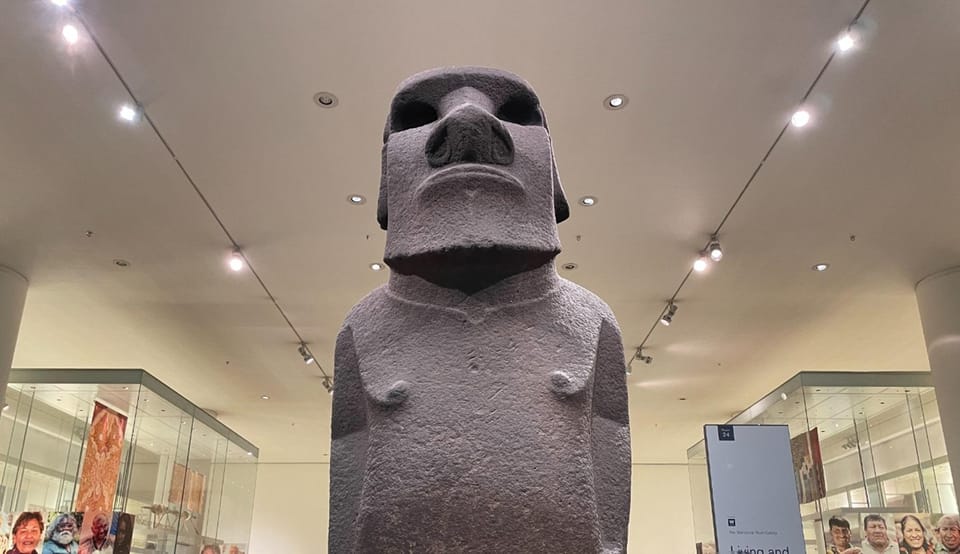
If you’re traveling with kids, good news: pushchairs are permitted on-site. Fold-up prams and buggies can be left free of charge in the cloakroom. That’s helpful when you’re trying to keep a walking plan realistic.
On the other hand, large items are limited. Luggage or large bags aren’t allowed, and wheeled cases and folding bicycles are listed as not permitted. If you’re traveling with coats and daybags, you’ll likely use the cloakroom.
Cloakroom costs are part of the planning picture. Coats cost £2, and bags have tiered fees depending on weight (smaller bags have a lower fee, and heavier bags cost more). Umbrellas cost £1.
This matters because it affects your total cost and how quickly you can get started. If you can store extra stuff before you arrive, you’ll enjoy the visit more.
Price and value: paying for convenience at a free-entry museum
This package is priced around $9.09 per person. At first glance, that sounds like you’re paying for entry. But the British Museum itself has free admission, so the value is different.
You’re paying for:
- Priority reserved entry (less waiting)
- A digital audio guide with 50+ listening points
- A host at the meeting point to help you get started
- A £1 donation to the British Museum included in your package
- A sightseeing app bonus with Political London
So yes, you could walk into the British Museum without paying. But you’d be giving up the time-saving entry experience and the built-in audio route. For many people, especially first-timers, that’s the trade that feels worth it.
I’d call this good value if you:
- want structure without a guided group pace
- like to learn as you walk
- care about minimizing time in lines
It’s less ideal if you already know exactly what you want to see and you’re comfortable navigating without audio. Still, even then, the audio points can be a helpful way to catch famous objects you might otherwise miss.
Who should book this audio tour (and who might skip it)
This is a strong match for independent travelers who want:
- self-paced visiting
- a guided route without the pressure of a group schedule
- quick access via reserved entry
It’s also a good choice for families using pushchairs, as long as you can manage bag rules and cloakroom basics.
You might consider skipping if:
- you don’t want to rely on a smartphone during your museum time
- you arrive without headphones or your phone battery isn’t dependable
- you’re carrying large bags that will force cloakroom fees
That said, the route is designed around iconic stops. Even if you change your mind halfway through, you’ll likely end up seeing the museum’s headline moments.
Should you book the British Museum audio tour with priority entry?
I’d book it if you want a smoother first visit: quick entry, a clear highlight route, and stories that make the artifacts easier to understand. The audio guide is the “engine,” and the priority entry is what gets you to the engine faster.
If you’re the type who enjoys museums at your own speed and you like having a plan you can follow—or partly ignore—this setup fits nicely. Just come prepared with headphones and a charged phone, and be ready to pay cloakroom fees if you’ve brought bulky items.
If you want your day to run on rails instead of guesswork, this is a practical buy.
FAQ
Where do I meet for the British Museum audio tour?
Meet at the fountain in Russell Square (WC1B 5EH). A Vox City staff member will exchange your voucher. The activity ends back at the same meeting point.
Is priority entry included?
Yes. The package includes priority reserved entry to the British Museum so you can skip the ticket line.
Do I need to bring headphones or a phone?
Yes. You’ll need headphones and a charged smartphone. A mobile device and headset are not included.
How does the audio guide work?
You download the app and audio guide by scanning the QR code on your voucher before you arrive. The audio guide includes 50+ listening points and multilingual commentary.
What languages are available for the audio guide?
The digital audio commentary is available in English, Italian, French, German, Spanish, and Chinese.
Are cloakroom fees included?
No. Cloakroom fees are not included, and there are listed charges for coats and bags depending on size/weight.