REVIEW · LONDON
Explore Biblical Artifacts at the British Museum
Book on Viator →Bookable on Viator
Bible stories, in museum-sized context. This tour turns the British Museum into a Bible timeline by using David’s guided explanations and Bible-artifact connections as you move room to room. I really like the way the tour pairs what you see with specific Bible themes, and how you can follow along using an offline Bible app. One watch-out: you’ll be standing and walking for about 3 to 4 hours, so plan for slower moments and comfort needs.
The route is built for flow: you start on the ground floor with Assyrian, Egyptian, and Greek galleries, take a break, then go upstairs for the Roman galleries. As time allows, there are optional rooms focused on Persia and Babylon if that’s your priority.
Logistically, it’s a good half-day plan. The meeting point is right at the British Museum (Great Russell St), groups are kept to a maximum of 10, and the tour runs for about 3 hours with the option to go longer depending on pacing and what you choose to see.
In This Review
- Key things to know before you go
- A half-day Bible lens inside the British Museum
- The guide rhythm: small group, fast context, lots of room for questions
- Ground-floor start: Assyria, Egypt, Greece, and the stories behind famous names
- Assyria first: monumental power you can actually stand next to
- Egypt next: pharaohs, Joseph, and Moses in the same mental frame
- Greece after: Parthenon sculptures and why Paul belongs there too
- The break that actually helps
- Roman galleries upstairs: Jesus and Paul through real objects
- Optional Persia and Babylon: when Old Testament threads want extra time
- The offline Bible trick: Google Doc notes plus an app that works in airplane mode
- Comfort and pacing: folding stools, warm rooms, and how to plan your body
- Price and value: $77.50 for the guide, not just the museum
- Who this tour suits best (and who may want to choose something else)
- Before you go: simple prep that pays off
- Should you book this British Museum Biblical artifacts tour?
- FAQ
- How long is the tour?
- Where does the tour start?
- When does the tour end?
- What galleries do you visit first?
- Are there optional galleries?
- Is museum admission included?
- What’s the group size limit?
- Is a Bible app required?
- Are folding stools available?
- What is the cancellation policy?
Key things to know before you go
- 40-ton Assyrian lamassu beasts: you’ll get up close to the kind of monumental guardian figures that defined whole empires
- Parthenon sculptures of Athens: Greek art isn’t just background noise here; it’s part of the story you’ll hear
- Roman rooms tied to Jesus and Paul: you’ll look at objects that relate directly to both figures
- Optional Persia and Babylon galleries: Old Testament threads can keep rolling if you have time and interest
- Offline Bible support: bring an app that works in airplane mode (YouVersion is suggested)
- Folding stools available on request: a practical fix if you worry about standing on hard museum floors
A half-day Bible lens inside the British Museum
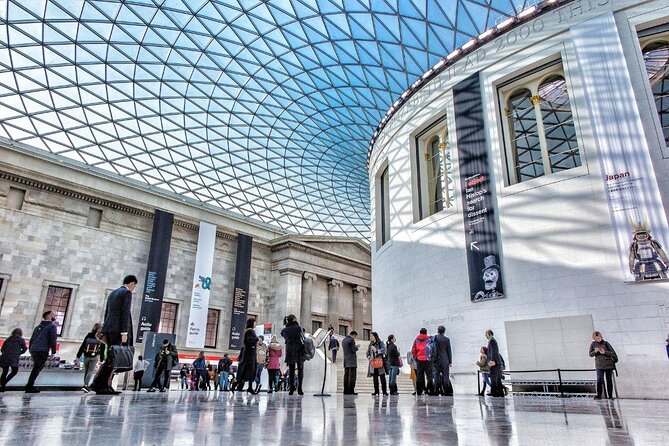
If you like the British Museum as a building, you’ll love it more when you enter it with a purpose. This tour doesn’t treat the Bible like abstract reading. It uses ancient material culture—sculpture, statues, objects—to give you another angle on familiar names and moments.
I also like that the tour isn’t only Old Testament or only New Testament. You get a sweep: Joseph and Moses in the Egyptian world; Jonah, Ahab, and Hezekiah in the Assyrian storyline; then you move forward into the Roman era with Jesus and Paul as anchor points. That timeline focus is the point. It helps your brain organize what you’re seeing instead of just collecting facts.
One more reason this works well as a London plan: it’s built as a half-day activity. You can do this and still have the rest of the day to roam on your own, eat well, and hit other big sights without feeling rushed.
You can also read our reviews of more museum experiences in London


The guide rhythm: small group, fast context, lots of room for questions
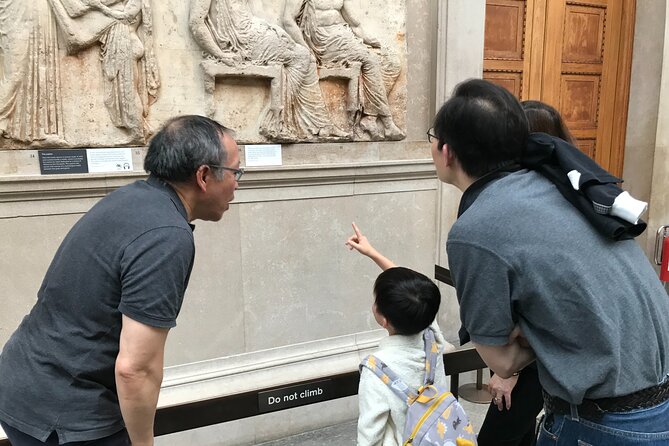
This is a max 10-person tour, which matters more than it sounds. You’ll move through the museum in a manageable group, and there’s space for David’s explanations without the constant squeeze you get in larger groups.
The style is also practical. The tour pairs what you see with what you read—so you aren’t stuck with vague references. David helps you connect specific Bible themes to the galleries you’re standing in, and he’s able to answer side questions when they pop up. That question-and-answer flow shows up again and again in the feedback, and it’s a big reason the time can feel surprisingly quick.
One extra help: there’s a Google Doc full of study notes and related Bible verses. That pre-work is meant to get your bearings before you walk into the museum rooms. It’s not required in the data as a rule, but if you do skim it, you’ll follow the timeline more easily when the tour starts.
Ground-floor start: Assyria, Egypt, Greece, and the stories behind famous names
Your tour begins on the British Museum’s ground floor. The idea is simple: start with the earlier empires and the visual language of ancient power, then build forward.
Assyria first: monumental power you can actually stand next to
One of the standout moments is seeing the 40-ton Assyrian lamassu beasts. These aren’t small carvings you glance at and forget. They’re huge guardian figures tied to Mesopotamian royal imagery. In a Bible-linked tour, their impact matters because they represent the kinds of empires that show up in the Old Testament storyline.
This is also where the tour earns its pace. Instead of listing rulers like a textbook, you’ll connect the empire’s visual scale and political style to the Bible characters associated with Assyria. The guide includes people like Jonah, Ahab, and Hezekiah in the conversation, so you’re not just seeing art—you’re mapping it to names.
A possible drawback here: the museum galleries can be busy and the route can feel like a lot of looking in a short time. If you’re prone to sensory overload, take your time at the big pieces and use the breaks to reset.
Egypt next: pharaohs, Joseph, and Moses in the same mental frame
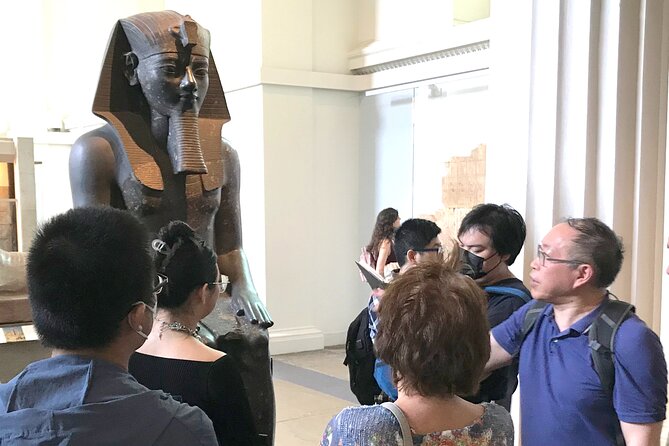
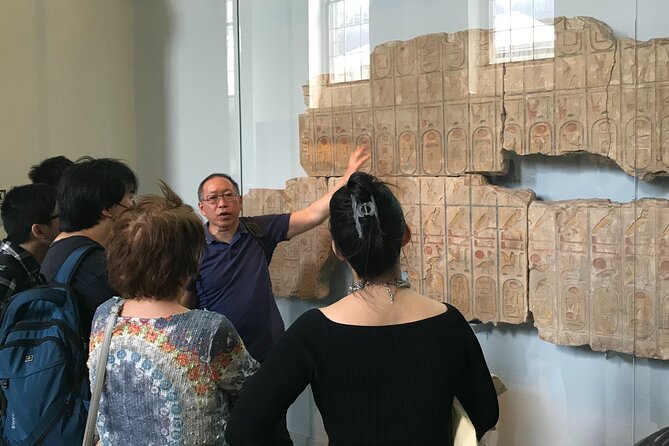
From Assyria you move into the Egyptian galleries. The museum has famous statuary and objects tied to pharaonic history, and the tour uses that to spotlight Joseph and Moses in a historical way that fits what you’re seeing.
You’ll also get help for reading Egypt visually. Names and narratives can feel separated when you read only one tradition at a time. Here, the guide ties the biblical storyline to what’s on display, so you can build a single mental map rather than jump between disconnected chapters.





Greece after: Parthenon sculptures and why Paul belongs there too
Then you hit Greek galleries, including the Parthenon temple sculptures of Athens. Even if you’ve seen images of the Parthenon before, seeing fragments and sculptures in person changes the scale and detail.
In this tour, Greece isn’t a random stop. The guide includes Paul in the Greek storyline too, which matters because Paul’s world wasn’t only Hebrew scripture. His journey and communication happened in a broader Mediterranean context, and Greece is part of that setting.
If you want pure art history only, this may not scratch that itch. The framing is explicitly Bible-connected. But if you’re curious how the Bible intersects with the wider ancient world, this Greek segment is useful.
The break that actually helps
After the ground-floor sequence, you take a break. That’s not just for comfort. It’s a mental reset before you go upstairs to the Roman galleries, where the New Testament timeline picks up with different kinds of objects and themes.
Roman galleries upstairs: Jesus and Paul through real objects
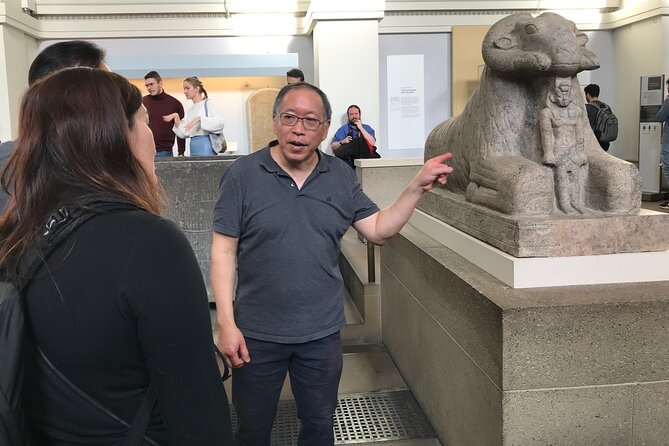
Next you go upstairs for the Roman galleries. This is where the tour tends to feel most electric for Bible readers, because the guide shifts from empire-style storytelling to specific connections with Jesus and Paul.
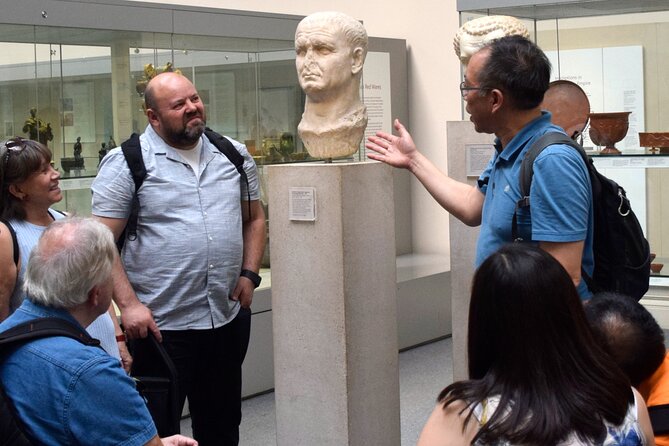
You’ll look at Roman emperors and objects related directly to these figures. Coins, inscriptions, and everyday-looking items can suddenly feel important when someone helps you connect them to the period and the names you’ve studied.
This is also where the timeline approach really helps. The Roman era can feel like a blur if you think about it only through later tradition. Here, you’re walking through a museum section tied to the environment where Jesus’s message spread and where Paul carried it further.
And yes, this part can get coin-level detailed. One of the practical wins mentioned in feedback is that David points out small details people miss on their own. He’ll notice things like writing direction on carved stone and layout details that help you understand how people in the ancient world recorded identity and authority.
Optional Persia and Babylon: when Old Testament threads want extra time
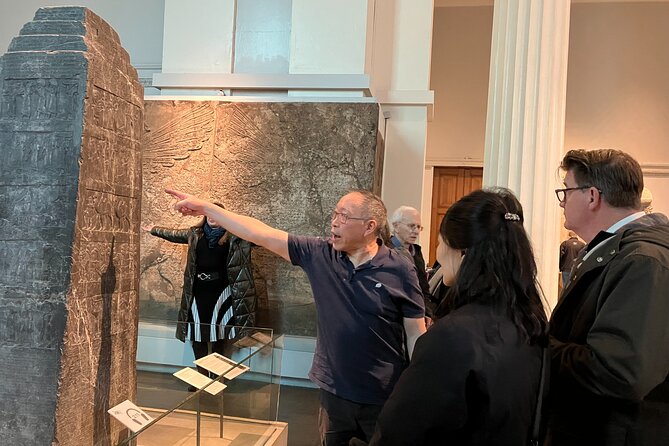
As time allows, the tour may add optional galleries focused on Persia and Babylon. This isn’t required, and the timing depends on how your group moves through the main route.
Still, if you’re interested in the stretch of the Old Testament story that connects to major powers in the region, these rooms can add continuity. The tour’s overall structure already includes Assyria and then pushes forward, and Persia/Babylon gives you more of the middle chapters where themes of exile, rule, and return often show up.
If you’re short on energy, skip options and stick with the core route. You’ll still get the main sweep from Assyria/Egypt/Greece to the Roman galleries.
The offline Bible trick: Google Doc notes plus an app that works in airplane mode
Here’s the part that makes this tour feel different from a standard museum guide: you’re not just listening. You’re linking.
You get access to a Google Doc full of study notes and related Bible verses. That means when you reach a gallery tied to a Bible theme, you’re not starting from zero.
Then, during the tour, David helps you use a Bible app that works without cell service. The suggestion is YouVersion, and it’s called out specifically as a good airplane-mode option. This matters because it keeps you from losing time to no-signal frustration while you’re trying to find passages.
Some tours include a quick setup moment before the main walking begins. One of the practical tips is to arrive with the app ready so you can move fast when the guide offers look-ups. If you need that reminder: download and test the app before you leave your hotel.
Also, don’t expect the tour to end at the museum door. Follow-up support is part of the experience: David has sent additional references after the tour in the feedback, including a video link that shows an example of how a Persian royal drinking vessel might be used.
Comfort and pacing: folding stools, warm rooms, and how to plan your body
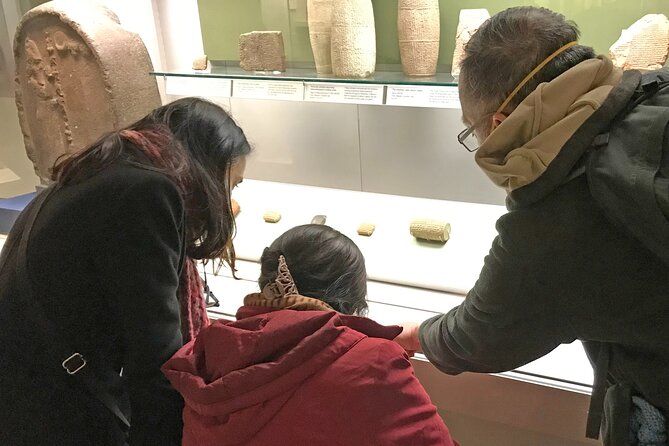
Museum floors are hard, and standing for several hours is real. The good news is that folding stools are available at the museum as an option. The tour includes this as a practical note, so if you’re worried about feet or knees, ask about it rather than toughing it out.
That said, even with stools, you’ll still do walking and shifting between galleries. Plan to wear supportive shoes, and take advantage of any short reset moments the guide builds in.
One more comfort consideration: some galleries can be warm. If you’re sensitive to heat, bring a plan to cool down during breaks. A half-day tour is short enough that you can manage it, but it’s long enough that comfort affects enjoyment.
Price and value: $77.50 for the guide, not just the museum
At $77.50 per person, you’re paying for interpretation, not general admission. The tour is built around a British Museum entry that’s free, so the cost is really about David’s guided framework—connecting Bible names, time periods, and themes to objects in specific rooms.
Is it worth it? In my view, it’s worth it if you care about the Bible as more than a reading experience. If you want names placed into a timeline and you’d like help seeing what the artifacts can and cannot do, a guide helps a lot.
This isn’t a tour that relies on dramatic storytelling alone. It’s grounded in the way museum collections represent ancient societies. When someone ties those details to biblical characters and events in a coherent sequence, the museum starts feeling like a narrative rather than a warehouse of objects.
If you’re visiting the British Museum mainly to wander and pick favorites at your own pace, you could likely do it without a tour and still have a great day. But if you want the Bible timeline structure, this price is more about value per hour of guided meaning than about raw ticket cost.
Who this tour suits best (and who may want to choose something else)
This tour is a great fit if you’re:
- Interested in biblical history and archaeology
- Curious how ancient empires relate to Bible characters and themes
- The kind of person who likes having a study tool nearby (Google Doc notes and an offline Bible app)
It’s also useful if you’re visiting the British Museum for the first time. A guided route helps you avoid decision fatigue. The guide knows the museum flow, and that saves time.
I’d use caution if you:
- Have just arrived from a long flight and are still dealing with jet lag. The tour is explicitly noted as not recommended for jet-lagged travelers right after long-haul travel.
- Prefer a tour that is purely art-history or purely archaeological without any Bible-centered framing. This one is Bible-focused by design.
- Expect a fully seated experience. Even with stools available, you’ll still spend time moving and looking.
Before you go: simple prep that pays off
A few prep steps can make this smoother:
- Skim the Google Doc study notes so names and themes land faster.
- Download and test your Bible app before you start. Airplane-mode access is the goal.
- If you want the folding stool option, think about it before you arrive. Don’t wait until you’re already tired.
- Use your phone for offline reading, but also check for messages after booking in your app and email inbox.
The museum is a big place. Arriving ready helps you get more out of each room instead of losing time to setup.
Should you book this British Museum Biblical artifacts tour?
Book it if you want the British Museum to feel like a Bible timeline, not just a collection you pass through. The combination of specific gallery focus, an organized narrative that links Egypt, Assyria, Greece, and Rome to Bible figures, and the offline Bible support makes this a strong value for the time you spend.
I’d skip or consider an alternate format if you’re exhausted from travel, want maximum lounging time, or prefer museums without a Bible-centered lens. The tour is not trying to be neutral in theme; it’s trying to connect scripture and artifacts in a way that’s easy to follow.
If you fit the audience—Bible-curious, timeline-minded, and okay with some standing—this is a very satisfying use of a London half day.
FAQ
How long is the tour?
It runs about 3 to 4 hours.
Where does the tour start?
It starts at the British Museum, Great Russell St, London WC1B 3DG, UK.
When does the tour end?
It ends back at the meeting point.
What galleries do you visit first?
You start with the Assyrian, Egyptian, and Greek galleries on the ground floor.
Are there optional galleries?
Yes. As time allows, you may add Roman-related options and also galleries such as Persia and Babylon depending on preference and timing.
Is museum admission included?
The tour info notes that admission ticket is free.
What’s the group size limit?
There’s a maximum of 10 travelers.
Is a Bible app required?
Not required, but a Bible app that works in airplane mode is recommended. YouVersion is suggested.
Are folding stools available?
Optional folding stools are available at the museum if you want them.
What is the cancellation policy?
Free cancellation is available up to 24 hours in advance for a full refund. Cancellation within 24 hours of the start time is not refunded. Cut-off times are based on local time.