REVIEW · LONDON
London: Tour of the British Museum
Book on GetYourGuide →Operated by Paseando por Europa · Bookable on GetYourGuide
If you like stories, the British Museum delivers. This 2-hour tour turns a huge building into a clear path through the world’s oldest civilizations, with an official guide to keep things from feeling like museum noise. I like that you get a guided route instead of wandering and guessing.
I also like the lineup of stops. You start at the museum entrance, then move into the Hall of Enlightenment (with King George III’s book collection), before stepping through Egypt, Assyria, Greece, and ending with the Easter Island moai Hoa Hakananai’a and Aztec pieces.
One thing to consider: the museum can be crowded, and meeting the guide may take a minute. A few people said the blue-green flag can be small, so arriving early matters.
In This Review
- Key takeaways before you go
- Why This British Museum Tour Works When You Have Limited Time
- Meeting Point on Great Russell Street: Finding Your Guide Quickly
- Getting Oriented Outside: Classical Greece in the Front Steps
- Hall of Enlightenment and King George III’s 60,000+ Books
- Ancient Egypt: Funerary Rites That Change How You Read the Objects
- Assyria: A Different Kind of Power and Image-Making
- Greece in the Museum: Seeing a Parthenon Fragment in Context
- Easter Island Finale: Hoa Hakananai’a and the Surprise of Aztec Pieces
- Guides, Pace, and Why You’ll Enjoy the Tour More Than You Think
- Price and Value: Is $14 a Good Deal in London?
- Practical Tips That Keep the Day Smooth
- Who Should Book This Tour?
- Should You Book It?
- FAQ
- How long is the British Museum Tour?
- Where do I meet the guide?
- What languages are available?
- What’s included in the price?
- Is food and drink included?
- Are pets or large bags allowed?
Key takeaways before you go
- Fast orientation: you walk in with a plan, not a map and a prayer
- Hall of Enlightenment focus: King George III’s 60,000+ books set the tone early
- Big civilizations, short time: Egypt, Assyria, Greece, Aztecs, and Easter Island highlights
- Talk-and-ask style: guides tend to answer questions and add humor
- Plan for crowds: queues happen, so you should show up early
- Find the flag: look for the blue-green Paseando por Europa banner after security
Why This British Museum Tour Works When You Have Limited Time
The British Museum is famous for a reason: it’s packed with artifacts that feel like they belong to different planets. The trick is not seeing everything. The trick is seeing the right things in the time you’ve got.
This tour is priced at $14 per person for a 2-hour walking tour with a local guide. That’s strong value in London terms because the cost mainly buys you context. Without guidance, it’s easy to stand in front of a masterpiece and leave with the vague feeling that you should have understood more. With a guide, you get the “what am I looking at and why does it matter” piece—especially helpful in a museum this large.
You can also read our reviews of more museum experiences in London



Meeting Point on Great Russell Street: Finding Your Guide Quickly
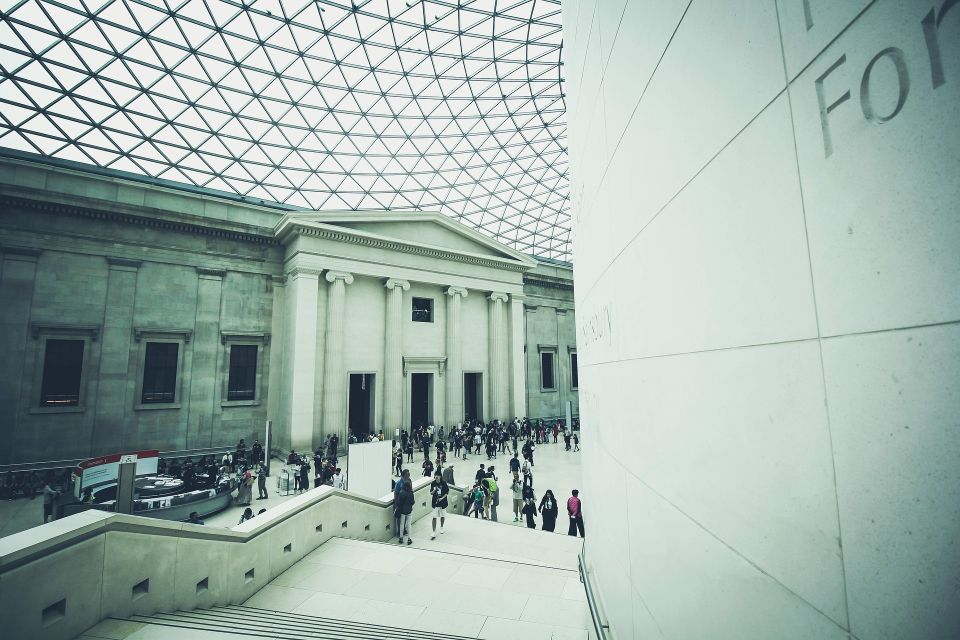
Start smart and you’ll keep your day relaxed. Your meeting spot is at the stairs to the main entrance of the British Museum on Great Russell Street, in front of Starbucks, after you pass the security checkpoint.
A couple practical notes that make a real difference:
- Go early because queues form at the entrance.
- Bring a printed confirmation or mobile voucher to show at the meeting point.
- Look for a guide holding a blue-green flag with the Paseando por Europa logo. The flag isn’t huge, so if you arrive at the last minute, you’ll waste time scanning faces.
Getting Oriented Outside: Classical Greece in the Front Steps
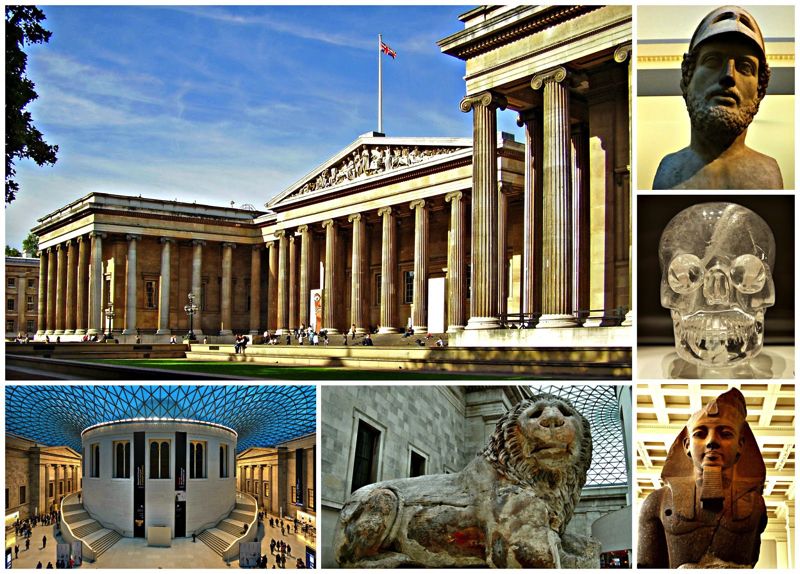
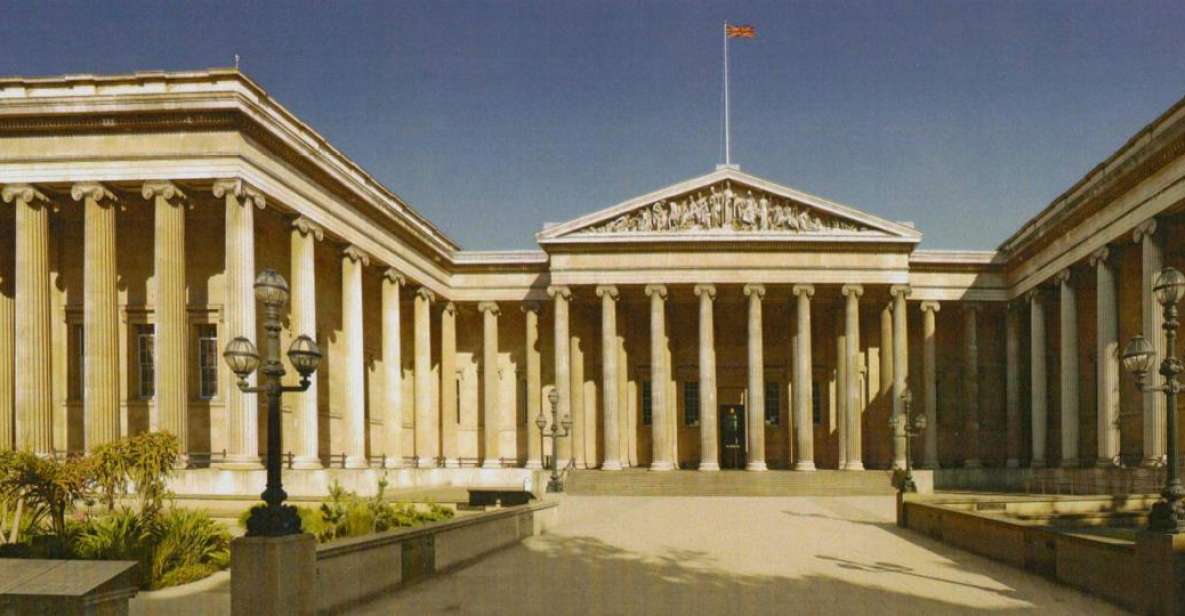
Before you even enter, you get a quick sense of the museum’s design language. You begin outside and take in the building’s look, which echoes Classical Greece. That matters because the British Museum doesn’t just hold ancient history—it frames it. When you notice the Greek vibe early, the later stop featuring Greek material lands with more clarity.
Think of this opening as the warm-up. You’re being taught how to pay attention once you’re inside: what to look for, how the museum organizes themes, and where the major “must-see” areas sit.
Hall of Enlightenment and King George III’s 60,000+ Books
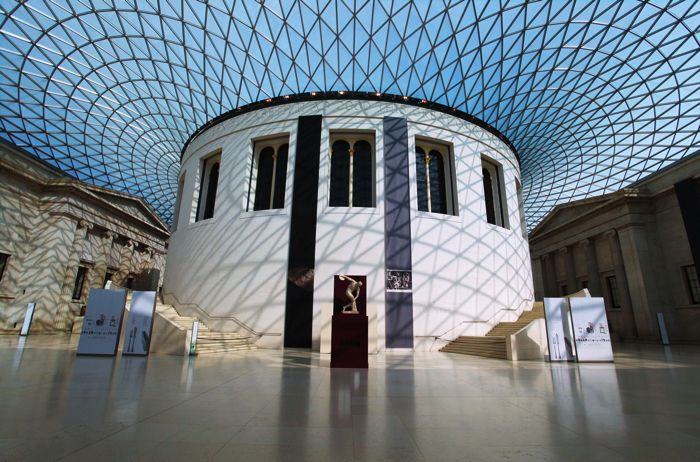
Then you move into the museum’s Hall of Enlightenment, described as the oldest hall inside the British Museum. This is where the tour gets delightfully specific: it houses a collection of more than 60,000 books associated with King George III.
Why this stop is more than a decorative break:
- It connects the museum to the world of learning and collecting, not just display cases.
- It gives you a baseline for how knowledge is preserved and presented.
- It sets a serious tone before the tour shifts into ancient civilizations.
Also, it’s a helpful pause. In a museum full of rooms, your brain needs a point where you understand the big picture. This hall gives you that.
Ancient Egypt: Funerary Rites That Change How You Read the Objects
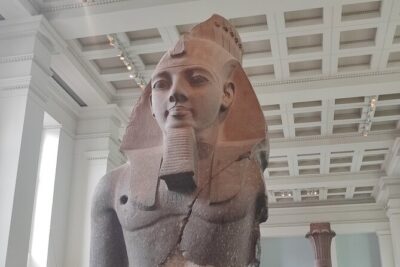
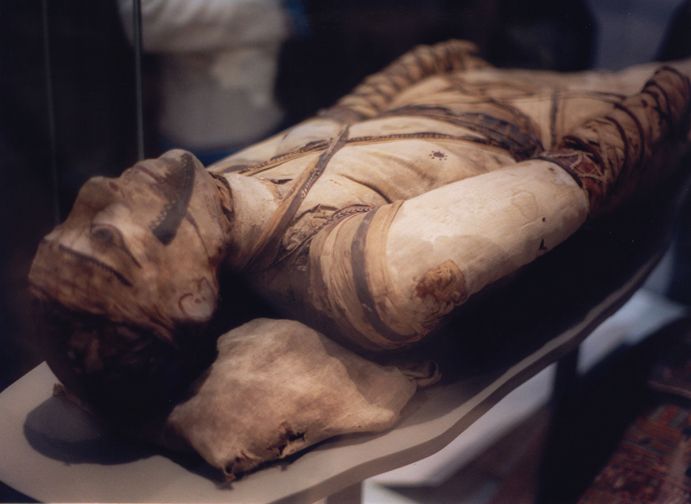
Next comes Ancient Egypt, and the focus is on Egyptian funerary rites. That theme is ideal for a guided highlights tour because it turns static objects into a story about beliefs—life, death, and what people hoped would happen next.
Even if you know only the basics of Egyptian mythology, a guide can connect details you’d otherwise miss:
- what the items were made for
- what rituals they relate to
- why particular symbols repeat across objects
This stop is where many first-time visitors start feeling the tour’s value. Instead of seeing Egypt as one big word, you see it as a system of ideas.





Assyria: A Different Kind of Power and Image-Making
After Egypt, the tour moves to the Assyrian civilization. The key benefit here is contrast. Egypt is often taught through monuments and gods; Assyria often reads as power expressed through imagery, rule, and public message.
With a guide, you’re less likely to treat Assyrian stonework as just impressive carving. You’re more likely to connect it to the broader idea of empire—how rulers wanted to be remembered.
Short tours can’t cover everything. What they can do is help you notice the “message style” of each culture, and this Egypt-to-Assyria sequence is a good way to train your eye.
Greece in the Museum: Seeing a Parthenon Fragment in Context
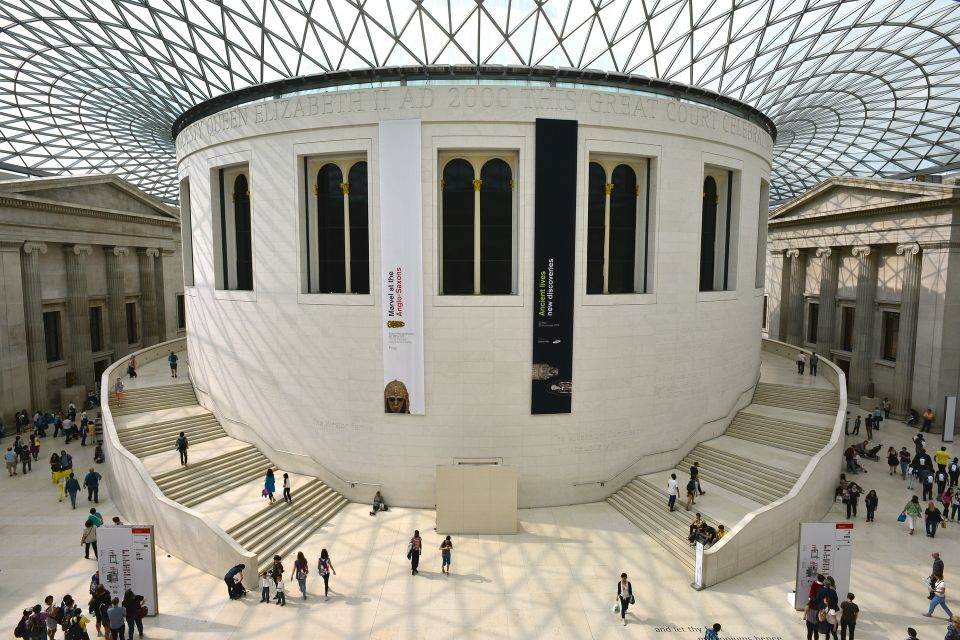
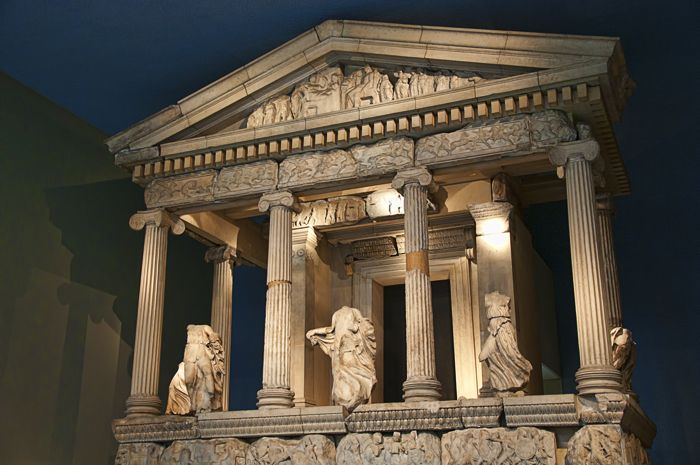
Then you hit the Greek legacy, including an important part of the structure of the Parthenon of Athens. This is a high-impact stop because the Parthenon is such an iconic reference point that it can feel familiar—even when you’ve never stood near the actual building.
Here’s what a good guide can do for you in this moment:
- explain why the Parthenon mattered to Greek identity
- help you recognize what you’re looking at (and what it isn’t)
- connect the museum’s Greek material to the building’s classical symbolism
Even if you’ve seen photos before, seeing a Parthenon-related fragment inside the British Museum gives it a different scale and a sharper “artifact” feeling. It becomes less like a landmark image and more like an object with a journey.
Easter Island Finale: Hoa Hakananai’a and the Surprise of Aztec Pieces
The tour ends with a two-part payoff: Hoa Hakananai’a, a moai from Easter Island more than two meters high, and then Aztec pieces after that.
This ending works for one main reason: it jumps across geography in a way that makes you stop and recalibrate. Moai statues don’t belong in your usual London walking itinerary, and that surprise keeps attention high at the end of a 2-hour tour.
Then you transition again—toward Aztec material—so you finish with a sense that “human history” is not a straight line from one region to another. It’s overlapping stories happening in parallel places, at different times, with different goals.
Guides, Pace, and Why You’ll Enjoy the Tour More Than You Think
One of the most praised parts of this experience is the guide themselves. People mention guides like Puri, Miguel, Buri, and Eduardo as being friendly, funny, and deeply informed. More important than the resume is how the tour is paced: several reviews highlight the idea that it’s the right amount of information for a short time slot.
You should expect an experience where:
- you get a clear walk-through of major highlights
- you’re encouraged to ask questions
- you don’t feel lost inside the museum maze
There’s also a practical angle: some visitors say they never would have navigated the museum highlights on their own in the time available. That’s exactly what you’re paying for.
One small caution from feedback: a couple people felt the group size didn’t match the expectation, and there wasn’t an explicit way to flag that you’re already at the meeting point versus running late. If you’re cutting it close, arrive early enough to handle delays.
Price and Value: Is $14 a Good Deal in London?
Let’s talk value like you’d talk about a good meal: does it save you time and mental effort?
For $14, you get:
- a local guide
- a walking tour that hits multiple major civilizations
- a route that reduces overwhelm in one of the world’s largest museums
The British Museum is known for free entry, but free often comes with crowds and the need to plan your day. One review mentioned securing a (free) museum reservation directly from the museum website for gate entry, especially around busy times. So while the tour price is low, don’t assume your day is frictionless. If it’s a peak season, get your museum entry sorted early so the tour doesn’t become a scramble.
Bottom line: the price feels fair because you’re buying meaning, not just access.
Practical Tips That Keep the Day Smooth
A few habits that will make this tour feel easy:
- Arrive early. Entrance queues are real, and meeting the guide takes a bit of looking.
- Wear comfortable shoes. It’s a walking highlights tour inside a big museum.
- Travel light. Pets, oversize luggage, smoking, and large bags aren’t allowed.
- Bring your voucher (printed or mobile). That’s your key to joining on time.
- Use the questions time. If you’re into a specific culture—Egypt, Greece, or something else—ask your guide to point out what’s most telling.
And if you’re traveling with kids or teens, this kind of structured route can be a lifesaver. A good guide can turn artifacts into stories kids actually want to hear.
Who Should Book This Tour?
I’d point you to this tour if:
- you’re visiting the British Museum for the first time and don’t want to get lost
- you like a clear highlights route over hours of wandering
- you want a guided path through Egypt, Assyria, Greek material, Easter Island, and Aztec pieces in about two hours
- you prefer English or Spanish narration
If you’re the type who wants to read every label and disappear into side rooms for an entire day, you might feel limited by the highlights format. But if you want to leave with real understanding quickly, this tour is built for that.
Should You Book It?
Yes—if your goal is to see the British Museum’s main stories without spending your day figuring out what’s important. The biggest reason to book is the combination of a focused route and high-energy, expert-guided explanations (with notable guides like Puri, Miguel, Buri, and Eduardo showing up in people’s feedback).
If you hate crowds, the only real risk is timing. Show up early, find the guide fast, and you’ll get a memorable, well-paced sweep through humanity’s major threads—right from central London.
FAQ
How long is the British Museum Tour?
The tour lasts 2 hours.
Where do I meet the guide?
Meet at the stairs to the main entrance of the British Museum on Great Russell Street, in front of Starbucks, after passing the security checkpoint. Look for a guide with a blue-green flag with the Paseando por Europa logo.
What languages are available?
The live guide speaks Spanish and English.
What’s included in the price?
It includes a guide and a walking tour.
Is food and drink included?
No, food and drinks are not included.
Are pets or large bags allowed?
No. Pets and oversize luggage/large bags aren’t allowed. Smoking is also not allowed.