REVIEW · LONDON
London: British Museum Guided Tour Private Group
Book on GetYourGuide →Operated by My tour London · Bookable on GetYourGuide
A few rooms in London can feel like a whole world. This private British Museum tour is built around human culture across time, with a licensed guide walking you through major stories you’d otherwise miss. I especially like how the route is tailor-made to hit the museum’s most meaningful highlights in just 2 hours.
You get a tight, guided path through Ancient Egypt, Ancient Greece, Ancient Rome, and beyond, so the collection actually starts to make sense. One watch-out: at 2 hours, the pace is fairly brisk, so if you’re the type who likes to stare at every detail for a long time, you may wish it lasted longer.
In This Review
- Key Things You’ll Notice on This British Museum Private Tour
- Entering the British Museum With a Private Plan That Actually Fits 2 Hours
- Meeting Point in Practice: Where to Stand After Security
- The Museum Starts in Ancient Egypt: Rosetta Stone and the Hook Into Hieroglyphs
- Parthenon Sculptures and the Elgin Marbles Debate: Art With a Purpose
- Ancient Rome Highlights: Power, Myth, and Everyday Awe
- Sutton Hoo: Anglo-Saxon Treasures and Early England’s Clues
- Hoa Hakananai’a From Easter Island: A World Far Away, Right in London
- How the Tour “Feels” on the Ground: Pace, Questions, and Group Up to 5
- Price and Value: $331 Per Group Up to 5 (How to Think About It)
- Who Should Book This British Museum Private Tour
- Should You Book the British Museum Guided Private Group Tour?
- FAQ
- How long is the British Museum guided private group tour?
- Where do we meet the guide?
- How many people are in a group?
- What languages are available for the live tour guide?
- Is the tour wheelchair accessible?
- When will we receive the tickets?
- Can I cancel for a refund?
Key Things You’ll Notice on This British Museum Private Tour
- A licensed, live guide who connects artifacts to the bigger human story (not just dates and labels)
- Rosetta Stone focus that helps you understand how Egyptian hieroglyphs were deciphered
- Parthenon sculptures and the Elgin Marbles controversy treated as part of the story, not a footnote
- Ancient Rome highlights including the kind of objects that reveal daily life, power, and belief
- Global surprises like Sutton Hoo and the moai statue Hoa Hakananai’a, so the museum feels less one-country
Entering the British Museum With a Private Plan That Actually Fits 2 Hours
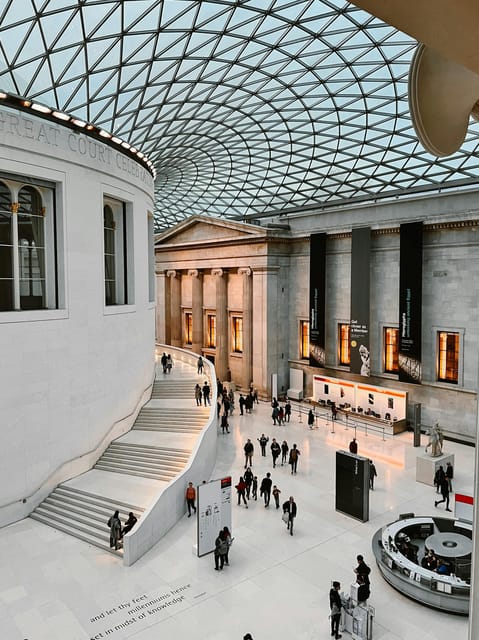
The British Museum can swallow a day whole. This is different because you’re not left to wander and hope you stumble into the right rooms. In a compact 2-hour window, you’ll move with purpose from one civilization thread to the next, which is exactly what most people need when they only have limited time.
I like private tours for one big reason: you get a human guide to sort the noise. You’ll hear how objects connect, and you’ll see the museum’s “greatest hits” without losing an hour walking in circles. The tour is private and designed for a group up to 5, so it’s small enough for questions while still feeling like a shared experience.
The trade-off is simple. With only 2 hours, the tour can feel fast, and some stops will be more highlight-reel than deep study. If you want a slow museum day, you might do better with a longer guided option. If you want the best use of time, this format is strong.
You can also read our reviews of more guided tours in London



Meeting Point in Practice: Where to Stand After Security
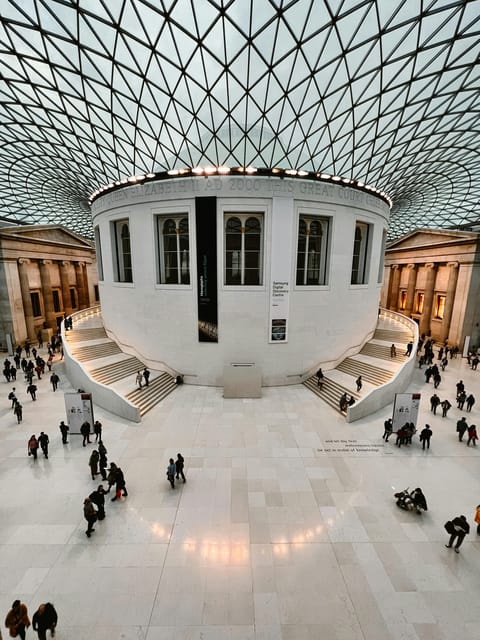
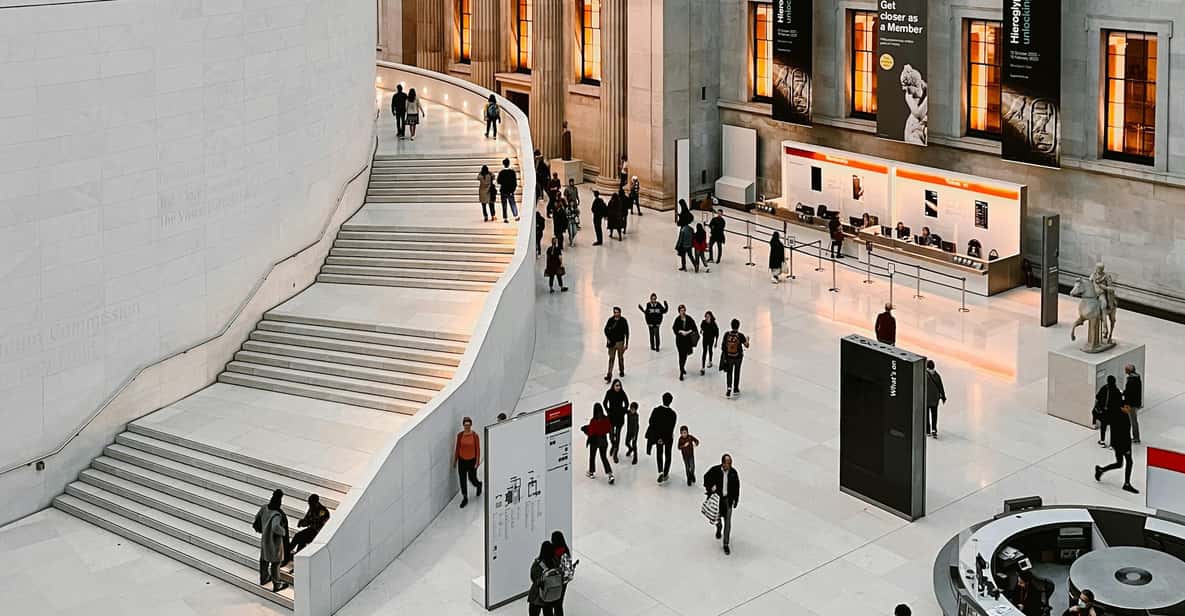
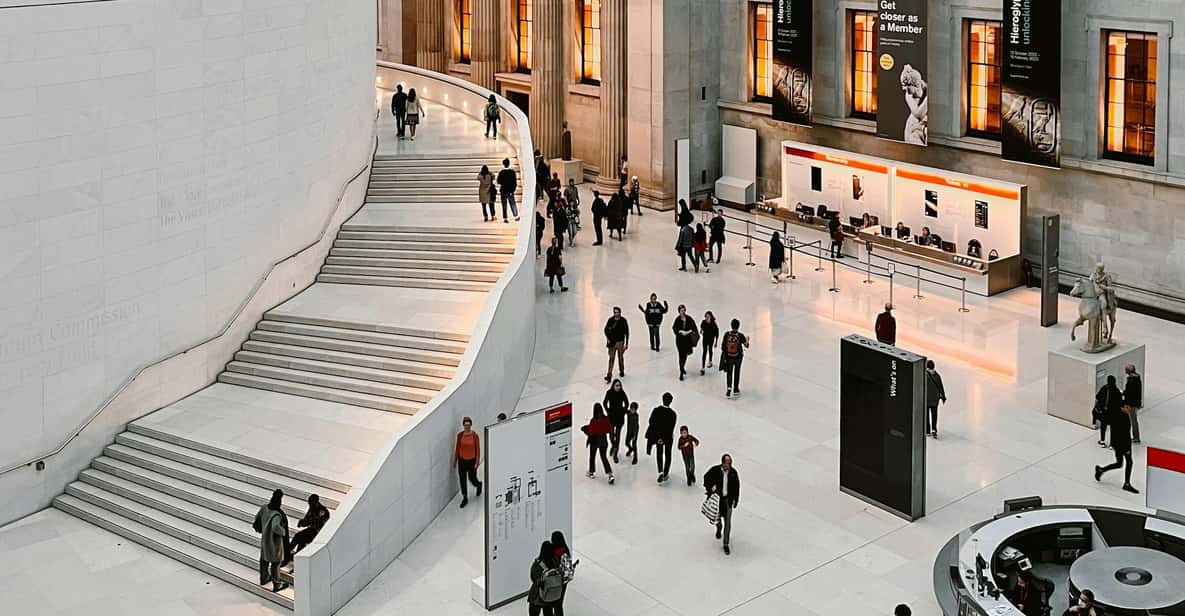
Meeting logistics matter here because the museum is big and security lines can change your timing. You meet your guide in front of the British Museum portals, on the stairs near the pillars, and importantly after you pass security. It’s not outside the gates.
You’ll receive tickets about 1 hour before the tour via WhatsApp. If you don’t use WhatsApp, you contact the provider by email so entry tickets can be sent another way. I recommend having a fully charged phone and checking that your WhatsApp notifications are on, since that timing is part of the flow.
If you’re traveling with friends, this is also where private tours shine. You’re not trying to sync multiple people with multiple starting points while everyone is hungry and jet-lagged. You just show up, find your guide at the portals, and go.
The Museum Starts in Ancient Egypt: Rosetta Stone and the Hook Into Hieroglyphs
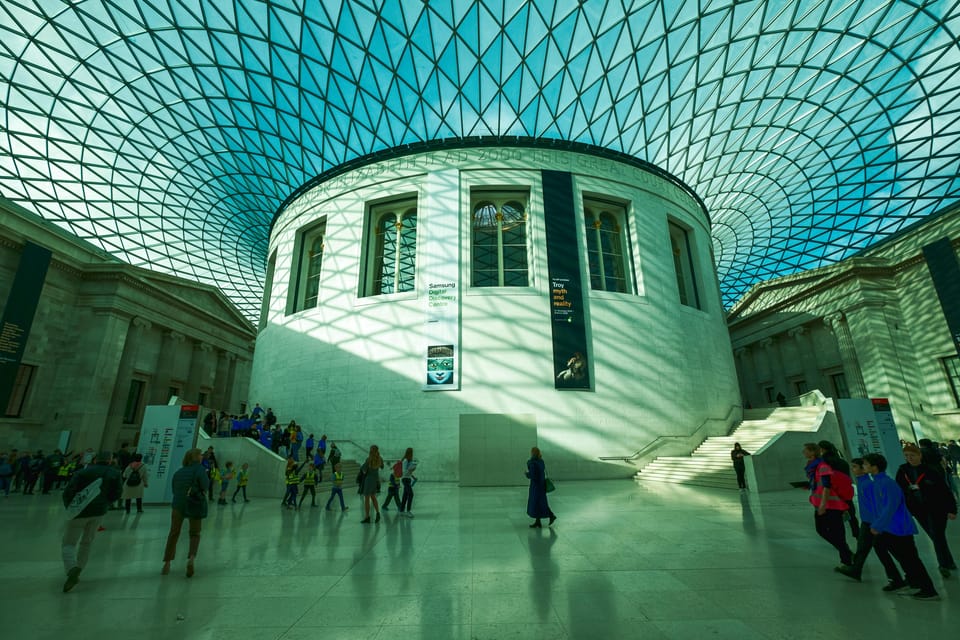
Your tour begins with Ancient Egypt, and that’s a smart move. Egypt is visually dramatic, and it also gives you a gateway into how people read symbols—exactly the kind of mental “key” the rest of the museum later builds on.
One of the highlights is the Rosetta Stone, presented as the turning point for deciphering Egyptian hieroglyphs. Even if you slept through most of your school history, a good guide can make this click: writing systems aren’t just old scribbles; they’re the tools people used to record power, belief, and law. You’re not just seeing an artifact; you’re learning why it matters.
What you’ll get from this opening segment is momentum. Once you understand what the Rosetta Stone represents—why it unlocked a way to read—Egypt stops being a pile of “ancient stuff” and becomes a language story. It also sets up later comparisons because the museum keeps moving between different civilizations’ ways of expressing ideas.
Practical tip: wear comfortable shoes. You’ll likely be standing and walking more than you expect, especially when you’re stopping at multiple major galleries.
Parthenon Sculptures and the Elgin Marbles Debate: Art With a Purpose
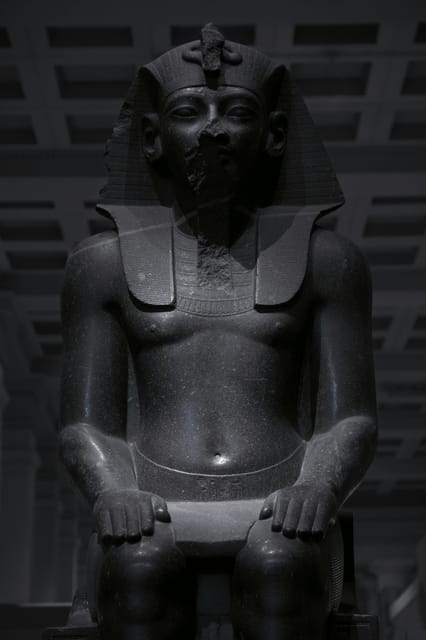
After Egypt, the tour swings to Ancient Greece, where philosophy and art are front and center. This is where you’ll see the Parthenon sculptures—including the famous Parthenon pieces often referred to as the Elgin Marbles, described as controversial. The guide’s job is to keep the discussion grounded so you understand what you’re looking at and why the issue exists.
Here’s what makes this section valuable for you: the Parthenon isn’t only “pretty marble.” It’s a statement about civic identity, religion, and how a society wanted to be remembered. In a guided format, you can connect the sculptural themes to the museum’s wider story about how Western thought was influenced by what people built and wrote in antiquity.
You’ll also be guided through marble inscriptions that shaped Western thought—again, the point isn’t memorizing text. It’s understanding how ideas travel across time through objects that survive long enough to be studied.
A consideration: if you’re hoping for a neutral, purely descriptive experience with no moral or historical discussion, you may not love the controversial element. If you’re okay with a respectful, reality-based explanation, this is one of the tour’s strongest segments.
Ancient Rome Highlights: Power, Myth, and Everyday Awe
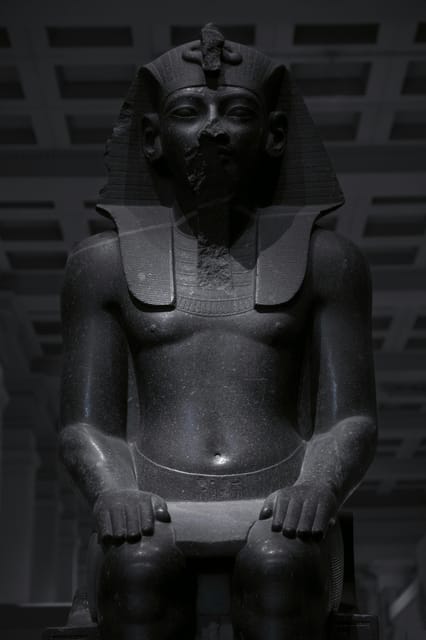
Rome follows Greece, and the transition helps you see a pattern. Greek culture contributes ideas and aesthetics, and Rome amplifies power and engineering—then expresses belief and mythology through art.
You’ll discover relics from Ancient Rome and see how the empire used images to communicate authority. The tour includes mosaics and statues depicting gods and heroes, which is exactly the kind of content that tells you Rome wasn’t only about politics. It was also about entertainment, religion, and shared stories people recognized.
One reason I like this stop: objects like mosaics and sculptural figures can make Rome feel tangible fast. You don’t need to be a Roman history expert to grasp what’s going on. Your guide can point out details that make the craftsmanship feel real—so it stops being abstract and becomes “this is what they made, and this is what they valued.”
If you like mythology, this is the part that often sticks in your memory. Seeing gods and heroic figures in physical form helps the stories feel less like book characters and more like a culture’s visual language.
You can also read our reviews of more private tours in London





Sutton Hoo: Anglo-Saxon Treasures and Early England’s Clues
After the classical world, the tour shifts gears to Sutton Hoo, which is a huge contrast—and that contrast is the point. Sutton Hoo’s treasures offer a glimpse into early English life, and you’ll be guided through why that site is so important for understanding the people who lived there and the world they moved in.
This segment matters because it brings the “England story” into the museum’s global frame. You’re not just hopping between ancient civilizations; you’re also seeing how Britain’s early history connects to wider European themes.
In a private tour, the guide can help you grasp what to look for, especially when you’re surrounded by artifacts that can feel unrelated. Sutton Hoo gives you a reference point: you can leave with a sense that early England was part of a connected world, not isolated history.
Hoa Hakananai’a From Easter Island: A World Far Away, Right in London
Then comes one of the most striking jumps: Hoa Hakananai’a, a moai from Easter Island. This is where you really feel the British Museum’s range, and it’s a great reminder that the museum isn’t limited to one geography.
You’ll explore the moai’s spiritual essence as part of the distant civilization’s identity. Even when you don’t know the full context, a guide can help you read the object as more than a statue. It’s a cultural signpost—something a community made to express belief, memory, and meaning.
I find this kind of stop energizing because it breaks the expectation that you’ll only see Mediterranean or near-Middle East civilizations. It also gives you something to compare with earlier sections: every culture here is using art to communicate what mattered most to them.
How the Tour “Feels” on the Ground: Pace, Questions, and Group Up to 5
Because it’s private and limited to a group up to 5, the experience is flexible in the ways that matter most. You can ask questions, and the guide can adjust emphasis depending on what interests you. In fact, the tour is described as tailor-made to see the museum’s most remarkable parts, which usually means you’re not locked into an overly scripted path.
One detail I really appreciate from the feedback is that guide energy can make a huge difference. Filomena, for example, is specifically praised for enthusiasm that felt infectious. That matters here because the museum covers centuries, and an energetic guide helps the facts stay connected instead of turning into a list.
About the tempo: one note in the feedback calls out that the visit felt a bit expeditious and shorter than expected. That’s the main trade-off you should plan around. Treat the tour as a high-impact highlight route, not a slow gallery crawl.
If you’re the kind of person who loves photos, set expectations. You’ll probably take some, but the best experience comes from watching and listening long enough to understand what you’re seeing.
Price and Value: $331 Per Group Up to 5 (How to Think About It)
At $331 per group up to 5, the value depends on how many people share the booking. If you fill all 5 spots, that works out to about $66 per person for a guided tour of one of the world’s largest museums. Even with fewer people, it can still be a smart buy compared to paying for individual tickets plus the time you lose wandering.
What you’re paying for is not just access—it’s interpretation. The British Museum is huge, and without guidance you’ll spend more time choosing where to go than learning what you’re seeing. A licensed guide helps you hit key objects like the Rosetta Stone, the Parthenon sculptures, and the global surprises like Hoa Hakananai’a, all in a short time window.
This is also a good option for families or small groups because the private format keeps the experience smoother. Kids (and adults) often do better when someone turns the museum into a story with clear stops.
Who Should Book This British Museum Private Tour
This tour fits best if you want:
- A high-impact highlights tour in a limited time window
- A guide-led explanation of big-name objects like the Rosetta Stone and Parthenon sculptures
- A mix of classical history and broader global artifacts, not only one region
- A private group experience where questions are welcome
It may not be ideal if you want:
- A long, slow museum day with minimal walking
- Full independence to linger at every object
- Deep reading sessions where you spend 20+ minutes per gallery stop
Should You Book the British Museum Guided Private Group Tour?
If you’re short on time, this is a strong yes. In 2 hours, you’ll get a structured path through some of the museum’s most powerful objects, and you’ll leave with a clearer sense of how civilizations talk to each other across time. The private group setup also makes it easier to personalize the experience and ask questions without feeling rushed.
I’d book it if you’re excited by major artifacts and want a guide to connect the dots—especially around Egypt’s writing breakthrough, the Greek world’s influence, Rome’s art and power, and the big cultural leap to Sutton Hoo and Hoa Hakananai’a.
If your top goal is sitting still and reading every label at a leisurely pace, plan for a different style of visit. But for a focused, guided hit of the British Museum’s greatest stories, this one makes sense.
FAQ
How long is the British Museum guided private group tour?
It lasts 2 hours.
Where do we meet the guide?
Meet your guide in front of the British Museum portals on the stairs near the pillars after passing the security check, not outside of the gates.
How many people are in a group?
It’s a private group up to 5 people.
What languages are available for the live tour guide?
The guide offers tours in English, French, and Italian.
Is the tour wheelchair accessible?
Yes, it is wheelchair accessible.
When will we receive the tickets?
Tickets are provided 1 hour before the tour via WhatsApp. If you don’t have WhatsApp, you can contact the provider by email so entry tickets can be sent another way.
Can I cancel for a refund?
Yes. You can cancel up to 24 hours in advance for a full refund.