REVIEW · LONDON
London: Jack the Ripper Guided Walking Tour
Book on GetYourGuide →Operated by London Mystery Walks · Bookable on GetYourGuide
Whitechapel after dark turns facts into a story. This Jack the Ripper guided walking tour takes you through cobbled lanes and working-class streets in East London, where the guide connects the famous murders to the everyday life and hardship around Whitechapel. You’ll also get visual context along the way, including photographs of the victims and suspects, not just a spoken lecture.
I love that the tour uses Victorian-era photos to help you understand poverty, fear, and crime in the area, including the grim realities the police faced. I also like that it runs in a small group of up to 10, which makes it easier to hear the guide and ask questions as you walk. One possible drawback: English narration can move quickly, so if you’re not a fast listener, you may want to focus hard during the storytelling.
In This Review
- Key Points Before You Go
- Starting at Aldgate Tube Station: Your 90-Minute Walk Begins Here
- The Guide Matters: Paul Mansfield, and How the Story Gets Told
- Whitechapel’s Real Setting: Cobblestones, Poverty, and Victorian Evidence
- The Stops You’ll Hit: Pubs from 1721, a Bath House, and a Jewish Soup Kitchen
- The Whitechapel Photo Stop: Seeing the Case Through Visual Clues
- How East End Storytelling Can Feel Different Than a Standard Scare Walk
- Pacing, Weather, and Comfort: What to Expect on the Ground
- What’s Included in the $26 Ticket, and Where the Value Comes From
- Who Should Book This Jack the Ripper Walk (and Who Might Skip It)
- Should You Book This Tour?
- FAQ
- FAQ
- Where does the tour start?
- How long is the tour?
- What does the $26 price include?
- Is food or drinks included?
- Is the tour wheelchair accessible?
- What language is the tour conducted in?
- What should I bring?
- Does the tour run in bad weather?
- Is it suitable for young children?
- What items or behavior are not allowed?
- Is there free cancellation?
Key Points Before You Go
- Small group size (up to 10) keeps the walk personal and easier to follow.
- Victorian photos of people and places help you grasp the atmosphere, not just the names.
- A guide with serious expertise: Paul Mansfield has been a Ripperologist for 18+ years.
- Expect stops around Whitechapel and Spitalfields with major East End landmarks and scenes.
- There’s a photo stop in Whitechapel, built around what you see and what it means.
- The route is weather-dependent in the sense that it runs outdoors no matter what.
Starting at Aldgate Tube Station: Your 90-Minute Walk Begins Here
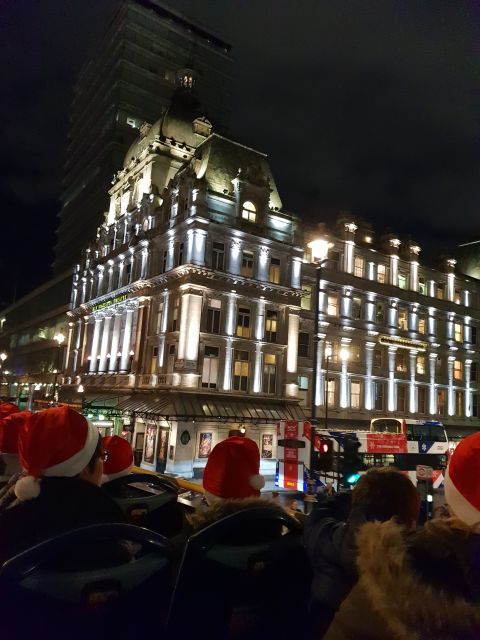
The tour meets at Aldgate Underground Station, specifically the exit for the Circle line and Metropolitan line. Important detail: don’t head to Aldgate East Station—this is a nearby but different spot, and you don’t want to waste walking time before the group departs.
The walk itself is about 1.5 hours, so it’s a good fit if you want something evening-focused without committing to an all-night ghost saga. You’ll also cover enough ground to feel like you actually moved through the neighborhood, not just stood around outside a few buildings.
Bring comfortable shoes. This is London walking—some of it on older streets and alleyways. Even if you’re a confident walker, you’ll be happier in shoes you can stand and step in for the whole session.
You can also read our reviews of more walking tours in London

The Guide Matters: Paul Mansfield, and How the Story Gets Told
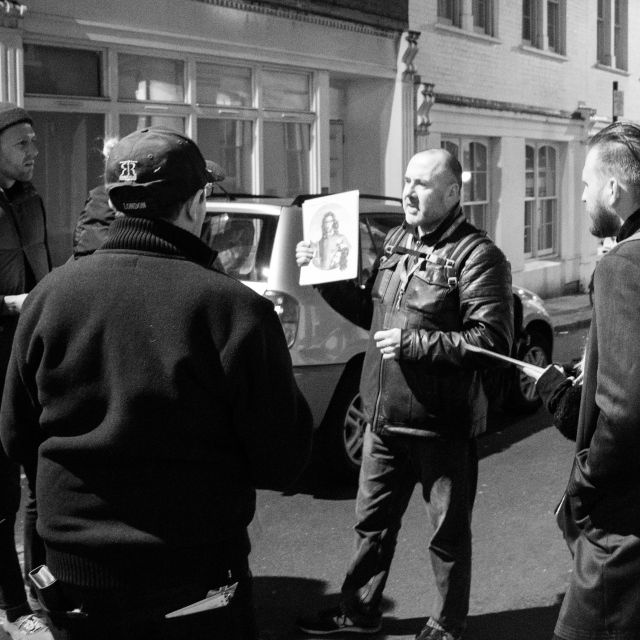
This tour is led by a live guide, and the main named guide is Paul Mansfield, described as a Ripperologist with over 18 years of experience. That background matters because the walk doesn’t treat the case like a pop-culture costume. The guide’s job is to give you context: who people were, how the area worked, and why the crimes became so infamous.
You may also encounter other guides depending on the schedule. One example from the tour experience is Mick, who’s noted for being informative and adding humor to the pacing. That’s a real plus for this kind of topic. True crime can get heavy fast, so any lightness that keeps you listening without feeling dragged helps the facts land.
A key practical point: the narration can be fast-paced. If English isn’t your first language, keep your attention locked on the guide rather than zoning out between streets. The tour leans on spoken storytelling plus visuals, and you’ll get more from it if you stay with the thread.
Whitechapel’s Real Setting: Cobblestones, Poverty, and Victorian Evidence
Where this tour really wins is how it frames Jack the Ripper as a product of place and time. Whitechapel in the late Victorian era wasn’t just spooky alleyways—it was a working neighborhood with intense hardship. The guide walks you through the idea that life was cheap and that violence was, in the tour’s telling, tragically common.
To make that understandable, you’ll see Victorian photos used to show what the area looked like and what people’s lives were like. These images give you a visual anchor. Instead of hearing about conditions in theory, you can connect the dots: crowded streets, fragile routines, and the pressure that shaped daily life.
The tour also highlights how hard it was for law enforcement to do its job. The story includes the idea that police were overworked and that crimes weren’t being solved. That matters because it shifts the focus from only the murderer to the system around the murders—plus the social conditions that allowed fear to spread.
You’ll also hear how the East End connects to other famous names and stories tied to London’s cultural memory: Charles Dickens and Oliver Twist, Karl Marx, the Elephant Man, Bodysnatchers, and the Krays. The point isn’t to turn it into trivia. It’s to show that this district has long attracted attention because of poverty, crime, and social tension.
The Stops You’ll Hit: Pubs from 1721, a Bath House, and a Jewish Soup Kitchen
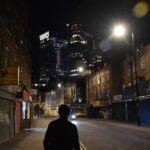
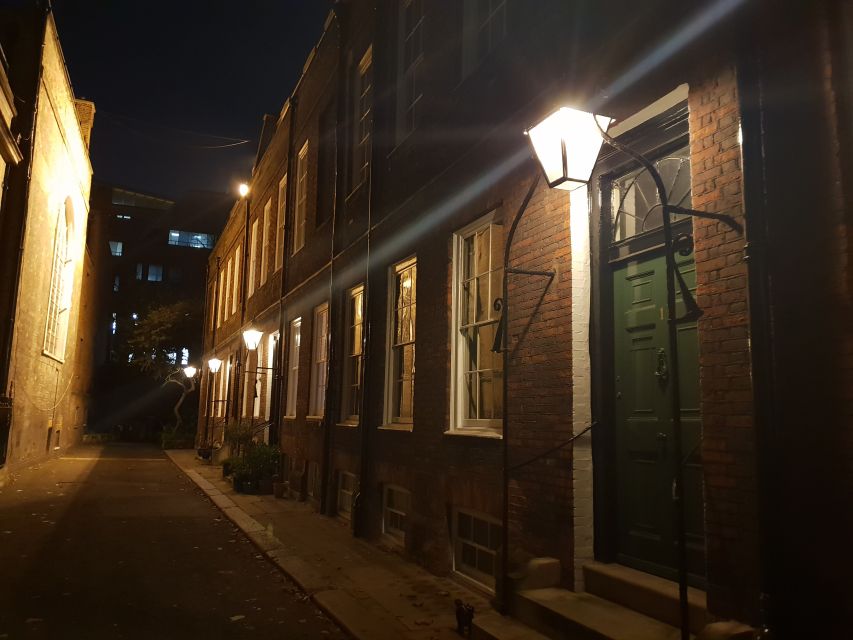
Your walk centers on Whitechapel and nearby Spitalfields-style lanes, with the guide leading you through dark, spooky streets and cobbled alleyways. These aren’t random aesthetic picks. The stops are chosen to build a picture of daily life in the era of the murders.
Here are the specific kinds of places you can expect to see mentioned and discussed:
- Pubs dating back to 1721: A pub from that period is a clue that the neighborhood had long-standing social spaces. The guide uses landmarks like this to show that people lived, drank, argued, and survived alongside the darker headlines.
- A Victorian bath house: This is the kind of stop that helps you understand health and hygiene in an era when basic cleanliness was harder for many working families. It also reinforces how cramped life could be.
- A Jewish soup kitchen for the Jewish poor: This is one of the most important social context stops. It reminds you that the East End wasn’t only about crime stories—it included communities trying to get through the day. Seeing this referenced during a murder walk changes how you feel about the neighborhood’s history.
The tour also includes photographs of victims and suspects. Expect the guide to treat these images with care, and you may receive warnings about more graphic material. That’s useful because it gives you a chance to mentally prepare without making the tour feel sanitized.
The Whitechapel Photo Stop: Seeing the Case Through Visual Clues
At some point you’ll have a photo stop in Whitechapel. This is where the tour leans into its most memorable feature: the way images can help you connect the story to physical space.
The idea is simple but effective. You’re not just hearing that a location mattered. You’re seeing how people looked, how the information was presented at the time, and how the community and authorities were likely thinking. In a topic like this, that’s what turns names into a mental map.
If you’re a visual learner, this part is often the difference between a tour that fades after dinner and one you remember the next morning.
You can also read our reviews of more guided tours in London



How East End Storytelling Can Feel Different Than a Standard Scare Walk
Plenty of London night walks focus on jump-scares and Halloween tone. This one aims for something more grounded: it links the murder case to how the neighborhood worked and who lived there.
That’s why the tour spends time on life in the East End rather than only repeating the plot of the killings. It touches the economic reality—how hard it was to get by—and it includes the tension of an environment where crime and fear were part of life. The story also brings in the fact that police resources were limited, and that investigations weren’t magically solved overnight.
Even if you already know the basics of Jack the Ripper, you’ll likely find the tour useful because it puts the case inside a broader London pattern: social inequality, dense neighborhoods, and fragile systems under strain.
And yes, it’s still eerie. You’ll walk real streets at night, and the guide’s tone helps you feel the setting. But the goal is understanding more than shock.
Pacing, Weather, and Comfort: What to Expect on the Ground
This tour runs whatever the weather. So plan like you’re going out for a nighttime stroll in East London, not like you’re visiting an indoor museum.
The route is wheelchair accessible, which is a big deal for this area because streets can vary. If you’re relying on a mobility device, it’s still smart to wear supportive footwear and plan extra time for getting to the meeting point and then back afterward.
There’s also an important health note: the tour is not suitable for people with heart problems. If you’re in any doubt, treat that seriously and consider asking a medical professional first.
Age matters too. It’s not suitable for young children under 10, which makes sense for the content and the walking time.
What’s Included in the $26 Ticket, and Where the Value Comes From
The price is $26 per person, and the tour includes a professional guide for about 90 minutes, with photos as part of the presentation.
That’s a strong value mix for three reasons:
- Time efficiency: 1.5 hours is long enough to build a story, short enough to fit into a packed London plan.
- Content format: photos add context and help you follow along even as streets change.
- Group size: up to 10 means you’re less likely to be stuck at the back straining for audio.
What’s not included is also worth noting: travel costs to the venue and food or drinks. So plan to eat beforehand or grab something after. The tour is about walking and storytelling, not a built-in dinner.
Who Should Book This Jack the Ripper Walk (and Who Might Skip It)
This tour is a great match if you want:
- True crime history grounded in real neighborhoods
- A guided story with photos of people and scenes
- A smaller group evening activity that’s easy to join solo or with friends
- East End context beyond the murders, including the broader cultural references tied to London
You might want to skip (or choose a different format) if:
- You’re not comfortable with the mention and display of graphic material (warnings are part of the experience, but the topic is still heavy)
- You prefer slow, laid-back pacing and you’re worried about faster English narration
- You have health considerations, since it’s marked not suitable for heart problems
- You’re traveling with kids under 10
Should You Book This Tour?
If your goal is a serious-but-accessible evening walk that ties Whitechapel’s people, poverty, and place to the Jack the Ripper story, this is an easy yes. The small group size and the photo-led approach make it more than a simple lecture, and the inclusion of social landmarks like a bath house and soup kitchen gives the case emotional context, not just myth.
Book it if you’re the type of person who enjoys connecting a famous crime to the actual streets where it happened. Skip it if you want mostly spooky atmosphere without the heavy history, or if fast narration would likely frustrate you.
FAQ
FAQ
Where does the tour start?
The meeting point is Aldgate Underground Station, at the exit for the Circle line and Metropolitan line. Do not go to Aldgate East Station.
How long is the tour?
The tour lasts about 1.5 hours (around 90 minutes).
What does the $26 price include?
You get a professional live guide and about 90 minutes of tour time, with photos as part of the experience.
Is food or drinks included?
No. Food or drinks are not included, so you’ll want to eat or drink outside the tour.
Is the tour wheelchair accessible?
Yes, it’s listed as wheelchair accessible.
What language is the tour conducted in?
The tour is conducted in English.
What should I bring?
Bring comfortable shoes, since it’s a walking tour.
Does the tour run in bad weather?
Yes. The tour takes place whatever the weather.
Is it suitable for young children?
No. The tour is not suitable for children under 10.
What items or behavior are not allowed?
The tour does not allow drones, intoxication, alcohol and drugs, bare feet, or bachelor and bachelorette party groups.
Is there free cancellation?
Yes. You can cancel up to 24 hours in advance for a full refund.