REVIEW · LONDON
London: Natural History Museum Entry Ticket and Guided Tour
Book on GetYourGuide →Operated by UTG EXPERIENCE · Bookable on GetYourGuide
Dinosaur bones are waiting in South Kensington. This one-hour Natural History Museum guided tour pairs skip-the-line security with a tight route through the museum’s biggest crowd-pleasers, plus the stuff that makes you think about how Earth and life work. It is a smart way to see the museum’s major stars without getting lost in 5 miles of galleries.
I especially like two things: the chance to hit the museum’s must-sees in a short time, and the way the live guide keeps the experience moving while pointing out what to come back to later. Guides such as Paul show up in the experiences people share, and the overall vibe is practical, friendly, and question-friendly.
One consideration: the meeting point is very specific, and it can be easy to miss if you arrive late or wander around the wrong side of Exhibition Road. If you prefer a super-casual start, give yourself a little extra buffer and watch for the metal plate at the stated spot.
In This Review
- The one-hour Natural History Museum route that actually works
- Start here: getting to the meeting point near South Kensington
- Express security and headsets: the small details that save real time
- Hintze Hall in person: dinosaurs and the blue whale’s 82-foot scale
- Central Hall moments: Diplodocus and what to notice beyond the wow factor
- Volcanoes and Earthquakes: seeing Earth as an active system
- Evolution Gallery: life’s variety explained in plain museum time
- Minerals, gems, and the hidden artistry of the natural world
- The Wildlife Garden: birds, bees, and a breather
- How the guide experience feels in real life
- Price and value: what $76 buys you for one hour
- Who should book this guided tour?
- Should you book this Natural History Museum guided tour?
- FAQ
- How long is the Natural History Museum guided tour?
- Where do we meet the guide for the Natural History Museum tour?
- Is the guided tour in English?
- What’s included in the ticket price?
- Does the tour include food or transportation?
- Is the tour wheelchair accessible and can I cancel?
The one-hour Natural History Museum route that actually works
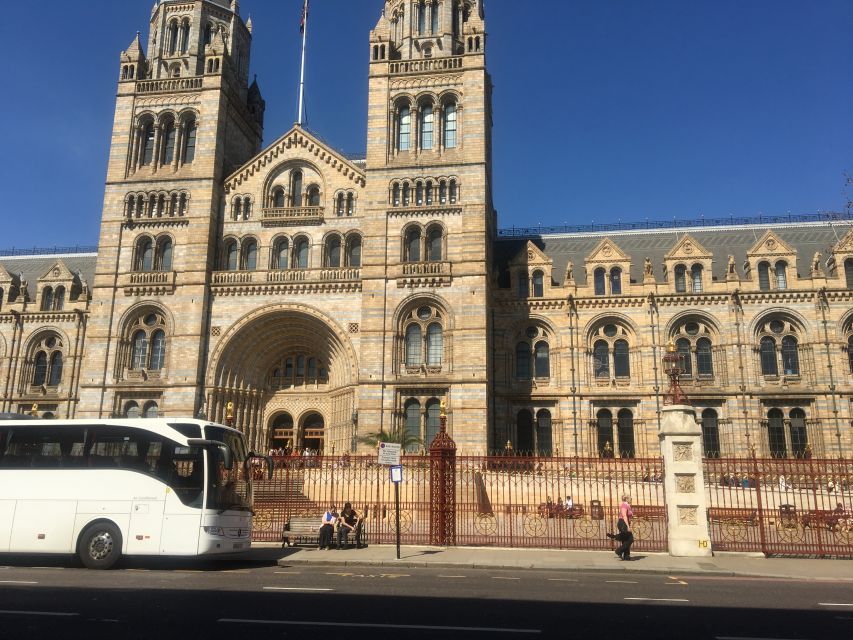
The Natural History Museum is the kind of place where a casual self-guided visit turns into a half-day mission. This tour is built for people who still want the highlights, but do not want to spend their limited time doing guesswork.
At 60 minutes, the guide’s job is to move you efficiently from room to room while connecting the dots: how fossils tell Earth’s story, how environments change, and why scientists care for specimens long after they are first collected. You are not doing every single gallery. You are doing the best “greatest hits” and getting the context that helps your next stop make more sense.
If you enjoy learning that feels like real-world science (not just display text), you’ll get a lot out of this format. And if you like museums that reward curiosity—especially about dinosaurs, minerals, and Earth processes—this is a strong fit.
Start here: getting to the meeting point near South Kensington
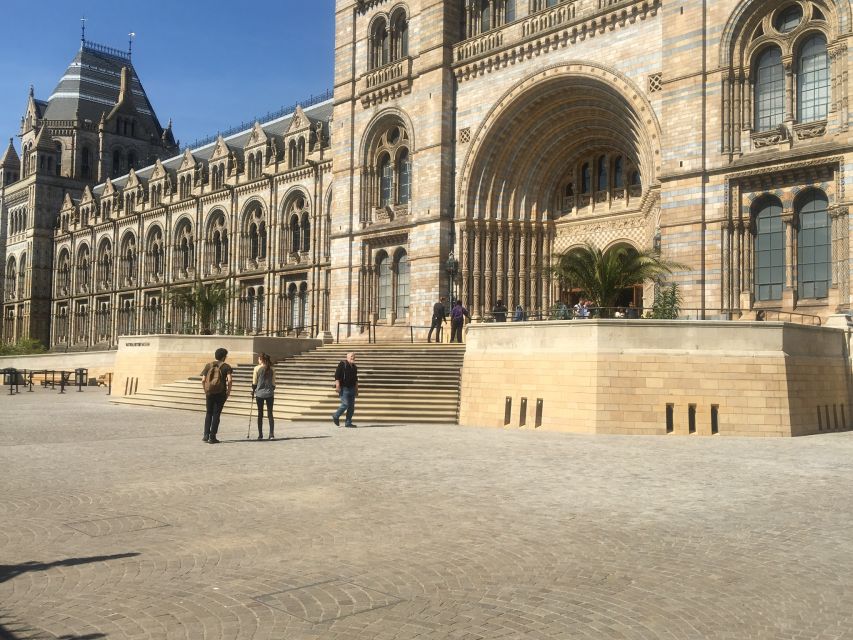
Your meeting point is near South Kensington Station, with the exit instructions pointing you to Natural History Museum Ismaili Centre Exit. Then you meet your guide at the metal plate labeled The Royal Borough of Kensington and Chelsea on Exhibition Road SW7.
A few practical tips so this feels smooth:
- Arrive early enough to confirm you are at the right curb and landmark. One person noted that the meeting-place description could be clearer, and that is exactly the kind of hiccup that ruins a first minute or two.
- Give yourself 10–15 minutes before tour time. The museum area gets busy, and you do not want to be sprinting while trying to read a sign.
- Bring your confirmation with you on your phone, even if you think you will remember everything.
You can also read our reviews of more tours and experiences in London


Express security and headsets: the small details that save real time
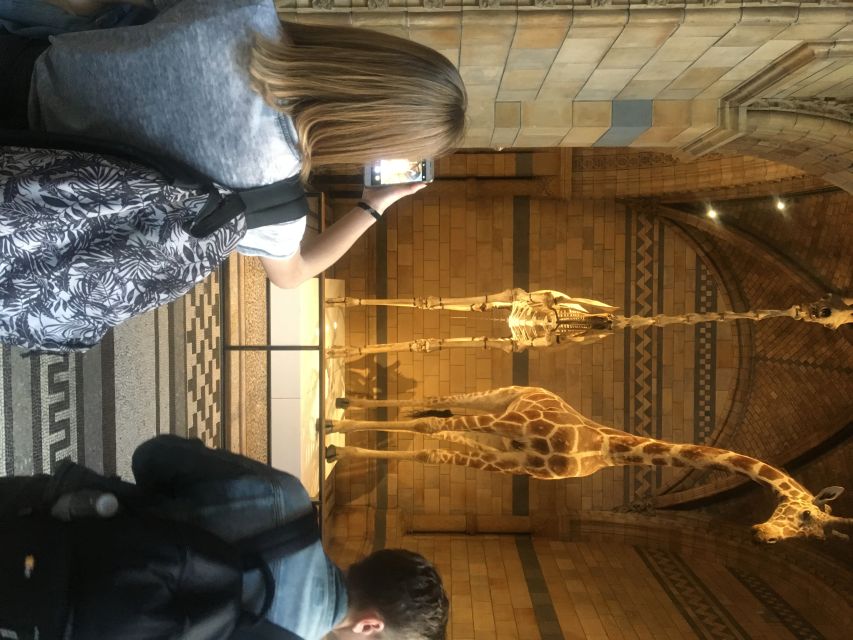
One of the real advantages here is the reservation ticket plus skip-the-line through express security. In a museum this popular, “skip-the-line” often means more than convenience. It means you spend less time in the slow part of the day and more time in the good part—actual exhibits.
You also get headsets if necessary, which matters because the museum is large, echoes can be loud, and groups can get spread out. If you find it hard to hear guides in crowded spaces, this inclusion is a big plus. Even if you hear fine, headsets keep the group coordinated, which helps the one-hour plan stay on track.
Hintze Hall in person: dinosaurs and the blue whale’s 82-foot scale
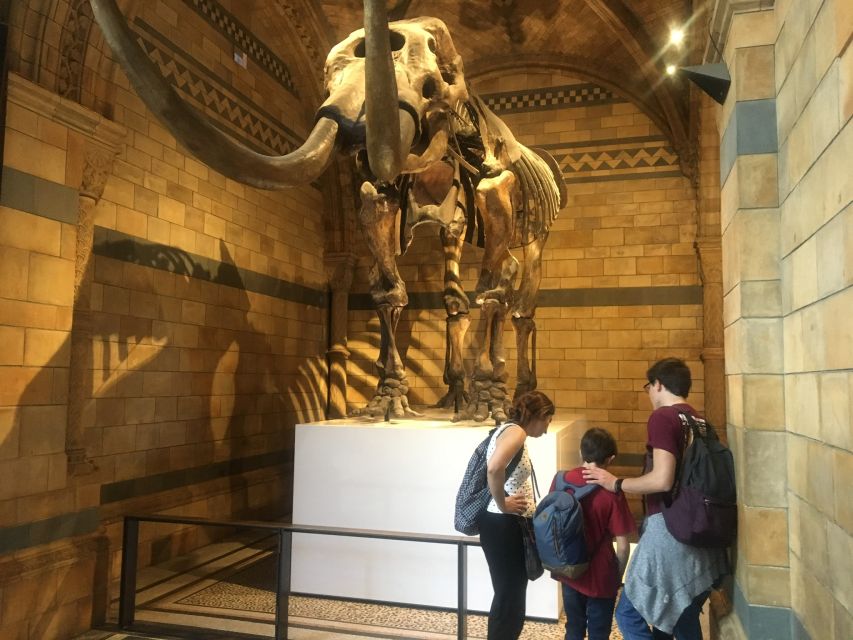
If you only knew one room name before this visit, make it Hintze Hall. This is where the museum’s heavy hitters live, and this tour is timed to get you there.
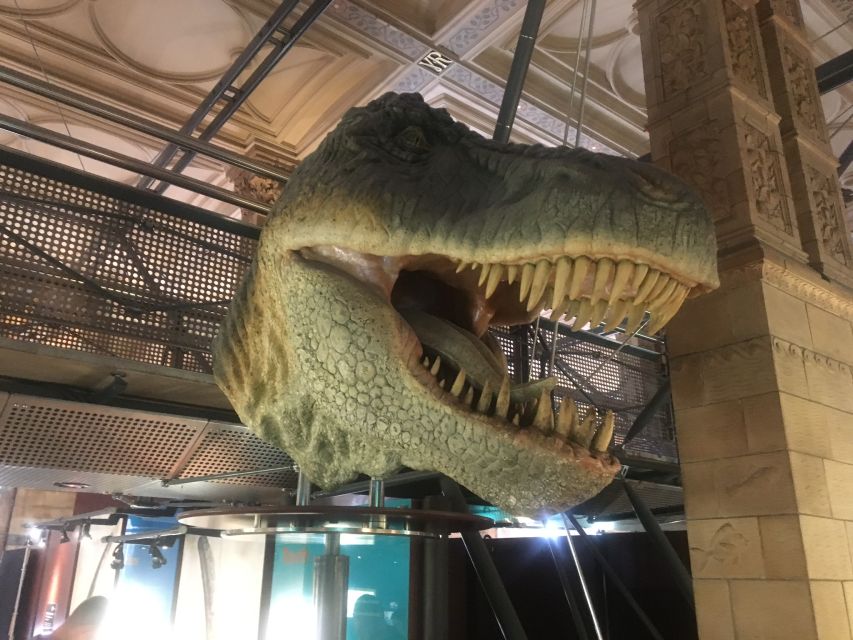
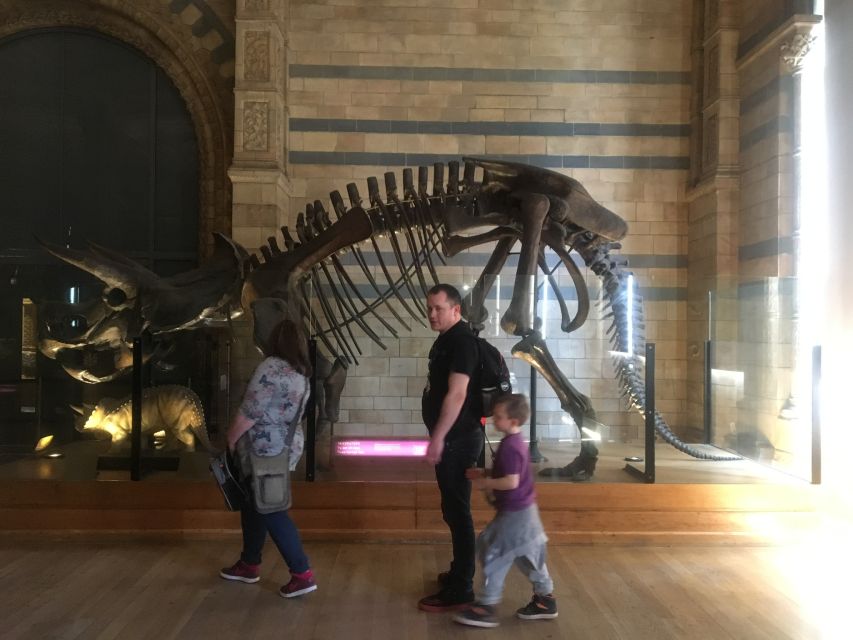
Inside, you’ll see the massive dinosaur skeletons that people travel across the pond to photograph. The room gives you the full effect: the scale feels bigger than photos because you are surrounded by the bones rather than staring at one framed angle.
The other headline is the blue whale skeleton, listed at 82 feet (25 meters) long. Standing there in a real museum hall is different from seeing a whale in a textbook. You start noticing proportions and the sheer size of how marine life can shape an entire ecosystem. It also makes the museum’s theme click: Earth’s story is not abstract—it has body counts and size comparisons.
This stop is also where you’ll benefit most from a guide. In a self-guided walk, you can admire the spectacle and still miss the “why it matters” parts. A good guide helps you connect what you are seeing to bigger ideas about evolution and classification.
Central Hall moments: Diplodocus and what to notice beyond the wow factor
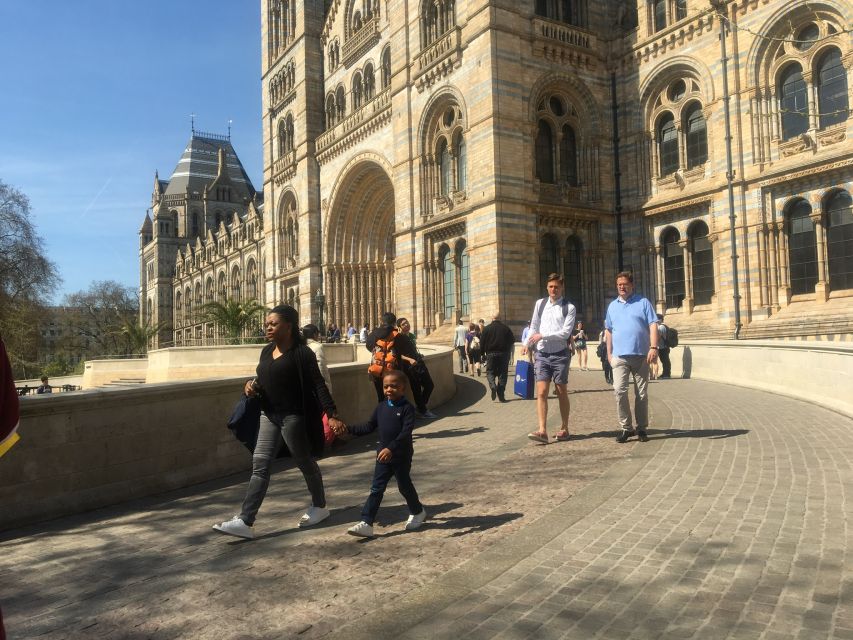
The tour also takes you toward the Central Hall, with the Diplodocus skeleton called out as a key sight. Diplodocus is one of those fossils that becomes a shorthand for dinosaur time. But the fun part is learning to look at what the display is emphasizing—how scientists interpret remains, how bodies change over evolutionary time, and why certain specimens become iconic.
In a one-hour guided setup, you are not trying to become an expert in sauropod anatomy. You are training your eye. When you get back to these halls later on your own, you’ll find it easier to spot details you would have skipped the first time.
If you like museums that encourage repeat viewing, this guided loop helps you return with purpose. One of the best reasons to do a short guided tour first is that it gives you a map for your second pass.
Volcanoes and Earthquakes: seeing Earth as an active system
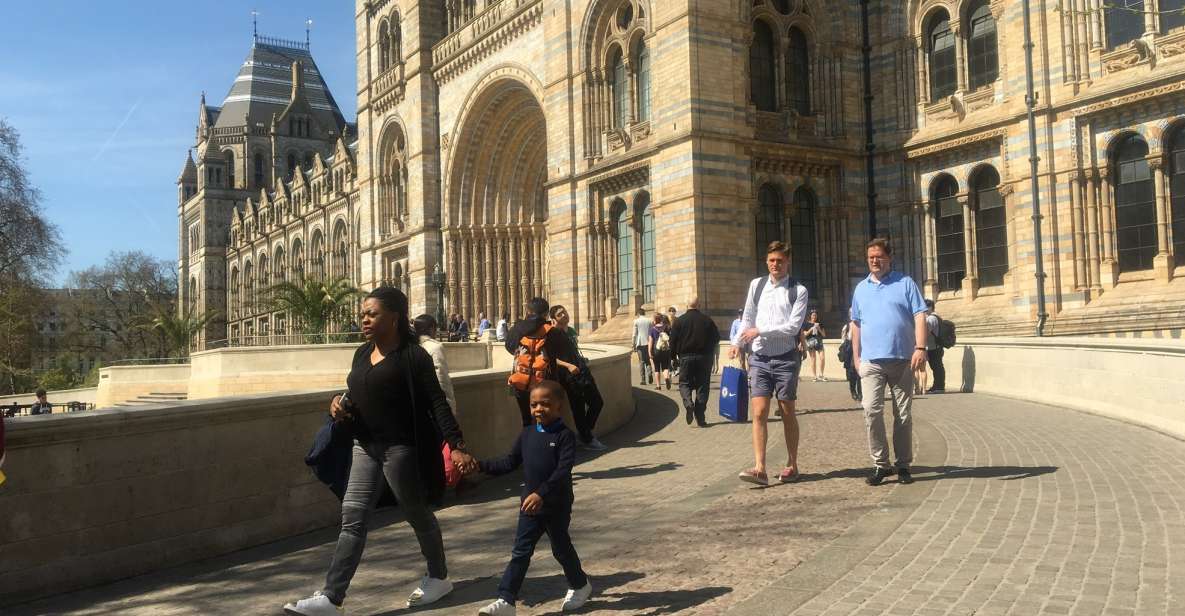
The Volcanoes and Earthquakes Gallery is where the museum shifts from “old time” fossils to Earth’s active behavior. It’s a strong pairing with the dinosaur and whale moments because it reminds you that Earth is not a still life. Plate movement, eruptions, and seismic events reshape the world that life depends on.
In a tour like this, you also get a structure: the guide helps you move from specimen to process. If you care about how planets work—why landscapes look the way they do and how change happens—this section gives you language to interpret what you might otherwise read and forget.
You’ll also be glad the pacing is guided. The museum has tons of interesting stop points, but with only one hour, it is easy to spend too long in one gallery and lose the chance to see the others.
You can also read our reviews of more guided tours in London





Evolution Gallery: life’s variety explained in plain museum time
Next up is the Evolution gallery, which focuses on the diversity of life on Earth. This is one of the museum’s most approachable topics once you have context from the earlier stops.
A guided visit helps because evolution can feel abstract when you read it alone. With a live guide, you get the connections: how specimens fit into a larger story, and how evidence is interpreted.
You can expect the guide to keep the pace moving through the “key ideas” portion of the gallery. And if you want to go slower, this is exactly where you’ll get the most benefit from the guide’s suggestions about what to revisit after the tour ends.
Minerals, gems, and the hidden artistry of the natural world
The tour also includes stops highlighting the intricate designs of minerals and gems. This is not just a visual detour. Those structures are a way to understand Earth’s conditions—temperature, pressure, chemistry—expressed as crystals and textures.
It is a good reminder that natural history museums are both scientific and artistic. Even if you came mainly for dinosaurs, this part often hooks people who did not expect it. You start seeing structure, not just color.
If you like hands-on questions and “how do we know?” explanations, ask your guide follow-ups here. This is the kind of exhibit where a short answer can lead to a better second visit.
The Wildlife Garden: birds, bees, and a breather
Not every highlight has to be indoor. The tour includes the Wildlife Garden, described as a haven for birds, bees, and other animals.
Why it matters: after staring at skeletons and rocks, this outdoor glimpse changes your mental frame. It brings the science back to life today. You stop thinking only about what is extinct or fossilized and start noticing living ecosystems that still depend on the same Earth systems.
It also gives you a natural reset. In a fast-paced museum plan, a breather like this helps you keep your energy for the next big indoor hall.
How the guide experience feels in real life
The guide is the heart of this activity. You get a live tour guide in English, and the tour includes headsets if necessary. The best experiences here lean on two things: clear communication and the ability to answer questions without blowing up the schedule.
People have specifically highlighted guides such as Paul for being friendly, answering lots of questions, and keeping things engaging for both adults and kids. One account even points to a visit where the group ended up being small, which can make the whole thing feel less like a lecture and more like a guided conversation.
That said, this is still a one-hour format. If you have toddlers, you might find it better suited to older children. The museum has big ideas, and the tour aims at essentials rather than slow exploration.
If you have mobility needs, the activity is listed as wheelchair accessible, and that can be reassuring when planning a day in a venue with lots of corridors and crowds.
Price and value: what $76 buys you for one hour
At $76 per person for a 1-hour guided experience, the value depends on what you would otherwise do with your time.
Here’s what you are paying for:
- A reservation ticket to manage entry smoothly
- A live guide who connects exhibits and helps you prioritize
- Express security to reduce time in the bottleneck
- Headsets if necessary, which can make the tour easier to follow in a busy museum
What you are not paying for:
- Transportation
- Food and drink
So the real question is: do you value time-saving and curated context? If you are visiting with limited hours in London, this tour can be a smart use of your day. It is basically a shortcut to seeing the most famous exhibits in a way that makes them stick.
If you have a lot of time and enjoy wandering at your own speed, you might skip the tour and self-guide. But if you know the museum will overwhelm you, a guided hour often turns into a better second visit on your own.
Who should book this guided tour?
This experience is especially good for:
- First-time museum visitors who want the big exhibits without chaos
- People who like learning that ties together fossils, minerals, and Earth processes
- Families with older kids who can handle a fast but fun museum pace
- Anyone who wants a practical plan for seeing Hintze Hall, Central Hall, and key galleries in one go
It may be less ideal if:
- You want slow, open-ended exploration for the whole visit
- You prefer to move at your own pace with no guide steering the route
- Your top priority is completing every gallery instead of seeing the highlights well
Should you book this Natural History Museum guided tour?
My take: if your goal is to see the museum’s famous dinosaur and whale moments and come away with a clearer understanding of what you saw, this one-hour guided tour is a good deal. The express entry, the headsets if necessary, and the fact that the guide helps you hit multiple key areas make it a time-efficient choice.
Before you book, check one thing in your own travel style: do you like being guided for an hour? If yes, you’ll likely get more satisfaction than trying to pick your own route while crowds build and your energy drops.
If you’re on a tight schedule and you want a structured start to a Natural History Museum day, I’d book it—then plan a bit of free time after the tour so you can linger where the guide points you next.
FAQ
How long is the Natural History Museum guided tour?
The tour duration is 1 hour.
Where do we meet the guide for the Natural History Museum tour?
Meet at the metal plate labeled The Royal Borough of Kensington and Chelsea at Exhibition Road SW7. The instructions also direct you to the Metro South Kensington exit called Natural History Museum Ismaili Centre Exit.
Is the guided tour in English?
Yes. The live tour guide language is English.
What’s included in the ticket price?
Included items are the guide, a reservation ticket, and headsets to hear the tour guide if necessary.
Does the tour include food or transportation?
No. Transportation and food and drink are not included.
Is the tour wheelchair accessible and can I cancel?
The activity is listed as wheelchair accessible. Cancellation is available up to 24 hours in advance for a full refund.