REVIEW · LONDON
London: Royal Museums Greenwich Day Pass
Book on GetYourGuide →Operated by Royal Museums Greenwich · Bookable on GetYourGuide
One line, one ship, and one hilltop view of London.
This day pass packs Royal Observatory Greenwich, Cutty Sark, and easy add-ons at the Queen’s House and National Maritime Museum into a smooth, money-smart visit.
I especially love the instant wow of standing at the Prime Meridian Line in the Meridian Courtyard, then shifting gears to the hands-on, ship-loving experience of taking the helm aboard Cutty Sark. I also like that you get a multilingual interactive guide at both paid attractions, so you spend less time hunting for meaning and more time looking around.
One thing to consider: plan for real walking on and between the sites, and if you go slow with photos (or stop for art), your day can run right up against the last-entry time.
In This Review
- Key things to know before you go
- Arriving at Greenwich Royal Park: where the day starts to feel big
- Standing on the Prime Meridian Line at the Royal Observatory
- Flamsteed House and the story of accurate time
- Wren’s Octagon Room and the observatory’s famous interiors
- The Great Equatorial Telescope and what you’ll see in the onion dome
- Going downhill to Cutty Sark: the tea clipper you can climb
- Cutty Sark main deck highlights: masts, rigging, and the Thames views
- The Queen’s House and the National Maritime Museum: best free add-ons
- A realistic 6-hour flow that doesn’t stress you out
- Who should buy this Greenwich day pass?
- Should you book this Royal Museums Greenwich Day Pass?
- FAQ
- What’s included in the London Royal Museums Greenwich Day Pass?
- Do I need separate tickets for the National Maritime Museum and The Queen’s House?
- How long should I plan for this experience?
- Can I visit the Prime Meridian at the Royal Observatory?
- What languages are available on the audio or interactive guide?
- Is this pass flexible to book, and is it wheelchair accessible?
Key things to know before you go
- Prime Meridian photo moment: Stand astride the line with Greenwich Mean Time right there.
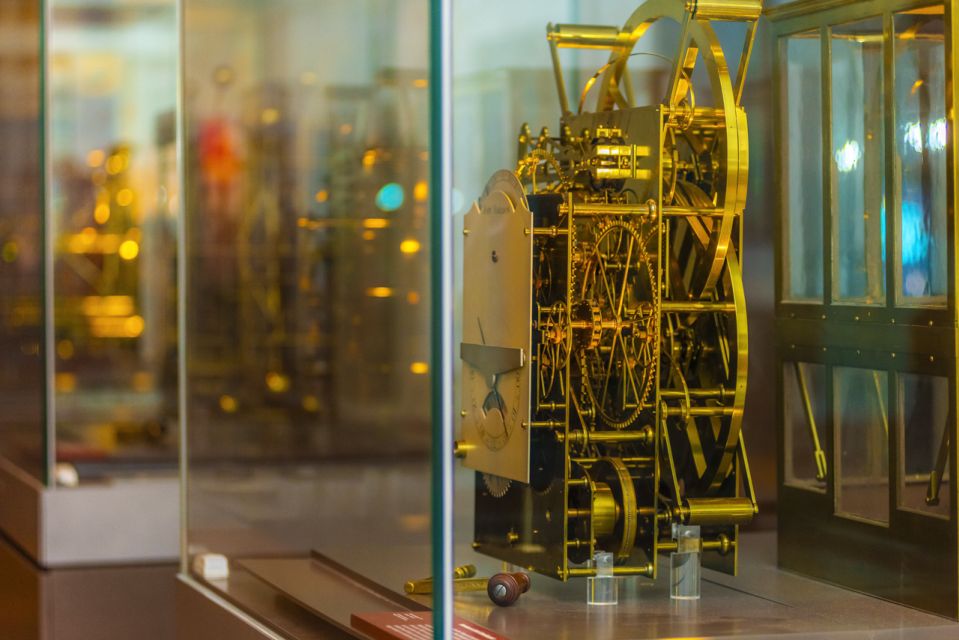
- Harrison clocks and public time signals: Expect accurate-time history with the Time Ball and more.
- Cutty Sark’s design and conservation: You can see the ship’s lines and even stand under it after the raise.
- Take the helm: The wheel experience is fun, and the Thames views help it land.
- Free extras are built in: Queen’s House and the National Maritime Museum are usually free unless you choose special add-ons.
- Your phone signal may be weak: Use the downloadable guides, not streaming tour audio.
Arriving at Greenwich Royal Park: where the day starts to feel big
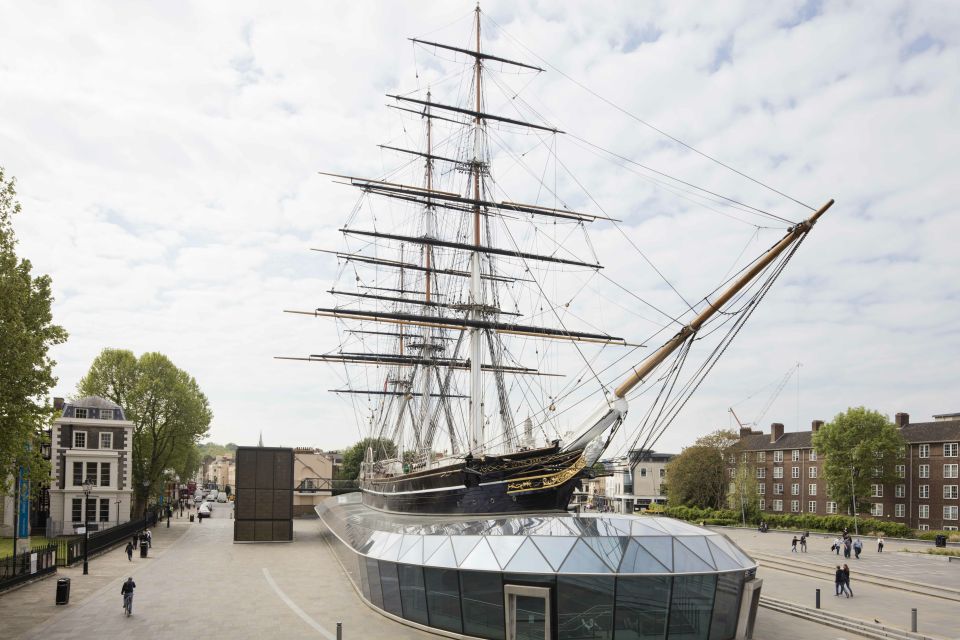
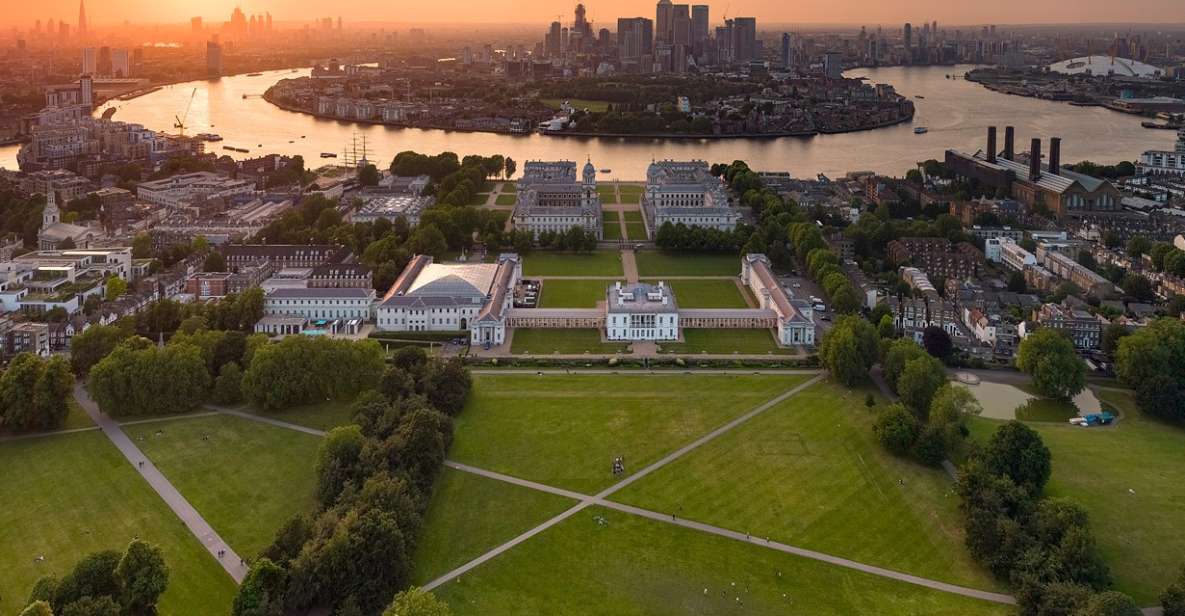
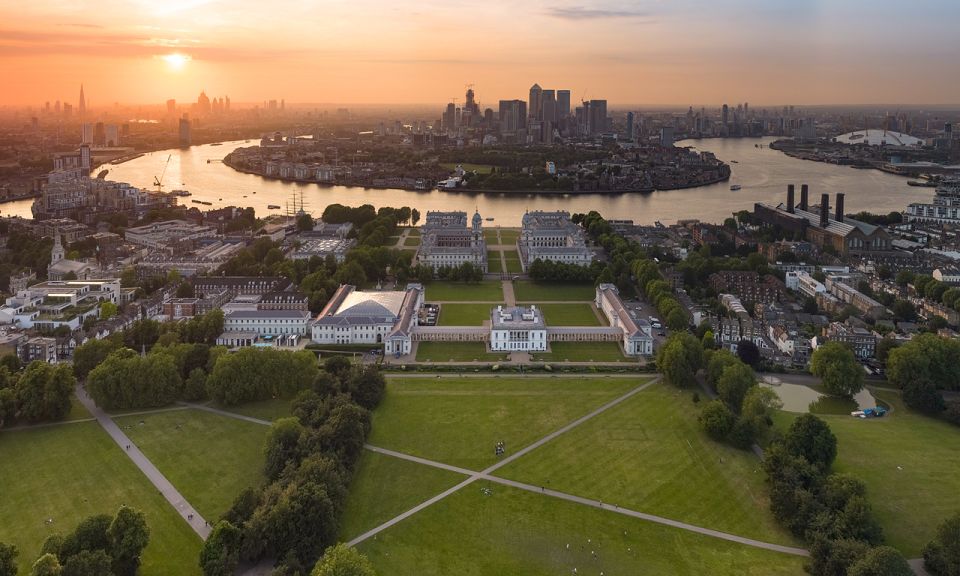
Royal Museums Greenwich is arranged like a mini world of ideas: time, ships, exploration, and royal art—on one stretch of the Thames-side hill. Your day starts at the Royal Observatory Greenwich, on Blackheath Avenue (SE10 8XJ). From there, you work downhill toward Cutty Sark and then fold in the free stops nearby when you still have daylight.
The view from Greenwich Royal Park is part of the deal. Even before you enter, you get dramatic angles back toward the City of London and across the River Thames. I’d call that a built-in warm-up: you’re going to look outward a lot today, because both the astronomy rooms and the ship decks reward it.
Also note the schedule rhythm. All sites open at 10:00 AM and close at 5:00 PM, with last entry at 4:00 PM. That means you don’t want to spend your best daylight stuck in a café line or waiting for the perfect photo—pick your priorities early and protect your time.
You can also read our reviews of more museum experiences in London


Standing on the Prime Meridian Line at the Royal Observatory
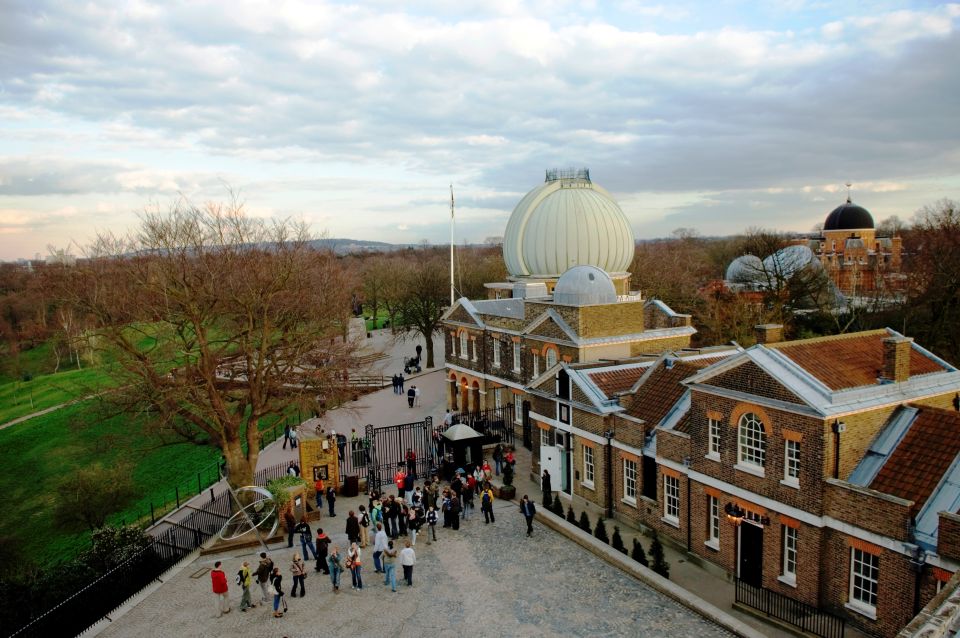
The Royal Observatory visit centers on one simple, powerful idea: the world’s timekeeping lives here. In the Meridian Courtyard, you stand astride the Prime Meridian Line, with one foot in the east and the other in the west—at the home of Greenwich Mean Time (GMT).
This is one of those moments that works even if you’re not a museum person. The location is concrete. The symbolism is literal. And once you’ve done the photo, you’re ready to understand how that line became a global reference point for travel, science, and trade.
If you like learning with structure, you’ll appreciate the way the visit moves through key rooms and displays. You start in the courtyard, then head through the observatory buildings—so it doesn’t feel like one long hallway of screens. You get a sense of how the place was designed for observation, not just display.
Practical tip: take your Prime Meridian photo early, before you’re tired. Later in the day, you’ll want your energy for Cutty Sark’s decks and the ship views.
Flamsteed House and the story of accurate time

From the courtyard, your path takes you through Flamsteed House, where you walk in the footsteps of the Astronomers Royal. The vibe here is part history lesson, part technology museum. You’re not just seeing clocks; you’re seeing why they mattered and who fought to make them work.
One highlight I’d put at the top is Harrison’s clocks—the inventions tied to changing the world’s ability to measure time at sea and in navigation. If you’ve ever wondered why time was such a big deal before everyone carried a smartphone, this is where the answer becomes clear.
Outside, don’t rush past the Shepherd Gate Clock. It’s mounted outside and was the first clock to show Greenwich Mean Time to the public. It’s a neat reminder that public time signals weren’t automatic. People had to build them, test them, and convince society to trust them.
Then look up at Flamsteed House’s bright red Time Ball. First used in 1833, it still operates today. That’s a rare combo: a display tied to global time standards that still has a living pulse. Even if you miss any timing moments, seeing the system and learning what it did for people is worth the pause.
Wren’s Octagon Room and the observatory’s famous interiors
The Royal Observatory also gives you a quick hit of architecture, not just science. The Octagon Room, designed by Sir Christopher Wren, is one of the best preserved Wren interiors in London. If you like the feeling of old buildings doing real work, this is a treat.
Rooms like this matter because they explain the setting. Timekeeping and astronomy weren’t free-floating ideas. They happened inside structures shaped for careful observation and practical function. Seeing Wren’s interior along the route helps you connect the scientific story to the physical place.
As you move through, the displays connect major figures associated with the Royal Observatory, including Newton, Halley, Bradley, Maunder, Harrison, Airy, and Einstein. The mix isn’t random. It shows how the site evolved from early astronomy into a broader scientific reference point over time.
I like that the observatory experience doesn’t treat these names like trivia. The displays are set up so you can connect the ideas—who contributed, what changed, and how that change affected real life beyond the museum.
The Great Equatorial Telescope and what you’ll see in the onion dome
Don’t skip the telescope. In the huge iconic onion dome, you’ll find the Great Equatorial Telescope, which gave astronomers new views of the universe over 100 years ago.
This part of the day is for you if you like big instruments—things made to do difficult tasks with patience. Even if you don’t know the details, you’ll get a strong sense of what advanced viewing meant before modern tech. The dome itself also creates a great visual moment, especially if you enjoy architectural shapes and industrial-era engineering.
If you’re visiting with kids, I’ll add a balanced note: some younger visitors may want more hands-on tasks than a traditional museum provides. There’s enough here to keep attention if you use the guide prompts, but it’s not a playground-style experience.




Going downhill to Cutty Sark: the tea clipper you can climb

After the observatory, head downhill toward Cutty Sark, located on King William Walk (SE10 9HT). This is where the day gets physical in a great way. You’re not just reading about history; you’re stepping into the world of a ship that once carried a valuable cargo across the globe.
Cutty Sark is the world’s sole surviving tea clipper, launched in 1869 for the China tea trade. That detail matters. It helps you understand why this ship looks the way it does and why speed and design were everything.
The conservation story is a big part of the impact. Original wooden planks and iron frames have been meticulously conserved. And after an ambitious six-year conservation project, the ship was raised over three meters, which means visitors can stand directly underneath and see the elegant lines and design details close up.
That raised-underneath moment is one of the most memorable visual tricks in the whole day pass. It’s rare that a museum lets you experience the structure, not just the outer shell.
Cutty Sark main deck highlights: masts, rigging, and the Thames views

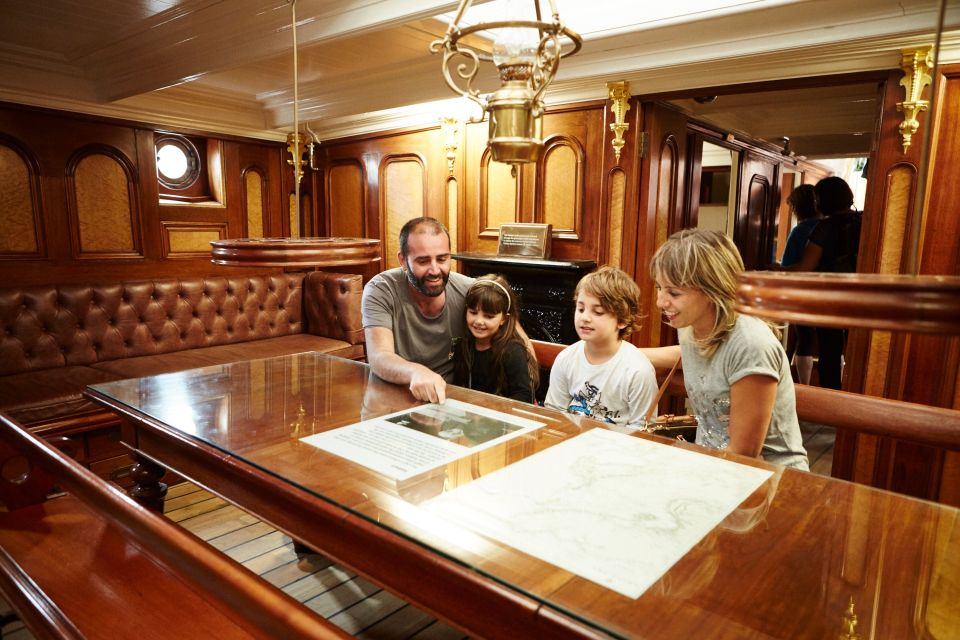
Once you’re aboard, you’ll have the full entrance access to explore. Look for the sailors’ quarters as you move around. Then make a point of the ship’s wheel area—one of the fun, interactive-feeling parts of the experience.
On the main deck, marvel at the towering masts and the scale of the ship’s rigging, described as 11 miles of rigging. That number is hard to picture until you see how much linework and structure exists when a ship was built for speed and survival.
And then there’s the payoff view. From the decks, you get fabulous sightlines back toward the River Thames. The ship becomes a framing device. You see London in the distance, then the engineering right under your feet.
A small timing note: if you love the observatory’s clocks and astronomy rooms, plan extra time there too. A common pattern is to think Cutty Sark will be quick and then realize you want to linger for the masts, the wheel, and the views.
The Queen’s House and the National Maritime Museum: best free add-ons
Your day pass also gives access to The Queen’s House and the National Maritime Museum. The key practical detail: entry to both is free of charge except for special exhibitions or guided tours. If you avoid the paid add-ons, you can stretch your value without adding much cost.
The Queen’s House is designed by Inigo Jones and is a pioneering piece of 17th-century architecture. It can feel like a different kind of museum day—more art and architectural calm than science or ship adrenaline. If you like royal art galleries and classical design, it’s a perfect “rest your legs and mind” stop. If you prefer more hands-on or subject-matter action, you might treat it as a shorter visit and focus on the big architectural moments.
On your other side is the National Maritime Museum, described as the largest museum of its type in the world. This is where you can lean into epic stories of exploration and endeavour that helped shape the world. It’s also an easy place to extend your day if you still have time and energy after Cutty Sark.
I’d suggest you don’t try to do everything. Pick one “deep focus” free add-on after your two paid anchors. Trying to sprint through the lot is how you end up seeing the labels, not the ideas.
A realistic 6-hour flow that doesn’t stress you out
With a 6-hour duration, the pass is designed for a tight but not frantic day. The biggest challenge isn’t getting from place to place. It’s making choices once you’re inside, because each site has multiple high-interest moments.
Here’s a way to pace it that tends to work:
- Start at the Royal Observatory early so you can do the Meridian Courtyard, then keep moving through Flamsteed House.
- Plan a second window for the Octagon Room and the Great Equatorial Telescope while you still have mental energy for science.
- After lunch-time wandering or a quick bite, head downhill to Cutty Sark and give it enough time for the main deck, wheel, and the under-ship conservation viewing.
- Finish with either The Queen’s House or the National Maritime Museum, not both unless you’re a fast walker.
Also plan for a bit of a leg workout. There can be a hike feel between higher Greenwich points and the ship area. If you come prepared with comfortable shoes, you’ll enjoy the day more than if you treat it like a quick city stroll.
Finally, phone signal can be a weak point in parts of Greenwich. Since the guides are downloadable, you’ll be safer relying on what’s already on your device or saved for offline use.
Who should buy this Greenwich day pass?
This is a great pick if you want a single, organized day that mixes two big themes—time and the sea—without having to build your own itinerary. I’d especially recommend it if:
- You like seeing major icons in a compact area (Prime Meridian and Cutty Sark in one day).
- You want value because the pass covers paid entry to the observatory and the ship, while the other big museums are typically free.
- You prefer a self-guided structure with multilingual guides you can use at your pace.
It’s also a solid family day, with one caveat. If your kids need lots of hands-on or interactive tasks, you may find you want to add extra activities outside the museums. Still, the ship experience can carry the day.
Should you book this Royal Museums Greenwich Day Pass?
If you want a London day that feels like you stepped into the origin stories of navigation, global time, and maritime trade, book it. The pass gives you the big ticket experiences that are hard to recreate with planning: the Prime Meridian moment and the chance to climb and explore Cutty Sark.
I’d skip it only if you hate walking hills, or if you know you’re the type who wants one museum only. This is a “do a bit of everything” day, and it works best when you’re okay with moving.
If that sounds like you, you’ll probably leave with a surprising mix of photos, ship-scale awe, and timekeeping facts you’ll actually remember.
FAQ
What’s included in the London Royal Museums Greenwich Day Pass?
Your ticket includes entrance to the Royal Observatory and Cutty Sark, plus downloadable multilingual interactive guides at both attractions. It also gives access to the National Maritime Museum and The Queen’s House.
Do I need separate tickets for the National Maritime Museum and The Queen’s House?
Entry to The Queen’s House and the National Maritime Museum is free of charge, except for special exhibitions or guided tours.
How long should I plan for this experience?
The duration is listed as 6 hours, and the sights are open from 10:00 AM to 5:00 PM, with last entry at 4:00 PM.
Can I visit the Prime Meridian at the Royal Observatory?
Yes. You can stand astride the Prime Meridian Line in the Meridian Courtyard at the Royal Observatory.
What languages are available on the audio or interactive guide?
The guide languages listed are English, Spanish, Chinese, French, German, Italian, Portuguese, and Korean.
Is this pass flexible to book, and is it wheelchair accessible?
The offer includes reserve now & pay later and free cancellation up to 24 hours in advance for a full refund. It is also listed as wheelchair accessible.