REVIEW · LONDON
London’s Ghosts & Gruesome Past Nighttime Walking Tour
Book on GetYourGuide →Operated by Tours by Foot · Bookable on GetYourGuide
London turns darker after dark. This 2-hour night walk through Greater London strings together Underground hauntings with the kind of real-life grimness you usually only read about in history books—grave robbery, plague-era medicine, and punishment sites tied to the city’s most infamous crimes. I love how the storytelling stays specific to exact locations, from Farringdon to the Old Bailey, and I love that it’s delivered with real energy by a guide people often call Matt, who clearly enjoys the subject and keeps the group moving.
One possible drawback: it can feel more gruesome than ghostly, so if you’re hunting for lots of spooky specters with zero crime detail, you may want to set expectations before you go.
In This Review
- Key things to know before you go
- Night Walk Value: What this tour is really good at
- Where the tour starts: Farringdon’s Underground ghost moment
- Smithfield Market and the machinery of public punishment
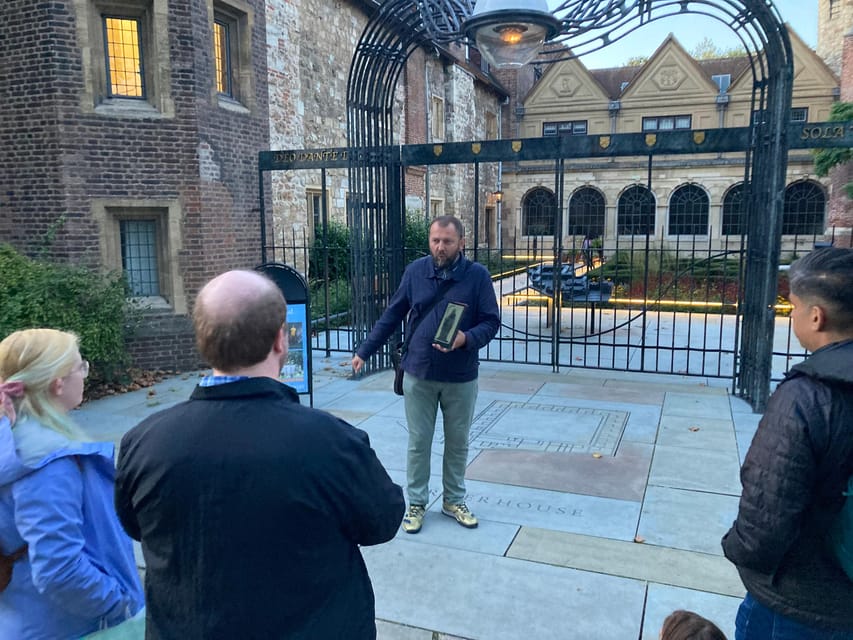
- Charterhouse Square: plague pits and what doctors could not fix
- St Bartholomew the Great: a hospital for centuries and the dead who still tell stories
- Sir William Wallace Memorial: wartime memory in a quieter moment
- Holy Sepulchre Church: empty pits and the grim business of bodies
- Old Bailey finale: the serial killer story, with a key warning
- The walking pace and what to bring for a 2-hour night route
- Price, guide quality, and whether $49 is a good deal
- Who this tour is best for
- Should you book London’s Ghosts & Gruesome Past Nighttime Walking Tour?
- FAQ
- FAQ
- How long is London’s Ghosts & Gruesome Past Nighttime Walking Tour?
- Where do I meet the guide?
- How much does it cost?
- What language is the tour guide?
- Is the tour wheelchair accessible?
- Can I get a refund if I cancel?
Key things to know before you go
- Meet at Farringdon and start with a tube-station ghost moment tied to the Underground’s own spooky lore
- Smithfield Market is your early stop for the history of public executions, with plenty of atmosphere
- Plague and survival take center stage at Charterhouse Square, where you learn how outbreaks changed London
- 900-year-old burial ground stories come to life around St Bartholomew the Great and its graveyard setting
- Holy Sepulchre Church adds the body-snatching/empty pits angle, connecting directly to the tour’s medical-grave themes
- Old Bailey serves as the finale, with a serial-killer story that is not Jack the Ripper
Night Walk Value: What this tour is really good at
This is not a gentle, tea-and-tales stroll. It’s a timed, story-driven walk that treats London like a crime scene and a classroom at the same time. You’ll cover familiar names—Farringdon, Smithfield, the Old Bailey—but you’ll see them framed by grim questions: how people survived (or didn’t) through plague, how medicine worked when it was wrong, and how punishment was staged in public.
At $49 per person for about two hours, the value is in the guide-led storytelling plus the fact that you’re visiting multiple major historic sites in central London on foot. If you already know London’s big sights and want something more characterful, this kind of tour is a good fit: you get an organized narrative, not just scattered facts.
The guide is a professional storyteller and scholar, and the tone tends to be dramatic, not academic-by-default. That matters. You’re paying for someone to make the city’s darker threads click into a single route you can actually follow in the dark.
You can also read our reviews of more walking tours in London


Where the tour starts: Farringdon’s Underground ghost moment
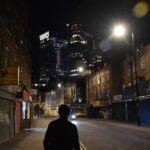
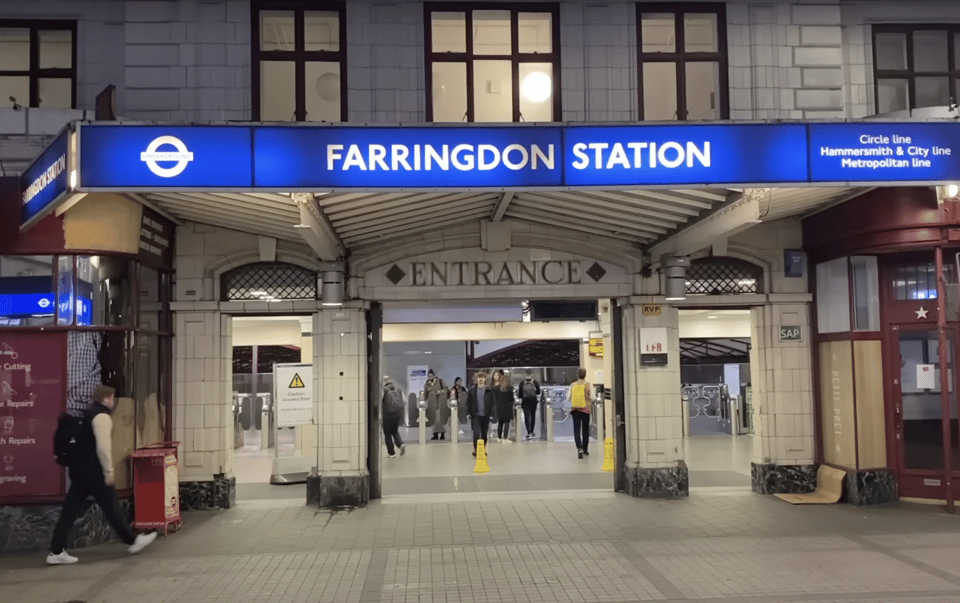
You meet your guide outside Farringdon Underground Station, at the main entrance/exit between the new and old station areas. It’s the right kind of start point for this theme: the Underground is part of everyday London life, so the idea of a haunting there hits harder than it would in some distant museum setting.
You’ll start with the classic tube-platform “mind the gap” moment, then the tour shifts into the legend of a ghost tied to the station—a story built around a girl said to haunt Farringdon. Even if you’re not the type who normally buys into hauntings, I like this opening because it puts you in the correct mood early and reminds you that London’s layers overlap: transport, crime, medicine, and superstition all share the same streets.
Practical tip: you’ll be outside and walking at night, so wear shoes that don’t punish you after 30 minutes.
Smithfield Market and the machinery of public punishment
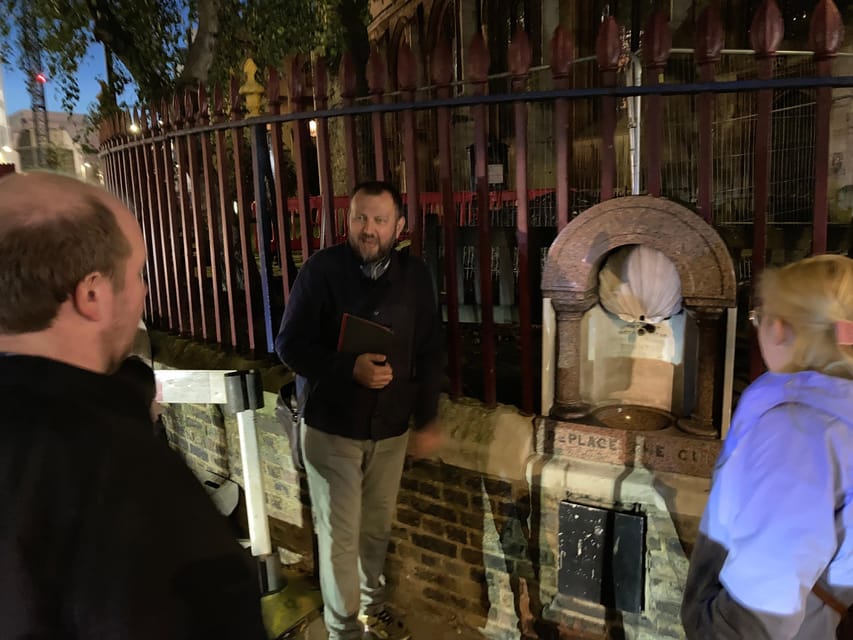
Next up is Smithfield Market, with both a photo stop and a visit. This stop is built around one of the tour’s core ideas: London’s gruesome past wasn’t hidden away. For centuries, this area served as a place for public executions, with different forms of torture and killing.
That public nature changes how you process the story. Instead of imagining crime as something that happens in isolation, you see it as something the city staged. The tour uses Smithfield to set the tone for the later courthouse stop at the Old Bailey, so by the time you reach the finale, you’ll understand why this part of London felt like a spotlight for punishment.
If you’re sensitive to grim subjects, keep in mind this tour leans into details as part of the narrative. It’s historically themed, but it’s still macabre.
Charterhouse Square: plague pits and what doctors could not fix
At Charterhouse Square, the vibe shifts from execution history to outbreak survival. You’ll learn how plagues changed London, how deadly they were, how doctors tried to stop them, and what happened to people who survived.
This stop matters because it’s where the tour connects the past to the human side of fear and coping. You’re not just hearing about bodies and crime; you’re also hearing about the desperation that led to strange medical thinking. The tour’s broader theme—why people used to drink blood and eat bones—fits here, because plague-era desperation is the kind of context that makes these practices understandable, even when they were clearly dangerous.
I like that Charterhouse Square gives you a breath of open space in the middle of darker stops. It helps you reset your brain before you step into the more tombstone-heavy sites.
St Bartholomew the Great: a hospital for centuries and the dead who still tell stories
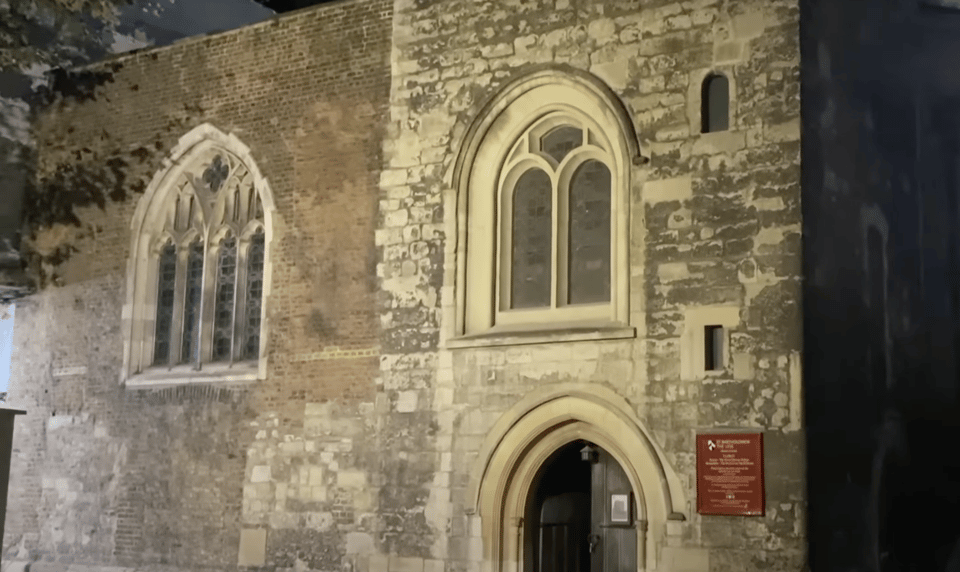
Then comes St Bartholomew the Great, framed as a graveyard setting with layers of history. The tour’s angle here is that for 900 years, the hospital served people both alive and dead. You’ll also hear burial stories tied to the founder of the church.
This is one of those stops where the setting does half the work. You’re surrounded by centuries-old tombstones while the guide connects the dots between healthcare, death, and the way bodies were handled after life ended. If you’re into the spooky side, it also works because graveyards naturally feel like they belong in ghost stories.
There’s also a strong “why it matters” thread: when medicine is linked to burial practices and long-term institutions, you get a deeper sense of how everyday life and the macabre were intertwined.




Sir William Wallace Memorial: wartime memory in a quieter moment
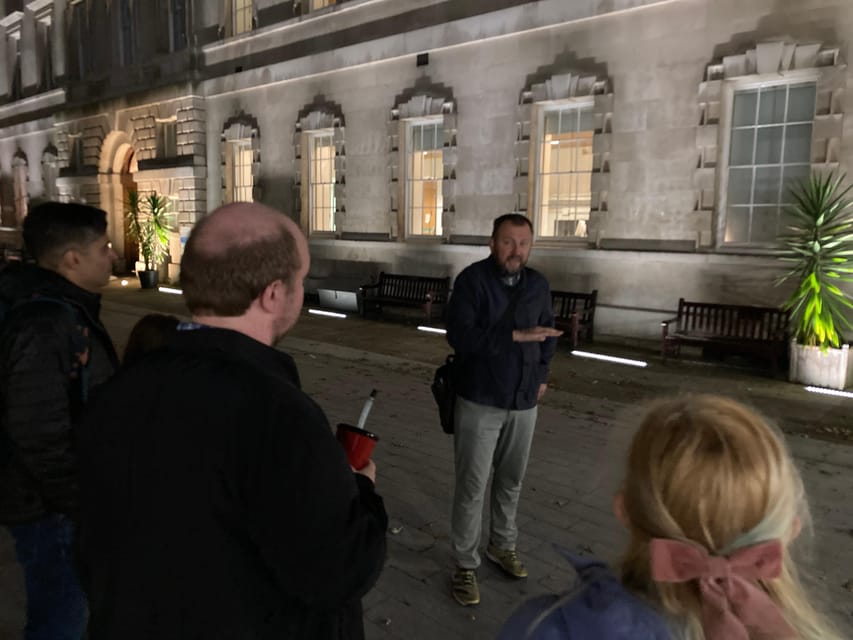
At the Sir William Wallace Memorial, the tour travels back further, to when England and Scotland were at war. A Scottish freedom fighter has a special place in memory here, and you’ll learn how this spot fits into that larger conflict.
This stop provides pacing. You get a different kind of legend and a different emotional tone than executions and plague. It also reinforces that London’s darker stories aren’t only about local villains—this city collected echoes from wars, national identities, and public memory.
If you tend to get restless during long walks, this memorial-style stop is a good reset.
Holy Sepulchre Church: empty pits and the grim business of bodies
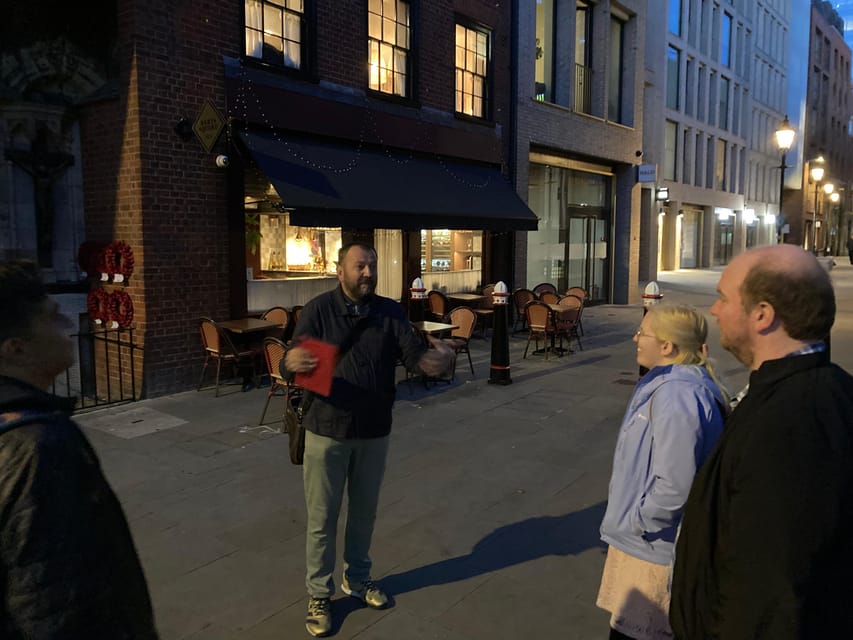
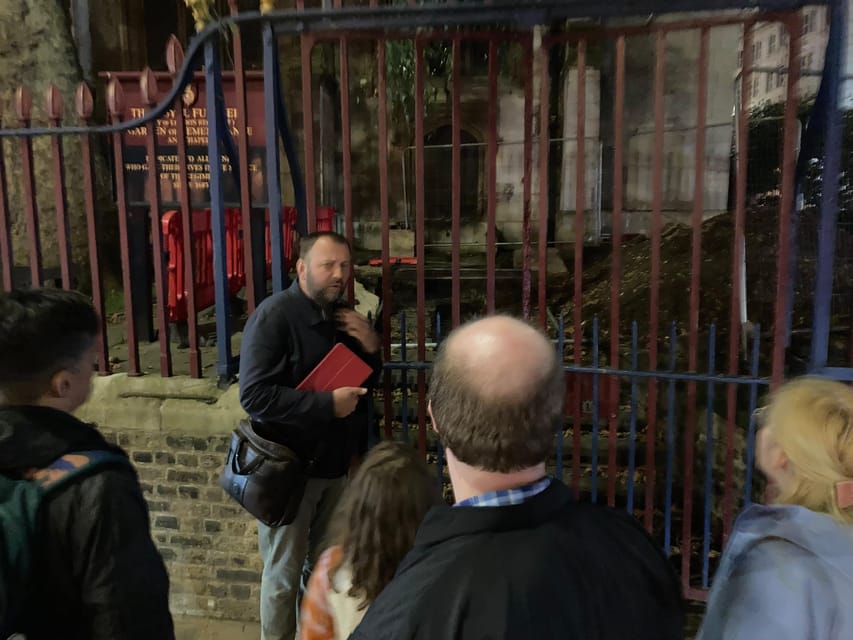
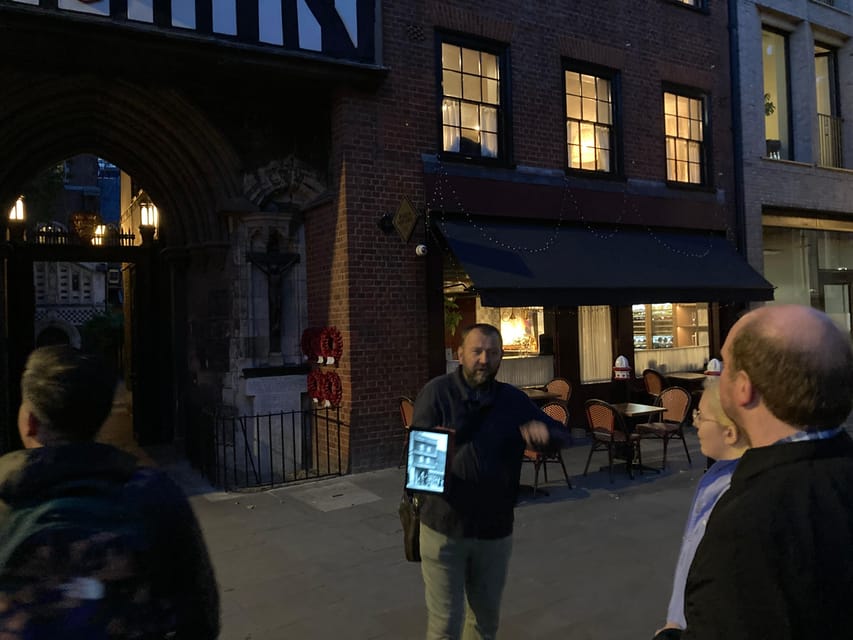
Holy Sepulchre Church brings you to one of the tour’s most direct explanations of the tour’s body-snatching thread. The empty pits in the churchyard are described as a reminder of times more than 200 years ago, when people made a living by taking dead bodies from graves and selling them.
The guide also connects this stop to what you’d heard earlier at the hospital and, along the way, the tour suggests a practical way to connect the story pieces—an intentional chain-linking method that keeps the narrative from feeling like random shocks.
This is also where you’ll feel the tour’s overall balance toward the gruesome. One review-style sentiment you should note is that some people wished there were more ghosts and less gruesomeness. If that’s you, this is probably the stop where the tour may feel heaviest.
Old Bailey finale: the serial killer story, with a key warning
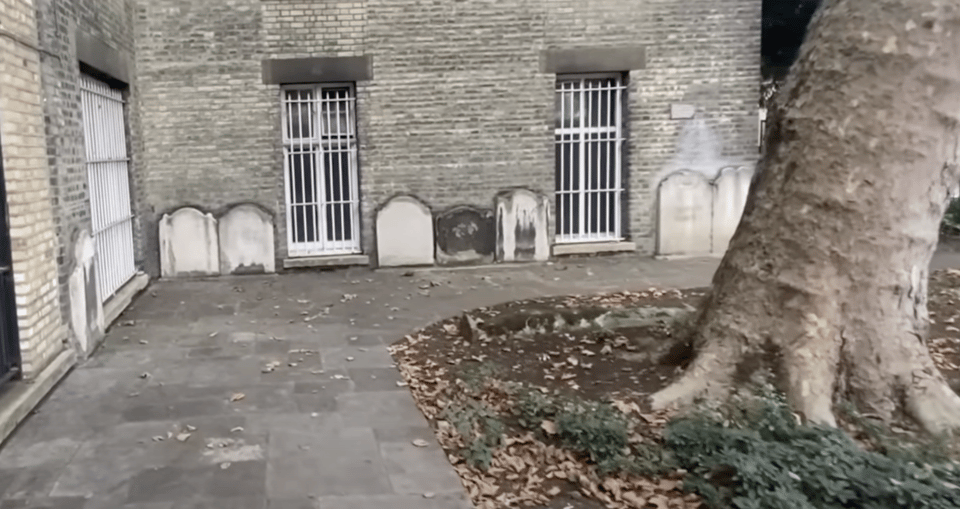
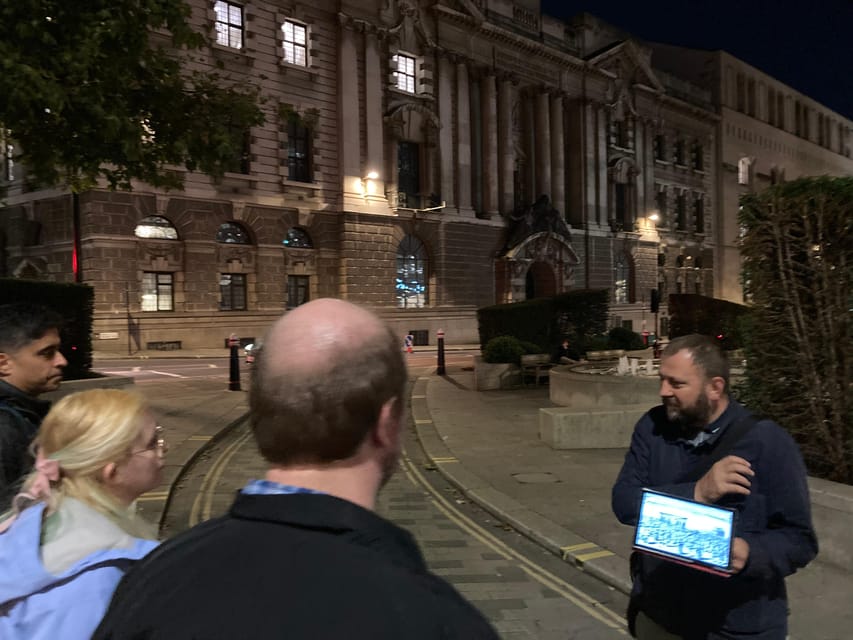
You finish at the Old Bailey, the legendary courthouse. The guide saves the darkest material for last and introduces the story of the worst serial killer England ever saw, with an explicit note that it’s not Jack the Ripper.
For me, that “not Jack the Ripper” framing is smart. It nudges you to pay attention to the specific story you’re being told instead of coasting on the most famous name in London crime. And because you’re ending here—after Smithfield and the churchyard stops—the courthouse feels like the logical final chapter.
If you like crime history, this is likely the moment you’ll remember most. If you’re on the fence because you usually avoid true-crime content, the earlier stops about plague and medicine may be the reason you’ll stick with it anyway. The tour builds a worldview where death isn’t an isolated event—it’s a system.
The walking pace and what to bring for a 2-hour night route
Because it’s two hours, the route is designed to keep you moving and listening without turning into a slow museum shuffle. That’s part of the appeal: you get story momentum.
Bring:
- Comfortable shoes for uneven sidewalks and night walking
- A layer for evening air (London nights can feel cool even when the daytime is mild)
- A way to keep your phone light useful for photos, since several stops are marked as photo stops
Also, the tour is described as having an escort through the dark and spooky streets of London, so the structure is there to keep the experience feeling guided, not random wandering.
Price, guide quality, and whether $49 is a good deal
At $49 per person, you’re paying for several things in one ticket: a professional certified guide, a curated sequence of serious historic sites, and an English-language storytelling performance that connects themes like plague, grave robbery, and crime.
The guide quality shows up in the kind of feedback people repeat: Matt is described as an incredible storyteller, very informative, entertaining, passionate, and clearly enjoying the tour. That matters because the success of this kind of experience depends on narration more than scenery. You’re not relying on a famous building’s wow factor. You’re relying on someone to make the story land.
So is it worth it? If you like night walking, want a guided narrative across central London, and enjoy dark history told in an engaging way, the price feels fair for what you’re getting.
Who this tour is best for
You’ll probably enjoy this tour if:
- You like true crime history and courtroom stories like those at the Old Bailey
- You enjoy macabre London lore that points you to specific places
- You want a night activity that feels like a story you follow, not a list you tick off
- You’re curious about how older medical ideas became tied to fear and death
You may want to skip or reconsider if:
- You want mostly ghosts and minimal gore or crime detail
- You get uncomfortable with topics involving executions, bodies, or serial-killer material
Should you book London’s Ghosts & Gruesome Past Nighttime Walking Tour?
Yes, with a clear expectation check. If you’re excited by the idea of pairing Farringdon’s Underground ghost lore with Smithfield Market’s execution history and ending at the Old Bailey for a serial-killer finale, this is exactly the kind of themed night walk that delivers. Just remember: this tour leans toward gruesome and true-crime themes more than pure ghost drama.
FAQ
FAQ
How long is London’s Ghosts & Gruesome Past Nighttime Walking Tour?
The tour runs for 2 hours.
Where do I meet the guide?
Meet your guide outside Farringdon Underground Station, in front of the main entrance/exit between the new and old stations.
How much does it cost?
The price is $49.00 per person.
What language is the tour guide?
The tour is guided in English.
Is the tour wheelchair accessible?
Yes, the tour is listed as wheelchair accessible.
Can I get a refund if I cancel?
The tour offers free cancellation up to 24 hours in advance for a full refund.