REVIEW · LONDON
London: 2-Hour Guided Tour of the British Museum
Book on GetYourGuide →Operated by My tour London · Bookable on GetYourGuide
The British Museum can swallow a day whole. This guided route keeps it focused, walking you through big ideas of human culture without turning the experience into a scavenger hunt.
I love how the guide turns the museum into a story you can follow, starting with ancient Egypt and the Rosetta Stone. I also like that you’re shown what to look at (and why it matters), from Greek sculpture and Roman artifacts to standout objects like the Elgin Marbles.
One thing to consider: language delivery can affect timing. I saw a note that if you book one language, you may still hear a bilingual pattern where the guide repeats points in two languages, which can mean you see fewer works in the 2-hour window.
In This Review
- Key Highlights You’ll Actually Feel in 2 Hours
- Entering the Museum With a Real Plan (Not Chaos)
- Meeting Point, Tickets, and the Express Security Trick
- Egypt First: Rosetta Stone and Pharaoh Relics
- Greece: Parthenon Sculpture and the Ideas Behind It
- The Parthenon Legacy Travels to the Next Room
- Ancient Rome: Power, Craft, and Everyday Splendor
- Elgin Marbles: Beautiful, Complicated, and Worth Hearing About
- Sutton Hoo: Early England, Real Objects, Real Mystery
- Easter Island in the Middle of London: Hoa Hakananai’a Moai
- The Global Finish: How the Museum Broadens Your Perspective
- Price and Value: What $64 Buys You Here
- Language Choices: English, French, Italian and the Pacing Reality
- Who This Tour Fits Best (And Who Might Want DIY)
- Should You Book This British Museum Tour?
- FAQ
- How long is the British Museum guided tour?
- Where do I meet the guide?
- How do I get the entry tickets?
- Is express security included?
- What languages are the tours available in?
- Is the tour wheelchair accessible?
- Do I need to bring anything?
- What if my plans change and I need to cancel?
- Is there a reserve now, pay later option?
Key Highlights You’ll Actually Feel in 2 Hours
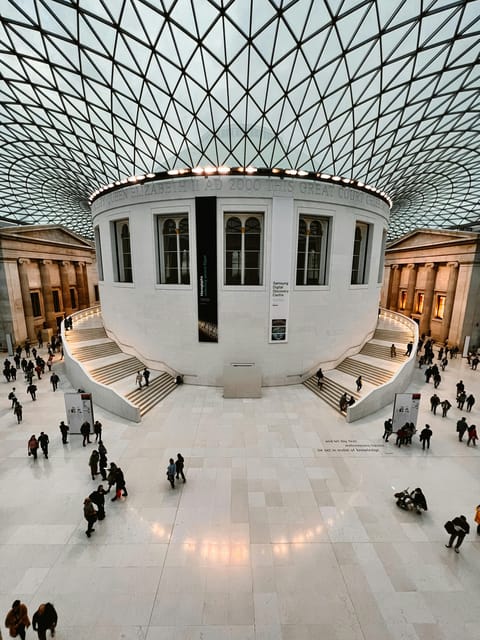
- Rosetta Stone explained with the practical “how you read it” angle, not just a fact dump
- Elgin Marbles context alongside the broader question of art, power, and what we keep
- Parthenon-linked sculpture and philosophical themes that connect art to Western thought
- Sutton Hoo treasures as a real window into early English life
- Hoa Hakananai’a (Easter Island) Moai for a spiritual, distant-culture contrast
- A tailored highlights route designed for this specific time limit, not “see everything”
Entering the Museum With a Real Plan (Not Chaos)
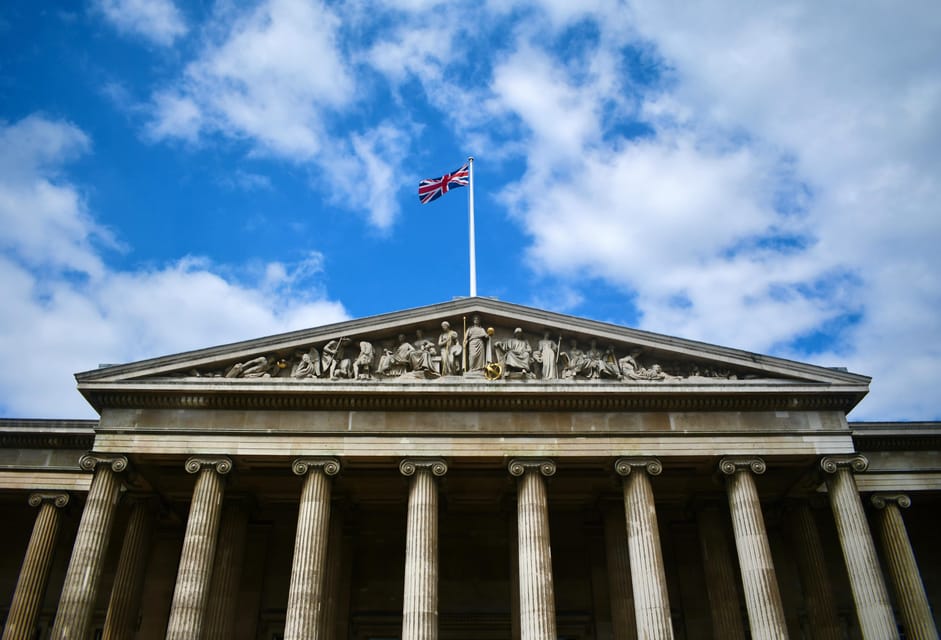
If you’ve ever stood in a museum line and wondered how anyone “does” it, you’ll like this format. Two hours is short for the British Museum, but the tour is built around the idea that you don’t need everything—you need the right thread.
This is also one of those places where self-guided can work, but it often leaves you with random photos and no sense of sequence. Here, I like that the guide organizes the experience around eras and themes, so you leave with mental bookmarks. You’ll get Egyptian language and writing, Greek ideas and sculpture, Roman power and craft, then a shift into early England and far-flung islands.
You should wear comfortable shoes. Floors can feel like an endurance test even when you’re walking “only” a couple kilometers inside.
You can also read our reviews of more guided tours in London



Meeting Point, Tickets, and the Express Security Trick
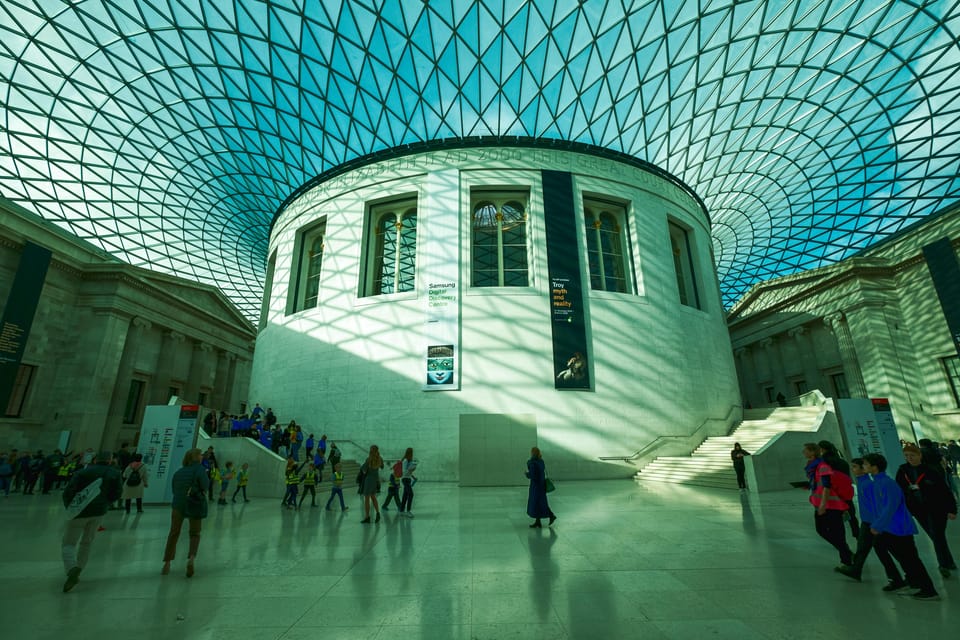
Logistics matter at the British Museum, and this tour handles the “front door” part smartly.
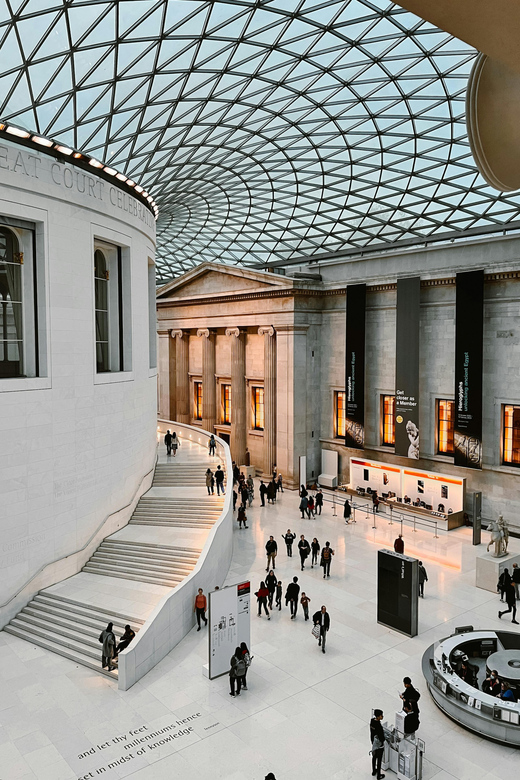
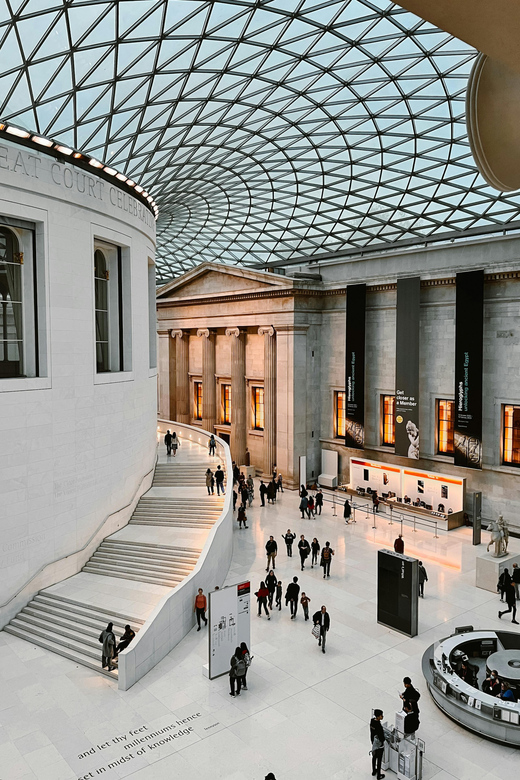
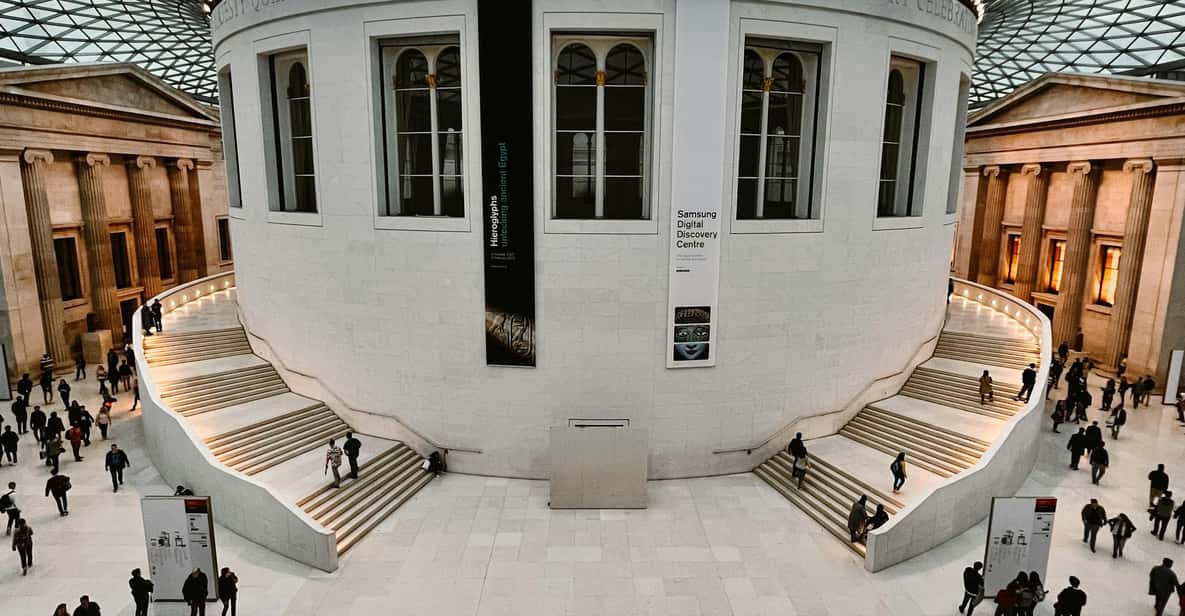
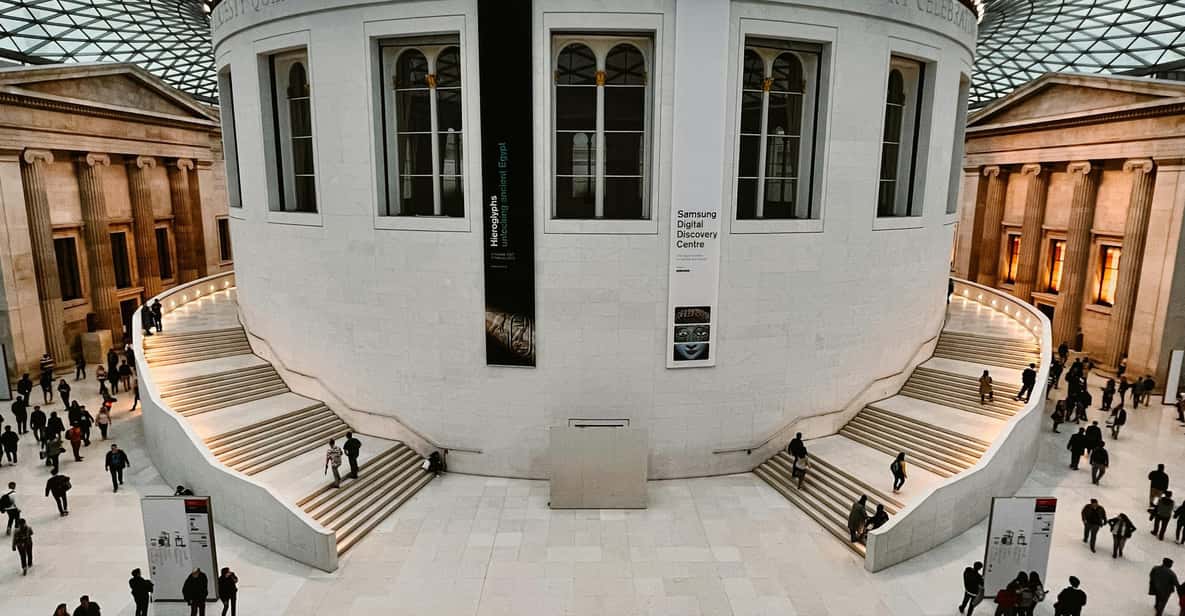
Meet your guide inside, in front of the museum portals on the stairs near the pillars, after you’ve passed security. The key detail is that it is not outside of the gates. In other words, don’t wait in the street crowd and hope it works out—aim to be inside after security, then find the guide spot.
Tickets are provided about 1 hour before the tour via WhatsApp. If you don’t use WhatsApp, you’ll contact the provider by email so they can send your entry tickets that way instead.
You’ll also use an express security check. That doesn’t remove security—you’ll still go through it—but it’s designed to reduce the slow, stop-start feeling that can eat into a tight schedule.
Egypt First: Rosetta Stone and Pharaoh Relics
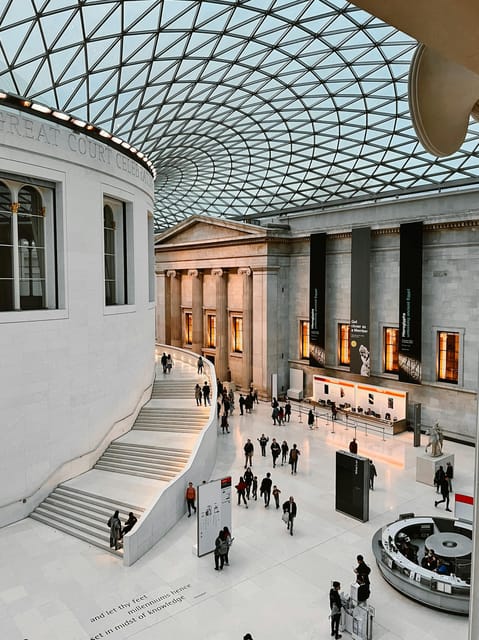
The tour starts where many visitors wish they could start: with the moment when ancient Egypt becomes legible. You’ll move through the museum’s Egyptian displays with a guide who focuses on the story behind the artifacts, not just their labels.
You’ll spend time around pharaoh-era relics and the big star everyone wants to see—the Rosetta Stone. What makes this stop worth doing with a guide is the explanation around hieroglyphics: you’ll learn the key idea that helped people decipher Egyptian writing. It’s one of those museum moments where the object stops feeling distant and starts feeling like a tool humans used to communicate.
Even if you don’t know a thing about Egyptian history, you’ll have an “aha” by the time you’re done here. The guide’s approach helps you see translation as a process, not a miracle.
What to watch for: don’t rush your eyes over the stone. Give it a few moments. When the guide points out what changes across scripts, your brain starts organizing the visual clues.
Greece: Parthenon Sculpture and the Ideas Behind It
Next comes ancient Greece, and this part is built for people who like the overlap between art and thinking. You’ll see iconic sculpture linked to the Parthenon and hear how these works influenced what later societies considered important.
The guide doesn’t treat sculpture as just decoration. You’ll get time to admire the pieces and then hear how inscriptions and philosophical themes helped shape Western thought. That combination is a big reason this tour feels different from a quick “look and move on” museum loop.
A practical tip: if you’re the type who enjoys reading plaques, you may want to skim after the guide’s explanation. The guide’s framing helps you decide which details are worth your attention, so you don’t get stuck reading everything.
The Parthenon Legacy Travels to the Next Room
Right after the Parthenon-focused stop, you’ll keep the thread going—Greece’s artistic legacy shows up again as you move further through the collections. This is where the tour route helps: you’re not forced to start from scratch with every gallery.
Instead, the guide builds continuity, so the museum stops feeling like separate “rooms of random ancient stuff” and starts feeling like a set of connected conversations across centuries.
If you’re worried you’ll get bored—don’t. Even if you’re not a classics person, the guide’s pacing is designed to keep each stop anchored in something you can understand quickly.
You can also read our reviews of more museum experiences in London






Ancient Rome: Power, Craft, and Everyday Splendor
Then it’s ancient Rome. This segment leans into what Rome did well: building systems of power and producing impressive art that communicated status.
You’ll look at artifacts including mosaics and statues—works that show gods, heroes, and the kind of heroic storytelling that fit Roman identity. It’s a helpful reminder that Roman culture wasn’t only politics and war. It was also aesthetics, public imagery, and engineering energy.
This is also a good time to remember that the British Museum is not a timeline you “complete.” It’s a collection that highlights what survived. Rome’s room shows how strongly certain visual themes traveled, even as rulers and cities changed.
Elgin Marbles: Beautiful, Complicated, and Worth Hearing About
Yes, the Elgin Marbles are on the route, and they’re on the route for a reason. You’ll get context for why they’re controversial and how they fit into the larger story of cultural ownership.
A good guided explanation matters here because you can’t read controversy off a marble surface. You need the framing: how these works moved, why that movement is disputed, and how modern audiences grapple with what they’re looking at.
Even if you have strong opinions already, you’ll likely come away with a clearer sense of the debate and the stakes. That’s one of the most valuable reasons to do this as a guided experience rather than a quick browse.
Sutton Hoo: Early England, Real Objects, Real Mystery
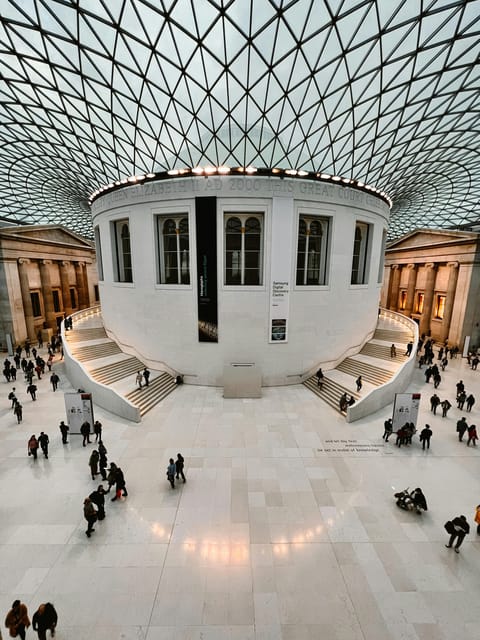
After the Mediterranean-heavy sections, the tour shifts to Britain with Sutton Hoo. This stop is a chance to see early English life through objects that feel startlingly tangible.
Sutton Hoo treasures help you connect the dots between ancient worlds and what later became England. With a guide, you’ll understand how these items fit into the broader story rather than treating them like an isolated British footnote.
This is a great stop if you want at least one part that feels closer to home—something that doesn’t rely entirely on Roman or Greek backdrops to grab your imagination.
Easter Island in the Middle of London: Hoa Hakananai’a Moai
Next comes Hoa Hakananai’a, a Moai from Easter Island. Placing it after Sutton Hoo works surprisingly well, because it snaps your attention outward: from early England to a faraway island culture with its own spiritual and artistic logic.
This part of the tour focuses on the spiritual essence of the object and what it represents. Even when you don’t know the culture’s history, you can understand something important: this art wasn’t made for a museum—it was made for meaning within a community.
If you love “world culture” displays, this stop is one of the reasons this tour feels broad in the best way. You get diversity of human experience, not just European highlights.
The Global Finish: How the Museum Broadens Your Perspective
Toward the end, you’ll move through artifacts from around the globe, rounding out the idea that human culture isn’t one storyline. It’s many.
This final stretch matters because it keeps you from leaving with only Egypt-Greece-Rome as your mental map. The museum’s strength is how it helps you compare approaches: how people recorded beliefs, built power, honored the dead, and expressed identity through objects.
In two hours, you won’t see everything. But you can still leave with a wider sense of scale—because the route is designed to widen your lens before you run out of time.
Price and Value: What $64 Buys You Here
$64 for a 2-hour guided tour is not “cheap,” but it can be good value depending on your priorities. For this price, you’re paying for:
- A live, licensed guide in English, French, or Italian
- A route that targets standout works instead of letting you wander
- Express security so your time stays intact
- Entry tickets delivered in advance (via WhatsApp or email)
If you’re the type who loves museums but hates wasting time figuring out what to see, this format often pays off fast. If you’re confident doing self-guided tours and you like reading at your own speed, you might prefer buying museum entry and building your own plan.
But for most people, the value comes from the guide’s ability to connect artifacts to ideas you can remember tomorrow, not just what you can photograph today.
Language Choices: English, French, Italian and the Pacing Reality
The tour runs in English, French, or Italian with a live guide. That’s excellent for comfort and comprehension.
One practical consideration: a bilingual repeating pattern can happen. If you’ve got strong language preferences and you hate hearing concepts twice or waiting while the guide translates, you may want to double-check that your session is truly in your chosen language.
Still, the upside is real: when the guide is sharp, you get explanations that feel human, not like a phone audio track.
Who This Tour Fits Best (And Who Might Want DIY)
This guided tour is a strong match if:
- You want key museum highlights in a short time
- You like context—especially for big objects like the Rosetta Stone and Elgin Marbles
- You want a structured route that makes the British Museum feel manageable
- You’re traveling with limited time and want less decision fatigue
You might prefer a self-guided approach if:
- You want to linger at objects longer than two hours allows
- You plan to read every plaque and go deep at your own pace
- You don’t care about context and just want photos
Either way, wear comfortable shoes. You’ll earn them.
Should You Book This British Museum Tour?
I think you should book this if you want the British Museum’s greatest hits with explanations that help the collection make sense quickly. The stops are chosen for impact—Egypt writing, Greece sculpture and thought, Rome’s art and power, plus Sutton Hoo, Hoa Hakananai’a, and global artifacts to widen your perspective.
Don’t book it if you’re trying to do the museum “slowly.” Two hours is a sprint, even with a great guide. But if you’re smart about what you want—an ordered, high-signal tour—this one is a solid way to see more than you could easily organize alone.
FAQ
How long is the British Museum guided tour?
It lasts 2 hours.
Where do I meet the guide?
Meet your guide in front of the British Museum portals on the stairs near the pillars, after passing the security check. This meeting point is not outside of the gates.
How do I get the entry tickets?
Your tickets are provided about 1 hour before the tour via WhatsApp. If you don’t have WhatsApp, contact by email so entry tickets can be sent another way.
Is express security included?
Yes. You’ll use an express security check to help you get in faster.
What languages are the tours available in?
The live guide speaks English, French, and Italian.
Is the tour wheelchair accessible?
Yes, the museum is wheelchair accessible and this tour is suitable for wheelchair access.
Do I need to bring anything?
Bring comfortable shoes.
What if my plans change and I need to cancel?
You can cancel up to 24 hours in advance for a full refund.
Is there a reserve now, pay later option?
Yes. You can reserve your spot and pay nothing today.