REVIEW · LONDON
Private Archaeologist Guided Tour Stonehenge, Salisbury & Avebury
Book on Viator →Operated by Archaeologist Guided Tours · Bookable on Viator
Stonehenge hits different with expert context. This private archaeologist-guided outing strings together iconic Wiltshire monuments and major landmarks without the usual rush, so I love the ask-anything Q&A part. I also like the private pacing, which lets you slow down when something clicks, instead of watching the next group file past.
The main thing to plan for is cost creep: Stonehenge and Salisbury Cathedral entrance fees are not included, and the day includes moderate walking on uneven ground.
In This Review
- Key points worth knowing before you go
- Private archaeologist Q&A: what actually changes
- Woodhenge: the timber rings that make Stonehenge make sense
- Durrington Walls: meet the builders village idea
- Stonehenge with time to think, not just pose
- Salisbury Cathedral and Magna Carta: the legal twist after the stones
- Alton Barnes White Horse: quick, fun, and oddly memorable
- Silbury Hill and West Kennet Long Barrow: the chalk engineering day
- Silbury Hill: the giant mound built from pounded earth
- West Kennet Long Barrow: a 5,500-year-old tomb you can enter
- Avebury stone circles and the Red Lion finish
- Price and value for a group up to 6
- What to expect from the pace and logistics
- Who this private tour fits best
- Should you book this archaeologist-led Stonehenge to Avebury day?
- FAQ
- How long is the tour?
- What time does the tour start?
- Is this tour private and how many people are in a group?
- What’s included in the price?
- What entrance fees are not included?
- Is West Kennet Long Barrow always visited?
Key points worth knowing before you go
- Ask unlimited questions to a private archaeologist guide, not a headset script.
- A dedicated driver lets your guide focus on you, in a luxury Mercedes E–Class, V–Class, or Sprinter.
- Most stops are free entry on the day (Woodhenge, Durrington Walls, Alton Barnes White Horse, Silbury Hill, West Kennet Long Barrow, Avebury).
- West Kennet Long Barrow access is seasonal (open March 1 to October 31).
- Stonehenge entrance is extra and time is only about two hours on-site.
- Avebury ends with time in the village, with a final drink at the Red Lion.
Private archaeologist Q&A: what actually changes
A private archaeologist guide isn’t just a nicer way to tour big names. It changes how you see them.
At the megalith sites, the real value is in the questions. You’ll want to ask things like how these monuments were built, what evidence points to ceremonies versus everyday life, and why so many people traveled for so long to reach these exact spots. With an archaeologist, you can push past the usual quick explanations and get answers tied to what has (and hasn’t) been found.
I also like that this tour is built for your group size: up to 6 people. That matters because you can actually have a conversation. One visitor specifically noted that their guide, Benjamin, was educated, even though they felt the level of detail didn’t match expectations set by a different archaeologist name (Dr. Shepherd came up in their experience). The takeaway for you: ask what style of interpretation your guide prefers, and be ready to make full use of the Q&A time once you’re there.
You can also read our reviews of more guided tours in London



Woodhenge: the timber rings that make Stonehenge make sense
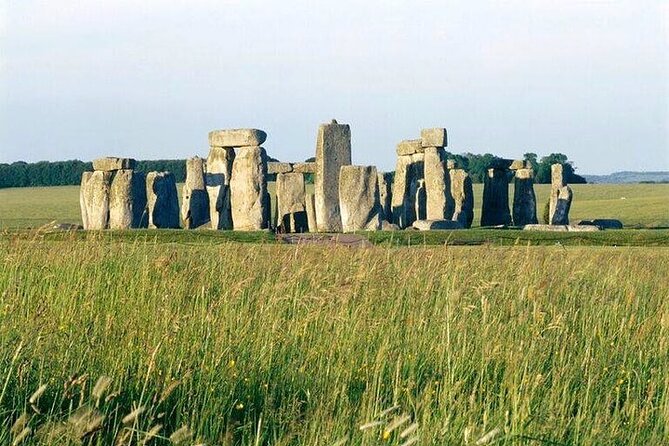
Woodhenge is a smart early stop because it gives you a “before and after” feeling. Instead of stones, you’re looking at six concentric rings of wooden posts, with 168 posts in total, arranged in a symmetrical pattern. It was built in the Late Neolithic period, and evidence from excavations in the 1920s points to oak as the wood source.
You’ll likely only have around 20 minutes here, since it’s listed as a short entry with free admission, but that can be enough if your guide frames what you’re seeing. Think of it like a sketch of the blueprint: a ceremonial site that may have tracked solar and lunar movements. Once you understand that, Stonehenge becomes less of a single monument and more of an evolving set of ideas across generations.
Practical note: it’s still an archaeological site, so you’ll want comfy shoes. The tour also involves moderate walking overall, and some surfaces can be uneven.
Durrington Walls: meet the builders village idea
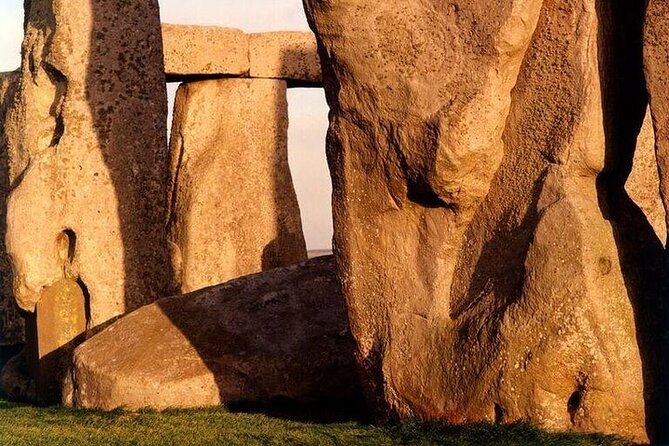
Durrington Walls is where the day starts turning from “spectacle” to “people.” This site is described as the Stonehenge builder’s village, and it’s easy to feel the scale even though you won’t spend all day there.
You’re looking at a large circular earthwork more than 500 meters across. Inside it are two big timber circles, thought to have served ceremonial purposes. It’s believed to have been constructed around 2600 BC, making it one of the earliest examples of this henge type.
The drive between Durrington Walls and Stonehenge is short (about 10 minutes), so your guide can connect the story in a clean line: community gathering, ritual space, and monument building that fits the Wiltshire timeline. Admission here is also free, with about 20 minutes allocated.
If you like archaeology that explains daily life, this is one of the stops that can feel especially satisfying. It’s the “who might have lived here and why” counterweight to the “who might have built Stonehenge” question.
Stonehenge with time to think, not just pose
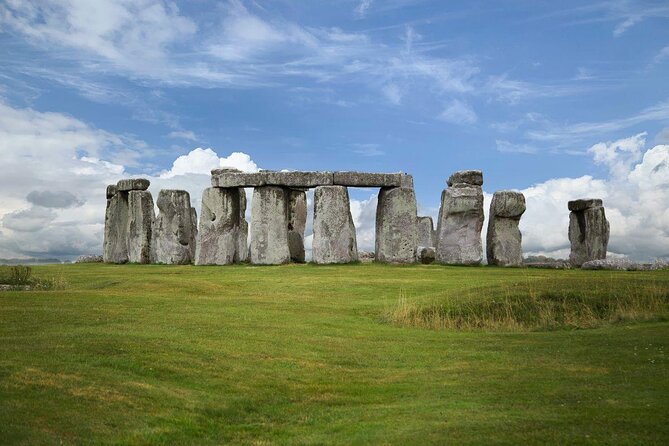
Stonehenge is Stonehenge, but the best part of going with an archaeologist is that the place turns into a question you can work on, not a photo spot you sprint through.
Your stop is about two hours, and you’ll pay the separate entrance fee (listed as £12.70 per person). That’s not a long visit when you’re chasing every angle, but it’s enough for a guided explanation and some personal wandering.
Here’s the angle that tends to land: Stonehenge’s pull wasn’t just visual. It drew people from far away, possibly over weeks or months, from across the British Isles and continental Europe. You’ll hear your guide connect that to evidence and the idea that the site mattered long after it was built.
Also, plan your expectations. This is the one stop where you’re most likely to feel time pressure. If you get value from slow looking, ask your guide at the start how you want to spend the two hours: quick overview first, or deeper focus on a smaller set of viewpoints.
Salisbury Cathedral and Magna Carta: the legal twist after the stones
After prehistoric monuments, Salisbury can feel like a full reset. The payoff is how different the story becomes while still staying rooted in human meaning.
You’ll have around two hours in Salisbury, including time to explore the city and the cathedral. The cathedral matters here because it’s tied to the Magna Carta legacy. Your guide will help you connect what the document said, how it was interpreted over the next 800 years, and why it still affects culture, laws, and rights.
Admission isn’t included for the cathedral (listed £5.50 per person). With that extra cost, I’d treat this stop as part history lesson, part architectural experience. Even if you’re not a cathedral person, Salisbury is a chance to compare how people in different eras used shared spaces to shape community identity.
You also get about a 30-minute drive from Stonehenge to Salisbury, which keeps the day moving without turning it into a blur.
You can also read our reviews of more private tours in London





Alton Barnes White Horse: quick, fun, and oddly memorable
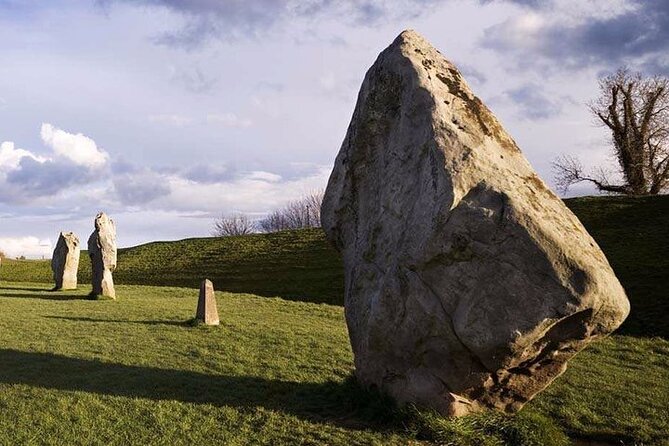
This stop is brief and free: the tour lists Alton Barnes White Horse on Milk Hill with admission free.
You’re not going to spend 90 minutes here, and that’s fine. A white horse engraving works like a palate cleanser between heavier sites. It also gives your guide room to talk about what chalk-landmarks mean to later communities, not just Neolithic and Bronze Age builders.
If you’re the kind of person who likes having at least one lighter moment in a long day, this is that moment.
Silbury Hill and West Kennet Long Barrow: the chalk engineering day
This part of the day is where Wiltshire really leans into engineering and scale.
Silbury Hill: the giant mound built from pounded earth
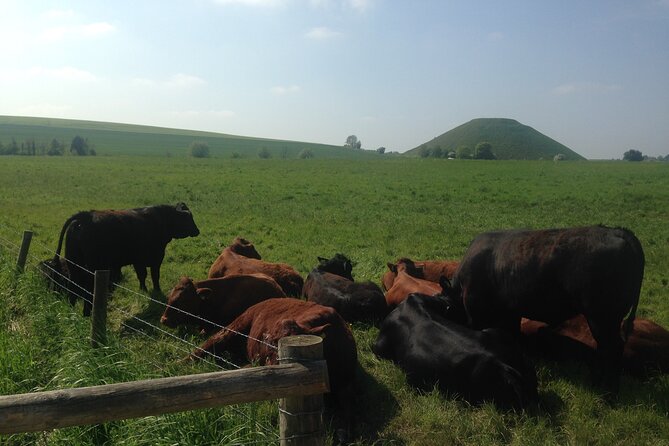
Silbury Hill is described as the largest man-made tumuli in prehistoric Europe, and the tallest prehistoric artificial hill in Europe, reaching 37 meters with a base diameter of 160 meters. It’s built from chalk and clay, using a technique called terrazzo, or pounded earth.
Your on-site time is listed at about 20 minutes, and admission is free. Even in a short visit, you can grasp the main point: this wasn’t a small project. Without modern construction tools, builders created an enormous mound strong enough to last thousands of years.
If you tend to think in terms of logistics and labor, this stop can be satisfying fast: the scale is the evidence.
West Kennet Long Barrow: a 5,500-year-old tomb you can enter
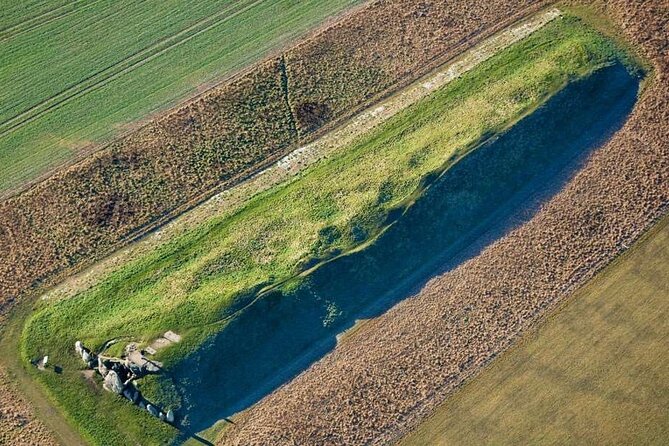
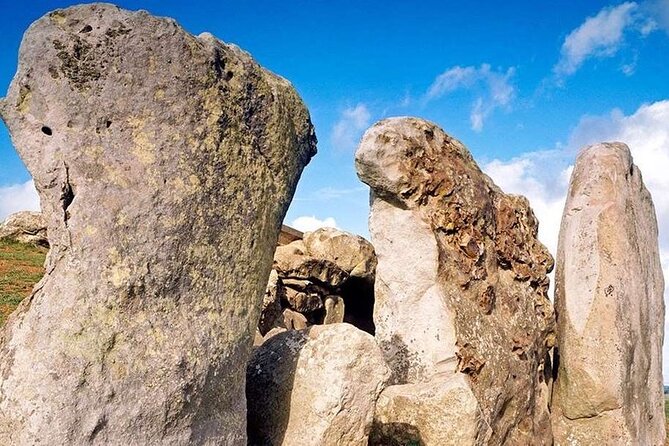
West Kennet Long Barrow is where you get physical access to prehistory. The tour describes it as a Neolithic tomb around 3750 BC, with a burial chamber and attached passageway plus side chambers. It’s roofed with large slabs of stone, and the entrance is flanked by massive uprights.
You’ll spend about 45 minutes here, and admission is free. One key constraint for you: the tour notes visits happen between March 1 and October 31. If you’re traveling outside that window, this site may not be available on your dates.
This is also one of the stops that tends to connect most strongly with people because it’s not just a shape from the outside. You’re walking into the structure and reading the monument with your feet and your senses.
Avebury stone circles and the Red Lion finish
Avebury is often the favorite stop for people who want a megalith site that feels lived in. Unlike Stonehenge’s famous crowds, Avebury includes a medieval village setting right inside the stone circles.
The Avebury Stone Circles are a UNESCO World Heritage Site and described as the world’s largest stone circle complex. The key pieces you’ll see include:
- an outer circle (the largest)
- two smaller circles (northern and southern)
- the avenue
Stones were erected between roughly 2600 and 2400 BC, and your guide will talk about how they may have served astronomical purposes or ritual ceremonies.
You’ll have about one hour at Avebury, plus time to walk along the avenue and finish with a drink at the Red Lion. That last detail matters more than it sounds. After hours of stone and chalk thinking, a pub moment lets the day settle into memory.
Also, it’s a great place to compare. Many people go to Stonehenge first in their mind. Avebury flips the emphasis. It feels less like a single icon and more like a whole system of sacred space.
Price and value for a group up to 6
The price is $1,782.05 per group for up to 6 people, for about 11 hours total. That sounds like a splurge because it is. But the value math changes when you break it down.
If you fill all 6 spots, you’re effectively paying roughly $297 per person for:
- an expert-led archaeologist guide
- a luxury vehicle (Mercedes E–Class, V–Class, or Sprinter)
- parking fees
- a separate professional driver
Then you add the two paid admissions: Stonehenge (£12.70 pp) and Salisbury Cathedral (£5.50 pp). Most other stops are listed as free entry, including Woodhenge, Durrington Walls, Alton Barnes White Horse, Silbury Hill, West Kennet Long Barrow (seasonal access applies), and Avebury.
Where this price can feel worth it:
- you want real depth at Stonehenge and the related sites (not just a checklist)
- your group values conversation and question time
- you’d rather pay for comfort and private pacing than pay for multiple separate tickets plus coach-day stress
Where it might feel steep:
- if you only care about seeing Stonehenge quickly, you might not use the archaeologist guidance enough
- if your group isn’t into learning mode and will just want photos
What to expect from the pace and logistics
This is an early start day. The start time is listed as 7:30 am, and you’ll be back after a long loop with drives between stops that are mostly manageable (the itinerary includes a longer run to Woodhenge and final return to London).
Your vehicle is air-conditioned, and you travel with a dedicated driver, which helps keep the guide’s attention on you rather than traffic. Parking fees are included, and you get a mobile ticket.
Walking is described as moderate, with some uneven surfaces. If you have mobility issues, I’d treat the uneven-ground note seriously and plan for careful footwork.
Luggage is limited in the compartment, and the tour allows no large items of luggage. Pack light.
And yes, it operates in all weather. Dress for rain and wind changes—this is England and chalk country can surprise you.
Who this private tour fits best
This works especially well if you fall into one of these categories:
- You want an archaeologist guide and don’t mind getting nerdy about Neolithic and Bronze Age evidence.
- Your group includes at least one person who cares about context, not just landmarks.
- You’d enjoy comparing Stonehenge with nearby monuments like Woodhenge, Durrington Walls, Silbury Hill, West Kennet Long Barrow, and Avebury.
It’s also a great choice for first-timers to southern England who want a full day that actually connects the dots between sites.
If your group wants a casual sightseeing day with minimal talking and no structured explanation, you might find it too much.
Should you book this archaeologist-led Stonehenge to Avebury day?
Book it if you want Stonehenge with real interpretation and you’re excited to see the supporting monuments that give the bigger picture. The best payoff is that the day is built around expert explanations and the ability to ask questions, with comfort and private pacing.
Skip or downgrade expectations if you’re only chasing the headline and don’t plan to talk much. Also budget for the separate Stonehenge and Salisbury Cathedral entrances, and remember West Kennet Long Barrow is seasonal (March 1 to October 31).
If you want my practical call: this is a strong fit for people who genuinely like archaeology, and a smart splurge for groups who want a guided day that feels thoughtful instead of rushed.
FAQ
How long is the tour?
The tour duration is listed as approximately 11 hours.
What time does the tour start?
The start time is 7:30 am.
Is this tour private and how many people are in a group?
Yes, it’s a private tour/activity. The group size is up to 6 people.
What’s included in the price?
Included are an expert-led archaeologist guide, air-conditioned luxury vehicle transport, parking fees, and a separate professional driver.
What entrance fees are not included?
Stonehenge entrance fee (£12.70 per person) and Salisbury Cathedral entrance fee (£5.50 per person) are not included.
Is West Kennet Long Barrow always visited?
Visits to West Kennet Long Barrow happen between March 1 and October 31.