REVIEW · LONDON
British Museum Highlights Private Tour in London including the Rosetta Stone
Book on Viator →Operated by City Wonders UK · Bookable on Viator
The British Museum can feel like a time-travel maze. This private highlights tour helps you cut straight to the big hits like the Rosetta Stone while a live guide adds the why behind what you see. You’re not wandering for hours just to guess what’s important.
I like that it’s truly private, so you can ask questions without waiting for a group to catch up. I also like the focus: you get a tight route through top British Museum stops without getting lost in the scale of the place.
The main trade-off is simple: this is a sprint, not a full museum day. At this price, you’ll want to be sure you’re okay prioritizing a handful of must-sees instead of soaking up eight million objects at random.
In This Review
- Key moments that make this tour worth your time
- Entering a museum that’s basically a whole universe
- Finding the north entrance fast: Montague Place and the sign
- Rosetta Stone: the “how it was deciphered” moment
- Parthenon Frieze: seeing ancient Greece at full scale
- Egyptian Rooms: mummies, afterlife beliefs, and why the objects feel personal
- Sutton Hoo and Anglo-Saxon finds: the British story in the middle of it all
- After the tour: how to keep momentum in a huge museum
- Price, value, and what’s included for $141.56
- Should you book this British Museum highlights private tour?
- FAQ
- How long is the British Museum highlights private tour?
- Is the Rosetta Stone included?
- What’s included in the price?
- Where do we meet the guide?
- Is this tour private?
- Can I bring a stroller?
Key moments that make this tour worth your time
- Skip the mental overload of 70 galleries with a guide who keeps you moving
- Rosetta Stone context that turns a famous object into a real language breakthrough
- Parthenon Frieze scale you can actually see, not just read about
- Egyptian Rooms explained well, especially the afterlife ideas tied to the mummies
- Sutton Hoo and Anglo-Saxon finds, including the ship burial story
- Private Q&A energy, with guides described as enthusiastic and story-driven, like Rob Smith, Trudy, Norma, and Guy
Entering a museum that’s basically a whole universe
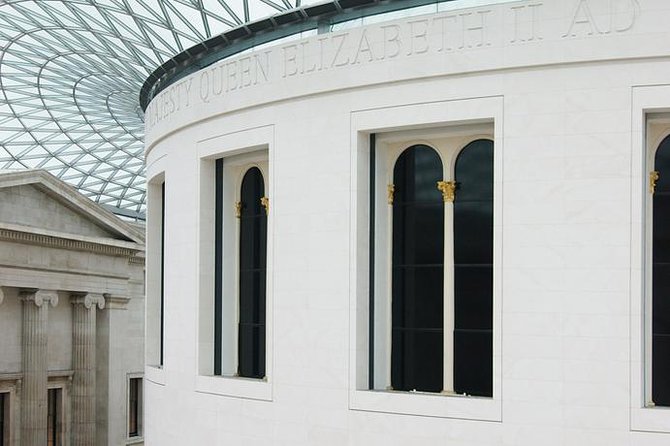
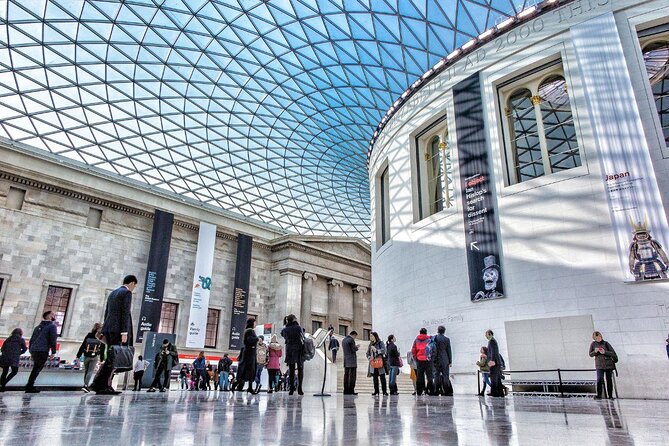
The British Museum is enormous. Inside, you’re looking at over eight million pieces spanning around two million years of human history, spread across nearly one million square feet. That’s exactly why a highlights tour works so well here. Without a plan, you’ll spend time locating things and still feel like you missed the point.
With a private guide, you get structure. Your guide steers you through the most important stops and, just as important, explains the connections. Athenian marbles don’t feel like random sculptures when you hear how they were tied to the Acropolis and why those forms mattered. Egyptian mummies stop being spooky curios when you understand what the ancient Egyptians believed about death and the afterlife.
This is also a good format if you’re the type who likes to know the story behind the object, not just the object itself. You can ask questions as you go, and you can also steer the pace toward what grabs you most—Greek, Egypt, or the British finds.
You can also read our reviews of more private tours in London


Finding the north entrance fast: Montague Place and the sign
The meeting point is Montague Place, by the north entrance of the museum (look for the stone lions near the doorway). The guide is supposed to be easy to spot—holding a sign—so you can get straight to the good part.
Here’s my practical tip: arrive early and do a quick check of your surroundings. One downside shows up in the wild—some people reported trouble locating the guide when the sign wasn’t obvious—so don’t gamble on being exactly on time. London museums are packed, and rainy days make everything feel harder.
Once you’re with the guide, the payoff is immediate. Instead of trying to decode the museum map while thousands of other people stream past, you get oriented and then guided to the most efficient route.
Also note a few helpful rules:
- Strollers are not permitted on the tour.
- It’s listed as suitable for most travelers, but there’s still real museum walking and standing, so bring normal touring stamina.
Rosetta Stone: the “how it was deciphered” moment
Yes, the Rosetta Stone is famous. But seeing it in person is different from hearing it as a trivia line. The guide’s job here is to connect the story: this is a real stone that helped decipher Egyptian hieroglyphs, and it became a key bridge for understanding Egyptian writing.
What you’ll get with a good guide is not just facts, but the sense of discovery. You’ll hear why the Rosetta Stone mattered for languages and translation, and how that changed access to ancient Egyptian knowledge. It’s the kind of explanation that makes you look again, slower, instead of snapping a picture and moving on.
If you like learning by asking follow-ups, this stop tends to work well. You can request more detail on how the breakthrough happened, or ask how historians turn inscriptions into real history instead of guesswork.
Parthenon Frieze: seeing ancient Greece at full scale
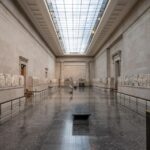
Another highlight is the Parthenon Frieze, an extraordinary piece tied to the Acropolis in Athens. The description calls out just how big it is: about three feet high and roughly 525 feet long. Even if you’re only seeing a portion in London, those dimensions matter. Scale changes how you read a sculpture.
Your guide will explain why this matters beyond Greek pride. The Parthenon Frieze is one of the most important surviving relics of classical Greece, so it’s not just art on a wall. It’s a statement of power, belief, and craft—built for a specific cultural moment, then scattered across time.
This stop is a great example of what a guide buys you. You’re not just looking. You’re learning how to look—what details are worth your attention and what the figures are communicating.
Egyptian Rooms: mummies, afterlife beliefs, and why the objects feel personal
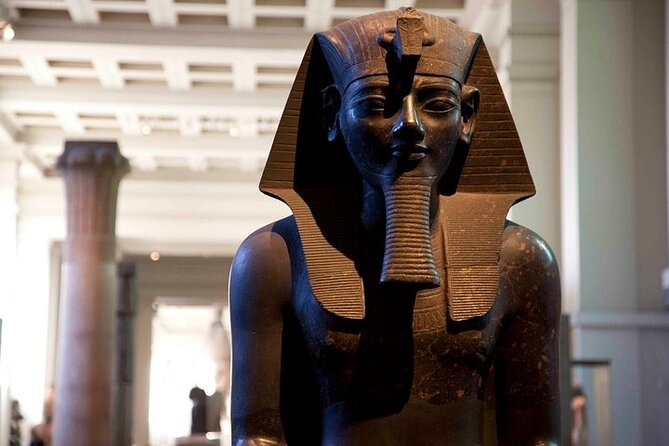
The Egyptian Rooms are where this tour really earns its “highlights” label. You’ll move through key Egyptian spaces and learn the cultural logic behind them, especially the importance of death and the afterlife in ancient Egypt.
Mummies are what most people expect to see. But the more meaningful part is how your guide explains why they were prepared the way they were, and what the culture believed would happen next. When that context lands, the Egyptian displays stop feeling like distant artifacts and start feeling like a full belief system you can understand.
If you’ve read about Egyptian mythology before, this is the point where it clicks. If you haven’t, it still works because the guide frames it clearly—what the Egyptians believed, what that belief required, and how the museum objects connect to those ideas.
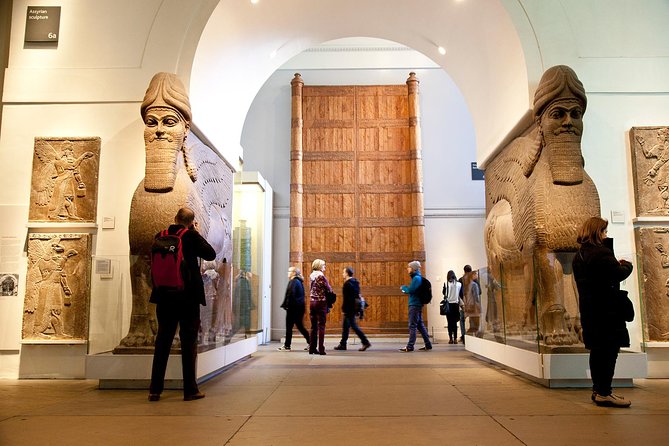
Some guides also weave in other regional context you may not plan for, such as references to other major Middle Eastern displays (for example, Syrian reliefs were specifically mentioned as part of some guide storytelling). That means even if Egypt is your main focus, you can leave with a broader sense of the museum’s interconnected world.
You can also read our reviews of more museum experiences in London






Sutton Hoo and Anglo-Saxon finds: the British story in the middle of it all
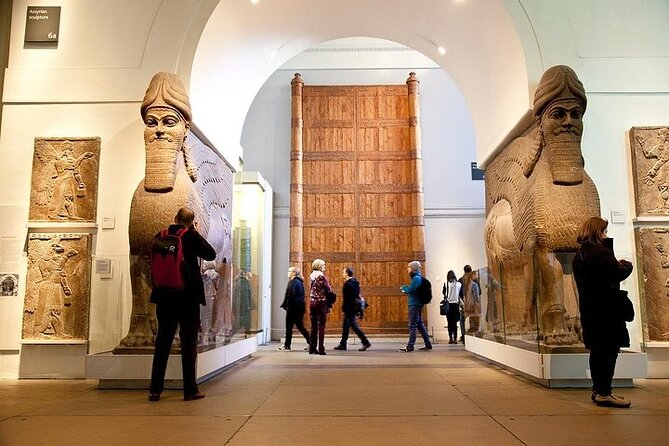
Not everyone expects British history inside the British Museum to hit as hard as it does. This tour includes Anglo-Saxon highlights like artifacts tied to the ship burial at Sutton Hoo.
Sutton Hoo matters because it’s a rare window into power and craftsmanship from early England. A guide can also explain the survival story—why these objects made it through centuries, including threats like grave robbers. That kind of detail gives you a sense of drama without turning history into theater.
This is also a good balance stop if you’re starting to feel like the museum is only Egypt and Greece. Seeing artifacts from the British Isles’ Anglo-Saxon world adds a grounded thread: this museum isn’t just collecting other cultures. It also preserves stories connected to the islands around it.
After the tour: how to keep momentum in a huge museum

The tour wraps back at the meeting point, and you’re free to explore more on your own. That’s a smart way to do this museum, because it lets you use your guide time as a compass.
Here’s how I’d follow up if you have even a little extra time:
- Go back to the section that clicked most. If Egypt felt powerful, spend time in that area and slow down.
- If Greece grabbed you, spend time around the classical displays and look for details your guide pointed out.
- If British history sparked curiosity, don’t rush past the English and early medieval areas—those often need a second look.
One more reason the pacing matters: at the British Museum, crowding and fatigue are real. A good highlights tour helps you leave before you’re too tired to appreciate what you already saw.
Price, value, and what’s included for $141.56
At $141.56 per person for about 2 hours 30 minutes, this is not a budget option. You’re paying for a live guide and private attention, and you’re also paying for time saved inside one of the world’s biggest museum layouts.
What you get for the price:
- A professional English guide
- All fees and taxes
- The tour includes museum admission (the experience is described as including ticket/admission time)
- A mobile ticket
- It’s private, meaning only your group participates
What you don’t get:
- Food and drinks
- Hotel pickup and drop-off
So the value depends on your situation. If you only have a half day, want the Rosetta Stone and the top anchors, and you like asking questions, this price starts to make sense. If you have a full day and you’re comfortable navigating on your own, a self-guided plan could cost less.
One more practical note: the museum itself is often free to enter for the public, so you’re mainly buying the expert guidance and efficient route, not access. That’s exactly how to think about it.
Should you book this British Museum highlights private tour?
Book it if:
- You want the Rosetta Stone and other core highlights without spending your limited time locating them.
- You enjoy history when it’s explained clearly and you want to ask questions as you go.
- You’re visiting on a tight schedule and need a plan for the first pass.
Skip it (or consider a different format) if:
- You hate walking through crowded spaces and would rather wander slowly.
- You’re looking for a deep, day-long museum study. This is designed to hit major points, then let you continue on your own.
If you’re on the fence, I’d treat it as a smart starter course: let a good guide give you the “what matters and why” fast, then choose what to revisit once you’re oriented.
FAQ
How long is the British Museum highlights private tour?
It’s listed at about 2 hours 30 minutes (approximately).
Is the Rosetta Stone included?
Yes. The Rosetta Stone is highlighted as one of the key stops and explained in the context of deciphering Egyptian hieroglyphs.
What’s included in the price?
A professional English guide, all fees and taxes, and admission ticket access for the museum time are included.
Where do we meet the guide?
Meet at Montague Place, London, by the north entrance of the British Museum near the stone lions.
Is this tour private?
Yes. It’s a private tour/activity, and only your group participates.
Can I bring a stroller?
No. Baby strollers are not permitted on the tour.