REVIEW · LONDON
British Museum Tour: Rosetta Stone, Parthenon, Mummies
Book on GetYourGuide →Operated by Move Venezia · Bookable on GetYourGuide
Four icons of empire and faith in two hours. A guided walk through the British Museum pairs the Rosetta Stone with the Parthenon sculptures, plus Egyptian mummies and a couple smart bonus stops.
I love how the route stays focused, so you don’t get lost in the museum’s scale, and you leave knowing what each object actually means. You’ll spend real face-time with the Parthenon sculptures and the Egyptian mummies, and the guide’s explanations connect language, power, and burial customs. One catch: the museum gets loud, and the guide can be soft spoken, so standing closer makes a difference.
In This Review
- Key highlights you’ll actually feel during the tour
- Great Court first: how to set yourself up for a short, smart museum visit
- The Rosetta Stone: why one slab unlocked reading Egypt
- Parthenon sculptures: the beauty and the controversy side by side
- Egyptian mummies: burial practice you can see, not just read about
- The bonus stops that broaden the museum beyond Egypt and Greece
- Sutton Hoo treasures: early medieval power in a burial site
- Winged Bulls from Khorsabad: Mesopotamian architecture made tangible
- What makes this tour worth $84.69: value in focus, not speed
- How to get the most from the guide (and not miss the good bits)
- Who this tour suits best
- Should you book this British Museum tour?
- FAQ
- How long is the British Museum tour?
- Where do I meet the guide?
- What time should I arrive at the museum?
- Is hotel pickup included?
- What’s included in the price?
- What isn’t included?
- What language is the tour guide?
- Do I need to bring anything for entry?
- Is this tour suitable for wheelchair users?
- Can I cancel or pay later?
Key highlights you’ll actually feel during the tour
- Rosetta Stone explained in plain terms: why it was the key to deciphering Egyptian hieroglyphics
- Parthenon sculptures, plus the controversy: Lord Elgin, removed from Athens, and the cultural mess behind it
- Egyptian mummies and burial objects: craft, ritual, and what everyday life looked like
- Sutton Hoo artifacts: a window into an early medieval burial site
- Winged Bulls from Khorsabad: Assyrian power made visible through scale and detail
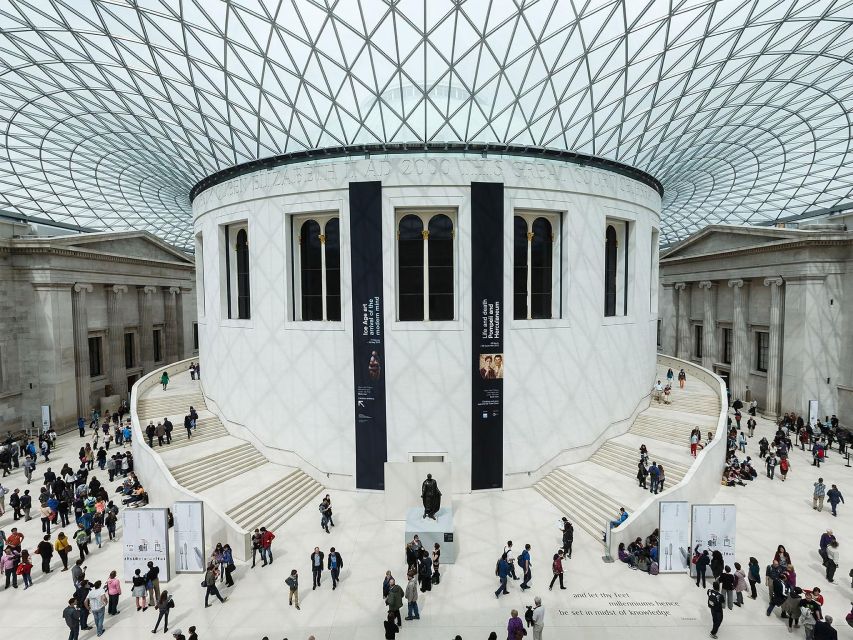
- Great Court glass roof time: a quick pause that helps you orient the whole visit
Great Court first: how to set yourself up for a short, smart museum visit
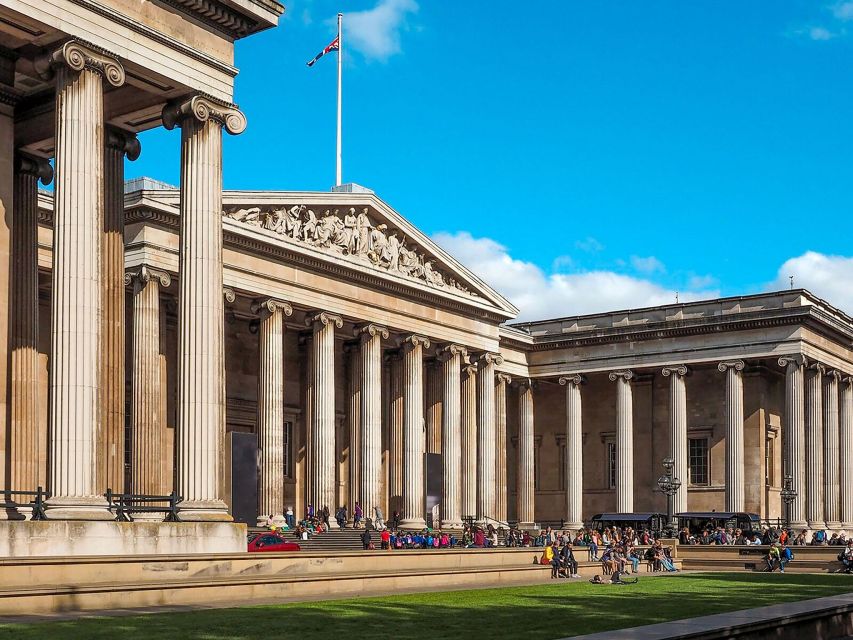
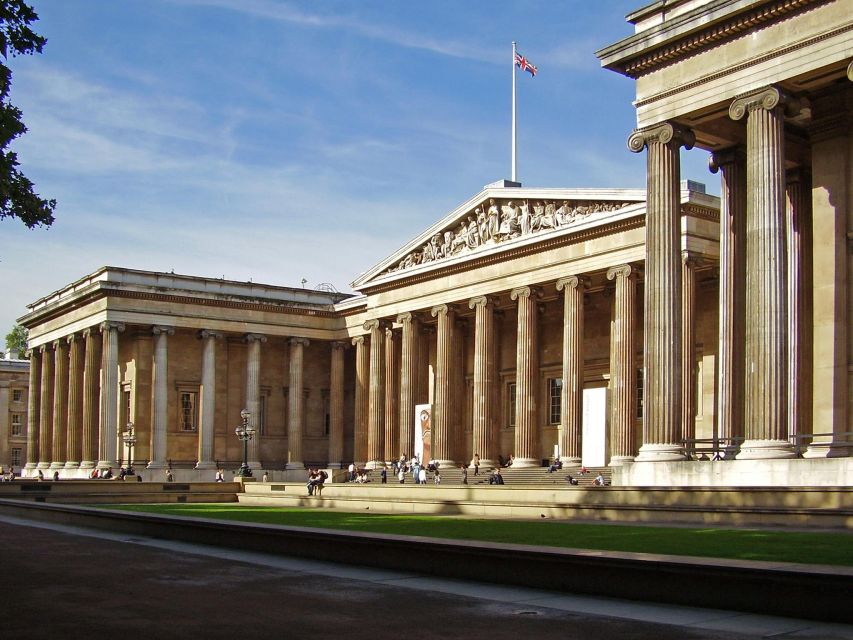
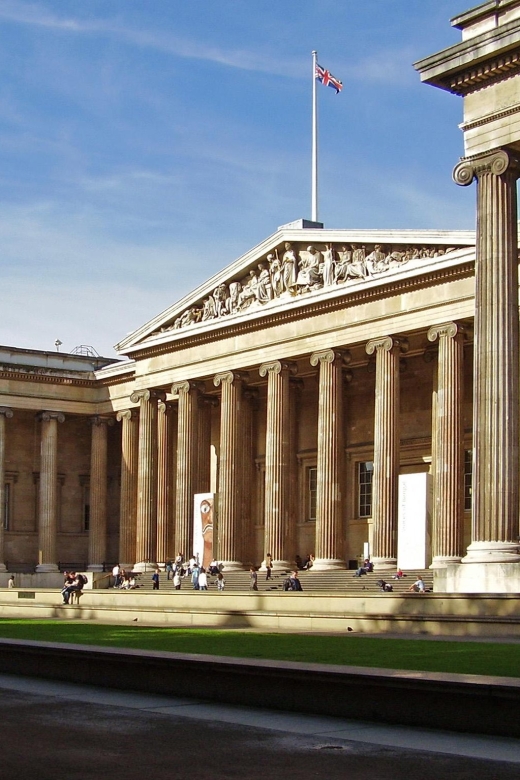
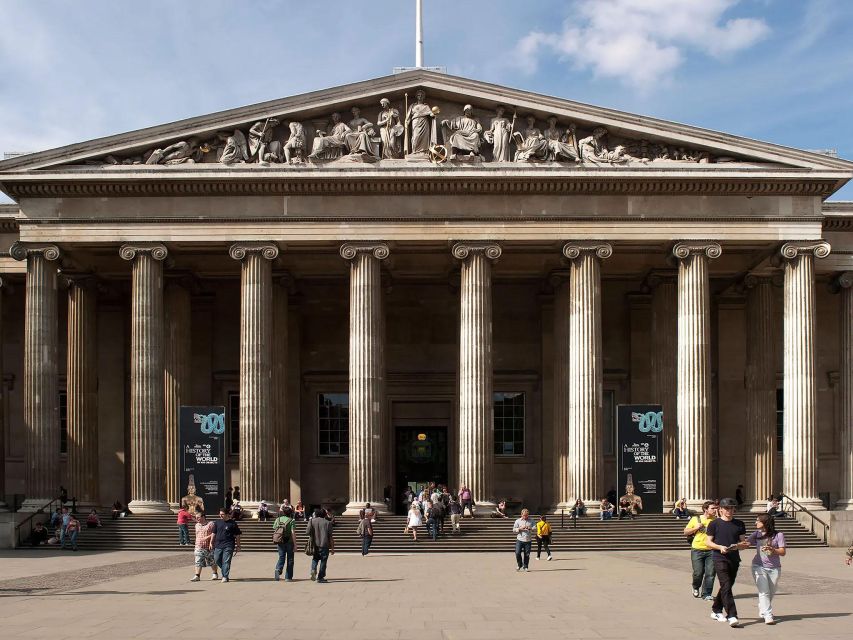
Start at the British Museum main entrance, then get through security before you meet your guide on the stairs. The museum is enormous, and this tour does not pretend otherwise. Instead, it gives you a tight path so you can see big, high-impact objects without wandering for hours.
My favorite warm-up is the Great Court and its glass roof. Even if you only spend a few minutes there, it changes your whole mindset. You’re not just marching from gallery to gallery. You’re orienting yourself in a space designed to make you look up, take a breath, and then move with purpose.
A short guided format also helps you avoid the classic museum problem: you see a lot, but you don’t know why any of it matters. This tour’s structure pushes you toward context. That means when you do land on a major artifact, it feels earned, not random.
You can also read our reviews of more museum experiences in London



The Rosetta Stone: why one slab unlocked reading Egypt
The Rosetta Stone is the centerpiece for a reason. This isn’t just a cool rock with symbols. It’s described as the key to deciphering Egyptian hieroglyphics, and your guide spends time making that “why” feel clear.
Here’s what you should watch for as you stand there. The stone is part of a bigger story about how humans compare texts and make meaning across languages. If hieroglyphs feel like an unreadable wall, the Rosetta Stone is the break in that wall. Your guide’s job is to connect the object to the moment scholarship could finally read it, instead of treating it like a mystery that stays mysterious.
I like that you’re not only shown the artifact. You’re given the function. That makes the Rosetta Stone more than a photo stop. It turns into a lesson in how knowledge actually moves forward.
Parthenon sculptures: the beauty and the controversy side by side
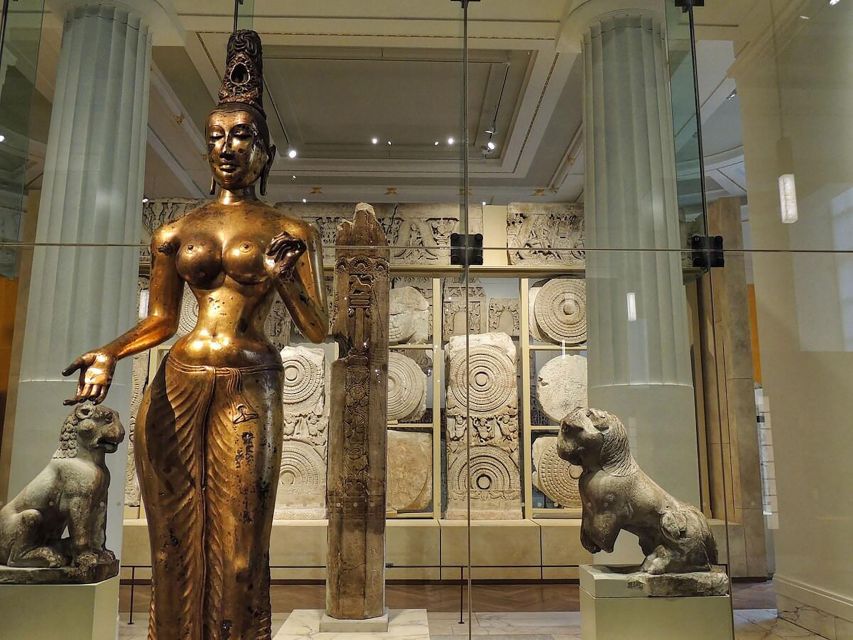
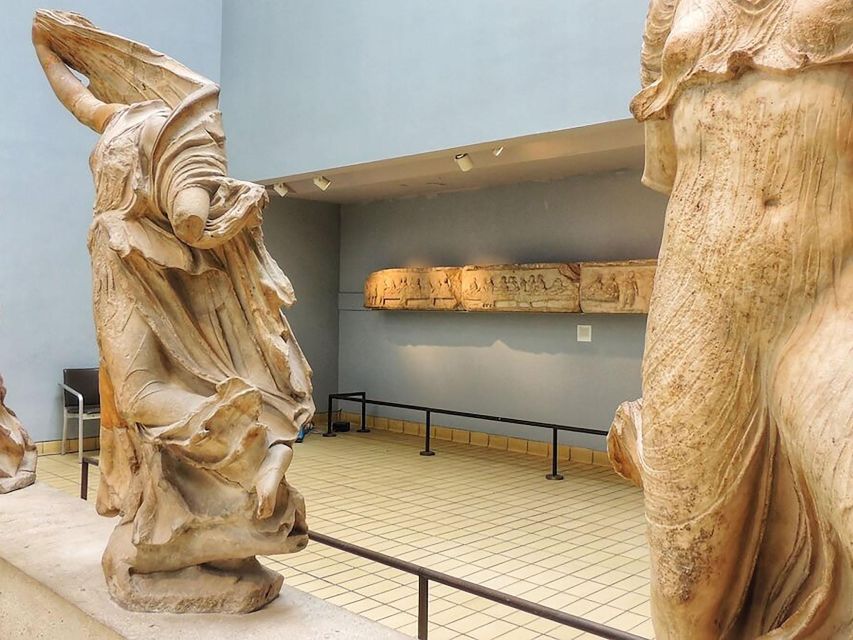
Next up are the Parthenon sculptures, and this is where the tour gets a lot more interesting in a human way. The collection is tied to a politically complicated removal: they were taken from the Parthenon in Athens by Lord Elgin, the British ambassador to the Ottoman Empire.
You’ll likely feel two things while you look. First, the artistry is right there—fine work you can sense even without art-history training. Second, the story behind the objects is messy, and your guide doesn’t dodge it. That mix is the point.
The value for you is that you’ll walk away with a clearer mental framework for “museum history.” These aren’t objects floating in time. They traveled because people, empires, and institutions made choices. When you understand who moved them and under what power, the sculptures stop being just famous. They become part of a continuing debate about ownership, heritage, and interpretation.
If you’re the type who likes art but also likes the political context, this part is worth the price by itself.
Egyptian mummies: burial practice you can see, not just read about
Then the tour shifts into Ancient Egypt with mummies and burial artifacts. This section works because the objects have a physical presence. You’re not learning from a textbook page. You’re looking at materials tied to funerary practice—things made to support the dead, the living, and the beliefs in between.
Your guide points out the elaborate burial practices and the craftsmanship. You’ll also get a sense that these galleries aren’t only about death rituals. They hint at everyday life too, because burial items reflect what a society valued enough to preserve.
A practical tip: spend your time carefully. Mummies can pull your attention in a strong visual way, but it helps to alternate between what’s on display and what your guide says about the purpose. When you do that, the “wow” turns into understanding.
The bonus stops that broaden the museum beyond Egypt and Greece
A big advantage of a guided route is that it doesn’t lock you into just one civilization for two hours straight. This tour threads in two additional stops that help you see the British Museum as a crossroad, not a single-subject museum.






Sutton Hoo treasures: early medieval power in a burial site
You’ll visit the Sutton Hoo artifacts, tied to an Anglo-Saxon burial site. This is early medieval history, and it lands differently after Egypt and Greece. Instead of ancient empires in full monumental mode, Sutton Hoo feels like a snapshot of elite life—what people carried, crafted, and prepared for a burial of status.
The value here is contrast. You see how different societies handled similar human needs—honor the dead, communicate identity, and project power—using totally different symbols and styles.
Winged Bulls from Khorsabad: Mesopotamian architecture made tangible
Finally, there are the Winged Bulls from Khorsabad. These are described as ancient Mesopotamian art, linked to Khorsabad and tied to ancient Assyrian civilization. The key detail to remember is scale and role: the winged bulls once served as monumental guardians for a grand palace.
When you’re standing in front of them, pay attention to their sheer size and the level of detail. The message is straightforward: this wasn’t meant to be subtle. It was meant to announce authority at a distance.
This stop also helps you understand what “museum objects” can do. They aren’t just preserved. They still communicate the intention of the makers: protection, power, and the spectacle of empire.
What makes this tour worth $84.69: value in focus, not speed
At $84.69 per person for a 2-hour guided visit, you’re paying for a concentrated route and interpretation. You could technically wander the British Museum on your own, but that often turns into a day of staring at labels and hoping things click.
This tour pays off because it filters the museum’s noise. You get a guided sequence that hits headline objects—Rosetta Stone, Parthenon sculptures, Egyptian mummies—then adds two strong crossovers: Sutton Hoo and the Winged Bulls from Khorsabad. That mix gives you variety without random walking.
The timing also matters. Two hours inside the British Museum can either feel like too little or just enough, depending on whether you have a plan. This tour has a plan.
Also, it’s not private, so you’re part of a group. That can be a plus if you like other people’s energy, but it also explains why sound matters. If you’re near the guide, you’ll get more out of the commentary; if you’re stuck off to the side, you might miss key points.
How to get the most from the guide (and not miss the good bits)
A highlight from past experiences is the guide’s strong historical and mythological background, plus context about how exhibits ended up in the museum. That matters more than it sounds. When you know the “how did it get here?” story, you see the object differently.
You’ll also want to plan for the practical reality: the museum can be busy. If the guide is soft spoken, your job is to fix your position. Stand close enough to hear. Don’t treat it like a lecture from the back row.
And don’t forget the museum rule of life: comfortable shoes. The tour is on foot, and the British Museum is huge. Two hours will still add up to serious walking.
Who this tour suits best

This experience is a good fit if you:
- Want a guided route that avoids the overwhelm of the British Museum
- Like big headline artifacts, but also want the context behind them
- Enjoy cross-civilization history without needing a full day
- Prefer a structured visit rather than wandering randomly
It’s probably not ideal if you:
- Need a very quiet environment to learn
- Struggle with walking long distances indoors
- Want a private, custom pacing (this one is not private)
Should you book this British Museum tour?
I’d book it if you want the British Museum’s biggest talking points in a manageable 2-hour block, with interpretation that helps you connect objects to meaning. The Rosetta Stone and Parthenon sculptures alone are strong reasons. The added Egyptian mummy focus plus Sutton Hoo and Khorsabad keeps the visit from feeling like a single-theme sprint.
Skip it only if you’re planning a slow, deep self-guided museum day and already know exactly which galleries you want. In that case, you might prefer flexible time on your own. But if you’d rather have a guide steer you toward the artifacts that actually teach something, this is a solid choice.
FAQ
How long is the British Museum tour?
The tour lasts 2 hours.
Where do I meet the guide?
Meet your guide on the stairs at the main entrance, after security checks.
What time should I arrive at the museum?
Arrive at least 15 minutes before your scheduled travel time.
Is hotel pickup included?
No, pick up from hotel is not included.
What’s included in the price?
A knowledgeable licensed guide is included, along with online support at the time of boarding the tour.
What isn’t included?
Food and drinks are not included.
What language is the tour guide?
The tour is in English.
Do I need to bring anything for entry?
Bring a passport or ID card.
Is this tour suitable for wheelchair users?
No, it’s not suitable for wheelchair users.
Can I cancel or pay later?
Yes. You can cancel up to 24 hours in advance for a full refund, and you can reserve now & pay later.
If you want, tell me your travel dates and whether you prefer early or late slots, and I’ll suggest the best way to line this up with the rest of your British Museum day.