REVIEW · LONDON
British Museum Private Tour: Ancient Daemons and Timeless Beauty
Book on Viator →Operated by MyLondonGuide · Bookable on Viator
London turns ancient in one private walk. This British Museum tour uses a theme of ancient daemons and timeless beauty, led by an art specialist storyteller, and I like the fast-track entry and the tight, art-led narrative that keeps you from getting lost. One consideration: in 2–3 hours, you still won’t see every corner of the museum, so it’s best to show up ready to follow the route.
You’ll enjoy a private setting for small groups, typically up to 6 guests, with a guide who can tailor the pace. Guides like Richard and Yulia have been praised for steering visitors toward the real highlights, and for giving families a bit of extra time when the group wants it.
In This Review
- Key Things That Make This Tour Worth Your Time
- Fast-Track Start at Montague Place (and Why It Matters)
- A Private, Theme-Driven Guide Changes Everything at the British Museum
- Inside the British Museum: From 8 Million Artifacts to a Clear Story
- Rosetta Stone: The Moment Language Starts Talking Again
- Parthenon Marbles: Imperial Glory in Stone (and Its Complicated Shadow)
- Egyptian Mummies and the Dance of Life and Death
- Sutton Hoo: The Last Voyage of an Anglo-Saxon Warrior
- Lewis Chessmen: Strategy, Wit, and the Social Life of Games
- Shiva Nataraja: The Cosmic Dance of Creation and Destruction
- Ancient Sculptures and the Evolution of Beauty Standards
- How Long Is Enough for 2 to 3 Hours?
- Group Size, Comfort, and the Real Meaning of Private
- Value Check: Is This Tour Worth the Price?
- Practical Tips Before You Go
- Who Should Book This Tour (and Who Might Skip It)
- Should You Book? My Take on Booking Smart
- FAQ
- How long is the British Museum private tour?
- How much does the tour cost?
- Is this a private tour?
- What language is the tour offered in?
- What’s included in the tour?
- Is British Museum admission included?
- Where does the tour meet and end?
- Are snacks or drinks included?
- What are the cancellation rules?
- Is it near public transportation?
Key Things That Make This Tour Worth Your Time
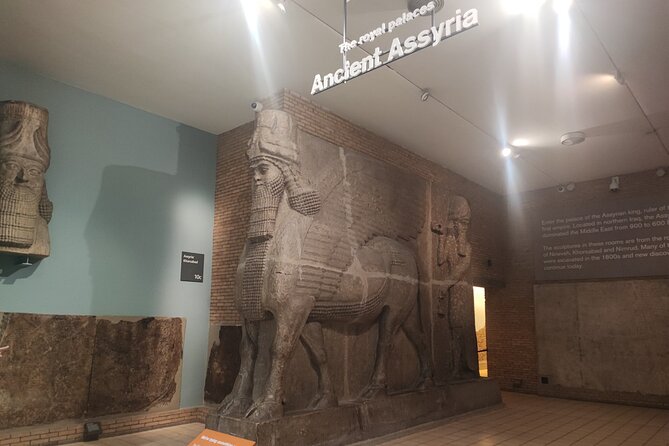
- Fast-track start helps you move from entrance to artifacts without the usual museum maze
- Small private group keeps questions flowing and the pace human-scale
- Art specialist storytelling connects objects across cultures so they make sense faster
- Theme-based route pairs famous pieces with the ideas behind them, not just dates
- Flexibility built in so you can spend longer where your group cares most
- Major “must sees” covered in one run: Rosetta Stone, Parthenon Marbles, Sutton Hoo, and more
Fast-Track Start at Montague Place (and Why It Matters)
The tour begins at Montague Place, Montague Pl, London, with the experience ending back near the start point. That round-trip setup is simple, and it matters in a place like the British Museum where time can vanish fast once you’re inside.
You’ll also get a mobile ticket and fast track entry. In practice, this means you’re less likely to waste your first minutes stuck in the flow of general admission visitors. It’s a small detail, but it can be the difference between a tour that feels focused and one that feels rushed.
The British Museum itself is impressive before you even hit the galleries. The entry space includes a famous canopy of light and glass designed by Norman Foster. It’s one of those views that resets your brain from busy London mode to slow, curious museum mode.
You can also read our reviews of more private tours in London


A Private, Theme-Driven Guide Changes Everything at the British Museum
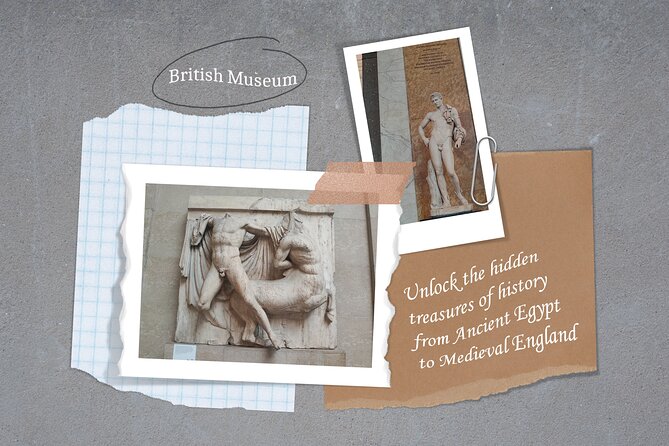
The British Museum is enormous, and it can turn into a choose-your-own-adventure you never asked for. This is why I think a private guide is such good value here. You’re not paying just for access; you’re paying for direction and interpretation.
This tour is led by an art specialist storyteller. That wording is important. You’re not just hearing dates and place names. You’re getting the “why” behind the objects: what they meant to the people who made them, how they traveled through time, and what clues to notice when you’re standing right in front of them.
Small-group size also helps. With fewer people, your guide can adapt on the fly. One of the strongest themes in the feedback: guides (including Richard and Yulia) were flexible—tailoring where the group spent attention, and even extending time for an additional half hour in at least one case.
One realistic note: this is still a museum, not a sprint tour with unlimited stops. You’ll get a curated run through big, meaningful highlights rather than a complete survey of the collection.
Inside the British Museum: From 8 Million Artifacts to a Clear Story
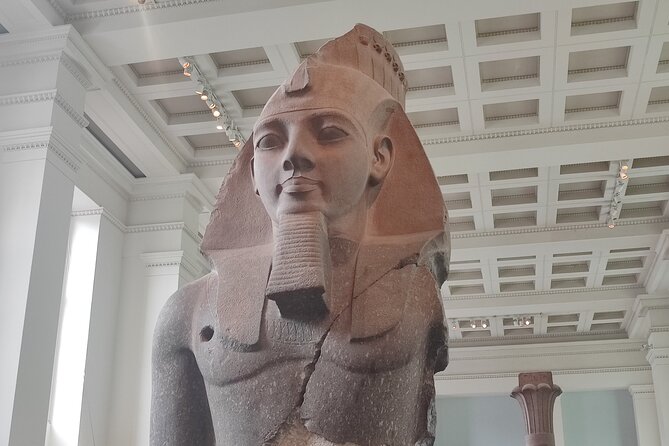
The museum holds over 8 million artifacts, all under one roof. That scale is part of the wonder—and part of the problem.
A private, themed route solves the “what do we do first?” question. Instead of bouncing randomly, you’re guided through a sequence that helps you connect objects across civilizations. You’ll move through moments that feel like chapters: language and power, empires and myth, burial and belief, strategy and symbolism.
The result is that you don’t just leave with photos. You leave with a mental map: how the pieces relate to bigger human themes like communication, authority, faith, death, and the ideas people used to explain the universe.
Rosetta Stone: The Moment Language Starts Talking Again
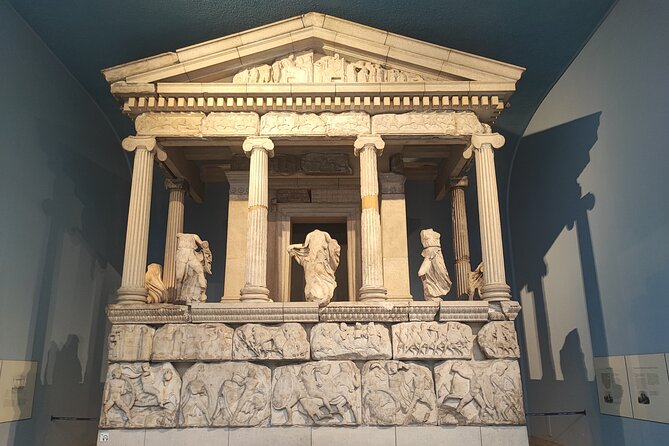
Your tour begins with the kind of object that changes how visitors look at museums. The Rosetta Stone is presented as a way to discover forgotten languages—and that’s a perfect fit for the storytelling style of this tour.
Even if you’ve seen the Rosetta Stone before in books, seeing it in person is different. Standing there, you’re reminded that translation isn’t magic. It’s work—patient, systematic comparison. This is why it’s such a strong “first stop” on a themed route: it sets you up to notice the human systems behind the artifacts.
What I like about this stop for your visit: your guide can help you think beyond the headline fact. You’ll likely come away with an understanding of how language can unlock history you’d otherwise never read.
Parthenon Marbles: Imperial Glory in Stone (and Its Complicated Shadow)
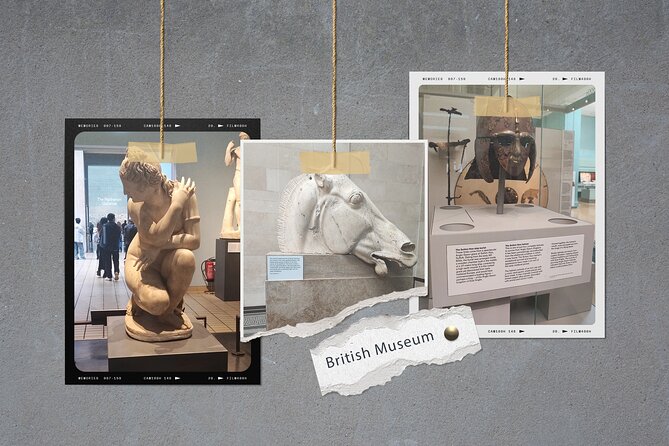
Next up are the Parthenon Marbles. These pieces are discussed as a recall of the glory of past empires—because that’s what classical art often does. It signals power, taste, and political identity.
The tricky thing about the Parthenon Marbles is that they’re never only art. They carry the weight of where they came from, how they were taken, and how they’ve been interpreted over centuries. A good guide helps you keep both parts in your head at once: what you’re looking at aesthetically, and what the objects represent historically.
If your group likes classical sculpture and the idea of cultural “models” spreading through time, this is a great stop. If your group only likes quick, visual moments, it can still work—because these are visually commanding pieces, and the tour structure keeps the context short and clear.
You can also read our reviews of more museum experiences in London






Egyptian Mummies and the Dance of Life and Death
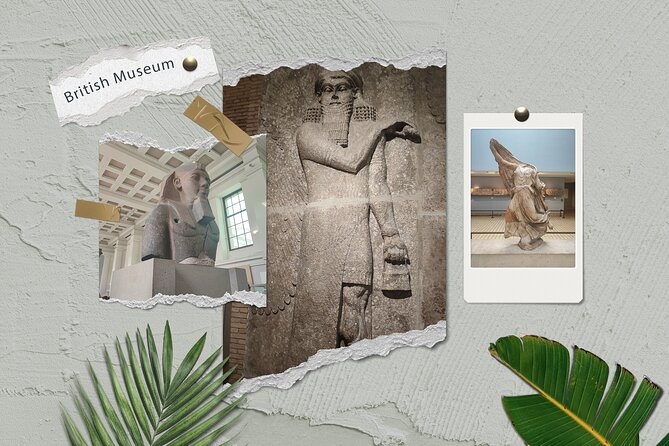
Then you hit the part of the museum that feels almost theatrical, even though it’s not. Egyptian mummies are framed as the place where the dance of life and death plays out in silence.
This is one of those moments where a theme-driven guide really helps. Without interpretation, it can turn into a “wow, creepy mummy” scan. With the right storytelling, it becomes a chance to understand the beliefs behind burial and what preservation meant to people in that society.
I like that the tour doesn’t treat this as a one-note spooky stop. It connects the mummy world to bigger human questions—mortality, the body, memory, and the hope (or fear) attached to what comes after.
Sutton Hoo: The Last Voyage of an Anglo-Saxon Warrior
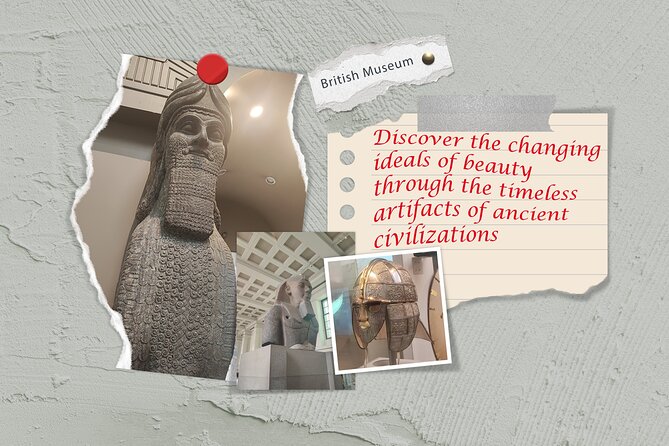
The tour also includes Sutton Hoo, introduced as the last voyage of an Anglo-Saxon warrior. This stop is valuable because it shifts the story from Mediterranean and Near Eastern civilizations to early medieval Britain—still tied together by the idea that objects reveal power and identity.
Sutton Hoo is the kind of exhibit where you can easily miss the full impact if you only skim. You’ll want a guide to point out how burial goods reflect status, belief, and connections across regions.
If your group enjoys archaeology and “how did we know?” questions, this is a strong moment. And even if you don’t, it’s a vivid way to feel how history looks when it’s reconstructed from what survived.
Lewis Chessmen: Strategy, Wit, and the Social Life of Games
A surprise highlight for many people is the Lewis chessmen, described as tales of strategy and wit. Chess is universal enough that many visitors already understand the emotional pull of the game—then the tour adds the historical layer.
What makes this stop land well on a themed route is that chess isn’t just a board game. It’s skill, symbolism, and social life. A guide can help you connect the objects to the larger human urge to compete, teach, and entertain through shared rules.
If you like details and stories that feel “human,” this is the stop that can turn a museum visit into a conversation.
Shiva Nataraja: The Cosmic Dance of Creation and Destruction
Then you stand before Shiva Nataraja, presented as the cosmic dance of creation and destruction. This is one of the most meaning-heavy stops on the route, and it’s where an art specialist storyteller earns their keep.
In person, the object isn’t just impressive—it’s active. The pose, the symbolism, and the sense of motion make it feel like the art is explaining a worldview. The guide’s job here is to translate symbolism into something you can actually read.
For your enjoyment, look for patterns the guide points out: gestures, surrounding iconography, and how the artist communicates energy and meaning without modern words.
If your group likes spiritual art—or if you’ve ever wondered why sacred art looks the way it does—this stop is a big reason to book.
Ancient Sculptures and the Evolution of Beauty Standards
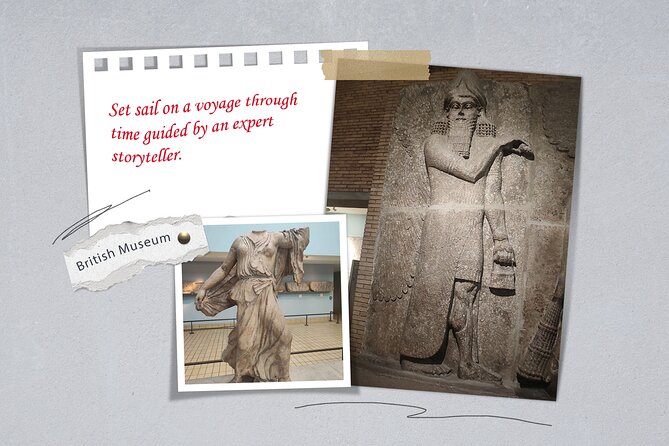
The tour doesn’t stop at famous “name” objects. It also looks at the evolution of beauty standards through ancient sculpture. That framing is smart because it invites you to ask a question, not just observe a style.
Beauty isn’t universal. It shifts with culture, ideals, and what a society chooses to value. With a guide steering you, you can compare how different civilizations represented bodies, balance, and ideal proportions.
This is a great stop if your group likes art history themes that connect to modern life. You might leave thinking: people have always used art to define what counts as beautiful, powerful, or worthy.
How Long Is Enough for 2 to 3 Hours?
The tour runs about 2 to 3 hours (with guided time listed around 2 hours). That’s the right length for a private highlight route. You get meaningful time in front of major pieces without burning your whole day.
Still, be realistic. The British Museum is too big for a full sampling in a short tour. The value here is that you’re using your limited time to see objects that anchor multiple storylines.
To get the most out of it, you’ll want to do one thing before you go: pick what you care about most. If your top priority is language and decoding, keep your focus on Rosetta Stone. If you’re here for sculpture and empire, let Parthenon Marbles set the tone. If it’s belief systems and symbolism, lean into the mummies and Shiva Nataraja.
Group Size, Comfort, and the Real Meaning of Private
This is a private experience for your group only. Price is listed as about $203.65 per group (up to 8), while the tour highlights mention groups up to 6 guests. Either way, the idea is the same: fewer people, more attention.
Private also means you can ask questions without waiting your turn or watching your guide slow down for a crowd. If you’re visiting as a family, it tends to feel less like a lecture and more like a guided walk with answers.
One extra plus from feedback: guides were willing to tailor the experience, and at least one guide extended the tour by an additional half hour free of charge. That’s not something you should assume, but it tells you the guide style is flexible, not rigid.
Value Check: Is This Tour Worth the Price?
Here’s how I think about it. You’re paying for three things:
- Fast-track entry and a smoother start
- A themed route through some of the museum’s most famous pieces
- Interpretation from an art specialist storyteller, not just access
If you were planning to do this solo, you’d likely spend time hunting for what to see. And once you find objects, you’d still need context to understand why they matter beyond the label.
For small groups, the per-person value can be reasonable because the cost stays tied to the group rather than exploding per ticket. If you’re traveling as a couple or small family, this kind of guide can turn a chaotic museum visit into something focused and satisfying.
One practical note: the tour doesn’t include snacks, food, or drinks. If you’re there at a time when you usually get hungry, plan ahead so you don’t end up distracted or low-energy.
Practical Tips Before You Go
A few common-sense moves help this tour feel effortless:
- Wear comfortable shoes. You’re walking inside a major museum for a couple hours.
- Use the themed focus. If you try to see everything, you’ll miss the point of the guide’s narrative.
- Bring a small water bottle if you tend to get thirsty. Snacks aren’t included.
- If your group has clear interests, share them early so the guide can shift emphasis where you’ll enjoy it most.
The experience is also listed as near public transportation, and most travelers can participate—so it’s not one of those tours that feels like you need special logistics to make it work.
Who Should Book This Tour (and Who Might Skip It)
This tour is a great fit if you want:
- A guided path through the British Museum’s biggest story anchors
- An art-focused guide who explains symbolism and meaning, not just dates
- A smaller-group experience where your questions matter
- A mix of civilizations in one visit, tied together by themes
You might choose a different approach if you’re the type who enjoys wandering for hours with zero structure and doesn’t mind feeling uncertain about what matters most.
Should You Book? My Take on Booking Smart
If you’re short on time, or you want a smoother, more meaningful British Museum visit, I’d book this. The combination of fast-track entry plus a themed route through high-impact objects is exactly how you get value from a place this big.
If your group loves art, ancient belief systems, and story-driven connections, this tour is especially strong. The pacing also sounds friendly and flexible, and guides like Richard and Yulia have shown they can tailor the experience and even add time when appropriate.
Go in expecting a curated set of highlights, not a full museum conquest. Do that, and you’ll leave with the sense that you didn’t just look at artifacts—you understood what they were trying to say.
FAQ
How long is the British Museum private tour?
It runs for about 2 to 3 hours, with guided time listed at around 2 hours.
How much does the tour cost?
The price is listed as $203.65 per group, for groups up to 8 (and the tour highlights also describe private groups up to 6).
Is this a private tour?
Yes. It’s a private tour/activity with only your group participating.
What language is the tour offered in?
The tour is offered in English.
What’s included in the tour?
Included are a guided museum tour, about 2 hours of guidance, fast track entry to the British Museum, and a friendly and professional environment.
Is British Museum admission included?
Admission is listed as free with the tour, and you’ll also have fast track entry.
Where does the tour meet and end?
The tour starts at Montague Place, Montague Pl, London, UK, and ends back at the meeting point.
Are snacks or drinks included?
No. Snacks, food, and drinks are not included.
What are the cancellation rules?
You can cancel for a full refund up to 24 hours before the experience start time, and cancellation within 24 hours is not refunded.
Is it near public transportation?
Yes, the meeting point is near public transportation.