REVIEW · LONDON
London: Guided Tour of the Natural History Museum
Book on GetYourGuide →Operated by Golden Tours - Gray Line London · Bookable on GetYourGuide
Some museums feel like homework. This one feels like discovery. A guided visit to the London Natural History Museum makes the big, best-known halls easier to navigate, so you spend your time on the big specimens instead of getting lost. I especially like how the tour starts with dramatic, old-school display tricks near the entry, and how you quickly move from dinosaurs into marine life without long wandering.
The main drawback is timing. In just 2 hours, you’re going to see highlights, not everything, and the format can be unforgiving if you show up late—some bookings have had issues with guides not waiting or not showing up. If you want a slow, self-paced museum day, treat this as a smart starter, not your whole itinerary.
Key highlights to look for
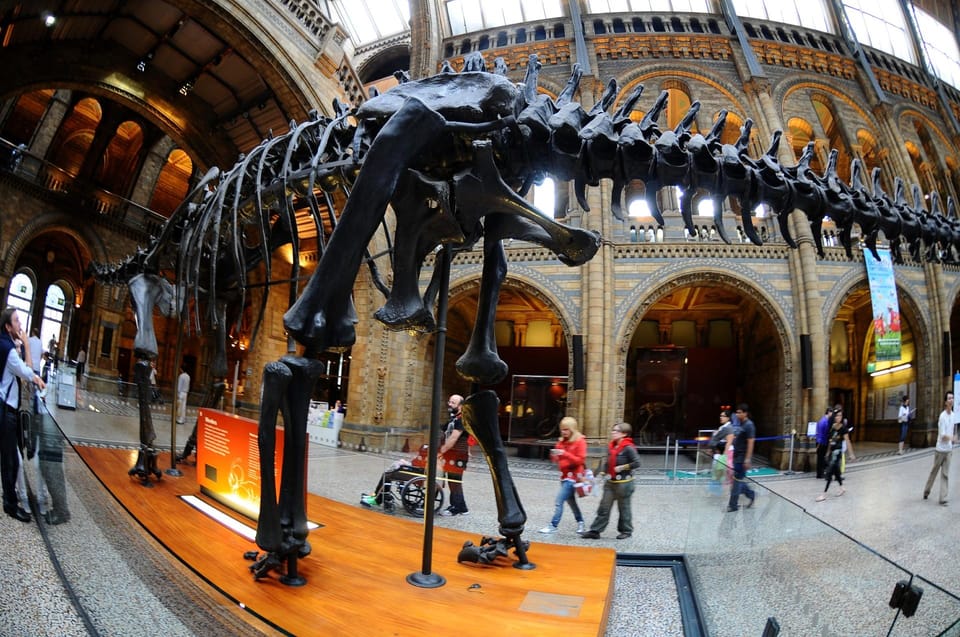
- Diplodocus and dinosaur skeleton moments that set the tone in the first major gallery
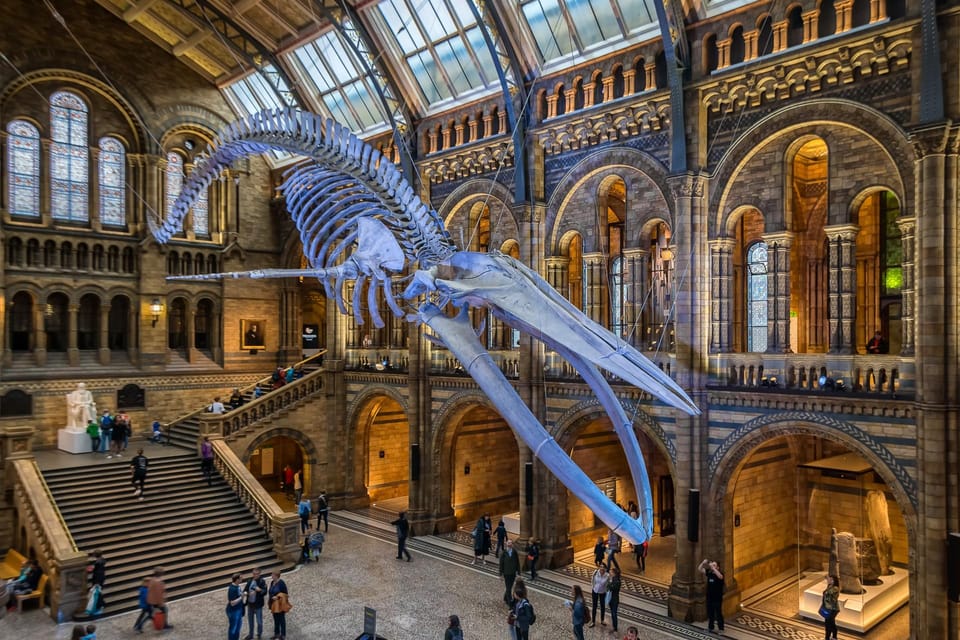
- A suspended blue whale skeleton that makes the Marine Life section feel cinematic
- Human Evolution Gallery with life-sized models and fossil remains that explain the story clearly
- Volcanoes and Earthquakes / Earth Sciences rooms with volcanic rocks and gemstones
- Wildlife Garden for a breath of fresh air with birds and bees around you
- Museum-to-café finish so you can recharge and grab a souvenir without rushing
In This Review
- Entering Cromwell Road: Bag Check, Giraffe Bones, and Museum Theater
- Dinosaur Gallery: Diplodocus First, So Your Brain Gets Oriented
- Mammals Gallery to Marine Life: The Jump From Land Giants to the Blue Whale
- Human Evolution Gallery: Life-Sized Models and Fossils That Tell a Straight Line
- Volcanoes and Earthquakes in the Earth Sciences Rooms: Gems, Rocks, and Real Earth Power
- Wildlife Garden: A Quick Nature Break Inside the City
- Ending at the Café and Gift Shop: How to Use the Last 15 Minutes
- Price and Value for a $40, 2-Hour Guided Visit
- What Could Go Wrong: Late Guides, Missed Waiting, and Cancellations
- Should You Book This Natural History Museum Tour?
- FAQ
- How long is the guided tour?
- What does the $40 price include?
- Where is the meeting point?
- What should I bring or wear?
- Is the tour official Natural History Museum guided service?
- What language is the tour guide?
- Does the tour include transportation?
- Is the tour wheelchair accessible?
- What’s included in the experience?
- What’s the cancellation and payment flexibility?
Entering Cromwell Road: Bag Check, Giraffe Bones, and Museum Theater
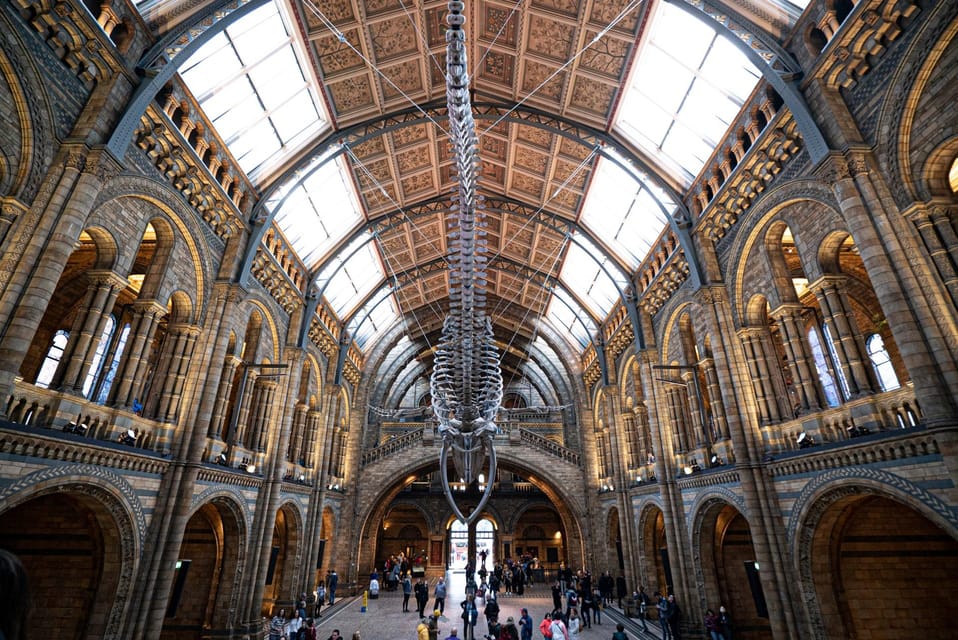
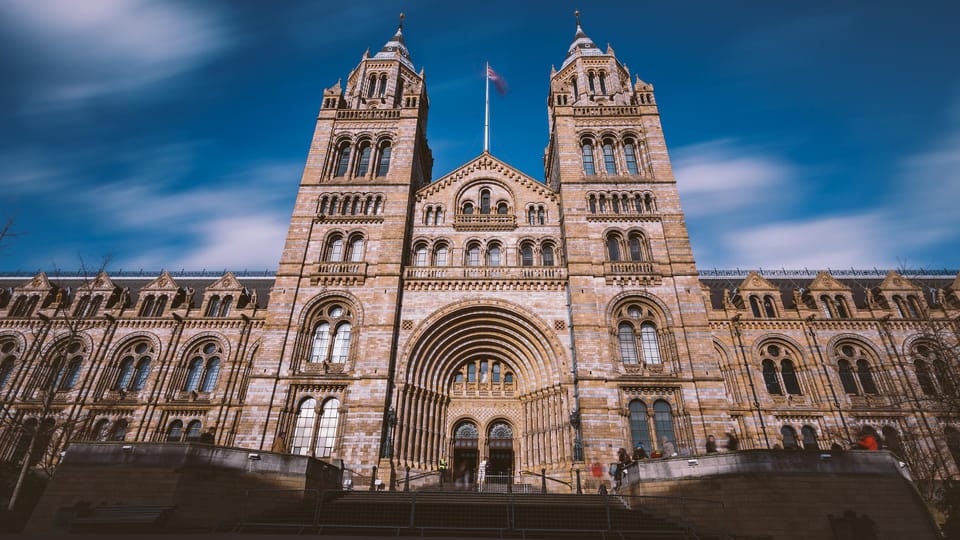
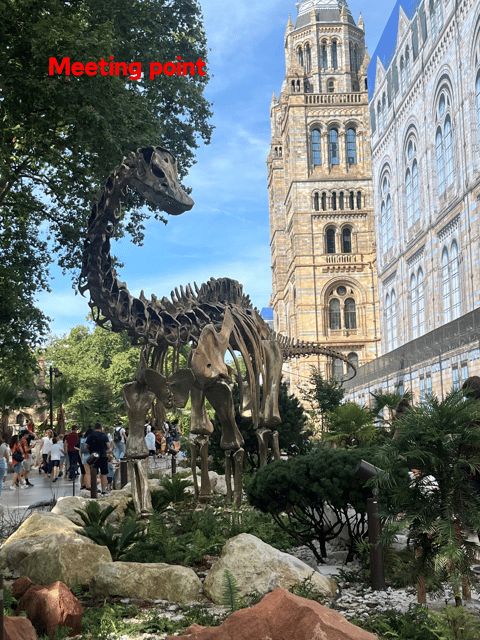
Your tour meets at the Natural History Museum’s main entrance on Cromwell Road, South Kensington (SW7 5BD). You’ll follow signs for the main entrance, and once you’re in/near the Evolution Garden, look for a bronze long-necked dinosaur statue. The Golden Tours guide is located opposite it, carrying a blue and white Golden Tours umbrella.
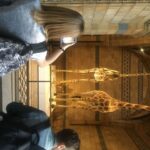
Right away, you get the sense that this museum is half science, half storytelling. Before the main exhibitions, you go through the bag check and the contactless donations queue. Nearby, you’ll spot a giraffe skeleton standing tall next to a taxidermy giraffe. It’s a clever “you’re in the right place” preview: old natural history meets modern visitor flow.
One more detail I like: the building itself pushes the theme of competition in science. In the grand hall, you’ll notice terracotta monkeys scaling the walls, tied to the rivalry between Sir Richard Owen and Charles Darwin. Even before you reach the fossils, you’re seeing how this museum dramatizes ideas.
Dinosaur Gallery: Diplodocus First, So Your Brain Gets Oriented
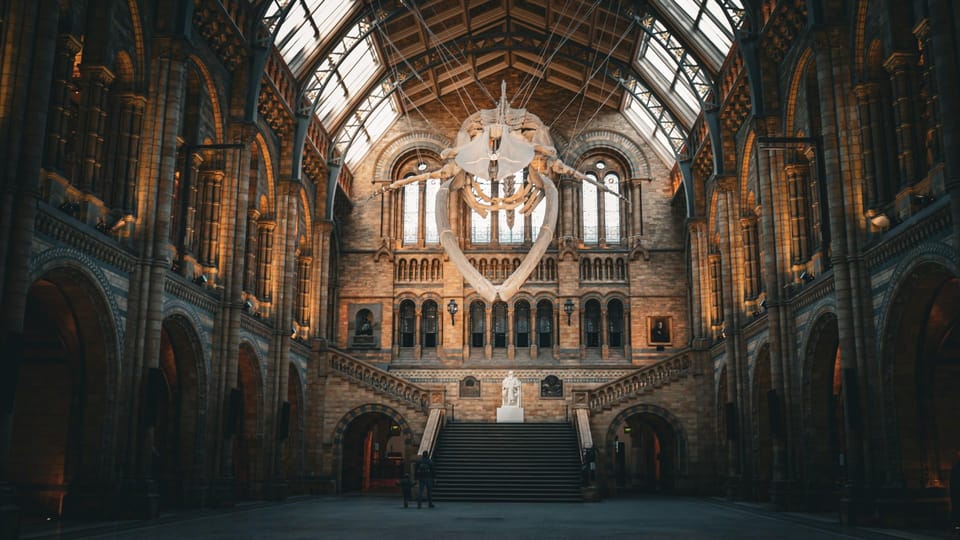
You start with the Dinosaur Gallery, which is a smart move. It’s the easiest way to anchor your understanding fast, because the museum’s dinosaur displays are so recognizable you can use them like reference points.
Here, you’ll see prehistoric skeletons, including the iconic Diplodocus. If you’ve ever seen photos and wondered what scale really looks like in person, this is where it clicks. Giant skeletons can feel static in pictures, but in the gallery, you start to notice structure—how bones relate, how the posture changes how you imagine movement.
The guided approach helps because you’re not just looking at dinosaurs; you’re learning how scientists interpret them. Even if you only catch the “why” in a few sentences, it gives you a lens for the rest of the museum.
Practical tip: wear comfortable shoes. The museum is huge, and even a highlight route still involves enough walking that your feet will remember it later.
You can also read our reviews of more guided tours in London



Mammals Gallery to Marine Life: The Jump From Land Giants to the Blue Whale
Next is the Mammals Gallery, where the museum goes from prehistoric giants to creatures you might recognize as living cousins. You’ll see taxidermy specimens and skeletons ranging from African elephants to cheetahs. This section is less about one “wow” moment and more about contrast: you learn how display choices help you compare size, anatomy, and adaptation.
Then comes one of the most striking stops: Marine Life, where you’ll find a blue whale skeleton suspended from the ceiling. That suspended view changes everything. Instead of a single “standing exhibit,” you get a creature you can visually track—like it’s still moving through water, even though you’re on dry land.
The tour’s value here is momentum. In one stretch, you go from big land mammals to ocean life, so your brain keeps shifting gears and staying engaged.
If you’re the kind of person who loves animals but finds long reading tough, this is a good fit. The displays do the heavy lifting, and the guide helps you notice what matters.
Human Evolution Gallery: Life-Sized Models and Fossils That Tell a Straight Line
After marine life, the Human Evolution Gallery delivers a different type of impact. Instead of only skeletons of animals, you’re looking at yourself—your place in the story of life.
This gallery includes life-sized models and fossilized remains. That matters because it bridges two ways of understanding evolution: the physical evidence (fossils) and the bodily scale and shape you can grasp quickly (life-sized figures). Even in a short visit, you’ll come away with a clearer sense of progression and shared traits.
I like that this part of the tour keeps it grounded. It’s not just “look at bones.” It’s more like: here’s how researchers think, here’s what the remains suggest, and here’s how the story connects to modern life.
Volcanoes and Earthquakes in the Earth Sciences Rooms: Gems, Rocks, and Real Earth Power
The tour then moves into the Earth Sciences Gallery, with a focus on geology. If you’ve ever looked at volcanic rock and wondered why people care, this is the section that makes it feel personal.
You’ll see gemstones and volcanic rocks, and you’ll also explore the Volcanoes and Earthquakes Gallery. The goal is to connect the beauty of minerals with the forces that shape landscapes. Even if you don’t leave a geology nerd, you’ll likely leave with better instincts for what you’re seeing next time you spot rock types in daily life.
In this museum, geology isn’t treated like a side topic. It’s treated like a central actor in the story of life—because earth processes set the stage for habitats, oceans, and climate.
Wildlife Garden: A Quick Nature Break Inside the City
A tour highlight list isn’t complete without the Wildlife Garden. This is where you step out of the big galleries and get a calmer beat.
The Wildlife Garden is a haven for birds, bees, and other animals. In practice, it gives you a chance to reset—your eyes stop staring at glass and labels, and you start looking for movement in real time. It’s also a nice contrast to the skeleton-heavy sections. You’re seeing living life, not just preserved examples.
This stop is short, but it changes the feel of the entire visit. After an hour of bones and geology, the garden makes the museum’s message about life diversity feel less abstract.
You can also read our reviews of more historical tours in London



Ending at the Café and Gift Shop: How to Use the Last 15 Minutes
Your guided portion ends at the museum’s café and gift shop. That’s genuinely useful. Many tours end with the guide dropping you in the middle of nowhere, forcing you to decide between food and souvenirs while still feeling rushed. Here, the ending point is practical: you can sit, refill water (not included), and then browse.
Also, take a minute after the tour to look at the museum architecture and intricate wall carvings. The building itself reinforces the theme of extinct and living species side by side—so the tour doesn’t feel like a checklist. It feels like a guided way of reading the museum.
Price and Value for a $40, 2-Hour Guided Visit
At about $40 per person for a 2-hour tour, you’re paying for a guided route through top galleries, not an all-day museum takeover. That’s why it can be good value if you like structure and want to prioritize the museum’s most famous highlights.
This is how I’d judge value for you:
- If you’re on a tight schedule in London, this gives you fast access to the core galleries: dinosaurs, mammals, marine life, human evolution, and earth sciences.
- If you’re a first-time Natural History Museum visitor, the guide helps you avoid wasting time wandering.
- If you’ve already been and want everything, you’ll probably feel the time pressure. In that case, you might prefer self-guided browsing.
The biggest thing is focus: the tour is designed for an efficient “greatest hits” experience. You’ll get more out of it if you treat it like an orientation session that points you toward what to revisit later on your own.
What Could Go Wrong: Late Guides, Missed Waiting, and Cancellations
This part matters. While the museum experience itself is excellent, the tour depends on the guide showing up on time and staying with the group.
There are documented cases where:
- the guide never arrived,
- the guide didn’t wait for someone arriving just a couple minutes late, even after communication,
- a tour was shortened after the guide had trouble locating the correct participants,
- and at least one booking ended without the full experience.
So here’s how to protect yourself:
- Arrive at the meeting point at least 15 minutes early, exactly as advised.
- Build in buffer time for the ramp approach and any security lines.
- If you’re cutting it close because of transit, consider choosing a different start time or pairing it with a backup plan to enjoy the museum even if the guided portion is delayed.
Also note: this tour is organised and operated by Golden Tours, and it’s not the official tour provided by the museum. That doesn’t mean it’s bad—it just means you should keep expectations realistic and plan like you’re booking a third-party guide, not a museum desk guarantee.
Should You Book This Natural History Museum Tour?
Book it if you want a smart, guided highlights route through the museum in 2 hours, especially if it’s your first time and you want dinosaurs, the blue whale, human evolution, and geology covered without guesswork.
Skip it (or add a self-guided plan) if you need a slow pace, you love reading every label, or you’re traveling on a very tight schedule where any guide delay would ruin your day.
If you do book, I’d go in with a good mindset: this is a fast tour of major exhibits, and the real win is how efficiently it moves you through the museum’s best stories—from Owen vs Darwin details you’ll spot on the walls, to suspended whales and life-sized evolution figures.
FAQ
How long is the guided tour?
It runs for 2 hours.
What does the $40 price include?
The price includes the guided tour. Food and drink are not included.
Where is the meeting point?
Meet at the museum main entrance on Cromwell Road (South Kensington, SW7 5BD). In the Evolution Garden, find the large bronze long-necked dinosaur statue, and look for the Golden Tours guide opposite it with a blue and white umbrella.
What should I bring or wear?
Wear comfortable shoes, since you’ll be walking through several gallery areas.
Is the tour official Natural History Museum guided service?
No. This is organised and operated by Golden Tours and is not the official tour provided by the museum.
What language is the tour guide?
The live tour guide is in English.
Does the tour include transportation?
No. Transportation is not included.
Is the tour wheelchair accessible?
Yes. The tour is listed as wheelchair accessible.
What’s included in the experience?
You’ll visit major highlights such as the Dinosaur Gallery, Marine Life (including the blue whale skeleton), the Human Evolution Gallery, and the Earth Sciences areas, plus a stop at the Wildlife Garden.
What’s the cancellation and payment flexibility?
You can cancel up to 24 hours in advance for a full refund. You can also reserve now and pay later.