REVIEW · LONDON
Private Highlights Tour of the British Museum
Book on Viator →Operated by The Museum Guide · Bookable on Viator
3 hours, one world-class museum, no stress. This private British Museum Highlights Tour lets you steer what you see, with a guide who’s comfortable talking about tough history and the controversy behind some famous objects.
I like two things right away: the tour starts by asking what you care about, and it actually shapes the route instead of running a generic script. I also like the way the guide keeps the tone balanced while still giving you the weird, macabre, and wondrous details that make museum objects feel human.
One consideration: 3 hours is still 3 hours, so if you want to slow-read everything (or linger solo in every gallery), you may feel a bit compressed.
In This Review
- Key things you’ll appreciate
- Entering the British Museum with a plan (and a shortcut)
- A 3-hour highlight loop your guide actually tailors
- The big lineup you’ll see: from Rosetta Stone to mummies
- Egypt: mummies and the Rosetta Stone’s pull on the imagination
- The Rosetta Stone + controversy lens
- Parthenon Sculptures (Elgin Marbles) and the debate you can’t ignore
- Power across regions: Assyrian guards and Ramesses II
- Lewis Chessmen and Sutton Hoo: clues from Britain
- Vindolanda Tablets and Standard of Ur: the “how do we know?” moments
- Far-reaching worlds: Aztec double-headed serpent and beyond
- Ife head, Tian-like questions: art that forces a second look
- Portland Vase and “oddly human” museum moments
- The macabre, the wondrous, and why the guide’s tone matters
- Price for up to 10: what you’re really paying for
- Who this tour suits best (and who might want something else)
- Booking call: should you book this private highlights tour?
- FAQ
- How long is the Private Highlights Tour of the British Museum?
- What’s the group size and price?
- Is the tour private?
- Is the tour offered in English?
- Where do we meet, and where does it end?
- Is museum entry included?
Key things you’ll appreciate
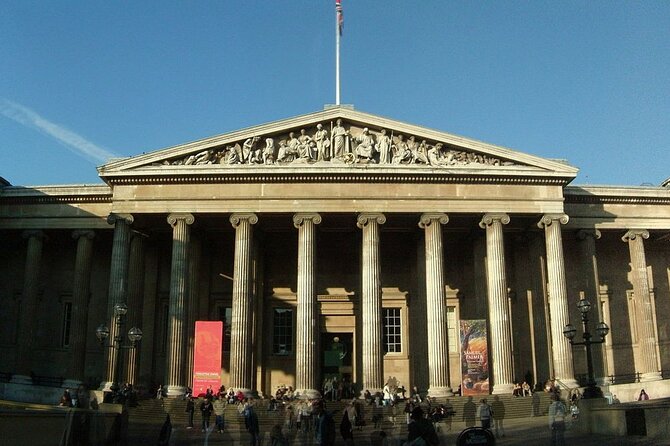
- Bespoke highlights route built around your interests before you even step into the galleries
- Expert-led tour in English with a professional guide who has advanced degrees in Cultural Heritage and Museum Studies
- Free entry through a lesser-known entrance, which helps you get moving faster inside
- A “highs and controversies” approach that doesn’t dodge harder parts of museum history
- A group size of up to 10 (private format), ideal for families, friends, and bookish travelers
- Icon-to-curiosity mix, from headliners like the Rosetta Stone to oddballs like the FeeJee Mermaid
Entering the British Museum with a plan (and a shortcut)
The British Museum can feel endless, even when you think you know where you’re going. What makes this tour work is that you don’t start with a map and guess; you start with a guide and a direction.
You meet at Montague Place (Montague Pl, London), then head to the museum where you finish inside (Great Russell St, WC1B 3DG). There’s also a mobile ticket, and the tour uses a lesser-known entrance for entry, so you’re less stuck waiting around at the busy main flow of visitors.
If you’re traveling with kids, teenagers, or a mixed-interest group, this private format is a big plus. Your guide can shift emphasis without slowing everyone down into separate day plans.
You can also read our reviews of more private tours in London


A 3-hour highlight loop your guide actually tailors
The tour is designed as a highlights circuit, but it’s not rigid. At the beginning, your guide asks about your interests, then points out specific objects and themes as you move through the museum.
So if you’re into ancient empires, you’ll likely spend more time with pieces tied to power and conflict. If you prefer everyday life, writing systems, or objects that feel personal, the tour can flex toward that. This is also why the “tough history topics” angle matters: your guide isn’t afraid to explain why some objects spark debate.
The best part for me is that the guide keeps it relevant without turning it into a history lecture. You get context you can use, plus stories that make each artifact feel like a clue to a real world.
The big lineup you’ll see: from Rosetta Stone to mummies
Within the 3-hour walk, you cover a broad sweep across cultures and time periods. The highlights list is packed, and your guide uses it to build a narrative rather than just recite titles.
You can expect to see the Rosetta Stone, Egyptian mummies, and other famous pieces like the Portland Vase. You’ll also encounter objects that shift the mood fast, including the FeeJee Mermaid, which is the kind of museum item that turns curiosity into a quick history lesson about belief, entertainment, and how people once explained the unknown.
Because the tour is customized, the “most important” object on the day can change. Your guide can spend longer on what fits your questions, whether that’s language, empire, ritual, or the human habit of making stories out of artifacts.
Egypt: mummies and the Rosetta Stone’s pull on the imagination
Egyptian material is one of the easiest ways to feel why the British Museum matters: these objects don’t just look old, they look like they were built to last and meant to be remembered.
With the Rosetta Stone in the mix, the guide can connect the object to how humans worked with writing and meaning over time. Pair that with the Egyptian mummies, and you get a strong contrast between “how people recorded the world” and “how people confronted death.”
If you prefer a less spooky pace, you can ask your guide to frame the mummies through history, art, and culture rather than shock value. Your guide’s role here is to keep the tone balanced, not sensational.
The Rosetta Stone + controversy lens
Some museum stars come with baggage. This tour explicitly works the controversy into the conversation when it’s relevant, so you’re not just looking at an iconic object—you’re also understanding why people argue about it.
That matters most for visitors who want more than a photo stop. If you came to London to learn the real story behind famous artifacts, this guide style is a good match.
You can also read our reviews of more museum experiences in London





Parthenon Sculptures (Elgin Marbles) and the debate you can’t ignore
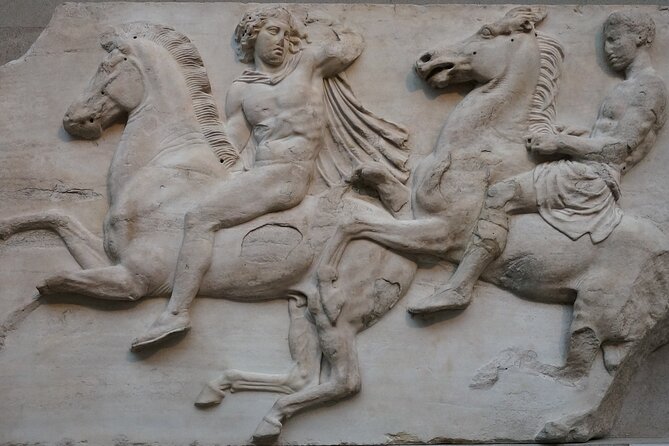
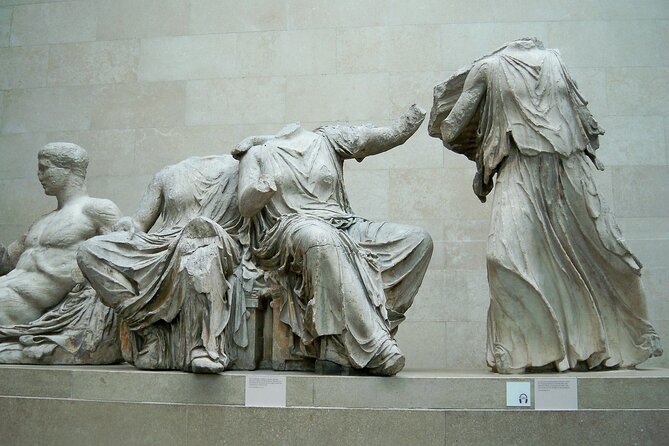
One of the tour’s headline stops is the Parthenon Sculptures (Elgin Marbles). These pieces are famous for a reason, but they’re also famous for a reason that often makes people stop and think.
On this tour, your guide doesn’t shy away from tougher topics. That means you’ll hear context around why the sculptures became part of a major museum collection and why the question of ownership and removal remains uncomfortable.
This is where a private guide helps a lot. In a big museum, you can miss the “why this matters” layer entirely. With a guide, you get a guided lens so you’re not left wondering what everyone is arguing about.
Power across regions: Assyrian guards and Ramesses II
The tour doesn’t keep you stuck in one civilization. It moves you through a web of rulers, symbols, and political imagery—so you can see how different cultures communicated authority.
You’ll have time to see pieces listed like Assyrian Guards and Ramesses II. The guide can connect those objects to what empires wanted viewers to understand: strength, order, permanence, and control.
I like that this tour gives you a chance to notice patterns. Once you see how power is visually communicated in one place, you start spotting similar storytelling techniques elsewhere—without needing a textbook.
Lewis Chessmen and Sutton Hoo: clues from Britain
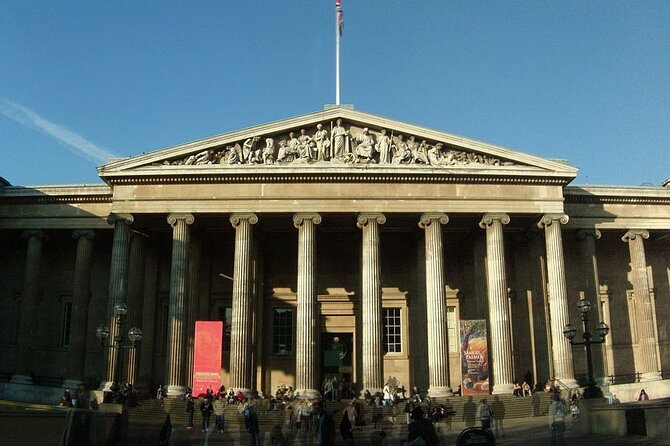
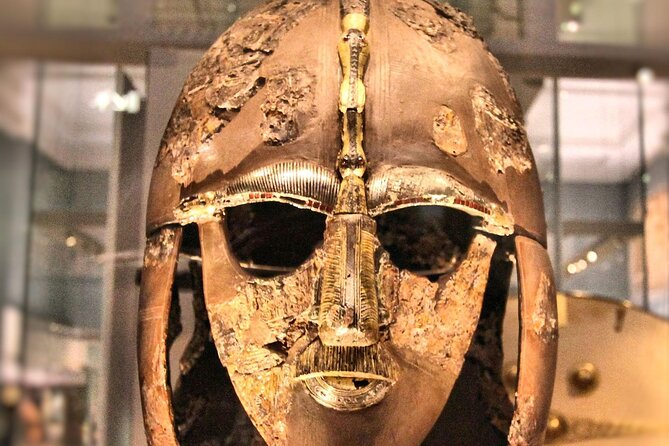
Even if your main interest is elsewhere, the British Museum’s collection includes anchors that connect to Britain’s past. You’ll see objects such as the Lewis Chessmen and Sutton Hoo.
These are great for visitors who like the museum’s human scale. They’re not just monumental; they also link to play, daily life, craftsmanship, and social status. If your group has at least one person who thinks museum tours are all solemn faces and funerary themes, these stops can keep the energy moving.
Also, they’re a useful reminder that “British Museum” doesn’t only mean foreign lands. It means Britain’s long relationship with the wider world.
Vindolanda Tablets and Standard of Ur: the “how do we know?” moments
If you enjoy mystery-solving, you’ll appreciate the way this tour handles evidence and interpretation through objects. The list includes Vindolanda Tablets and the Standard of Ur, both of which lend themselves to that “wait, how do we read this?” feeling.
The guide can point out how museums translate material leftovers into stories you can follow. That’s one reason people with a sharp interest in history often love this tour: it treats objects as clues, not just display items.
Don’t worry if you’re not a specialist. You can ask questions at your own pace, and your guide can adjust explanations so they land for different knowledge levels in the same group.
Far-reaching worlds: Aztec double-headed serpent and beyond
One of the most satisfying parts of this kind of highlights tour is the feeling of mental travel. In 3 hours, you can move from ancient Mediterranean and Near Eastern material to objects that represent very different cultural worlds.
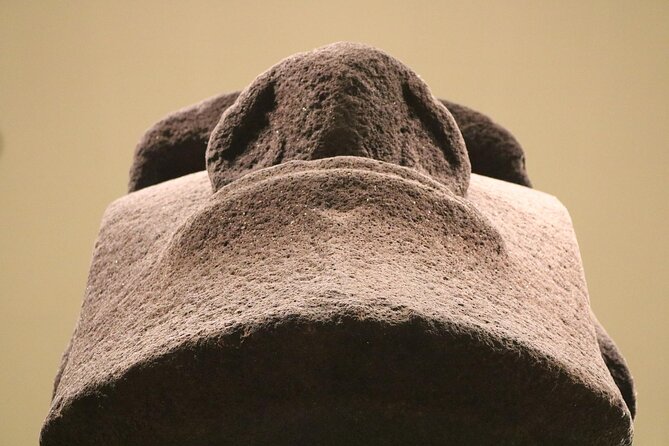
The tour includes the Aztec Double-Headed Serpent, plus items such as Statue of Tara and Hoa Hakananai’a. That cross-cultural sweep is valuable because it prevents you from turning the museum into a single-story museum.
Instead of collecting random images, you get a map of human creativity, belief, and symbolism. Even if you only remember a few pieces afterward, the overall sense of scale sticks.
Ife head, Tian-like questions: art that forces a second look
The list includes an Ife Head, and that’s a great stop for anyone who likes art that looks finished even when you know it’s centuries old. It can also work well for groups where people want a break from strictly “ancient timeline” thinking.
Your guide can frame what you’re looking at in a way that’s respectful and accessible, and you’ll likely get tips on how to notice details rather than just admire from a distance.
If you’re the type who takes slow notes, this tour can still suit you because your guide’s job is to point out what’s worth your attention while the clock keeps moving.
Portland Vase and “oddly human” museum moments
The tour list includes the Portland Vase, which adds variety because it doesn’t feel like the typical giant-statue or ancient-writing experience. Objects like this can shift your brain from “history events” to “craft skill and design.”
Then you get the swing toward the weird. The FeeJee Mermaid is exactly the sort of object that turns a museum tour into a story about how people once explained what they couldn’t fully understand.
That mix is part of why the guide promises a tour that doesn’t hide from controversy. Some objects are controversial because of origin and collection history, and some are controversial because they test what you think you know about truth and spectacle.
The macabre, the wondrous, and why the guide’s tone matters
This tour leans into the strange side of museums, but it does it with care. Your guide is specifically described as not shying away from controversy, and that’s a real difference from tours that skim only the safe, cheerful facts.
When it works, you leave with a better brain. You stop seeing the museum as a wall of items and start seeing it as a set of human conversations: art, faith, power, trade, and the modern politics of display.
One thing I appreciate is that the guide is built for engagement. In past feedback, Jessica stood out for keeping a group of 10 families (including teenagers) interested, with stories that felt relevant and well-balanced across ages.
That kind of guide skill matters. A museum tour can collapse if it talks too much or too little, but a guide who can hold attention for teens can also make it enjoyable for adults.
Price for up to 10: what you’re really paying for
The tour price is $468.78 per group (up to 10) for about 3 hours. That sounds like a chunk until you translate it into what a private guide actually does in a huge museum.
You’re not paying for a ticket to a building. You’re paying for guided time with an expert who can:
- tailor the emphasis to your interests,
- keep the pace manageable,
- and turn a crowded place into a route that makes sense.
The tour also includes free entry to the British Museum through a lesser-known entrance, and the total experience includes a fully-guided, expert tour in English. When you split the cost across a group, it often feels closer to the price of a few individual guided hours rather than a full family day out.
If you’re solo, you might consider whether the group price still fits your travel budget. But if you’re a family group, a friends group, or you’re bringing multiple ages, this setup is usually where the value lands.
Who this tour suits best (and who might want something else)
This tour is ideal if you want structure without losing control. I’d book it if you like museum highlights but also want context, and you’re happy to hear about the controversial parts of history instead of skating past them.
It’s also a strong fit for:
- history buffs who want a tour guide who can handle complex topics,
- families with teenagers who need more than a silent wander,
- and London visitors who want to make one museum visit count.
If your priority is spending hours reading every label and staying in one gallery, this might feel too fast. For that style, you’d want a slower self-guided day plus a shorter focused stop with a guide.
Booking call: should you book this private highlights tour?
Yes, if your goal is to experience the British Museum’s major hits with a guide who can explain why they matter and why people still argue about some of them. The customization, the expert-led approach, and the focus on both iconic and unusual objects make it a smart use of limited time.
I’d especially lean toward booking if you’re traveling with a group and want one plan that works for different ages. And if you’re the type who gets frustrated in big museums, having a guide with a built-in route and a willingness to tackle tougher topics can turn a stressful visit into a confident one.
FAQ
How long is the Private Highlights Tour of the British Museum?
It runs for about 3 hours.
What’s the group size and price?
It’s priced at $468.78 per group for up to 10 people.
Is the tour private?
Yes. It’s a private experience for only your group.
Is the tour offered in English?
The tour is offered in English.
Where do we meet, and where does it end?
You meet at Montague Place, Montague Pl, London, and the tour finishes inside the British Museum at Great Russell St (WC1B 3DG).
Is museum entry included?
Yes. The tour includes free entry to the British Museum through a lesser-known entrance, and the admission ticket is listed as free.