REVIEW · LONDON
London: British Museum Guided Tour
Book on GetYourGuide →Operated by My tour London · Bookable on GetYourGuide
This tour turns the British Museum into a story you can follow. In just two hours, a licensed guide steers you through major milestones of human culture, from the Rosetta Stone to Greek and Roman masterpieces, with enough context to make the objects click.
I like that the route is tailored to what matters most in a museum that’s basically too big for one lifetime.
I also like the way guides bring the collection to life through real interpretation, not just labels—names you might hear in groups include Filomena, Tara, Stuart, Rebekka, Lucia, and Maya. You’ll even get a heads-up on tricky, contested parts of museum collecting as the tour touches famous items like the Elgin Marbles.
That said, there’s one possible drawback: in busy galleries, hearing can be tough if your guide’s voice isn’t amplified enough.
Meet your guide right after security, not outside the gates, and you’ll start with a plan instead of drifting. Expect a “highlights plus meaning” approach—and bring comfortable shoes, because even a short museum tour still means real walking.
In This Review
- Key Things to Know Before You Go
- Why This British Museum Tour Works in Just 2 Hours
- Finding Your Guide After Security (Portal Stairs, Not Outside the Gates)
- Egypt First: Rosetta Stone and the Real Meaning Behind Hieroglyphs
- Greece Next: Parthenon Sculptures and Marble Inscriptions as Ideas
- Rome in the Middle: Emperors, Mosaics, and Engineering Impressions
- Sutton Hoo and Easter Island: When the Museum Changes Scale
- The Elgin Marbles and Other Contentious Objects: Expect Honest Context
- How Guides Make the Huge Collection Feel Like a Plan
- Price and Value: Why $39 Often Feels Fair
- The One Thing to Watch: Hearing in Crowds
- Who This Tour Suits Best
- Should You Book This British Museum Guided Tour?
- FAQ
- How long is the British Museum Guided Tour?
- How much does the British Museum Guided Tour cost?
- Where do I meet my guide?
- When will I receive my tickets?
- What’s included in the tour price?
- Is transportation included?
- Which languages are available?
- Can two languages happen at the same time?
- Do I need to bring anything?
- Is the tour wheelchair accessible?
Key Things to Know Before You Go
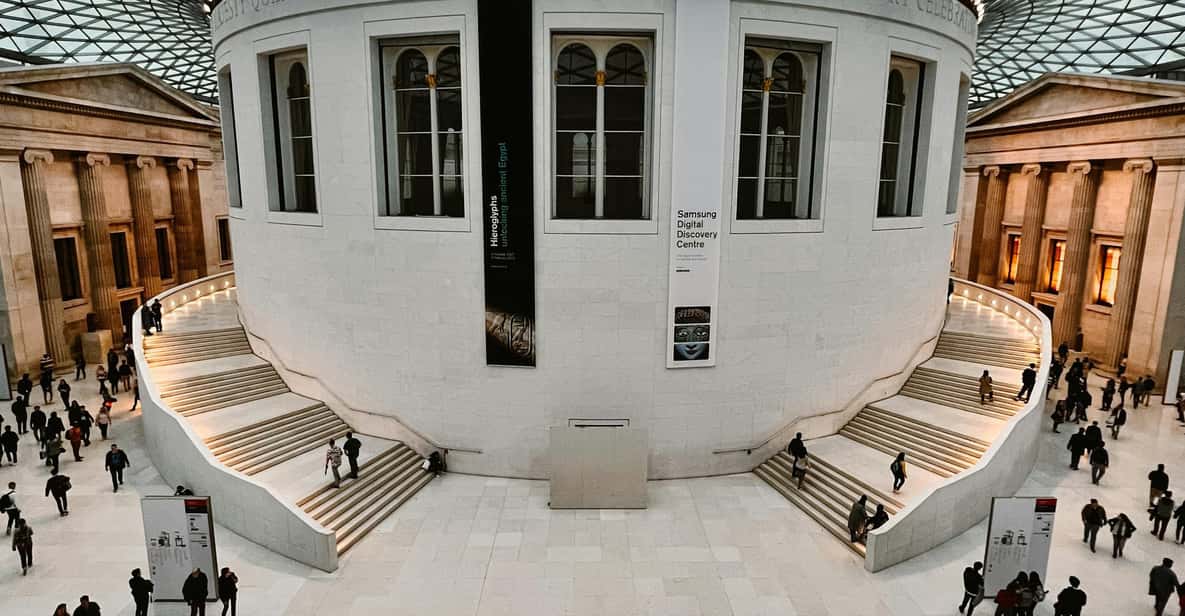
- Skip the usual headache with an express security check so your tour time stays focused on the galleries
- Rosetta Stone explained with the key idea of how hieroglyphs can be deciphered
- Parthenon sculptures and marble inscriptions are treated as ideas, not just statues
- Rome meets art and tech via mosaics, emperors, and the way the empire built its image
- Global connections in one loop including Sutton Hoo and a moai from Easter Island
- A guide helps with the hard stuff such as how the tour frames controversial collecting
Why This British Museum Tour Works in Just 2 Hours

The British Museum can feel like a choose-your-own-adventure where every door leads to another continent. This 2-hour guided format is built for people who want the big hits, but also want to understand what they’re looking at instead of speed-reading tiny captions.
I like the structure because it’s chronological and themed at the same time. Ancient Egypt sets up how humans recorded meaning. Greece then shifts toward philosophy and art as argument. Rome shows how power gets displayed through culture. Then the tour jumps across time and distance again with objects that connect surprising dots—like Sutton Hoo and Easter Island’s moai—so you don’t leave with a single-region view.
You should come in with one mindset: you’re not trying to “see everything.” You’re trying to see enough to understand why this museum matters.
You can also read our reviews of more guided tours in London



Finding Your Guide After Security (Portal Stairs, Not Outside the Gates)
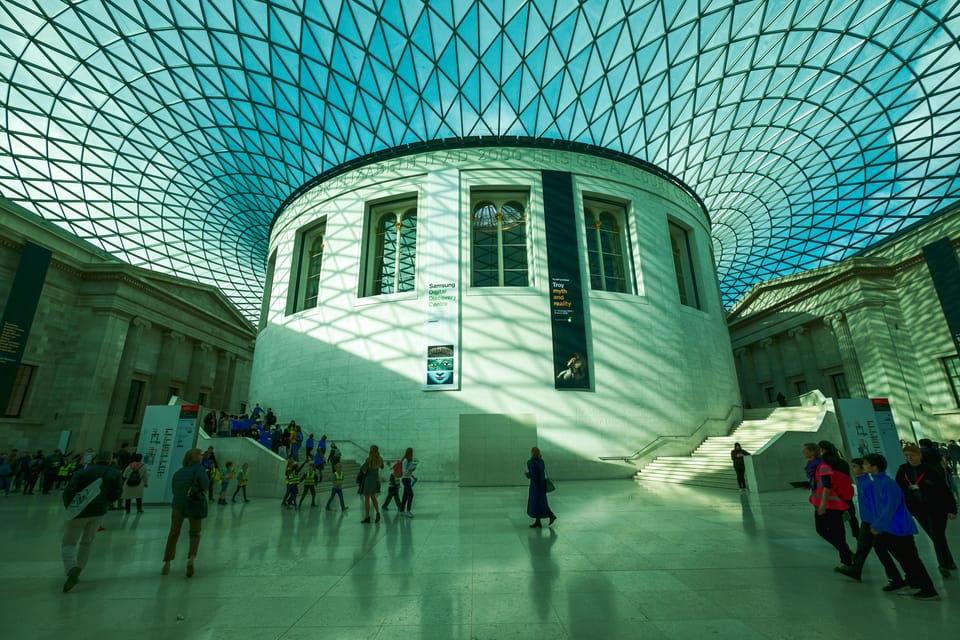
This tour starts with a simple but important detail: meet your guide in front of the British Museum portals on the stairs near the pillars after passing security. The instruction specifically says not outside the gates. That matters more than it sounds—London’s entrances can be confusing, and you don’t want to burn your first 15 minutes wandering.
Tickets are also delivered shortly before the tour. You’ll get admission tickets 1 hour before via WhatsApp. If you don’t use WhatsApp, you’re expected to contact the provider by email so they can send the entry tickets another way.
Because your tour time is tight, plan to arrive early enough to handle security without panic. Comfortable shoes are non-negotiable—museum tours don’t feel like walking until you’ve done it for a couple of hours.
Egypt First: Rosetta Stone and the Real Meaning Behind Hieroglyphs
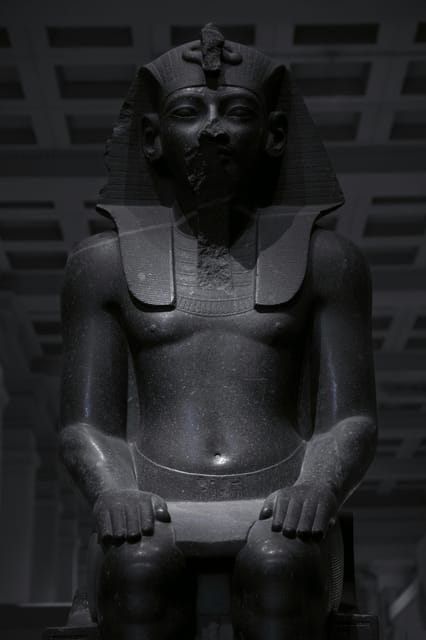
The tour begins in ancient Egypt, which is a smart move. Egypt’s artifacts are among the most famous in the museum, but the bigger value is learning how you’re supposed to look at them.
You’ll spend time around pharaonic relics and get to the Rosetta Stone, described as the key to deciphering Egyptian hieroglyphics. The point isn’t to memorize a history lesson. It’s to understand why this object was transformative—because it gave scholars a way to connect Egyptian writing to known languages and meanings.
When you’re standing in front of the case, that explanation changes the whole experience. Without it, you might see a slab with marks. With it, you see a tool that helped people rebuild a broken communication chain across centuries.
If you like “how we know what we know” stories, this is the part that will feel most satisfying.
Greece Next: Parthenon Sculptures and Marble Inscriptions as Ideas
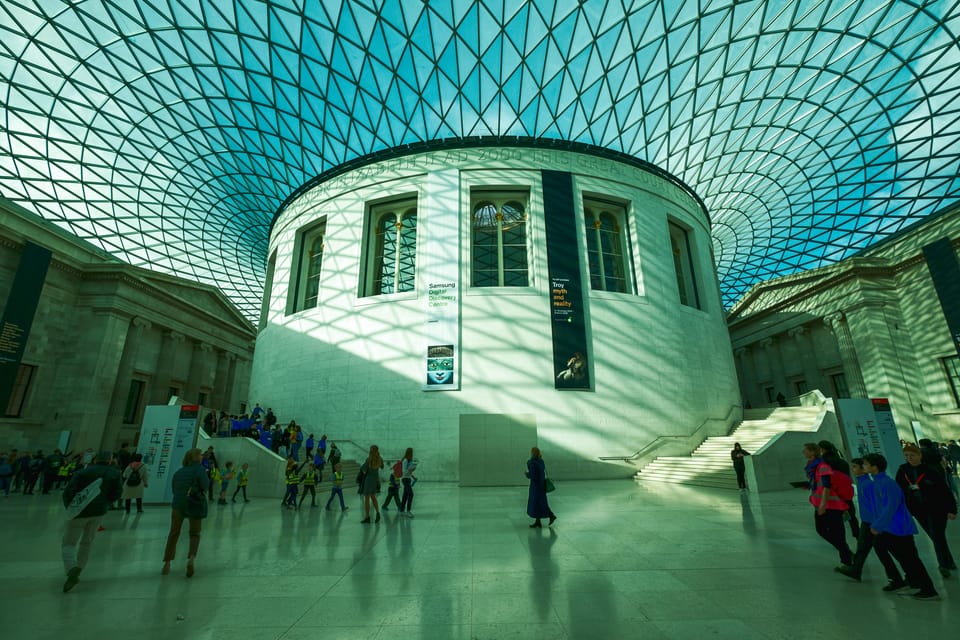
After Egypt, the tour moves to ancient Greece, where philosophy and art weren’t separate subjects. This section is where you start seeing the museum as a place that stores arguments.
You’re guided to iconic Parthenon sculptures and also to marble inscriptions tied to the ideas that shaped Western thought. That phrasing matters. The tour isn’t just saying statues are pretty. It’s pointing you toward why these works mattered to the people who made them—and why they still matter to how we talk about politics, ethics, and culture.
One practical benefit: a guide helps you avoid the common problem of staring at a single statue for 20 minutes while missing the broader context. Here, you’re led along a path so the gallery sequence supports the story.
If you’ve studied any classics before, you’ll likely feel that “ah, that’s what they were talking about” moment. If you haven’t, it still works because the guide’s job is to translate the importance into plain language.
Rome in the Middle: Emperors, Mosaics, and Engineering Impressions
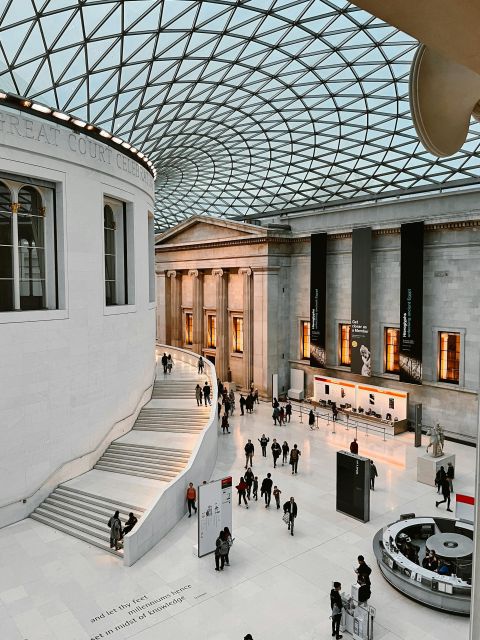
Then comes ancient Rome—imperial power at full volume. In this stretch you’ll see relics tied to emperors and engineering feats, plus artwork such as intricate mosaics and statues depicting gods and heroes.
This is where the tour becomes fun in a different way. Rome isn’t only about battles and rulers. It’s about how authority gets staged: in public art, in religious imagery, and in how buildings and systems project permanence.
Mosaics are especially worth your attention. In a museum, mosaics can look like decorative floor patterns. A good guide points out what they’re doing—where attention goes, what figures symbolize, and how images communicate identity across a vast empire.
If you’re the kind of person who likes “look closely” moments, this part can reward you even during a fast pace.
You can also read our reviews of more museum experiences in London






Sutton Hoo and Easter Island: When the Museum Changes Scale
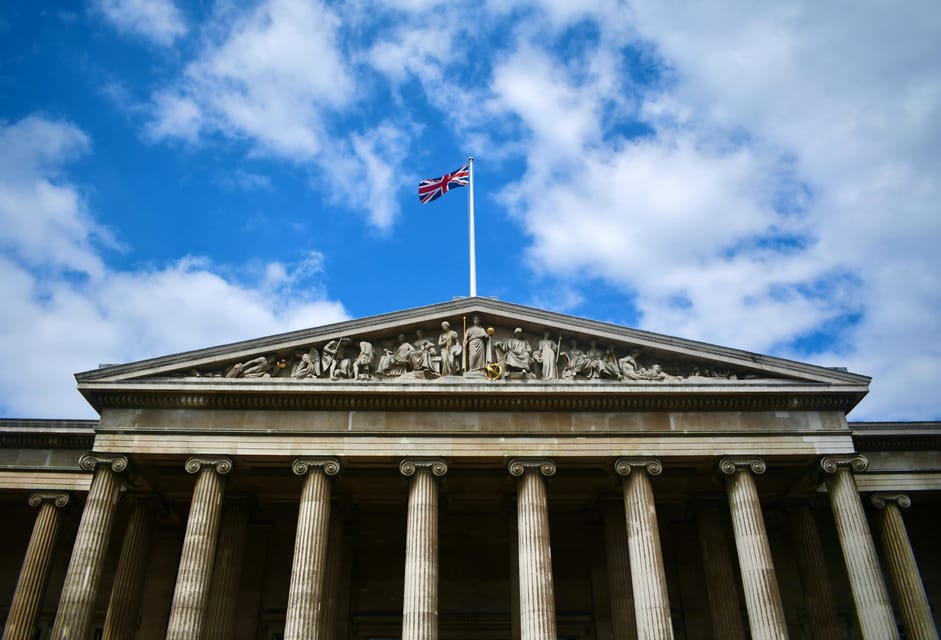
A two-hour museum tour sounds like it should stay in one neighborhood of time. Instead, you get jumps that widen your perspective.
You’ll discover Sutton Hoo, with Anglo-Saxon treasures that offer a window into early English life. Then the route moves to an object from far away—Hoa Hakananai’a, a moai from Easter Island—shared as a spiritual expression from a distant civilization.
That pairing can feel surprising, but it’s one of the tour’s strengths. It reminds you that human culture isn’t a single timeline marching forward. It’s many different ways of making meaning, often with no shared vocabulary.
The value here is that you stop treating the museum like a highlight reel of famous European artifacts. You start seeing it as a network of societies—each with its own logic, symbolism, and technology.
The Elgin Marbles and Other Contentious Objects: Expect Honest Context
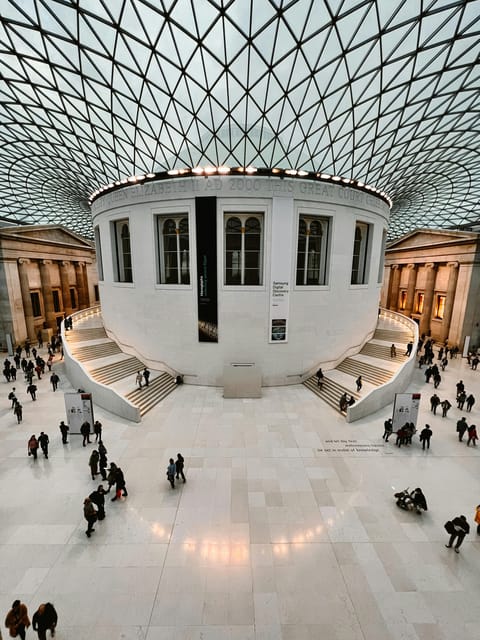
Some museum tours skip the uncomfortable parts to keep things smooth. This one doesn’t do that.
The tour specifically includes the Elgin Marbles, and you should expect discussion that acknowledges the controversy around how famous classical pieces ended up in British collections. That approach shows up again in how the guide frames other contentious categories of artifacts, including references to looted or stolen contexts such as the Benin bronzes and contested Greek marble.
This matters because it changes your experience from awe to understanding. You’re not only learning what an object is. You’re learning how museums got what they display—and why that history still affects interpretation today.
It won’t turn the tour into a debate club. It’s more like: you’re given the context that keeps your appreciation from becoming willful ignorance.
How Guides Make the Huge Collection Feel Like a Plan

The British Museum is vast, and most people lose time chasing the wrong targets. The best value of this tour is that a guide gives you a route and a filter.
In the praised experiences, guides like Filomena and Stuart are repeatedly described as making navigation easier in an insanely huge collection. That usually comes down to three practical things: where you stand, what you should focus on, and what you should ignore until later.
You’ll also learn interpretive “shortcuts.” A good guide helps you read what you’re seeing—why a symbol matters, what a scene implies, or how an object connects to belief and power. That’s why people walk out saying the museum felt easier than wandering on their own.
Group dynamics can vary. Some guided groups may include mixed language if demand is high, so you might hear English, French, and Italian in parallel depending on tickets. If you’re trying to follow every word, pick your comfort level for a multilingual environment.
Price and Value: Why $39 Often Feels Fair
At $39 per person for two hours, the price can sound small compared to the museum’s fame. The real question is: what are you buying?
You’re buying:
- a licensed guide who chooses the objects and explains what matters
- express security so your time doesn’t get eaten by lines
- a focused tour that hits major areas instead of wasting an hour deciding where to go
For many people, that’s worth it because the British Museum is free to enter (with some ticketing involved for timed entry). The tour cost becomes the “effort tax” you pay to avoid getting lost, missing context, or staring at things without knowing why they’re special.
It also helps if you don’t want to spend your limited London time doing research. The tour compresses a lot of interpretive groundwork into a short, guided arc.
If you’re a casual visitor who only wants photos and atmosphere, you could skip a guide. But if you want meaning—this cost tends to pay for itself in satisfaction.
The One Thing to Watch: Hearing in Crowds
This tour is praised for knowledge and enthusiasm, but there’s an honest consideration. In crowded rooms, hearing can be difficult—especially if a guide isn’t projected clearly and the space is noisy. One experience noted it felt harder to hear due to building noise and the guide not having the clearest speech or enough volume.
What to do with that? Arrive with a backup plan: position yourself closer to the guide when possible, and if you use them, bring earbuds for comfort. If you’re hard of hearing or sensitive to noise, consider booking for a quieter time window if one is available.
Who This Tour Suits Best
This tour fits best if you:
- want the big museum highlights in a controlled time box
- like stories that connect art to power, belief, and everyday life
- want context around famous, controversial objects like the Elgin Marbles
- enjoy a guided route through Egypt, Greece, and Rome, with global add-ons like Sutton Hoo and Easter Island
It may be less ideal if you’re the type who likes to linger alone in galleries for long periods without being kept moving. A two-hour tour is a sprint. Even a great guide can’t slow down a fixed schedule.
Should You Book This British Museum Guided Tour?
Book it if your goal is to leave with understanding, not just impressions. This is the kind of tour that helps you make sense of a museum that can overwhelm your brain in the first ten minutes.
Skip it if you already know the museum well, love wandering slowly with no structure, or you’re concerned about hearing in busy rooms.
My decision rule is simple: if you want the British Museum to feel readable, not random, $39 for a two-hour licensed guide is usually a smart spend.
FAQ
How long is the British Museum Guided Tour?
The tour duration is 2 hours.
How much does the British Museum Guided Tour cost?
The price is $39 per person.
Where do I meet my guide?
Meet your guide in front of the British Museum portals on the stairs near the pillars after you pass the security check. It is not outside the gates.
When will I receive my tickets?
Tickets are provided 1 hour before the tour via WhatsApp. If you do not have WhatsApp, contact via email so tickets can be sent another way.
What’s included in the tour price?
A tour guide is included.
Is transportation included?
No, transportation is not included.
Which languages are available?
The tour is offered in English, French, and Italian.
Can two languages happen at the same time?
Yes, the tour may be in two languages at the same time depending on demand and ticket availability.
Do I need to bring anything?
You should bring comfortable shoes and weather-appropriate clothing.
Is the tour wheelchair accessible?
Yes, the tour is wheelchair accessible.