REVIEW · LONDON
London: Brutalist Architecture & History Walking Tour
Book on GetYourGuide →Operated by explorabilia · Bookable on GetYourGuide
Brutalism hits fast, and it keeps talking. I love how this small group (max 6) turns a tight 2.5-hour walk into real Q&A time, and I also love that the guide focuses on concrete—how it shaped modern London and why people argued about it. The style is also a bit of a dealbreaker for some: the buildings can feel cold, blunt, and aggressively utilitarian, even if you end up respecting the engineering behind them.
One more reason to go: the tour doesn’t just point at famous facades. You get context for the post-war push toward bold, modernist forms, plus a clear sense of the ongoing debate about what should happen to these concrete landmarks next. If you want to see interiors, though, you’ll be disappointed—this is outside-only.
In This Review
- 5 key moments that make this Brutalist London tour worth it
- What this London Brutalist Architecture walking tour is really about
- Meeting at Russell Square and getting to the good stuff fast
- The guide makes or breaks it: Evan’s role in what you learn
- Institute of Education: concrete you can actually learn from
- National Theatre: iconic Brutalism and serious photo opportunities
- The unseen theme: the fight over what to do with Brutalist buildings
- What you’ll actually do during the 2.5 hours
- Price and value: is $47 a fair deal?
- Practical fit: who should book, and who might not
- My take on the biggest trade-off
- Should you book London: Brutalist Architecture & History Walking Tour?
- FAQ
- Where is the tour meeting point?
- How long is the London Brutalist Architecture & History Walking Tour?
- Is the tour all walking, or does it use public transport?
- Do I need a Tube ticket, and what zone should I plan for?
- Are building interiors included?
- Who is the tour suitable for?
5 key moments that make this Brutalist London tour worth it
- Russell Square start: easy central meeting point near the Piccadilly Line, then the walk gets you into the heart of the concrete conversation
- A short Tube hop (Zone 1): one practical underground segment that keeps the route efficient without turning it into transit class
- Institute of Education stop: a major Brutalist example that’s perfect for learning how form follows post-war thinking
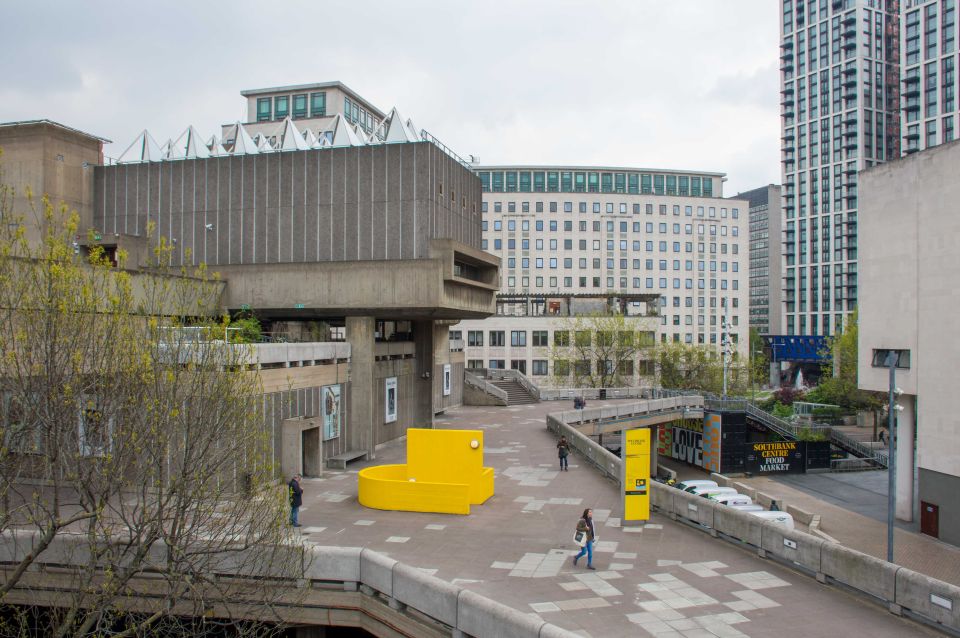
- National Theatre photo time: you’ll pause for close looks at one of London’s most instantly recognizable Brutalist shapes
- Brunswick and “street-level architecture”: you’ll get specific guidance so you notice details you’d otherwise miss
What this London Brutalist Architecture walking tour is really about
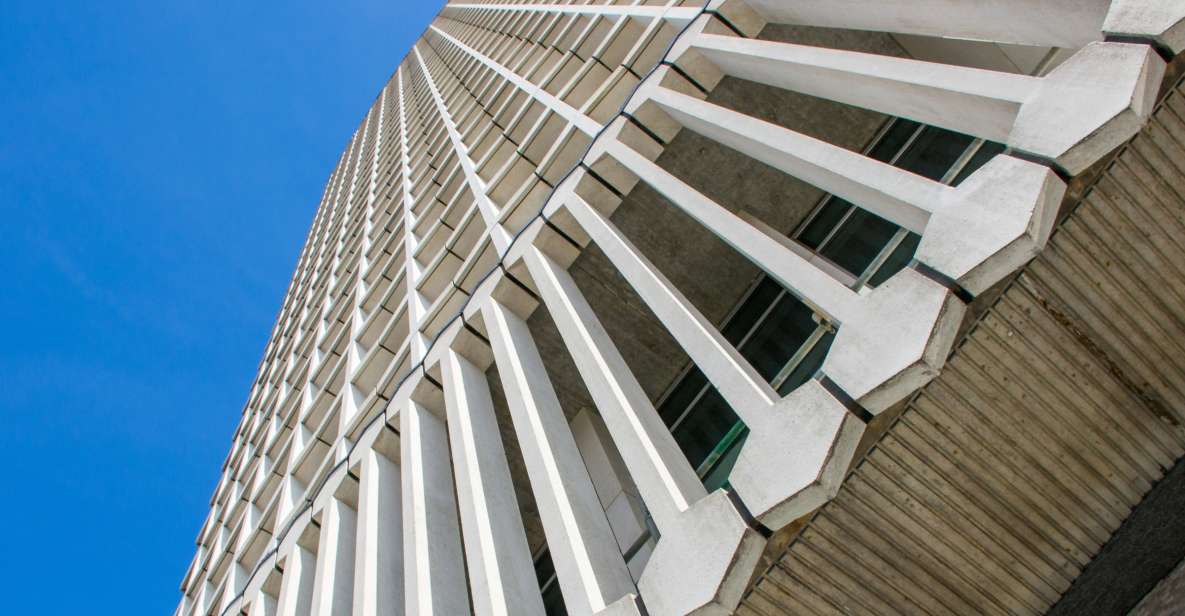
This isn’t an “art history slideshow” tour. It’s a focused walk through central London built around one big idea: how concrete became a language after the war, and how that language landed with mixed feelings.
Brutalism (the style) is easy to spot once you know what to look for: bold massing, visible structure, and surfaces that often look unfinished on purpose. The interesting part is that the tour treats those design choices like evidence. You’re not just looking at monuments. You’re learning what pushed them into being—social pressure, housing and rebuilding realities, and a broader European modernist mindset spreading across borders.
And because it’s a small group, the guide can slow down when people want to ask why a building was designed one way instead of another, or why the city later struggled to decide what to do with these structures.
You can also read our reviews of more walking tours in London



Meeting at Russell Square and getting to the good stuff fast
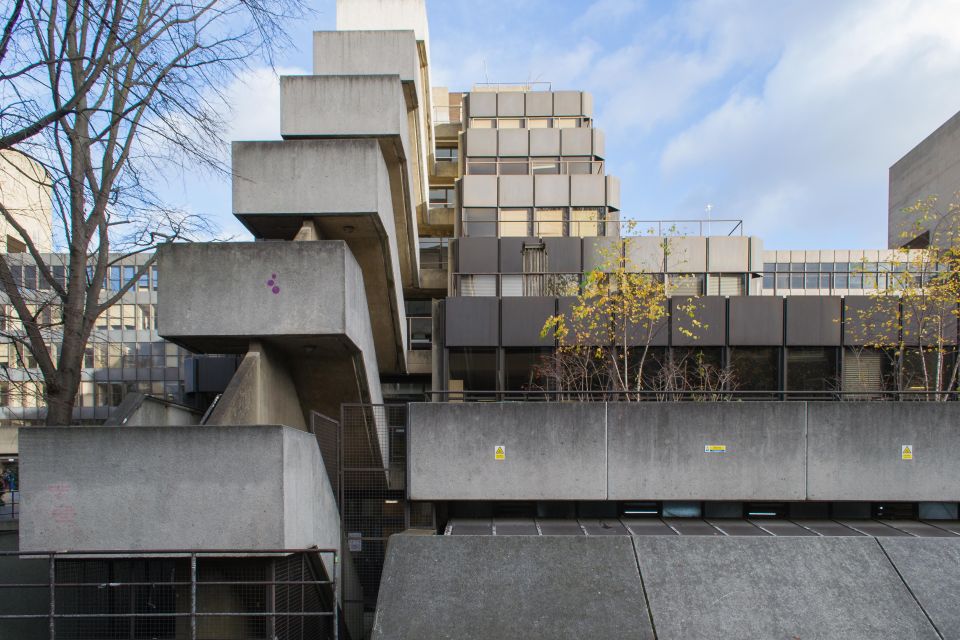
You start outside Russell Square Underground Station (Piccadilly Line). It’s a solid choice because you’re already in central London when the tour begins, and you’re not spending the first part of your time getting across town.
Then there’s a short Tube journey. The key practical detail: you’ll need enough credit for one trip within Zone 1. If you’re coming from outside London, make sure your transit plan covers that. I’ve found that these small “one hop” moments are when travel plans most often go sideways—people assume it’ll be included or covered another way. Don’t guess.
After that, you settle into a walk route built for pausing. Brutalist buildings demand that kind of pace. You can’t appreciate the “why” if you only sprint past the “wow.”
The guide makes or breaks it: Evan’s role in what you learn
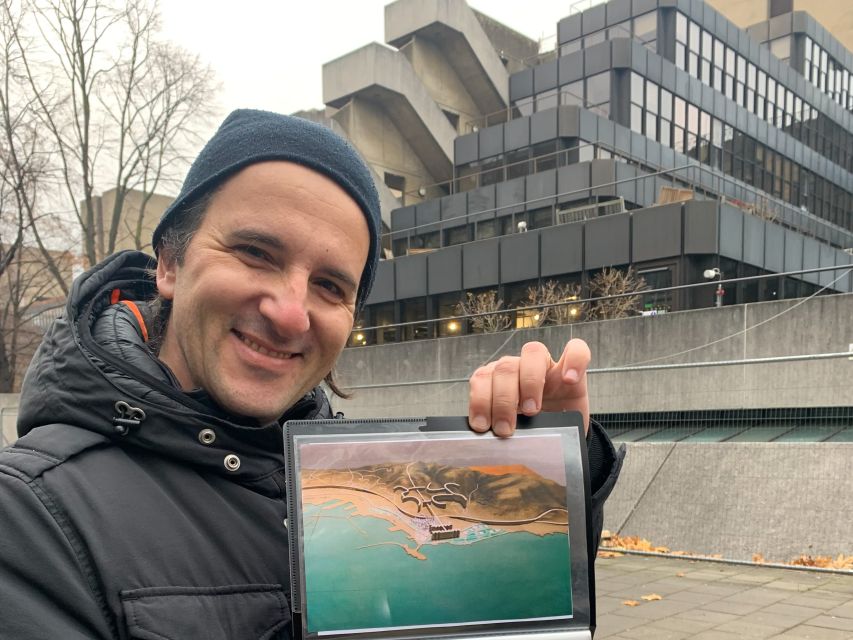
The tour’s biggest recurring strength is the host. Multiple reviews highlight Evan as enthusiastic, engaging, and willing to tailor explanations to the group. That matters, because Brutalism is one of those topics where people either feel it instantly or resist it for reasons that are emotional, not just architectural.
Evan’s approach, based on the feedback, tends to connect the buildings to the humans around them—social, political, and economic circumstances behind major landmarks like the National Theatre. One review even notes how Evan adapted the guide to the group’s existing knowledge level, which is a big plus if you’re traveling with someone who knows architecture already (or someone who has zero patience for jargon).
There is a single caution worth mentioning for balance. At least one review flags a couple of factual misstatements (one about a claim tied to window tax, and another about Isaac Hayward’s politics). The good news: even with that kind of slip, the overall structure of the tour still sounds engaging, and the guide’s energy keeps the experience moving. Still, if you’re the type who wants every detail perfectly footnoted, treat the tour as a strong overview you can refine with your own reading afterward.
Institute of Education: concrete you can actually learn from
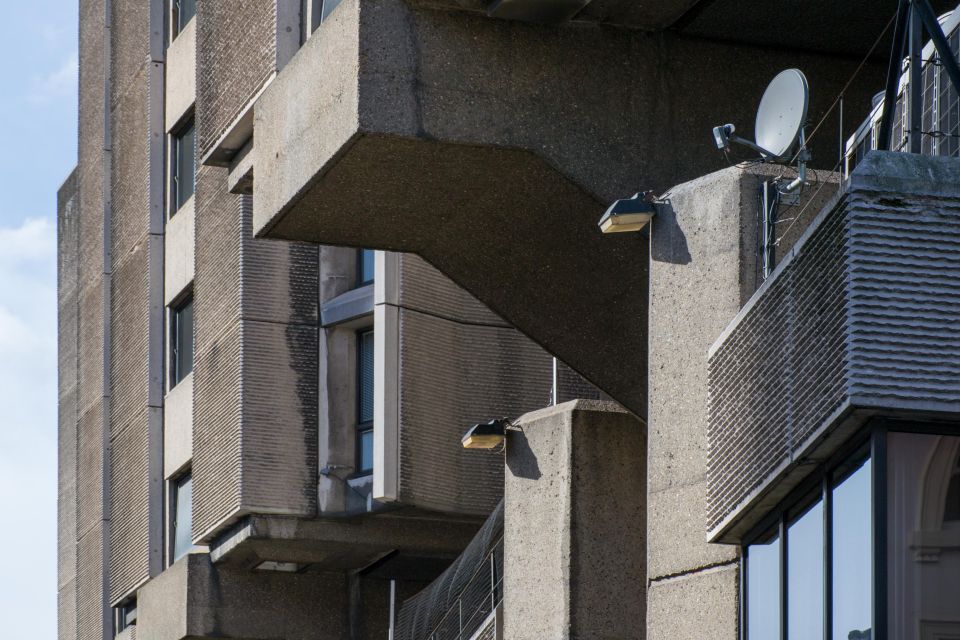
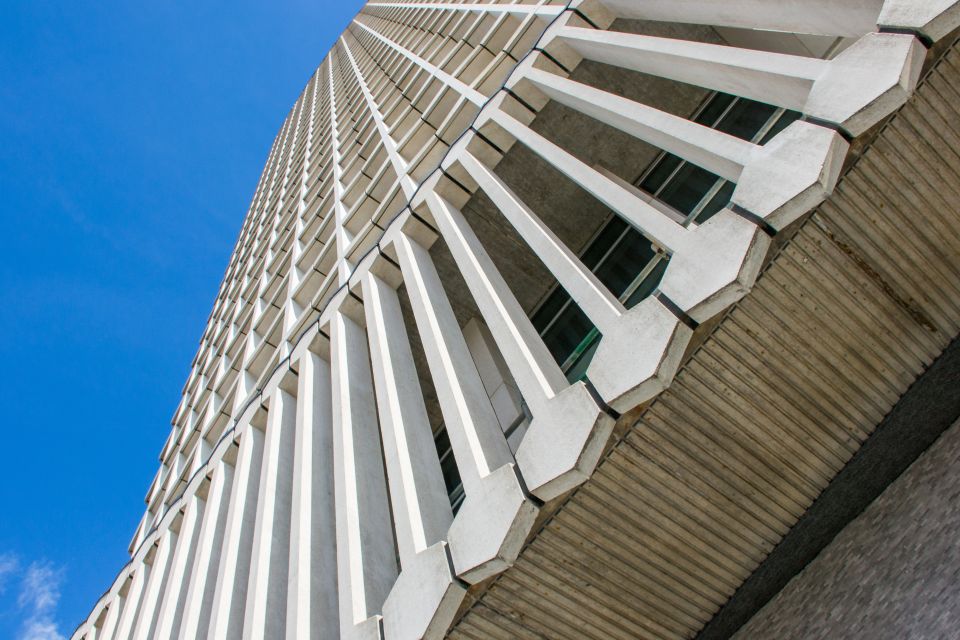
One named stop is the Institute of Education. This building is a great teaching tool because it’s a clear example of what Brutalism does at street level: it expresses structure and mass without trying to soften them into something decorative.
Here’s the value for you. You learn how to “read” concrete the way you’d read a map:
- Look for how the building’s logic shows through its surfaces
- Notice how the design choices create rhythm (or intentionally break rhythm)
- Think about how post-war modernism favored honesty of form over historical mimicry
The tour also leans into the bigger point: concrete wasn’t just a material choice. It was part of a broader push toward a modern society, using engineering methods that could scale and meet rebuilding needs.
If you’re curious about why Brutalism is both praised and hated, this is where the arguments start to make sense. You begin to see that people aren’t just reacting to ugliness or beauty—they’re reacting to a style that refuses to pretend.
National Theatre: iconic Brutalism and serious photo opportunities
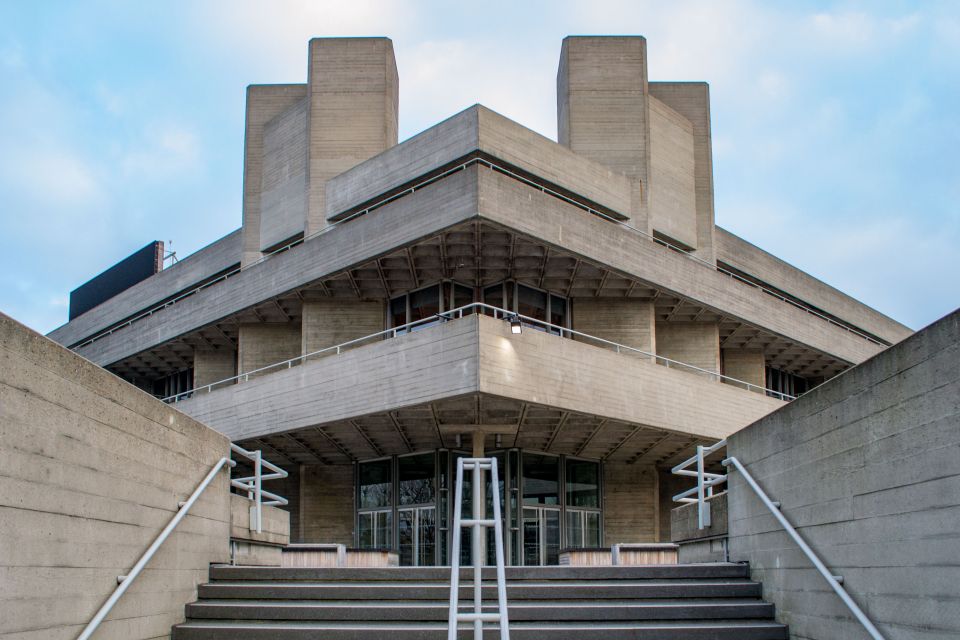
The tour’s other named centerpiece is the National Theatre, which is famous for how sharply it reads as modern monumental architecture.
This stop is built for two things:
- Understanding the cultural context behind the building
- Getting photos because the architecture is bold from every angle
Brutalism often gives you dramatic lines and stark surfaces, so your best shots usually come when you step back enough to catch the full massing and then move closer for texture. The tour gives you time for that kind of looking instead of rushing you along.
The tour also frames the National Theatre as more than a landmark you’ve seen on postcards. Reviews mention the guide connecting it to the social and political circumstances that shaped why it was built. That’s what turns a photo stop into a learning stop.
And if you’re someone who tends to recoil at brutal forms at first glance? This is where the style often flips. You start noticing the discipline in the shapes, the way the building holds up as a piece of engineering, not just an aesthetic statement.
You can also read our reviews of more historical tours in London






The unseen theme: the fight over what to do with Brutalist buildings
A major thread in this tour is the tension around preservation and use. You’ll hear about the ongoing struggle among local authorities, preservation groups, and residents on how these buildings should function in the future.
This is one of those details that makes a tour feel real, not museum-pretend. Brutalism didn’t arrive as a polite visitor. It came with strong statements—so it also later faced strong questions. What’s the right use? Can the buildings adapt without losing their character? Should they be protected even if the public mood shifts?
You walk away thinking about architecture as a living argument, not a completed design. That’s also why the tour format works. You’re outside, in the city environment where these buildings still serve and still provoke opinions.
What you’ll actually do during the 2.5 hours
Expect a steady rhythm of walking and stopping. The tour is described as a 2.5-hour experience with a small group cap, and that time is usually enough to:
- see multiple central London Brutalist landmarks
- hear the post-war context linking them
- get at least a couple of moments for photos and close visual study
The guide doesn’t focus on interiors. Building access is not part of this plan, so don’t plan your day expecting to go inside.
Wear shoes for uneven sidewalks and lots of street-level looking. Brutalist buildings reward slow walking because the details are often architectural, not scenic. If you like to stand around and really look up at facades, you’ll get your money’s worth.
Price and value: is $47 a fair deal?
At $47 per person for about 2.5 hours, this feels like strong value if you care about the subject. Why? Because you’re not paying for a bus ride or a long route. You’re paying for a specialist guide with a clear passion for the built environment.
Reviews repeatedly stress that Evan’s explanations go beyond the basics—shared knowledge that feels more like a conversation with someone who reads buildings carefully than a scripted lecture. One review even suggests the tour felt like it could have charged more, which lines up with the pricing for this kind of niche, guide-led experience.
Also, the small group limit (up to 6) helps keep the tour from turning into a “stand and listen” factory. You can ask questions without shouting over a crowd.
If you’re only casually curious about architecture and want a quick hit of photos with minimal facts, you might find the content heavier than you expected. But if you’re willing to look closely, the price-to-time ratio is likely to feel fair.
Practical fit: who should book, and who might not
This tour is marked as not suitable for children under 16 and not suitable for people with mobility impairments. That’s probably because it’s a walking route plus at least one Tube segment, with the typical constraints of city sidewalks.
You’ll also want to bring a public transport ticket since the tube trip isn’t included. That’s a small detail, but it changes how smooth the tour feels.
Best fit:
- You like modern architecture and want a focused theme
- You enjoy street-level photo walks
- You’re curious about post-war London and why design choices spark debate
Less ideal if:
- You hate walking tours or dislike standing outside
- You need interior access to feel like you got your money’s worth
- You’re uncomfortable with an architectural style that splits opinion
My take on the biggest trade-off
Here’s the trade-off in one line: you get strong context and great outdoor viewing, but you don’t get inside access.
That’s not a problem if your goal is understanding the architecture as seen from the street. It’s a problem if you assumed you’d go into the Institute of Education or other stops.
If you do want to see interiors, treat this as the “begin here” option. It’ll sharpen your questions before you choose other tours or museum visits.
Should you book London: Brutalist Architecture & History Walking Tour?
Yes—if you want a tight, high-signal tour built around real Brutalist landmarks and the post-war forces behind them. The guide quality (Evan) is the clearest reason to choose this one, plus the small-group size keeps it human.
Skip or reconsider if you need accessibility-friendly pacing, travel with kids under 16, or you specifically want building interiors. Also, if Brutalism makes you uneasy on sight, the tour won’t try to soften the look. It explains it—and that might either win you over or confirm you prefer a different style.
If you’re on the fence between this and a more general architecture walk, pick this one. Brutalism is a polarizer, and that’s exactly why a focused guide can be worth it.
FAQ
Where is the tour meeting point?
The meeting point is outside Russell Square Underground Station (Piccadilly Line).
How long is the London Brutalist Architecture & History Walking Tour?
It lasts 2.5 hours.
Is the tour all walking, or does it use public transport?
You do walk, but the tour uses the Tube once for a short journey.
Do I need a Tube ticket, and what zone should I plan for?
You should bring a public transport ticket, and the Tube trip is within Zone 1, so you’ll need enough credit for one journey.
Are building interiors included?
No. Interiors are not visited.
Who is the tour suitable for?
It is not suitable for children under 16 and not suitable for people with mobility impairments. The tour runs in English with a live guide.