REVIEW · LONDON
London: British Museum Archaeology Course and Guided Tour
Book on GetYourGuide →Operated by Spirit of Discovery Tours · Bookable on GetYourGuide
Some museums just show objects. This one teaches how we know. You’ll follow human history from early tools and first cities through major empires, while archaeologist Rossa explains how writing gets deciphered and how artifacts are dated. I especially like the way the tour turns big names and famous objects into a clear story you can actually follow, and you’ll also get a fun break from lectures with The Royal Game of Ur.
The biggest thing to keep in mind is time: in 5.5 hours you’ll cover what’s essential, not everything in the British Museum. Also, lunch is on your own, so plan for that stretch and wear comfortable shoes.
In This Review
- Key takeaways before you go
- Why an archaeologist-led British Museum course works
- Russell Square meeting and the fast entry mindset
- Your guided path through human history (and what you’ll actually get)
- The famous artifacts you’ll meet (and the stories behind them)
- Learning how writing was deciphered: hieroglyphs and cuneiform
- Archaeology in real life: dating, burial, and the science behind it
- The Royal Game of Ur: scholarship you can play
- Break time, room for seating, and surviving 5.5 hours
- Price and what you’re actually paying for
- Who this tour suits best
- Should you book the London British Museum archaeology course?
- FAQ
- Where do I meet the guide?
- How long is the tour?
- What’s included in the price?
- Is lunch included?
- Do I get skip-the-line entry?
- What should I bring and wear?
- Is the tour wheelchair accessible?
- Can I cancel or reserve without paying right away?
Key takeaways before you go
- Archaeologist-led, not just gallery highlights: you learn the methods behind the museum’s collections.
- Rossa keeps it moving: stories hold the attention of adults and teens alike.
- Writing systems get real: Egyptian hieroglyphs and Sumerian cuneiform explained in approachable terms.
- You get the “how dated?” question answered: the science of burial, discovery, and dating gets practical.
- A play-based stop: The Royal Game of Ur turns scholarship into something you can experience.
Why an archaeologist-led British Museum course works
If your idea of a museum tour is spotty facts and quick photo stops, this style feels different. The goal here is interpretation: you’re not just walking past famous things, you’re learning how archaeologists piece together the past from objects that survived for thousands of years.
That shift is what makes the experience worth your time. You’ll move in a roughly chronological sweep—early origins, then the first civilizations in Mesopotamia and the rise of major empires—so the British Museum stops being a pile of rooms and starts feeling like one long storyline.
And you’ll feel the guide’s focus on how we know, not just what we know. That includes the science side (how sites get buried and how objects are dated) and the detective side (how ancient languages were deciphered).
You can also read our reviews of more guided tours in London



Russell Square meeting and the fast entry mindset
You start outside Russell Square Station, where your guide meets you holding an iPad with the local partner name on the screen. It’s a small but helpful detail: it’s easy to find the right person quickly, especially if you arrive early.
There’s a short walk to the museum—just a few minutes—so you’re not burning tour time getting there. Once inside, you benefit from skip-the-line access via a separate entrance, which matters because the British Museum can be busy on Saturdays and peak sightseeing days.
One practical note: the tour runs for about 5.5 hours, and you’ll likely do more standing and walking than you expect for a “class-style” format. Wear shoes you trust, and if you like to pause often, plan to use the seating options available around the entrance area.
Your guided path through human history (and what you’ll actually get)
The best part of this tour is the structure. Instead of trying to show you everything, it takes you through a curated arc of human development and then builds in the reasoning behind it.
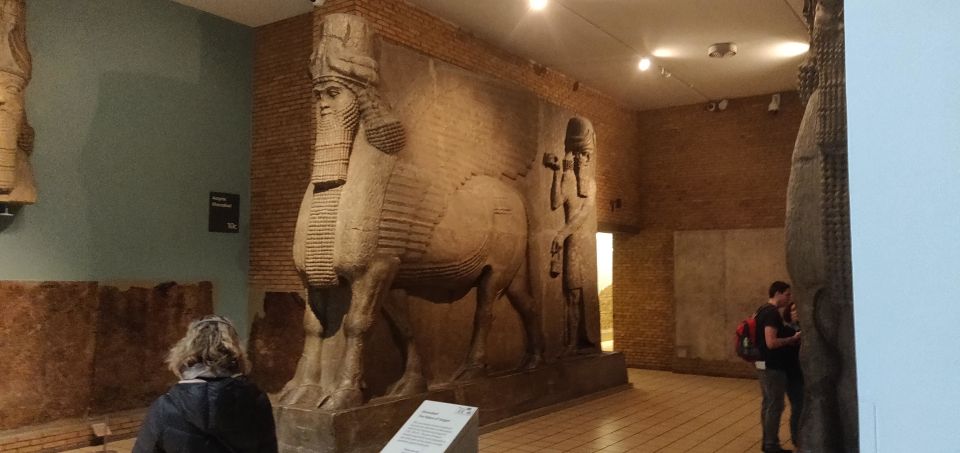
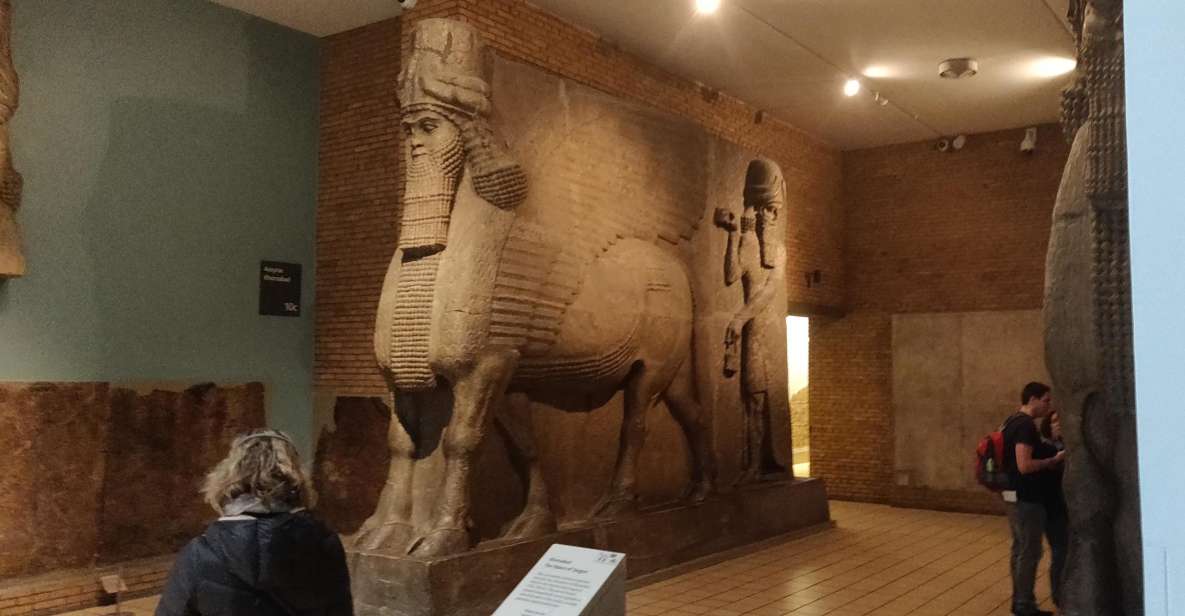
You’ll go from early human material—often described in terms like Neanderthal tools—toward major cultures and empires that shaped writing, cities, belief systems, and state power. That includes the sweep from African origins to Mesopotamia’s first cities, then into Ancient Egypt, Assyria, Ancient Greece, and Rome.
After those heights come the questions of what happened after empires collapsed. That thread is more useful than it sounds, because it helps you connect individual galleries you might otherwise treat as separate islands.
If you want a museum experience that gives you something to remember for the rest of your trip, this is the right format. You’ll leave with a mental map of time periods and why each one matters, which makes the rest of the museum easier to explore on your own later.
The famous artifacts you’ll meet (and the stories behind them)
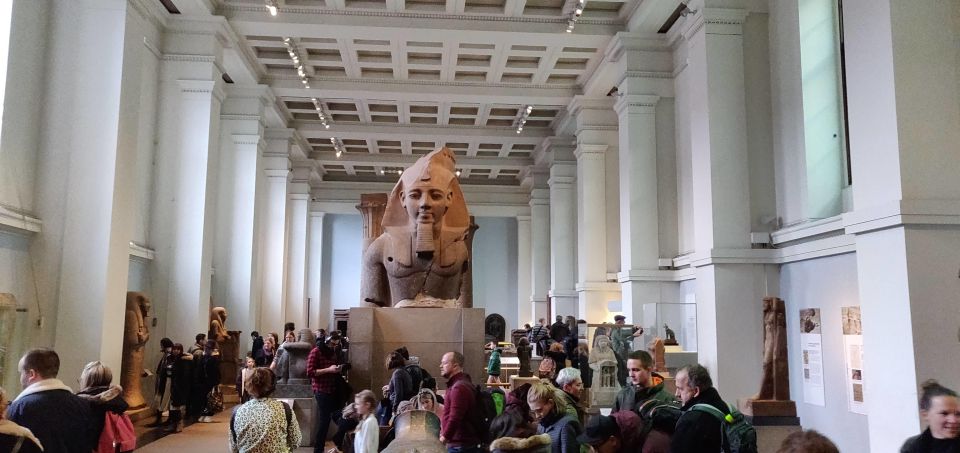
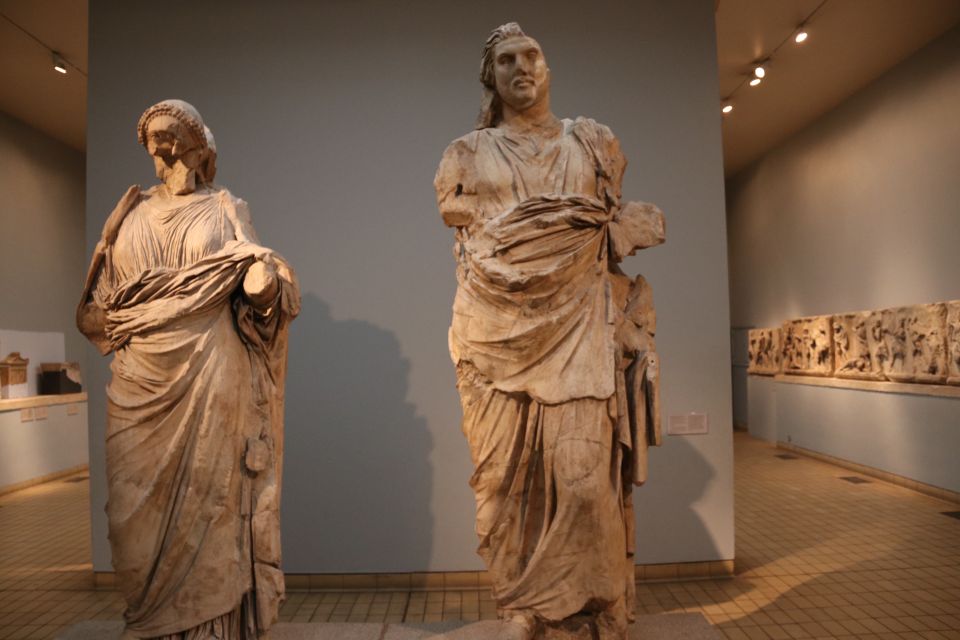
You’ll see several headline objects as part of the tour’s guided flow. Expect stops connected to major themes like Egyptian statecraft and religion, classical sculpture and identity, and Mesopotamian daily life.
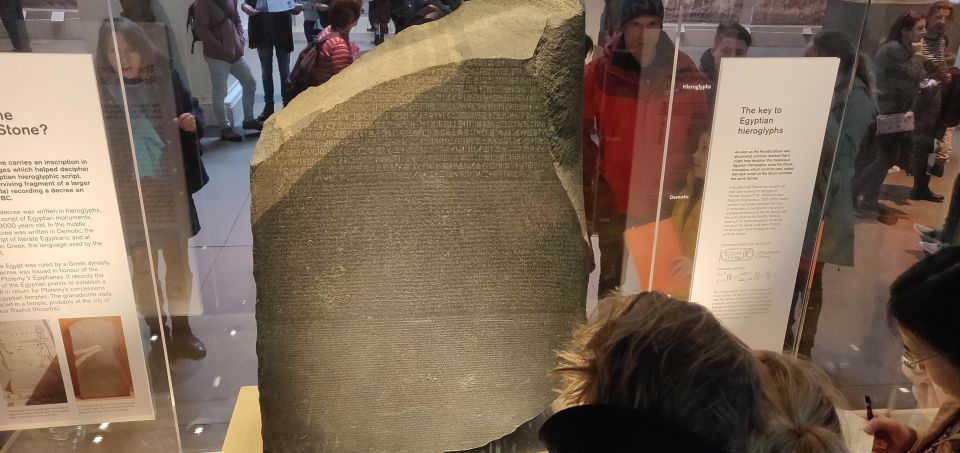
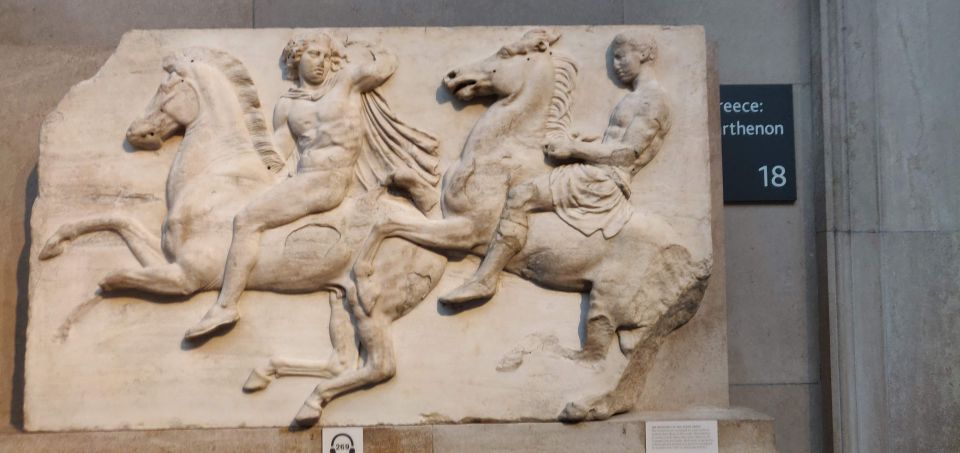
Among the names you’ll learn in context are the Rosetta Stone, the Parthenon Marbles, the Sutton Hoo Helmet, and the Lewis Chessmen. The tour approach matters here: it’s not just a “look at this masterpiece” moment. You’ll get the why behind its importance and how it fits into broader history.
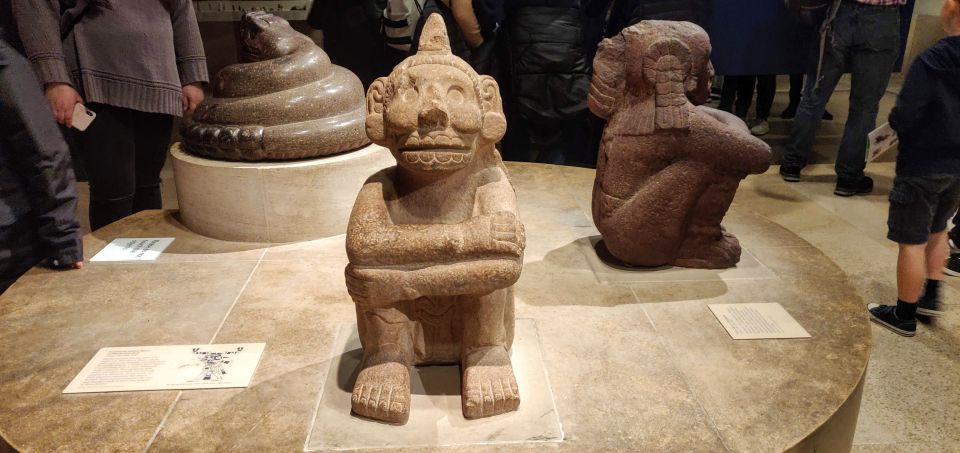
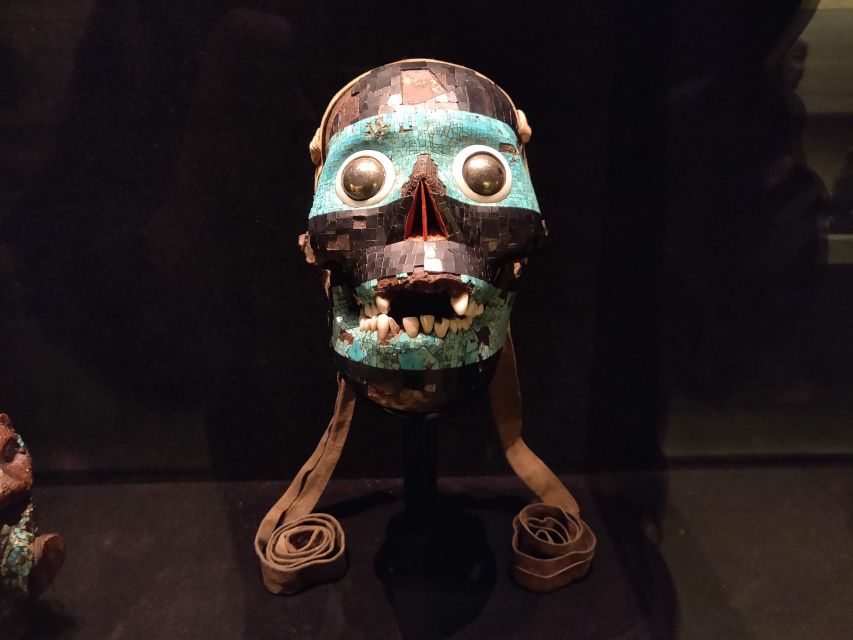
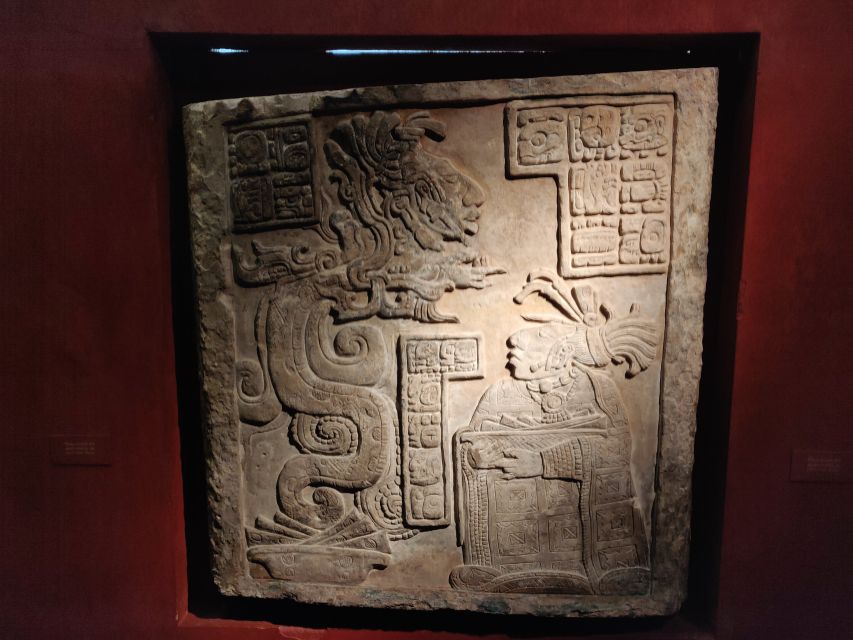
You’ll also hear about regions and cultures that many first-time visitors don’t naturally connect: Assyria and Egypt side by side with Greek and Roman ideas, plus references that stretch beyond Europe, including Vikings and the Aztecs. That global framing helps you see the museum as a world story, not a local trophy case.
Even if you don’t consider yourself a “major artifacts” person, you’ll still get value. The emphasis on interpretation makes each famous object a clue, not a stop sign.
Learning how writing was deciphered: hieroglyphs and cuneiform
One of the most memorable sections is the focus on ancient languages, because it turns a mystery into a process you can understand. You’ll learn how scholars decoded Egyptian hieroglyphs and Sumerian cuneiform, which are often treated like magic words by museum visitors.
The practical payoff is this: once you understand how decipherment works, you read the museum differently. You start seeing texts, scripts, and inscriptions as tools that helped people administer power, record beliefs, track trade, and preserve memory.
It also helps you understand why writing was such a turning point. The tour frames it as the invention of recording ideas beyond spoken memory, which then changes how societies organize and how historians can reconstruct the past.
This is a great section for families too, because it’s full of problem-solving energy. If you enjoy puzzles and explanations, you’ll probably want to ask questions and keep going.
You can also read our reviews of more museum experiences in London






Archaeology in real life: dating, burial, and the science behind it
After the language part, the tour shifts into the nuts and bolts of archaeology: how ancient sites become buried, how artifacts are found, and how relics are dated.
This matters because most people only see the finished museum object. Here you learn what had to happen before that object made it to display. The logic behind dating turns what looks like a pile of old things into a timeline with reasoning.
You’ll also learn about why archaeology still leaves mysteries. That honest uncertainty is part of the value. It’s what keeps the subject from turning into a set of tidy facts that never change.
If you’ve ever wondered how archaeologists can say something is from a certain period, or why the same site can yield different kinds of clues, this is the kind of explanation that makes the whole field feel more real.
The Royal Game of Ur: scholarship you can play
One of the most fun elements is the stop for The Royal Game of Ur. You’ll play one of the world’s oldest board games, and you’ll learn that the rules were deciphered by British Museum scholars.
That mix is the point. It’s not “time to rest.” It’s a way of using the museum’s scholarship to bring daily life in ancient Mesopotamia down to something you can handle with your own mind and hands.
It’s also a smart way to keep energy up in a long session. Reviews mention the tour has breaks, and this game time gives your brain something active to do rather than just watch and listen.
If you’re traveling with kids, this is often the moment they remember later. If you’re traveling solo, it’s still a great moment to test your curiosity in a concrete way.
Break time, room for seating, and surviving 5.5 hours
There is a break built into the tour, which is a relief when you’re combining lectures with gallery walking. Still, the total time is substantial, and the British Museum is large.
I recommend arriving with a plan for comfort. Bring water if you can. For footwear, go for support over style. And if you like to sit during pauses, there are portable stools available near the entrance area, and some people find a folding chair helpful for resting during the longer stretches.
Lunch isn’t included, so you’ll either need to bring something or plan to buy food inside the museum. Since the museum has food outlets, you should be able to manage it without stress, but do not assume you’ll have a long sit-down meal during the tour window.
Price and what you’re actually paying for
At about $81 per person for a 5.5-hour experience, this pricing can look surprising at first—because the British Museum itself has free entrance.
The key is that your money isn’t buying museum access. It’s paying for the archaeologist-led interpretation, skip-the-line entry, and a guided course that connects major galleries to the methods used in archaeology and decipherment.
For me, the value is strongest if you want more than a standard highlight tour. If you want the story behind the objects—how writing was decoded, how dating works, and why archaeology can still surprise us—this is the kind of guided format that justifies the spend.
If you mainly want to wander freely and pick your own stops, you might feel limited by the structure. But if you like a guided path with a clear time frame, the cost makes more sense.
Who this tour suits best
This is a strong match for:
- Families who want an educational day that still feels entertaining, including the Royal Game of Ur moment.
- History buffs who don’t just want facts, but want to understand how archaeology turns objects into evidence.
- First-time British Museum visitors who feel overwhelmed by the sheer scale and want a mental map.
It also works well if you’ve already visited the museum before. You’ll notice more the second time because you’ll have a framework for what you’re seeing.
Group energy can vary by day, but the overall approach is built for keeping attention through stories, questions, and frequent tying-back to methods like decipherment and dating.
Should you book the London British Museum archaeology course?
Yes, if you want a guided course that teaches you how archaeologists build timelines and meaning from objects. With Rossa leading, the tour is built around engagement and explanation, not just pointing at artifacts.
I’d hesitate if your travel style is mostly self-directed wandering and long breaks. This is a structured 5.5-hour experience, and it covers highlights in a focused way, not everything the museum has to offer.
If you’re on your first or second trip to London and want one museum day that feels like a class you’ll remember, this is an easy “book it” choice.
FAQ
Where do I meet the guide?
Meet outside Russell Square Station. The guide will be holding an iPad with the local partner name displayed.
How long is the tour?
The duration is 5.5 hours.
What’s included in the price?
You get a qualified archaeologist guide, guided tour, and entrance (free).
Is lunch included?
No. Lunch isn’t included.
Do I get skip-the-line entry?
Yes. The tour includes skip-the-line access through a separate entrance.
What should I bring and wear?
Bring comfortable shoes. A day pack is generally okay, but luggage or large bags are not allowed.
Is the tour wheelchair accessible?
Yes, it’s wheelchair accessible and noted as suitable for people with limited mobility. If you have special requirements, you should contact in advance.
Can I cancel or reserve without paying right away?
You can cancel up to 24 hours in advance for a full refund. You can also reserve now and pay later.