REVIEW · LONDON
London: British Museum Guided Tour with Priority Entrance
Book on GetYourGuide →Operated by BEST TOURS LONDON LTD · Bookable on GetYourGuide
That Great Court glass roof is worth the trip alone. This 2-hour guided visit turns the British Museum’s huge collections into a clear, story-led route, with priority tickets and a small group pace that makes the must-sees actually make sense.
I like two things most about this tour. First, the guides bring the objects to life with real personalities you can feel right away, including guides like Tony and Tara, who made the commentary feel both fun and focused. Second, you get guided time with the museum’s headline areas, from the Great Court to the big cultural highlights like Greek sculpture, Egyptian funerary beliefs, and Anglo-Saxon craft.
One thing to plan for: priority entry does not always mean instant access. On busy days, you may still face a line after you’ve arrived, so I’d rather you arrive early and treat the priority ticket as help, not magic.
In This Review
- Key highlights
- Price and what $39.05 buys you (and doesn’t)
- Getting in fast: priority timeslots and the line reality
- Meeting point inside the museum (so you don’t lose time)
- Great Court orientation: the glass roof that sets the whole tone
- Elgin Marbles and Greek myths: seeing sculpture as evidence
- Egyptian mummies, Book of the Dead, and Ramesses II: religion made human
- The Rosetta Stone connection: language, decoding, and big breakthroughs
- Enlightenment Room: when ideas become objects
- Chinese collection and Southeast Asia: craft you can recognize fast
- Sutton Hoo: Anglo-Saxon craftsmanship in one focused stop
- The guide factor: why commentary matters in a giant museum
- Small group size: up to 10 people is the sweet spot
- Who should book this tour (and who might skip it)
- Should you book this British Museum Guided Tour with Priority Entrance?
- FAQ
- What’s the duration of the British Museum guided tour?
- How many people are in the group?
- What languages are the guides available in?
- Where do we meet the guide?
- Does this tour include priority tickets?
- Is headset equipment available?
- What’s included in the tour price?
- What’s not included?
- Can I get a refund if I need to cancel?
Key highlights
- Small-group format (up to 10) keeps the pacing human in a museum this size
- Great Court orientation helps you navigate without feeling lost
- Elgin Marbles plus Greek context turns sculpture into stories
- Egyptian mummies and Rosetta Stone link-up makes the collections click
- Sutton Hoo focus spotlights how skilled and organized early England was
Price and what $39.05 buys you (and doesn’t)
At about $39.05 per person for 2 hours, this tour is priced like a guided-value experience, not a budget pass into the museum. You’re paying for two things: a guide who can point you to meaning instead of just objects, and pre-arranged entry timeslots that should reduce some friction.
What it does not magically remove is the fact that the British Museum is a top draw. Even with priority tickets, you can still encounter queues. For me, that’s the fair trade-off: you may wait a bit, but once you’re in, you’re not spending your limited time wandering randomly through galleries that could take days to explore.
So if your goal is to see major highlights in a short window, the price starts to feel reasonable. If your goal is maximum independence and you’re happy reading and walking at your own pace, you might prefer an audio guide and self-guided plan.
You can also read our reviews of more guided tours in London



Getting in fast: priority timeslots and the line reality
The tour includes priority entrance tickets with allocated timeslots and a separate entrance option for skipping the main line flow. In theory, that’s your fast-track.
In practice, you should still plan around busy hours. People reported that the museum’s ticketing situation can still involve waiting once you arrive, even if your entry is timed. That’s not uncommon in big London museums with high demand.
My practical advice: aim to show up earlier than your mental schedule. You meet your guide inside the museum next to the information desk, so you want time to get oriented, find the right place, and settle your group before you move.
If you only have one short visit to London, this is exactly the kind of “arrive early, then relax” plan that works.
Meeting point inside the museum (so you don’t lose time)
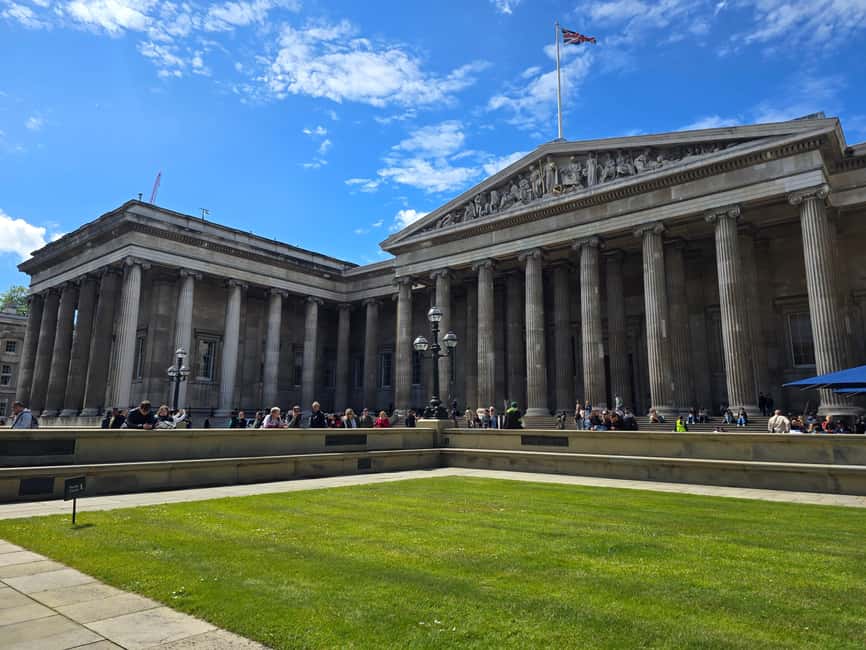
Your guide waits for you inside the British Museum, next to the information desk. That detail matters because it prevents the most common guided-tour problem: everyone hovering outside while the museum keeps doing its museum thing.
The meeting point is shown on the provided map link: https://goo.gl/maps/93hhDrcHH7An1ftf9
The tour ends back at the meeting point, so you aren’t solving a transit puzzle or walking across London afterward. You can treat the rest of your day like a blank page.
Great Court orientation: the glass roof that sets the whole tone
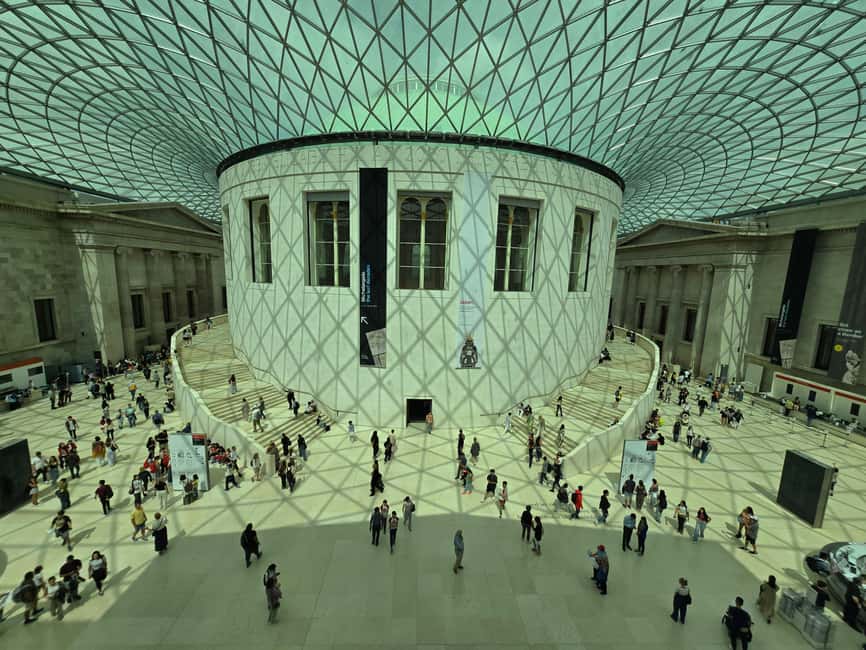
Early on, you get a view of the museum ceiling and the classic Great Court space. The museum is full of “wow” rooms, but the Great Court is special because it’s a natural orientation checkpoint. It’s where you stop, look up, and suddenly the building doesn’t feel like an endless maze.
You’ll also spend time admiring the glass roof of the Great Court, which isn’t just pretty. It gives the museum a light, airy feel that makes the rest of your visit less claustrophobic, especially if you’ve seen photos of the British Museum as a dark, stone-heavy place.
This is where the guide’s job really helps you: you learn how the museum is organized and what to aim for next. In a building with millions of objects and decades of collecting, a little structure saves you hours.
Elgin Marbles and Greek myths: seeing sculpture as evidence
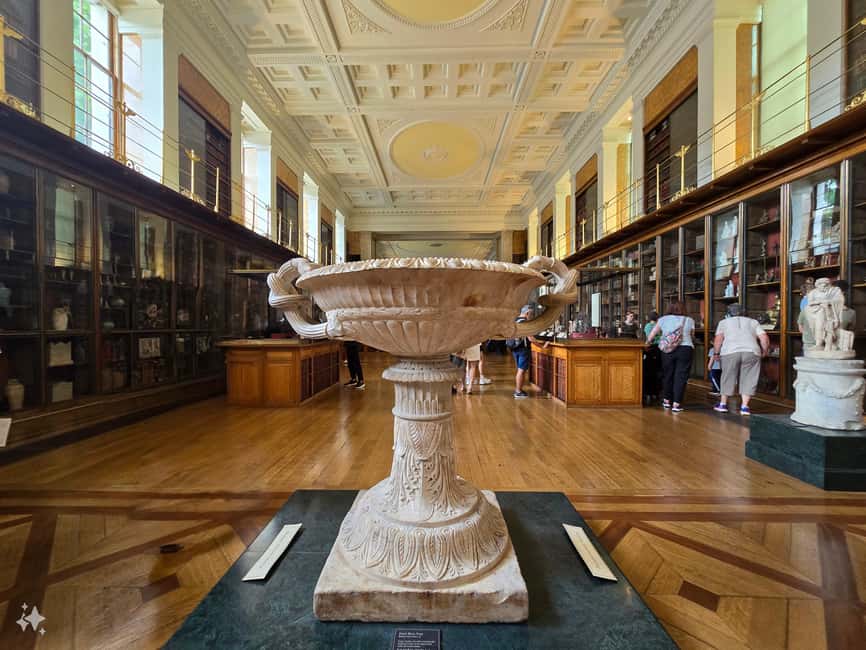
Then you move into the Greek story zone, with a focus on the Parthenon Sculptures, often called the Elgin Marbles.
Here’s why a guided approach matters. If you see Greek sculptures without context, you might admire the craftsmanship and move on. With a guide, you start noticing details that connect art to myth, religion, and public life in ancient Greece.
You’ll also hear enough background to understand the sculptures as historical claims: Greek cities used images to communicate power, belief, and identity. Even if you’ve seen generic “Greek mythology” content before, seeing these works in person with explanation tends to make the myths feel less like stories and more like cultural messaging.
I like that the tour doesn’t leave you with only admiration. You come away with a clearer sense of what these figures were meant to do.
You can also read our reviews of more museum experiences in London






Egyptian mummies, Book of the Dead, and Ramesses II: religion made human
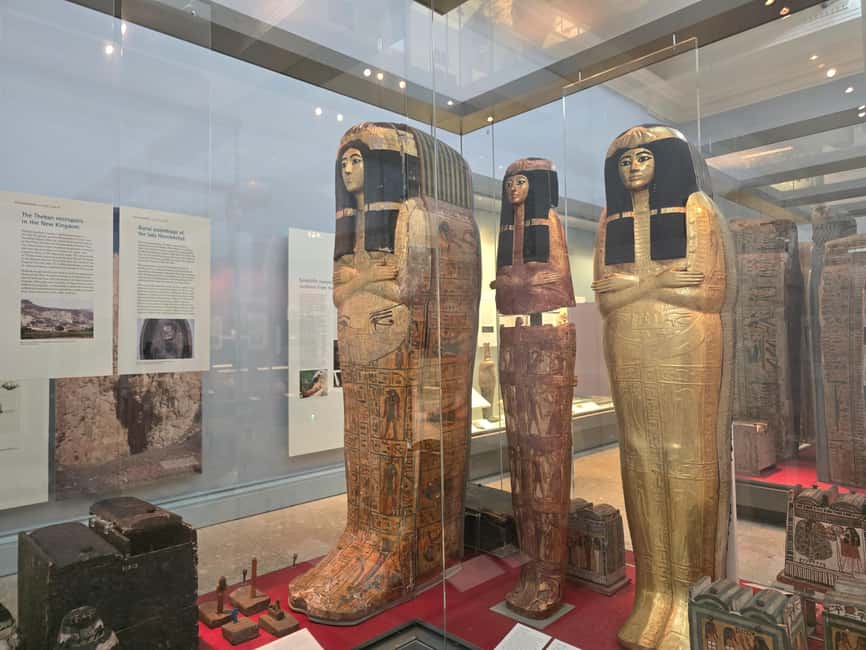
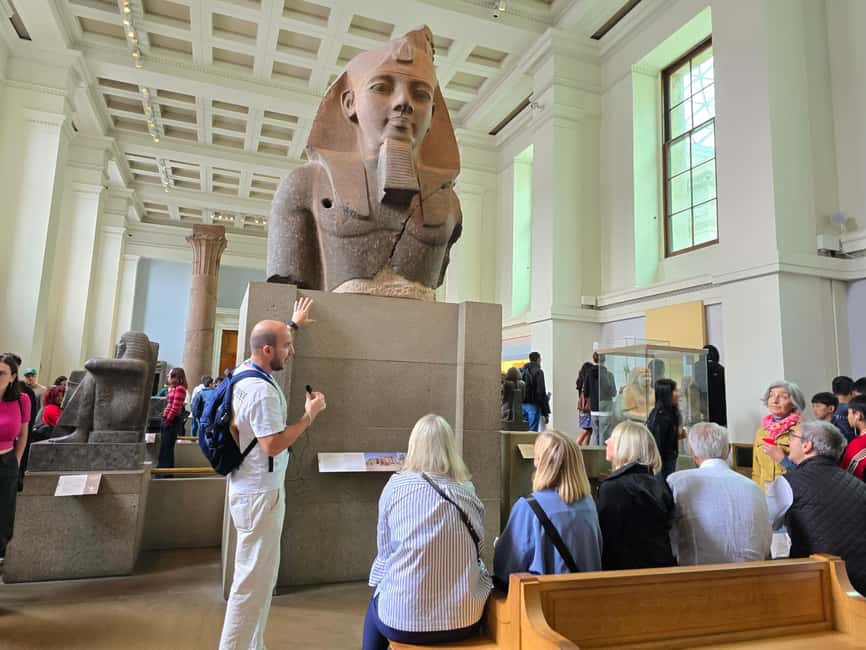
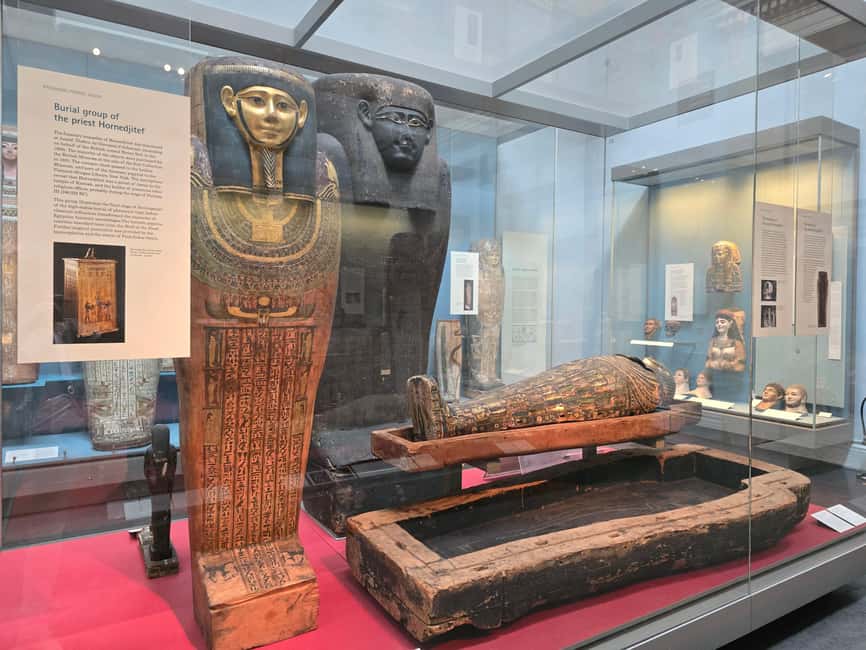
Next comes ancient Egypt and the funerary world. Expect to spend time with the Egyptian mummies, the Book of the Dead, and an awe-inspiring bust of Ramesses II.
This part can go two ways in a self-guided visit: either you rush past because it’s “too much,” or you get stuck staring without knowing what you’re looking at. A good guide bridges the gap.
With explanation, the mummies stop being just a curiosity. You start connecting them to beliefs about the afterlife and the idea that rituals were meant to protect identity beyond death. The Book of the Dead is especially important here because it’s a window into what Egyptians thought mattered.
Ramesses II adds another layer. Even if you’ve heard the name before, you’ll get the feeling of how rulers used monuments, images, and royal iconography to project permanence.
It’s a powerful shift from Greek public myth to Egyptian private belief. And that contrast is one of the reasons this tour works: it keeps history from turning into a blur.
The Rosetta Stone connection: language, decoding, and big breakthroughs
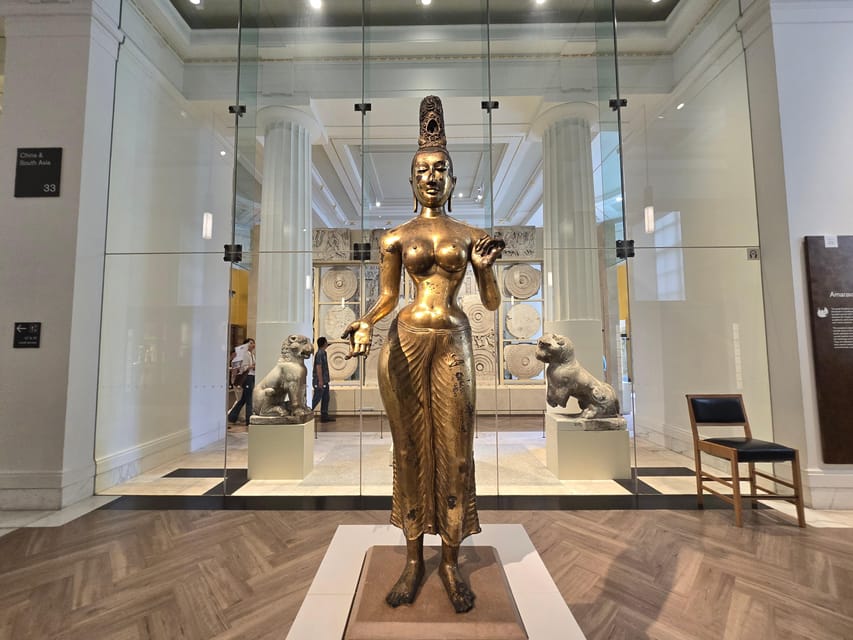
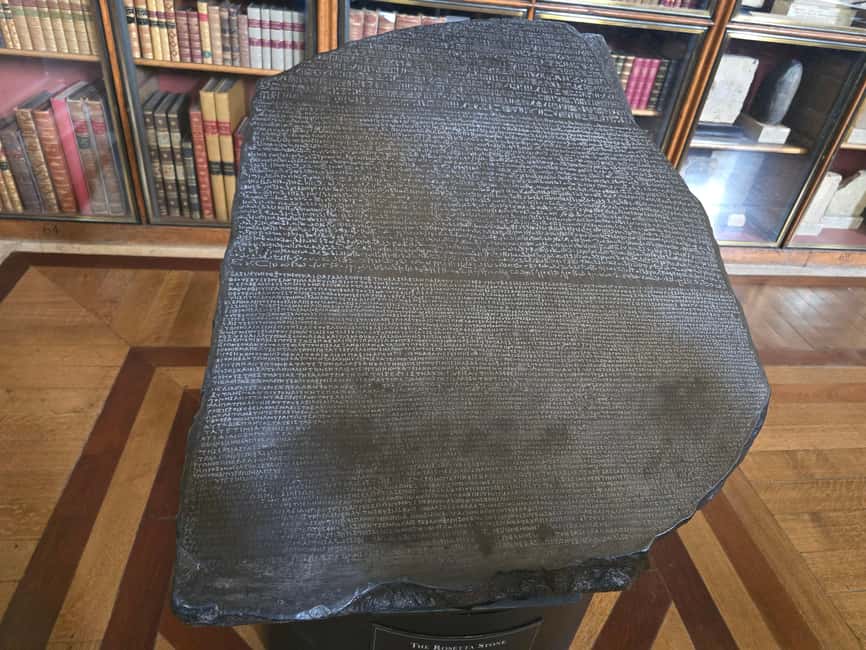
A highlight for many people is the Rosetta Stone moment. The tour includes time around it, and that matters because the Rosetta Stone isn’t just an object you look at. It’s a breakthrough story.
In simple terms, it connects to how scholars learned to read ancient Egyptian scripts. The excitement isn’t about magic or guessing. It’s about evidence—how comparing scripts helped unlock understanding.
On a guided tour, you don’t need to be a classics expert to follow what’s going on. You just need someone to explain why it’s historic, what the stone enabled, and how that changed everything from museum labels to modern scholarship.
This is also a nice “math brain” pause inside a museum tour filled with art and religion. It gives your visit a scientific backbone.
Enlightenment Room: when ideas become objects
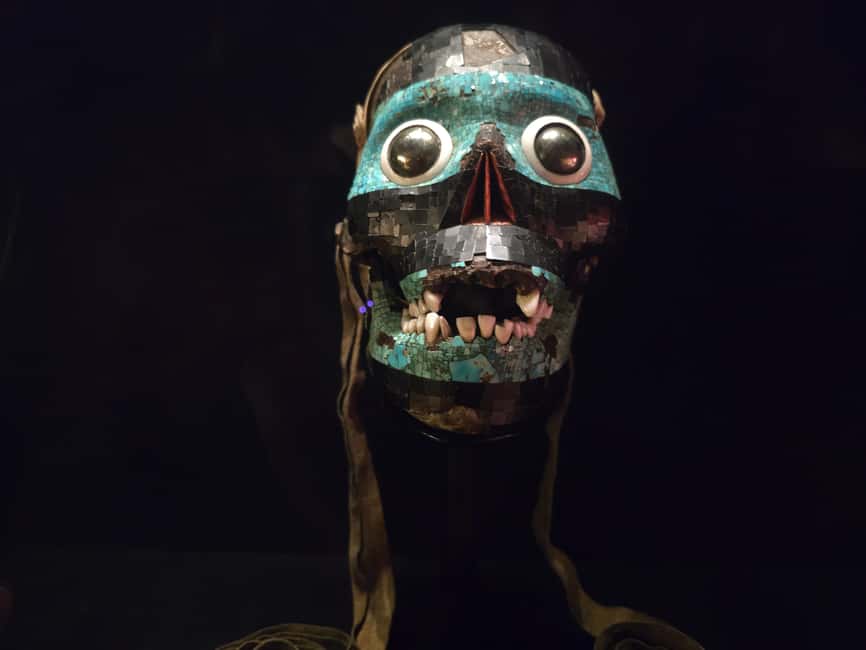
After the ancient worlds, the tour shifts into the Enlightenment Room, highlighting how 18th-century thinkers shaped curiosity, science, and collecting.
This room can be easy to miss if you’re only hunting for the biggest ancient highlights. Guided time here helps you notice how collecting wasn’t only about treasure. It was also about questions: How do you measure? How do you categorize? How do you explain the natural world?
You’ll see the museum as an institution that documents ideas as much as it documents artifacts. That change in theme makes the tour feel more like a story, not a checklist.
And if you’re traveling with teens or anyone who gets museum fatigue, this is a smart pivot. It breaks the spell of only ancient empires and shows why the British Museum became a symbol of knowledge.
Chinese collection and Southeast Asia: craft you can recognize fast
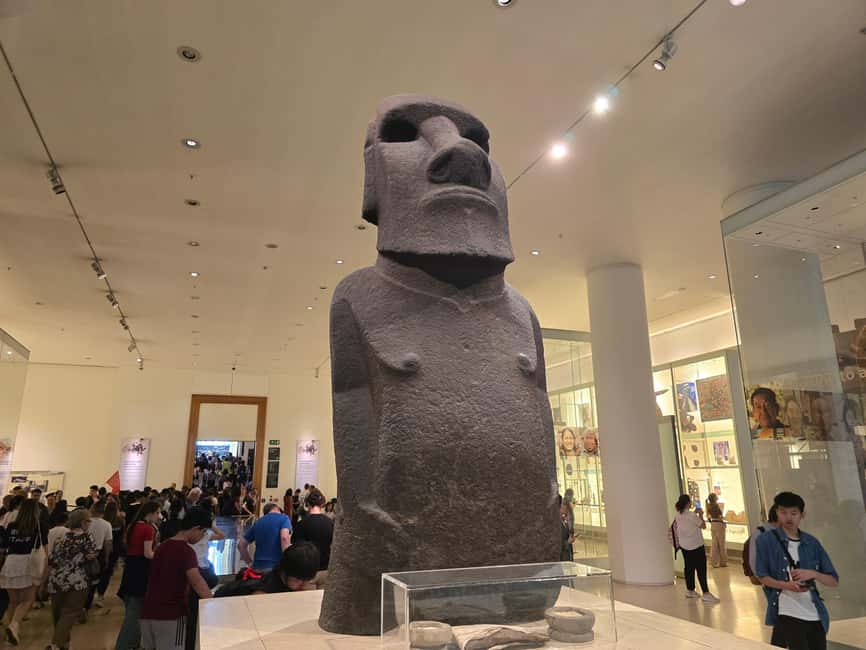
The tour also covers parts of the museum’s Chinese collection and beautifully crafted objects from Southeast Asia.
I appreciate that this stops the visit from being all Europe and all Egypt. You get a broader sense of how global collecting shaped the museum’s identity.
Because the tour is only 2 hours, you won’t see everything. But you’ll get enough pointing and context to help you look better. You learn what to notice first—materials, patterns, and how objects were used or valued.
Even if you can’t name every item, you’ll start building a visual vocabulary. That’s the kind of skill a guided tour can actually teach in a short time.
Sutton Hoo: Anglo-Saxon craftsmanship in one focused stop
Finally, the tour spotlights Anglo-Saxon England with a focus on Sutton Hoo ship burial treasures, including an intricately crafted helmet and shield, along with other artifacts.
This is one of the best choices for a short guided tour because the story feels complete. You’re not just looking at random items. You’re seeing a curated snapshot of power, status, and workmanship at a formative time in English history.
The helmet and shield are the kinds of objects that pull you in fast. But the real value comes from understanding what they imply about technology, beliefs, and social organization. A guide can also help you see these pieces as statements of identity, not just impressive metalwork.
If you want a “wow” ending that isn’t repetitive, this works. It gives your brain a new anchor story right when you might otherwise get tired.
The guide factor: why commentary matters in a giant museum
The British Museum is famously huge. With only 2 hours, your experience depends heavily on how the guide chooses, explains, and times everything.
That’s why the guide names stand out in the feedback you’ll hear about this tour: Tony, Tara, Stuart, Alex, and Mira. People consistently praised the storytelling and the sense that the guide truly knew what mattered and how to say it.
The best guided moments aren’t just facts. They’re connections. Why a sculpture matters. Why a text changes interpretation. Why a burial site tells a broader social story.
Also, when queues are long, guides who wait help your day stay smooth. One useful example from the experience: Stuart was noted for waiting after a long line, which is exactly the kind of small kindness that prevents a tour from turning stressful.
Small group size: up to 10 people is the sweet spot
The group is limited to 10 participants, and that changes everything. In a crowded museum, you don’t want 25 people trying to gather around one object. A smaller group makes it easier to hear, to ask questions, and to keep moving without constant bottlenecks.
For couples and friends, it also feels less like you’re herded and more like you’re traveling with a smart local friend who happens to work the museum like a pro.
If you hate standing around, this format helps.
Who should book this tour (and who might skip it)
This guided tour is a great fit if:
- You only have a couple of hours at the British Museum and want major highlights done well
- You want expert commentary in English or Italian, not just signage
- You prefer structure and pacing over wandering through 70+ galleries
You might skip it if:
- You plan to spend half a day or more and want full freedom
- You’re the type who loves reading labels and navigating alone without a schedule
- You dislike any chance of waiting at the museum, even with timed entry
For most first-time London visitors, it’s a strong way to make the museum feel manageable.
Should you book this British Museum Guided Tour with Priority Entrance?
I’d book it if your priority is clarity in a short visit. The 2-hour time limit forces smart choices, and the guide-led structure helps you get real meaning from big-ticket objects like the Great Court, Parthenon sculptures, Egyptian mummies, Rosetta Stone, and Sutton Hoo.
The one caution is honest: don’t assume priority entry means zero waiting. Show up early, meet your guide inside next to the information desk, and treat that ticket as your head start.
If you want a quick, high-impact museum experience with strong storytelling, this is a good value. It’s not trying to replace a week of museum time. It’s trying to get you the best bits, explained.
FAQ
What’s the duration of the British Museum guided tour?
The tour lasts 2 hours.
How many people are in the group?
The group is limited to 10 participants.
What languages are the guides available in?
The tour includes live commentary in English and Italian.
Where do we meet the guide?
The guide waits inside the museum next to the information desk.
Does this tour include priority tickets?
Yes. It includes priority tickets for the main entrance with allocated timeslots.
Is headset equipment available?
An option for headsets is listed as available.
What’s included in the tour price?
You get a guided tour with commentary, priority entrance tickets for allocated timeslots, and the option of headsets.
What’s not included?
Transportation and food and drinks are not included.
Can I get a refund if I need to cancel?
Free cancellation is available up to 24 hours in advance for a full refund.