REVIEW · LONDON
London: British Museum Tour with Archaeologist Guide
Book on GetYourGuide →Operated by Spirit of Discovery Tours · Bookable on GetYourGuide
A museum tour can feel like information overload. This one is different because an archaeologist guide turns big-name objects into clear stories you can actually follow. You also get skip-the-line entry and a focused route through a museum that’s otherwise nearly impossible to conquer.
I especially like how the guide connects artifacts to real questions: who made them, what they were used for, and why the details still matter to scholars. The pacing is built for limited time, so you’re not just staring at labels.
One thing to watch: the tour leaves promptly (so late arrivals can miss the entry slot). If you’re the kind of person who hates being rushed at the start, plan to arrive early and stay close to the group.
In This Review
- Key Takeaways Before You Go
- Russell Square Start: where the group actually forms
- The British Museum game plan: skip the line and use your time wisely
- Rosetta Stone to Ramses II: Egypt made human-sized
- Assyrian palaces and Parthenon Marbles: power across empires
- Aztec crown jewels, Moai statues, and a global museum that makes sense
- Vikings in the Lewis Chessmen and the Sutton Hoo hoard
- Who is the guide, and what makes the experience feel special
- Pacing across 2.5 hours: enough depth without feeling trapped
- What to do after the tour: take the thread and run with it
- Price and value: is $58 worth it?
- What you’ll want to bring (and what you should not)
- Accessibility and practical comfort
- Should You Book This British Museum Archaeologist Tour?
- FAQ
- How long is the British Museum tour?
- Where do we meet for the tour?
- What time does the group leave?
- What’s included in the price?
- Is the tour in English?
- Is the tour wheelchair accessible?
- Do we get food or drinks on the tour?
- What should I bring, and is there anything I can’t bring?
- What is the cancellation policy?
Key Takeaways Before You Go
- Archaeologist-led interpretation that explains how discoveries change what we think we know
- Skip-the-line entrance to cut down the biggest London Museum pain point: waiting
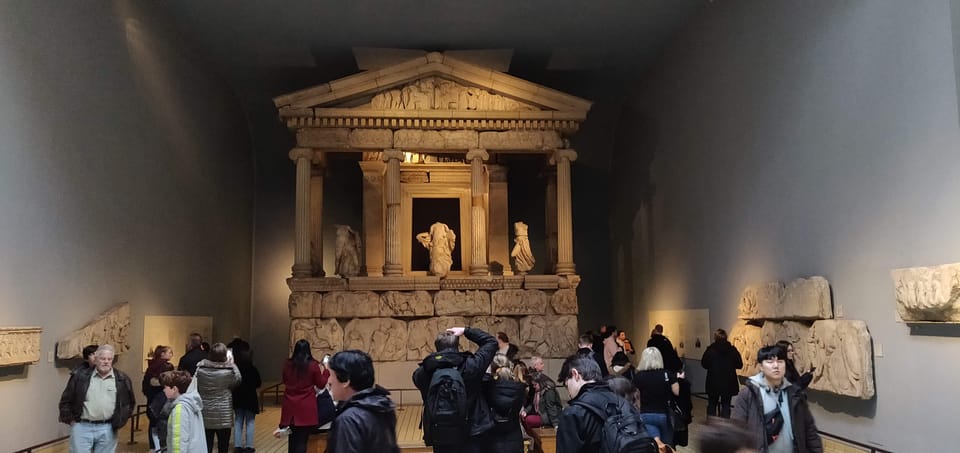
- A fast, curated route through Egypt, Greece, Assyria, Vikings, Aztecs, and more
- Big artifacts plus less-expected context, so the visit feels purposeful, not random
- Voice and storytelling that work in noisy galleries, including time for questions
Russell Square Start: where the group actually forms
Your tour begins at the Russell Square area, at the entrance of Russell Square Station. The guide meets you holding a tablet with Spirit of Discovery showing on the screen. It’s simple to spot, but you still want to arrive early enough to get your bearings.
Then the group walks in on foot for about five minutes to the British Museum. That short walk matters: it gets everyone together before you hit the crowd flow inside, and it helps you avoid that classic museum scramble where half the group ends up hunting for the meeting point.
You can also read our reviews of more guided tours in London



The British Museum game plan: skip the line and use your time wisely
The British Museum is huge. Without a plan, you either wander until your brain is tired, or you rush past the very objects you came to see.
Here, you get a guided route for about 2.5 hours, with entry included. The skip-the-line access via a separate entrance helps you start your visit faster, which is a big deal when the museum is busy and you only have half a day to spare.
Also, the tour is designed around listening. One of the most praised details in the guide style is that the explanations are easy to hear even when galleries are crowded and noisy. That’s not a small point. Hearing the story is what turns museum minutes into real learning.
Rosetta Stone to Ramses II: Egypt made human-sized
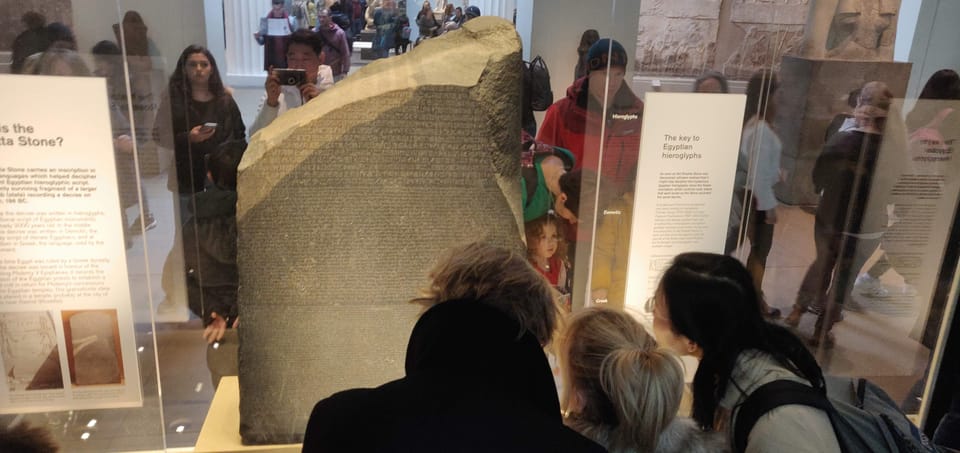
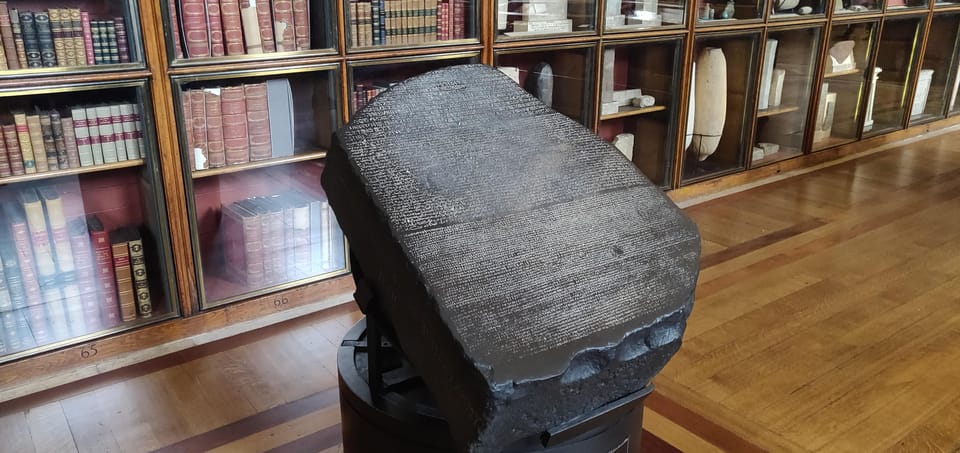
The first major “wow” moment in this tour is the Rosetta Stone. Instead of treating it like a single famous photo, the guide helps you understand why it mattered—how it played a role in unlocking Egyptian hieroglyphs for modern readers.
From there, the tour shifts to Egyptian power and spectacle, including a colossal statue of Pharaoh Ramses II. Stand with that object long enough and you start noticing the choices that signal authority: scale, posture, and the sheer intention behind display. A skilled guide makes you see those details instead of just moving along.
If Egypt is your thing, I think you’ll enjoy how the story stays attached to the object. You’re not just reading plaques in silence. You’re getting the “why” right where you’re standing.
Assyrian palaces and Parthenon Marbles: power across empires
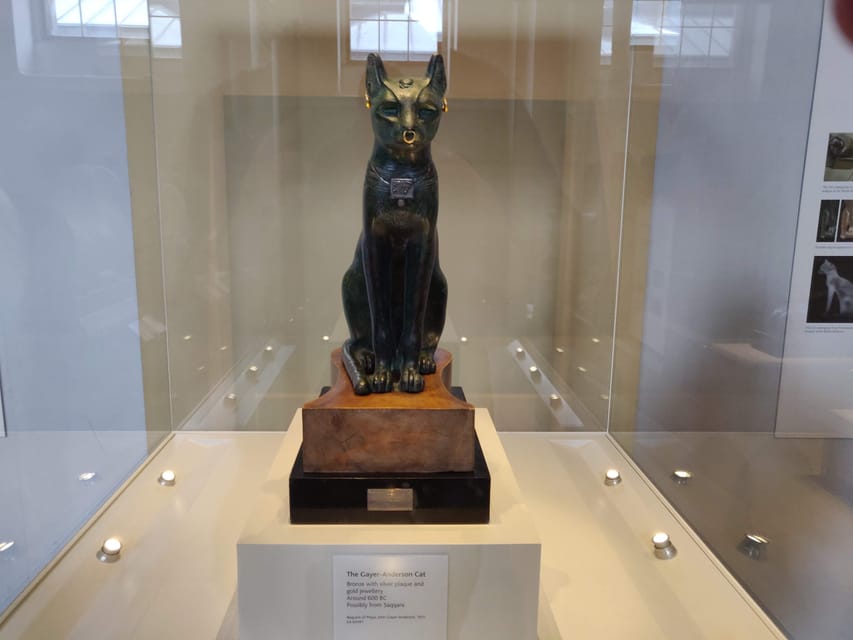
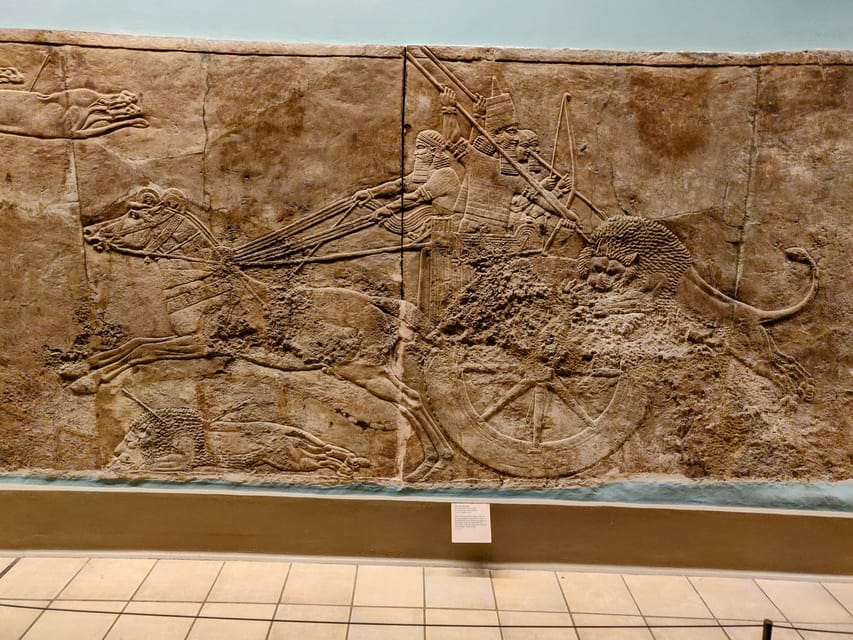
Next up is a look at the Assyrian Empire, including towering palace scenes and the sense of domination they communicated. Assyria is a great example of how museum objects can feel political even when the original context is long gone.
Then you come to the Parthenon Marbles. This is one of those galleries where people often rush because the objects are so famous. With a guide, you get time to focus on what you’re looking at and why Greek sculpture still shapes how people imagine classical art.
This is also a good moment to pay attention to phrasing. The guide approach tends to connect discovery and interpretation to the modern museum experience—so you understand not only what the pieces are, but how they ended up here in the first place and why scholars argue about meaning and context.
Aztec crown jewels, Moai statues, and a global museum that makes sense
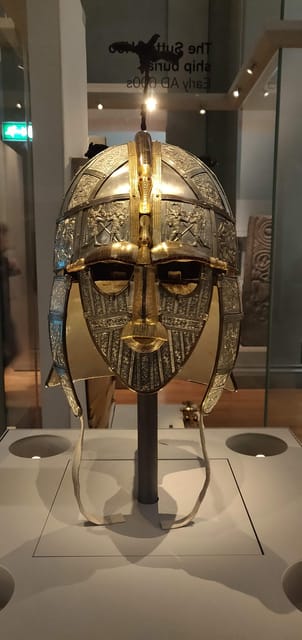
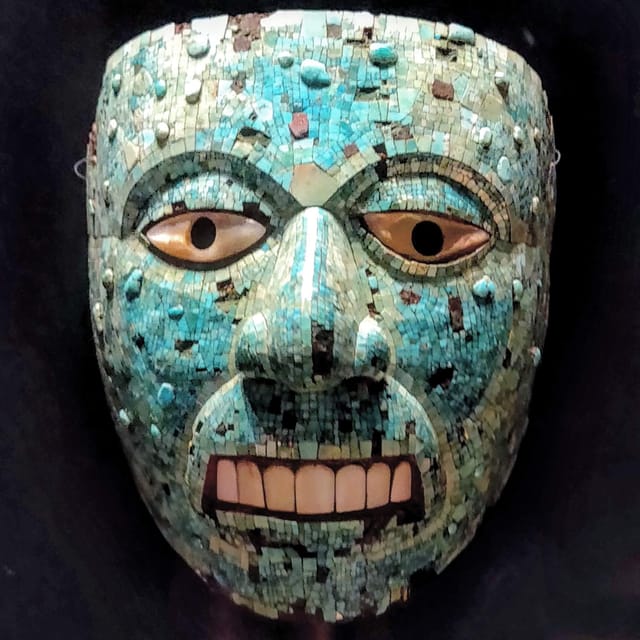
One surprise strength of this tour is the way it doesn’t treat non-European civilizations as a side quest. You’ll see highlights associated with the Aztec Empire, including its crown jewels. The point isn’t to make you memorize facts. It’s to show how these objects functioned in systems of status, belief, and ceremony.
From there, you’ll encounter Moai statues from Easter Island. It’s the kind of object that can feel mysterious on first glance, and that’s exactly where a good archaeologist guide shines. You get help framing why these statues matter and what kinds of questions people have asked about them.
This section is great for families too. One parent noted that kids aged 12 and 14 stayed engaged, largely because the guide keeps stories clear and connected to what’s in front of you. If you’ve ever tried to museum-hop with teens and lost them to phones, this tour’s style is a relief.
You can also read our reviews of more museum experiences in London






Vikings in the Lewis Chessmen and the Sutton Hoo hoard
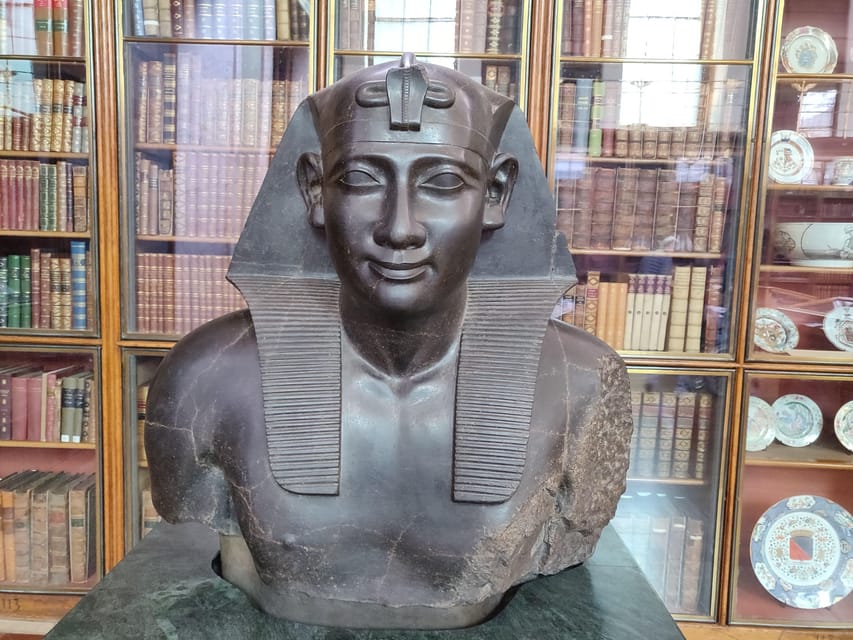
Now you move into the Viking Age with the Lewis Chessmen. These pieces have that perfect mix of artistry and puzzle-box weirdness. You get context around how extraordinary they are—and why they’re so compelling as cultural evidence, not just decorative objects.
Then the tour turns toward the Dark Ages with the Sutton Hoo hoard, tied to the mysterious King Raedwald. This part tends to land because it feels like a time capsule that scholars can’t fully decode yet. You don’t just see treasure. You hear how archaeologists read patterns—what burial goods suggest about power, contact, and belief.
If you’re the kind of visitor who likes “how we know what we know,” Sutton Hoo is your moment. It’s not just a collection of impressive items; it’s a set of clues that archaeologists still interpret.
Who is the guide, and what makes the experience feel special
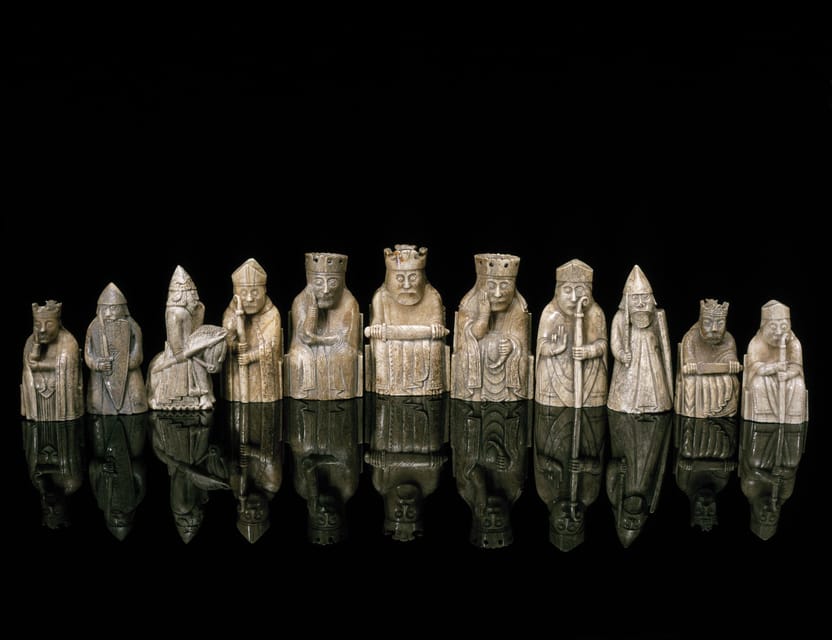
The guide behind this tour is an archaeologist from Spirit of Discovery Tours, and the name that comes up again and again is Rossa (also shown as Ross Minogue in some bookings). Over and over, guests highlight three things: deep expertise, engaging storytelling, and a teaching style that helps you connect artifacts to bigger historical questions.
You’ll also benefit from practical guiding habits. One guest specifically praised how the guide kept the group together in a crowded museum, using a voice that carries. Another mentioned the guide was prepared with iPad notes, like a professor with materials ready.
That’s what you want in a museum guide: preparation plus clear communication. Otherwise you end up with a nice lecture that doesn’t match what you’re seeing.
Pacing across 2.5 hours: enough depth without feeling trapped
At 2.5 hours, this isn’t a casual stroll and it’s not an all-day museum plan either. It’s a sweet spot: long enough to connect multiple civilizations through a single line of thinking, short enough that you’re not exhausted by Gallery Olympics.
The tour focuses on major exhibits first—then adds other standout stops to keep the route from feeling one-note. Guests also described the tour as well paced, with time to ask questions and enough left afterwards to explore more on your own.
One fair consideration: sometimes the explanations can run longer at specific stops. If you’re the type who prefers quick scanning and moving on, that may slightly limit how many objects you personally can “extra” linger with. The upside is that what you do spend time on tends to make sense.
What to do after the tour: take the thread and run with it
When your guided portion ends at the British Museum, you’re already oriented. You’ll know which galleries feel most important to you—Egypt, classical Greece, Viking-era Britain, or the more mysterious Dark Ages.
So here’s my practical advice: after the tour, don’t try to “catch everything.” Pick one theme you felt most curious about and re-visit at your own pace. The tour gives you the names and the stories; your job is to slow down and let a couple objects stick.
If you want to bring children, this structure helps. Kids often need fewer stops with clearer payoff, and the guide’s storytelling style seems to fit that. Still, bring snacks separately only if you’re allowed in the areas you’ll be in—food and drinks are not included in the tour.
Price and value: is $58 worth it?
At $58 per person for a 2.5-hour experience, the value comes from three concrete things you get together:
1) British Museum entry is included, so you’re not adding another separate ticket cost on top.
2) You get a guided tour with an archaeologist, not just a generic museum walk.
3) You skip the line through a separate entrance, which saves time when the museum is crowded.
If you’re visiting for the first time and you only have a limited window, paying for guidance usually makes sense because it converts “time spent” into “understanding gained.” For the British Museum specifically, that’s the big win. You could spend days here, but with only hours, you need someone to draw the map.
If you already know your preferred civilizations and you love reading placards at your own pace, you might feel less need for a guide. But if you want the stories to click while you’re standing in front of the objects, this is priced like a smart shortcut.
What you’ll want to bring (and what you should not)
The essentials are straightforward: wear comfortable shoes and bring water. That’s not just comfort talk. Museums can be tiring, and you’ll be moving between galleries during the tour.
Don’t bring weapons or sharp objects. Also avoid luggage or large bags, since that can get annoying with museum rules and movement. If you’re traveling light, you’ll keep the tour smooth for everyone.
Accessibility and practical comfort
This tour is wheelchair accessible, which is a big plus for visitors who need an easier route through busy galleries. As always in a large museum, you’ll want to consider personal comfort and pacing, but the tour is designed to be workable for a range of visitors.
Also, because the group leaves promptly and the entrance is time-based, you’ll be happiest if you show up ready to go—no last-minute searching for the right door.
Should You Book This British Museum Archaeologist Tour?
If your goal is to see the British Museum’s main treasures without getting lost in the scale, I’d book it. The combination of archaeologist storytelling, included entry, and skip-the-line access makes the $58 price feel less like an add-on and more like buying back your time.
It’s especially worth it if:
- you want Egypt, Greece, Vikings, and Dark Ages history connected through objects
- you’re visiting with kids who need lively explanations, not just quiet reading
- you appreciate being taught how archaeology interprets artifacts, not just what they are
Skip it (or at least consider another option) if you hate any sense of a schedule. This tour asks you to be ready at the start, and it moves with purpose for the full 2.5 hours.
FAQ
How long is the British Museum tour?
The guided British Museum tour lasts 2.5 hours.
Where do we meet for the tour?
You meet at the entrance of Russell Square Station. The guide will be holding a tablet showing Spirit of Discovery.
What time does the group leave?
You need to leave promptly at 9.45am to make the museum entry slot.
What’s included in the price?
The price includes entry to the British Museum, the British Museum tour, and an archaeologist guide. Skip-the-line access is included through a separate entrance.
Is the tour in English?
Yes, the live tour guide speaks English.
Is the tour wheelchair accessible?
Yes, the tour is wheelchair accessible.
Do we get food or drinks on the tour?
No. Food and drinks are not included, so you’ll want to plan accordingly. Water is recommended to bring.
What should I bring, and is there anything I can’t bring?
Bring comfortable shoes and water. Weapons or sharp objects are not allowed, and you should not bring luggage or large bags.
What is the cancellation policy?
Free cancellation is available up to 24 hours in advance for a full refund. You can also reserve now and pay later to keep plans flexible.